
Why Your Garage Is a Mouse Magnet (And What You Can Do About It)
Garage mice control starts with understanding why these pests love your garage in the first place. Here’s what you need to know right away:
Need help with mice in your garage? Call Black Dog Pest Solutions for a free inspection. We serve Avon, Cleveland, Lorain, and surrounding Northern Ohio communities. Call 440-654-8234 today.
Quick Action Steps for Garage Mice Control:
- Remove attractants – Store pet food, bird seed, and pantry overflow in sealed plastic containers
- Set traps – Place snap traps along walls and behind storage, checking them daily
- Seal entry points – Close gaps larger than a dime using steel wool and caulk
- Secure the garage door – Check bottom seals and weatherstripping for gaps
- Declutter and clean – Remove cardboard boxes, fabric piles, and nesting materials
When the first cold snap hits Northern Ohio, mice start searching for three things: warmth, shelter, and food. Your garage checks all three boxes. It’s an insulated space with stacked boxes perfect for nesting, plus snacks like bird seed, pet food, or even that forgotten granola bar in your car’s cup holder.
The National Pest Management Association estimates that rodents invade about 21 million homes in the United States every winter. Garages are particularly vulnerable because they offer dark hiding places, abundant food sources, and easy entry points. Mice can squeeze through a crack the size of a dime – or as the research puts it, “if you can see through it, a mouse can squeeze through it.”
The problem goes beyond just the “ick” factor. Mice contaminate stored items with droppings and urine, put your vehicle at serious risk by chewing through wiring, and can carry diseases like Hantavirus and Salmonella. Once inside, mice can live for two to three years in the protected environment of a garage, and with their rapid reproduction rate, a small problem quickly becomes a full-blown infestation.
I’m Mat Ledyard, owner of Black Dog Pest Solutions in Avon, Ohio, and I’ve been helping Northeast Ohio homeowners tackle pest problems since 2005. Over nearly two decades in the industry, I’ve seen how quickly garage mice control issues can escalate if left unaddressed, and I’ve developed proven strategies to eliminate these pests and keep them from coming back.
In this guide, I’ll walk you through exactly how to identify, eliminate, and prevent mice in your garage – from recognizing the first warning signs to implementing long-term solutions that actually work.
Spotting the Unwanted Guests: Signs and Risks of a Garage Infestation
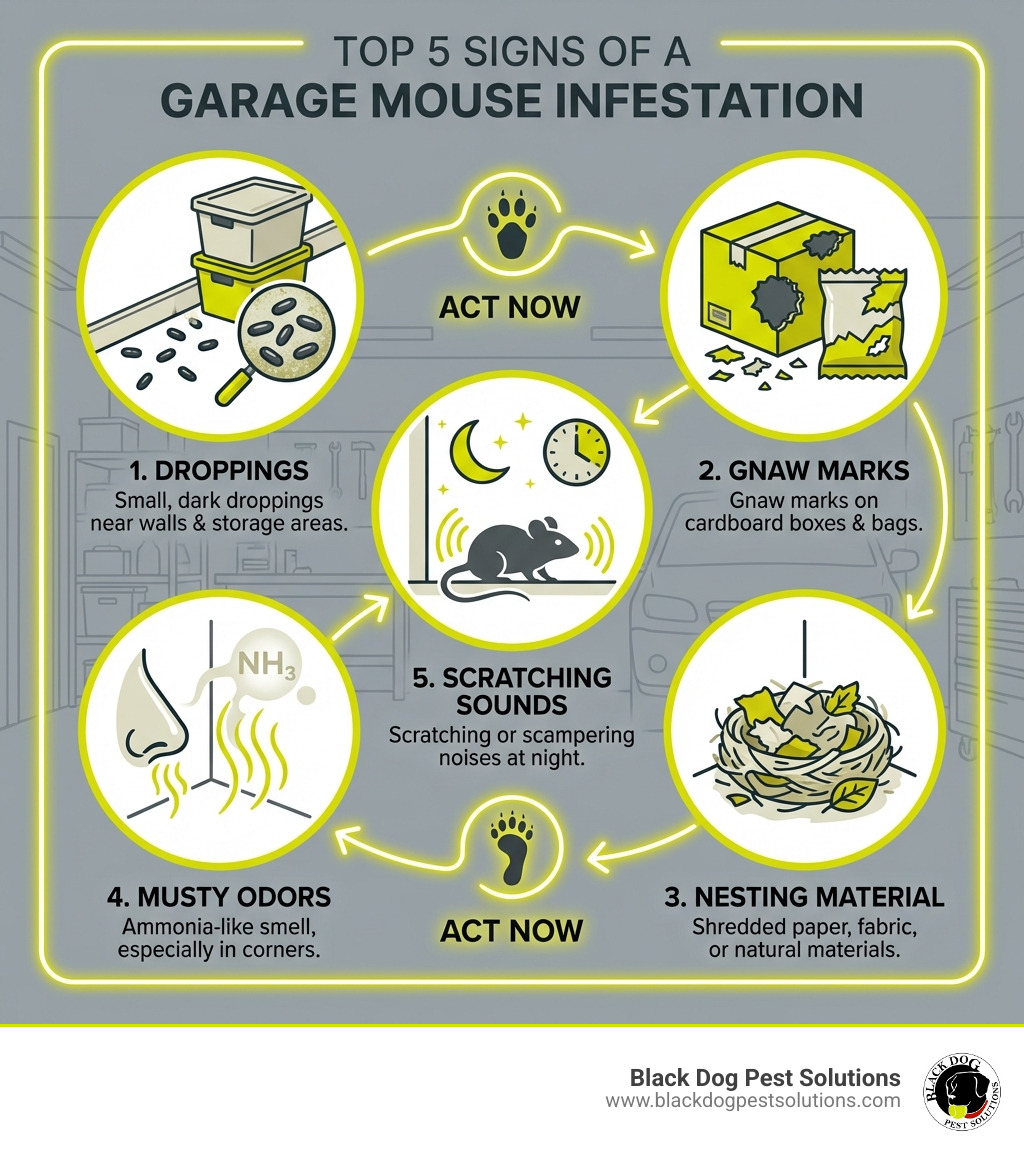
Before we can tackle a mouse problem, we first need to confirm we have one. Mice are nocturnal creatures, meaning they’re most active at night when there’s less human activity. This makes them tricky to spot, but they always leave clues. Keep an eye (and ear, and nose!) out for these tell-tale signs:
- Droppings: This is often the most obvious sign. Mouse droppings are small, dark, and resemble grains of rice. You’ll typically find them along walls, near food sources, or in secluded areas like behind storage bins or under shelves.
- Gnaw Marks: Mice constantly chew to keep their incisor teeth sharp and maintain their size. Look for nibble marks on cardboard boxes, plastic containers, wood, wires, or anything else they might find appealing. Rodents put your vehicle at serious risk, and repairing the damage they cause is often complicated and expensive.
- Nests: Mice love to create cozy nests out of shredded materials. If you find torn paper, insulation, fabric, or other soft debris bundled into a messy ball, you’ve likely found a mouse nest. These are commonly hidden in cluttered areas, inside appliances, or even within vehicle engine compartments.
- Musty Odors: A persistent, stale, or ammonia-like smell, especially in confined spaces, can indicate a significant mouse presence. This odor comes from their urine.
- Scratching Sounds: If you hear faint scratching, squeaking, or scampering sounds coming from inside your garage walls, ceiling, or even from stored items, especially at night, it’s a strong indicator of rodent activity.

Beyond being a nuisance, mice pose significant risks to your property and your health.
- Vehicle Damage: This is a big one for many homeowners in Northern Ohio. Mice are notorious for chewing through vehicle wiring, hoses, and insulation. This can lead to costly repairs and even fire hazards. We’ve seen how extensive this damage can be, turning a simple car into a complex, expensive repair job.
- Property Damage: They’ll gnaw on anything they can get their teeth on – insulation, drywall, wooden beams, stored holiday decorations, and even the structural elements of your garage. This can compromise the integrity of your property and lead to further expenses.
- Health Risks: Mice carry and spread various diseases through their urine, droppings, and saliva. The Centers for Disease Control and Prevention (CDC) lists several diseases directly transmitted by rodents, including Diseases Directly Transmitted by Rodents like Hantavirus and Salmonella. Simply coming into contact with their waste can be enough to get sick. They can also carry parasites like fleas, which can further spread illness to your family and pets.
Why Garages are Prime Real Estate for Mice
Why do mice seem to flock to our garages? It’s simple: garages offer everything a mouse could want or need to thrive, especially as temperatures drop in areas like Avon, Lorain, and Greater Cleveland.
- Clutter: Garages often become storage hubs, accumulating tools, boxes, old furniture, and gardening supplies. This clutter provides mice with endless hiding spots, sheltered runways, and materials for nesting.
- Stored Food: Many of us keep pet food, bird seed, grass seed, or even pantry overflow in the garage. These are gourmet meals for mice. Plastic packaging is easily chewed through, making these items readily accessible.
- Cardboard Boxes: While not food, cardboard boxes are perfect for gnawing, nesting, and hiding. They’re a rodent’s dream home!
- Lack of Human Activity: Unlike the main living areas of our homes, garages are often less frequented, especially at night. This gives mice the freedom to forage and explore undisturbed.
- Proximity to the House: For mice, your garage is often just a stepping stone to the warmth and abundant resources of your main home. A garage infestation can quickly become a house infestation. Learn more about the various unwanted guests we handle at More info about Pests.
The Dangers Lurking in Your Garage
The presence of mice in your garage isn’t just an inconvenience; it poses tangible threats:
- Fire Hazards from Chewed Wiring: As mentioned, mice love to gnaw on electrical wires, especially those in vehicles. Exposed wires can short-circuit, leading to electrical fires in your car or even your home. This is a serious concern that we often emphasize to homeowners in areas like Westlake and North Olmsted.
- Contamination of Stored Items: Anything stored in your garage – holiday decorations, clothes, camping gear, tools, or even children’s toys – can become contaminated with mouse urine and droppings, making them unsanitary and potentially unsafe.
- Disease Transmission to Pets and Family: Even if you don’t directly interact with the mice, their waste can spread pathogens. Pets might investigate and inadvertently bring diseases or parasites indoors. For more insights into common pest problems in our region, check out What Cleveland Homeowners Need to Know About Pest Problems.
Your Action Plan: Effective Garage Mice Control Methods
Now that we understand the enemy and the battlefield, it’s time to talk strategy. Our approach to garage mice control is based on Integrated Pest Management (IPM), which focuses on long-term prevention and effective, targeted solutions. This involves a combination of sanitation, exclusion (blocking entry points), and population control.

Step 1: Clean and Declutter to Remove Attractants
This is arguably the most crucial first step in any mouse control effort. If you don’t remove what’s attracting them, they’ll just keep coming back.
- Storing Food in Sealed Containers: Any food items – pet food, bird seed, human snacks, even grass seed – must be stored in hard, airtight plastic or metal containers. Plastic packaging is no match for a determined mouse.
- Removing Clutter: Decluttering your garage eliminates hiding spots and nesting materials. Get rid of old newspapers, stacks of cardboard boxes, unused fabric, and anything else that provides shelter.
- Organizing Storage: Keep items off the floor and away from walls. Use sturdy shelving units and plastic bins with tight-fitting lids. This makes your garage less inviting and easier to inspect.
- Securing Trash Cans: Ensure all trash, recycling, and compost bins have tightly sealed lids. Rinse out recyclables to remove food residue. Empty bins regularly.
- Cleaning Up Spills: Promptly clean up any food crumbs, spills, or pet food residue. A clean garage is a less appealing garage for mice.
Step 2: Trapping and Removal
Once you’ve made your garage less attractive, it’s time to deal with any existing occupants. For garage mice control, we generally recommend trapping over poisons, especially in areas accessible to pets or children.
- Snap Traps: These are often the most reliable and fastest method for getting rid of mice. They deliver a quick, humane kill when properly set.
- Bait Selection: Forget the cheese! Mice are often more attracted to peanut butter, hazelnut spread, or even a small piece of chocolate or a cotton ball for nesting material. The National Pesticide Information Center offers great advice on Get Rid of the Mouse! With Kids in the House?.
- Trap Placement: Place traps perpendicular to walls, with the bait end facing the wall. Mice tend to run along edges. Position them in areas where you’ve seen signs of activity – behind appliances, along baseboards, or near potential entry points. Use multiple traps (6-10 feet apart) for effective coverage, as mice are often social.
- Live Traps: If you prefer a humane approach, live traps capture mice without harming them. However, you’ll need a plan for responsible release. Releasing mice in a residential area, even a few miles away, simply offloads the problem to someone else. If you use live traps, release mice far from residential areas or contact us for guidance.
- Avoid Sticky Traps and Poisons: While some sources mention sticky traps, we generally advise against them. They are less humane, causing prolonged suffering, and mice may even chew off their own limbs to escape. Poisons, or rodenticides, pose significant risks to pets, children, and even wildlife that might prey on poisoned mice. They can also lead to mice dying in inaccessible places, creating foul odors and attracting other pests. For more comprehensive information on mice and their control, visit our dedicated page: More info about Mice.
Step 3: Safe Cleanup and Disposal
Once you’ve successfully trapped mice, proper cleanup is essential to prevent the spread of disease and eliminate residual odors that might attract more pests.
- Wearing Gloves: Always wear disposable gloves when handling dead mice or cleaning up droppings and nesting materials.
- Using Disinfectant: Thoroughly clean and disinfect all areas where you found signs of mice. Use a bleach solution (1 part bleach to 9 parts water) or a commercial disinfectant.
- Double-Bagging Dead Mice: Place dead mice in a plastic bag, seal it, and then place that bag into another plastic bag before disposing of it in your outdoor trash can. This prevents other animals from accessing the carcasses and keeps pathogens contained.
- Ventilating the Area: After cleaning, open your garage doors and windows to air out the space, especially if you’ve used strong disinfectants. For general information on rodents and their associated health risks, refer to the General information on rodents from the CDC.
Fortify Your Fortress: Long-Term Prevention Strategies
Once you’ve cleared out the current mouse population, the real work begins: making sure they can’t get back in. This is where exclusion, or “mouse-proofing,” becomes your best friend in garage mice control.
Sealing All Potential Entry Points
Mice are incredibly resourceful and can squeeze through surprisingly small openings. A mouse can fit through a hole the size of a dime. If you can see light through a gap, a mouse can probably get through it. Our goal is to eliminate these tiny welcome mats.
- Steel Wool: For small cracks and holes (like those around pipes or wires), tightly pack steel wool into the opening. Mice cannot chew through it.
- Copper Mesh: Similar to steel wool, copper mesh is an excellent choice for sealing larger voids or gaps because rodents find it difficult to chew through.
- Caulk: Use a good quality exterior-grade caulk to seal any cracks in your foundation, walls, or around window frames. For wider cracks, you might need concrete patch.
- Hardware Cloth: For larger openings like vents, use ¼-inch hardware cloth. This sturdy mesh will block entry while still allowing airflow.
Here’s a list of common mouse entry points in a garage to inspect:
- Cracks and gaps in the foundation and exterior walls.
- Gaps around utility lines (pipes, electrical conduits, gas lines) where they enter the garage.
- Spaces around windows and door frames.
- Vents and drains that aren’t properly screened.
- The bottom edge of the garage walls, where they meet the floor.
- The threshold where the garage meets the house.
- Any old cable holes or unused openings.
Making Your Garage Door Impenetrable
The garage door is often the largest and most vulnerable entry point for mice. Years of foundation settling can cause a garage door to no longer sit flush along the floor, creating gaps.
- Inspecting Weather Stripping: Check the rubber or vinyl weather stripping along the sides and top of your garage door. If it’s cracked, worn, or has gaps, replace it.
- Installing New Garage Door Seals: The bottom seal of your garage door is critical. If it’s flattened, cracked, or missing, mice will easily sneak underneath. You can find replacement garage door seals at most home improvement stores. We often see issues with these seals during winter in places like Medina and Brunswick, especially with snow and ice preventing a tight closure.
- Checking for Gaps at the Bottom: Even a small gap can be an invitation. Regularly inspect the bottom of your garage door for any light showing through.
- Rodent-Shield Plates: If you’ve had issues with mice chewing on the lower side jambs of your garage door, consider installing metal rodent-shield plates to prevent further damage.
Natural and Humane Garage Mice Control Options
While physical exclusion is key, some natural deterrents can supplement your efforts, though their effectiveness can vary.
- Peppermint Oil: Mice reportedly dislike the strong scent of peppermint. You can soak cotton balls in pure peppermint essential oil and place them in areas where mice might enter or hide. Remember to reapply the oil every few days, as the scent fades. For more on peppermint oil, check out the Peppermint and Peppermint Oil Profile from Cornell Cooperative Extension.
- Ultrasonic Repellers: These devices emit high-frequency sound waves that are supposed to be irritating to rodents but inaudible to humans. Opinions on their effectiveness vary, with some suggesting they may work briefly but are not a reliable long-term solution, especially if strong attractants like food are present.
- Keeping a Cat: If you’re a cat person, a feline friend can be an excellent, natural deterrent. Not all cats are expert mousers, but even their presence can be enough to discourage mice from settling in. Just ensure your cat is safe from potential dangers in the garage.
Know Your Enemy: Mice vs. Rats in the Garage
Sometimes, what you think is a mouse might actually be a rat. While both are rodents and share some similarities, their size, behavior, and the scale of damage they can cause differ significantly. This means our garage mice control methods might need to be adjusted if we’re dealing with rats. For more detailed information on rats, visit our page: More info about Rats.
Identifying the Pest: Key Differences
Knowing whether you have mice or rats will influence your control strategy.
| Feature | House Mouse | Norway Rat |
|---|---|---|
| Size | Small (3-4 inches long, plus tail) | Large (7-10 inches long, plus tail) |
| Droppings | Small, dark, rice-grain sized (1/8 – 1/4 inch) | Larger, blunt-ended, capsule-shaped (1/2 – 3/4 inch) |
| Tail | Thin, long, hairy, usually same length as body | Thick, scaly, often shorter than body |
| Ears | Relatively large, prominent | Smaller, covered with fine hair |
| Gnaw Marks | Small, fine, on softer materials | Larger, coarser, on harder materials |
Do Control Methods Differ?
Absolutely! The size difference between mice and rats means their habits and capabilities vary, requiring different approaches.
- Trap Size: A mouse trap won’t be effective for a rat, and a rat trap might be overkill for a mouse. Use appropriately sized traps for the pest you’re targeting.
- Bait Amount: Rats require more bait than mice due to their larger size.
- Exclusion Hole Size: While mice can squeeze through a dime-sized hole, rats can fit through holes as small as a quarter. This means your sealing efforts for rats need to be even more thorough.
- Professional Approach: Because rats are larger, more destructive, and can carry more serious diseases, a confirmed rat infestation almost always warrants professional intervention. Their rapid breeding cycles mean a few rats can quickly become a major problem. If you’re unsure whether you have mice or rats, or if the problem seems overwhelming, it’s always best to consult with experts like us. For additional signs of pest problems, check out Do You Have a Pest Problem? Key Signs Every Owner Must Know.
When DIY Isn’t Enough: Calling a Professional
While we’ve provided a comprehensive guide to DIY garage mice control, there are times when the problem is simply too big, too persistent, or too dangerous to handle on your own. That’s when it’s time to call in the professionals, like us at Black Dog Pest Solutions, serving areas from Avon Lake to Strongsville. We’re here to help with all your Residential Services.
Signs You Need an Exterminator
- Recurring Droppings Despite Efforts: You’ve cleaned, sealed, and trapped, but the droppings keep reappearing. This indicates a persistent infestation or that you haven’t found all entry points.
- Hearing Activity in Inaccessible Areas: If you hear scratching or scampering inside your garage walls, ceiling, or other areas you can’t reach, that’s a job for an expert. Mice can nest and breed in these hidden spaces, making them impossible for a homeowner to address.
- Finding Numerous Nests: Finding multiple nests or a large number of mice indicates a well-established and growing population that requires a more aggressive and systematic approach. Rodents produce large litters in short periods of time, so a small problem can quickly multiply.
- Overwhelmed by the Problem: If the sheer scale of the infestation feels overwhelming, or if you’re concerned about the health risks, don’t hesitate to seek help. We understand that dealing with pests isn’t everyone’s cup of tea, and we’re here to provide peace of mind.
What to Expect from a Professional Service
When you call Black Dog Pest Solutions for garage mice control in Northern Ohio, here’s what you can expect from our team:
- Thorough Inspection: Our licensed and experienced technicians will conduct a detailed inspection of your garage and surrounding property to identify the type of rodent, the extent of the infestation, and all potential entry points.
- Identification of Entry Points: We’ll pinpoint every crack, gap, and vulnerable spot that mice are using to get in, no matter how small. Sarah, one of our amazing technicians, for example, is known for covering the inside and outside, taking care of holes/gaps above doors, attics, and garages.
- Customized Treatment Plan: Based on our findings, we’ll develop a custom treatment plan that combines trapping, exclusion, and other effective methods to eliminate the current population and prevent future infestations. We prioritize safe and effective solutions for your home and family.
- Follow-Up Visits: We don’t just set traps and leave. Our service often includes follow-up visits to monitor progress, re-bait traps, remove dead rodents, and ensure the problem is fully resolved. We’re committed to your satisfaction and a long-term solution. Our clients, like Heather Lundberg, appreciate our professionalism and thoroughness, especially when it comes to refilling bait boxes as the weather turns colder.
Conclusion: Reclaim Your Garage from Rodents
Effective garage mice control is a multi-step process that combines vigilance, proactive measures, and sometimes, professional help. By understanding why mice are attracted to your garage, recognizing the signs of an infestation, and implementing a comprehensive action plan, you can protect your property, vehicles, and family from these unwelcome guests.
To recap, our key steps for a mouse-free garage include:
- Sanitation: Keep your garage clean, organized, and free of food sources and nesting materials.
- Exclusion: Seal every potential entry point, from dime-sized cracks to worn-out garage door seals.
- Monitoring: Regularly inspect your garage for any new signs of activity.
For persistent garage mice control issues in Northern Ohio, the experts at Black Dog Pest Solutions provide reliable and effective services. We’re dedicated to helping homeowners in Cleveland, Avon, Lorain, and surrounding areas achieve lasting pest-free peace of mind. Don’t let mice take over your garage – we’re ready to help you reclaim your space. Contact us for a comprehensive mouse control solution.