
Why Speed Matters When Dealing with Rats
Why Speed Matters When Dealing with Rats

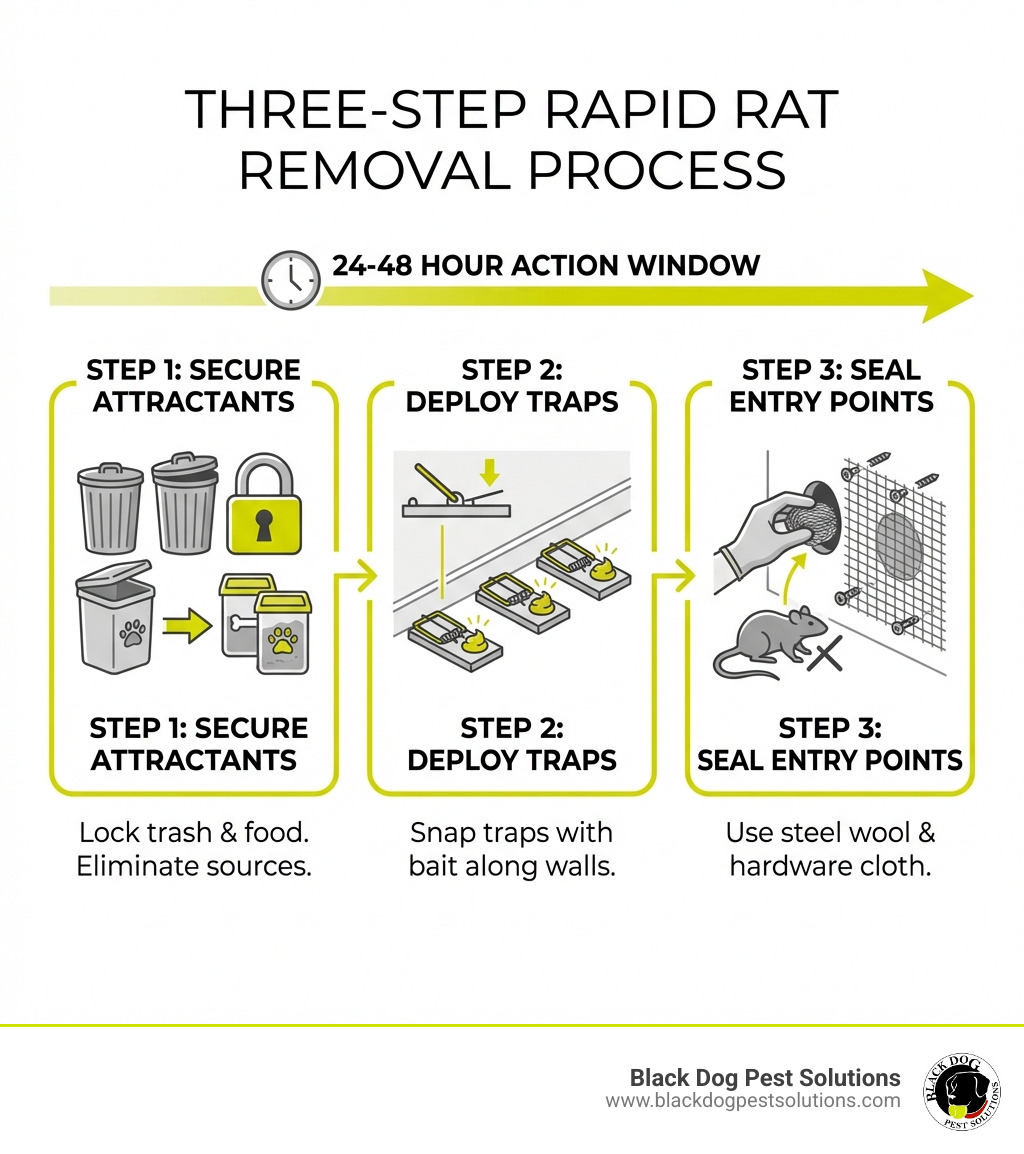
The best way to get rid of rats fast is to act immediately by removing food sources, deploying traps strategically, and sealing entry points—all within the first 24-48 hours of spotting signs of activity.
Quick Action Plan:
- Remove Attractants – Secure trash, pet food, and fallen fruit; fix water leaks
- Deploy Traps – Place snap traps or electronic traps along walls with peanut butter bait
- Seal Entry Points – Close all gaps larger than 1/2 inch with steel wool and caulk
Finding a rat is shocking. They carry numerous diseases and can have six to seven babies every 21 days, meaning a small problem can become a massive infestation in weeks.
Beyond health risks, rats cause serious damage. They chew through electrical wiring (a fire hazard), contaminate food, and leave up to 70 droppings daily. Their teeth grow 5 inches per year, so they constantly gnaw on wood, drywall, and even pipes.
The math is frightening: a rat population can multiply tenfold in just 15 weeks. Every day you wait allows them to cause more destruction.
I’m Mat Ledyard, owner of Black Dog Pest Solutions in Avon, Ohio. Since 2005, I’ve learned that the best way to get rid of rats fast is an integrated approach that targets their food, traps them efficiently, and locks them out permanently. Speed is everything.
Signs You Need to Act Fast: Identifying a Rat Infestation
To tackle a rat problem, you first need to confirm you have one. Rats are stealthy but leave tell-tale signs. If you see these, act swiftly.
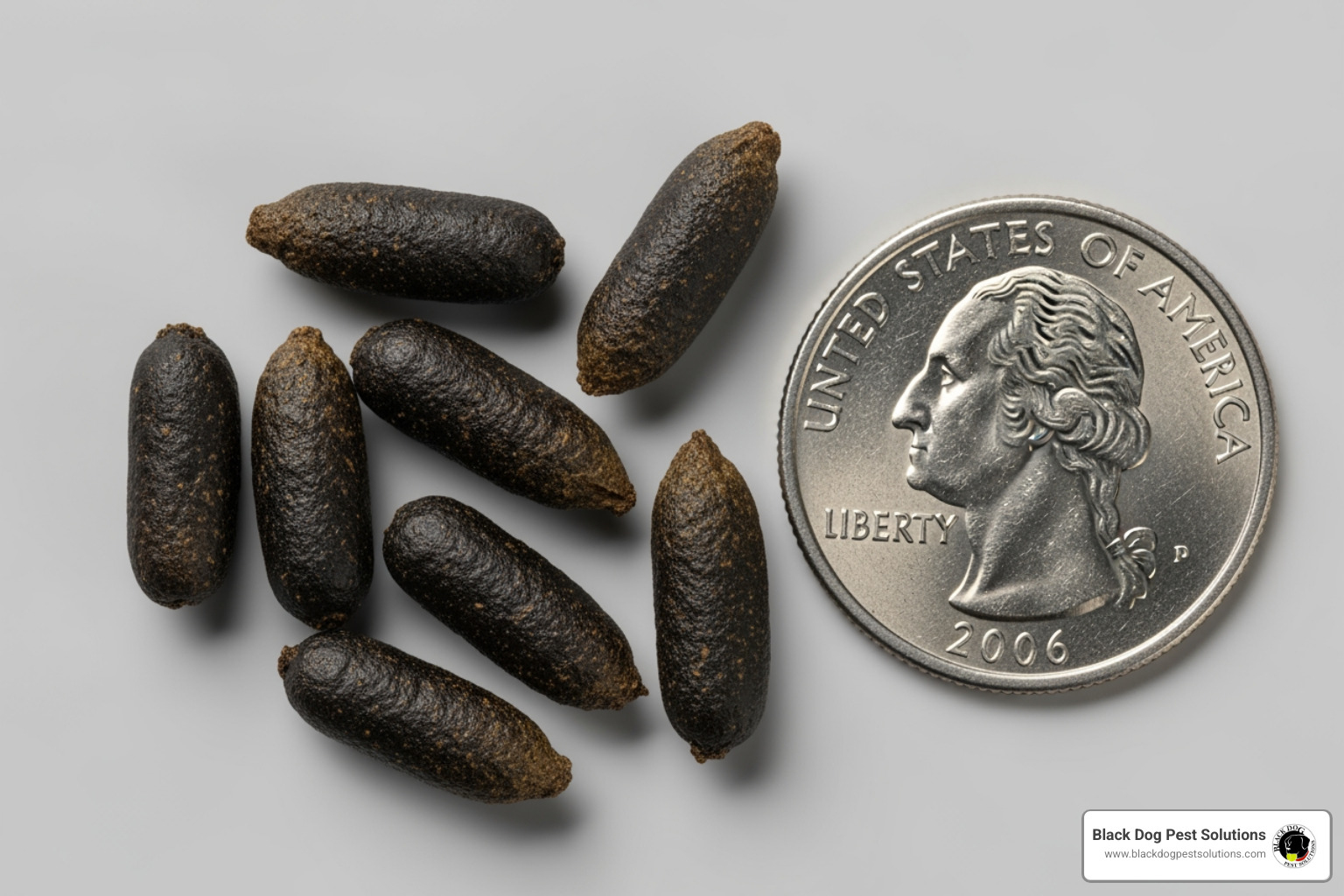
- Droppings: This is the most common sign. Rat droppings are dark, rice-like pellets. Norway rat droppings are larger (19mm, 3/4 inch) with blunt ends; roof rat droppings are smaller (13mm, 1/2 inch) with pointed ends. Found near food or along runways, a large amount indicates a serious problem, as a single rat can leave 70 droppings a day.
- Gnaw Marks: Rats constantly gnaw to file their incisors. Look for rough marks on wood, plastic, pipes, and wiring. These are larger than mouse gnaw marks. Chewed wiring is a significant fire hazard.
- Greasy Rub Marks: As rats use the same paths, oils from their fur leave dark, greasy smudges along walls and baseboards. These marks indicate active rat runways.
- Rat Burrows: Look for 2- to 4-inch wide holes in your yard or near your foundation. These burrows, often under vegetation, serve as nests and tunnel entrances. Smooth edges suggest active use.
- Noises in Walls or Attics: As nocturnal pests, rats cause scratching, scurrying, or gnawing sounds from walls, ceilings, or attics, especially at night.
- Pet Agitation: Pets often detect pests first. If your dog or cat is agitated, staring at walls, or sniffing obsessively at certain spots, they may be sensing rats.
- Ammonia-like Odor: A strong, stale, ammonia-like smell, especially in enclosed areas, indicates rat urine and a large infestation.
For a more comprehensive look at pest signs, check out our guide on Do You Have a Pest Problem? Key Signs Every Owner Must Know.
Distinguishing Rats from Mice
Knowing if you have rats or mice is crucial, as their behaviors and the size of entry points they can exploit differ. Here’s a quick comparison:
| Feature | Rats (e.g., Norway Rat, Roof Rat) | Mice (e.g., House Mouse) |
|---|---|---|
| Size | Large, often over 15 inches long (including tail), weighing up to 18 oz. | Small, typically 5-8 inches long (including tail), weighing 0.5-1 oz. |
| Droppings | Larger (1/2 to 3/4 inch), blunt or pointed ends, rice-like. | Smaller (1/4 inch), oval, often mistaken for sprinkles. |
| Snout | More blunt or rounded. | Triangular and pointed. |
| Ears | Smaller in proportion to head, usually hairy. | Larger in proportion to head, floppy, less hairy. |
| Tail | Thick, scaly, often hairless, shorter than body for Norway rats, longer than body for Roof rats. | Thin, hairy, usually as long as or longer than body. |
| Entry Point Size | Can squeeze through openings as small as 1/2 inch (the diameter of a thumb). | Can squeeze through openings as small as 1/4 inch (the diameter of a pinky finger). |
| Gnaw Marks | Larger, more noticeable, often on wood, plastic, and wiring. | Smaller, finer, often on cardboard, food packaging. |
| Behavior | Often more cautious (neophobic), travel established runways. | More curious, explore new areas readily, timid. |
| Nesting | Burrows in ground, under structures, attics, dense vegetation. | Hidden nests in walls, cabinets, attics, often using shredded materials. |
Understanding these distinctions helps us tailor our approach. For more detailed information on these common pests, you can visit our dedicated pages on Rats and Mice.
The Best Way to Get Rid of Rats Fast: A 3-Step Rapid Response Plan
When speed is critical, an integrated approach is best. This isn’t just about killing rats; it’s about making your property inhospitable to them for good. Our 3-step rapid response plan involves removing attractants, strategic trapping, and fortifying your home.
Step 1: Immediately Remove All Rat Attractants
Rats need food, water, and shelter. Your home might be unintentionally providing them. The best way to get rid of rats fast starts by removing these resources. Every leaky faucet or open trash can is an invitation.
- Eliminate Food Sources:
- Secure Trash Cans: Use sturdy trash cans with tight, chew-proof lids. Secure lids with bungee cords if needed. Never leave garbage bags outside unsecured.
- Manage Pet Food: Don’t leave pet food out overnight. Store pet food and birdseed in sealed, chew-proof containers (metal or thick plastic). Clean up pet waste daily, as it can also attract rats.
- Remove Fallen Fruit & Berries: Harvest ripe produce and clear fallen fruit from the ground promptly. Rotting fruit attracts rats.
- Bird Feeders: Bird feeders are notorious rat attractants. Consider removing them temporarily or using rodent-proof feeders with spill trays.
- Compost Bins: Use enclosed, pest-proof compost bins with tight lids. Avoid adding meat, dairy, or cooked foods.
- Remove Water Sources:
- Fix Leaky Pipes: Repair dripping outdoor faucets and other plumbing leaks immediately.
- Empty Standing Water: Empty standing water from pet bowls, bird baths, and saucers nightly. Keep gutters clean and cover pools.
- Eliminate Shelter (Hiding Places):
- Clear Yard Clutter: Remove yard clutter like woodpiles and old equipment. Stack firewood on stands at least 12-18 inches off the ground and away from your home.
- Trim Vegetation: Mow your lawn and trim vegetation away from your foundation and roof. Rats use branches to access your home. Keep a clear perimeter around the building.
- Secure Outdoor Structures: Block access under decks and sheds with wire mesh. Inspect and seal old outbuildings.
Removing these attractants makes your property less appealing, forcing rats to go elsewhere. For more insights on what attracts rodents, you can read about 7 Foods that Invite Rats and Mice to Your Home.
Step 2: The best way to get rid of rats fast using Traps
After making your property less inviting, the next step is removing existing rats. While poisons pose risks to pets, children, and wildlife, traps offer fast, targeted removal with proof of capture.
- Types of Traps for Rapid Removal:
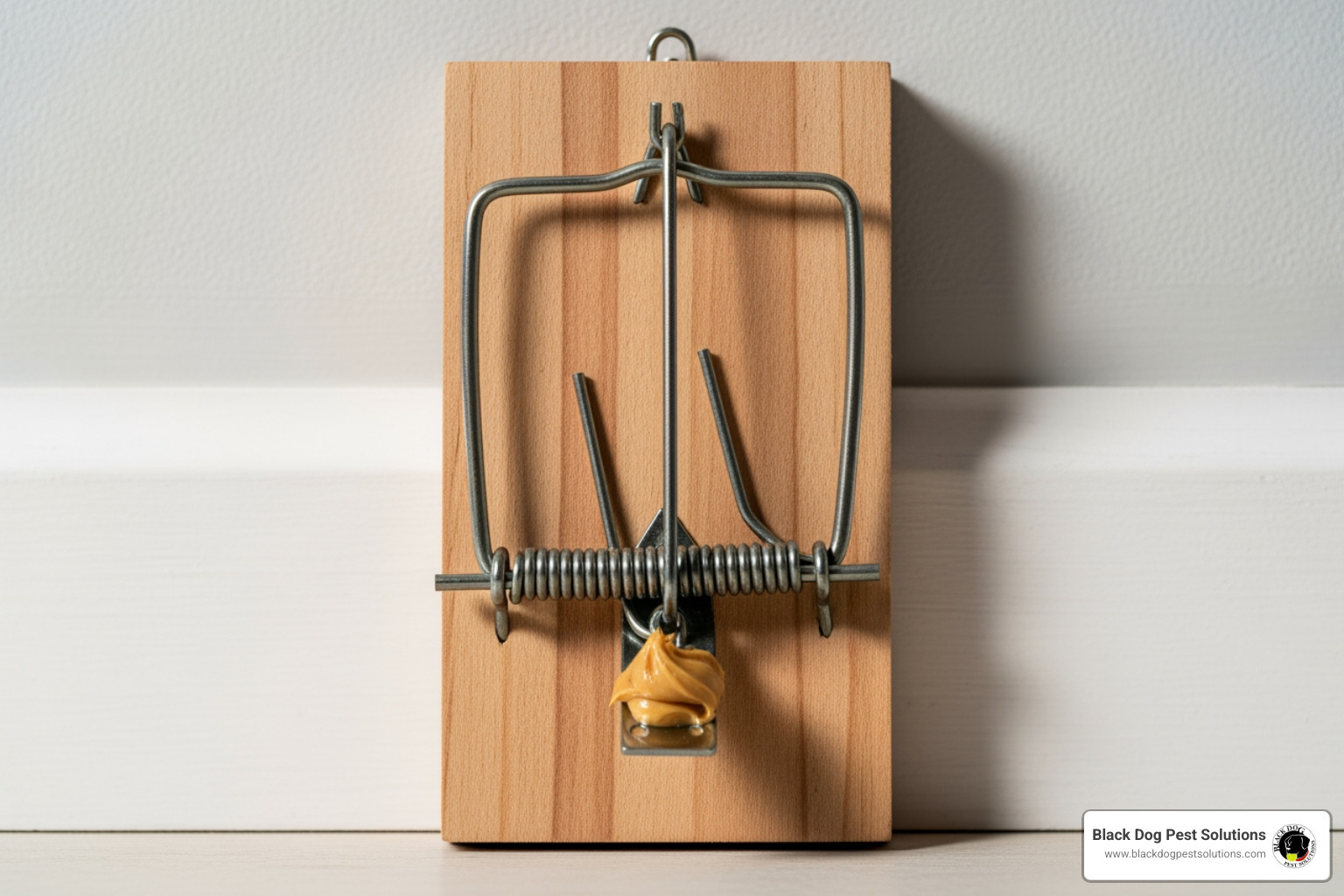
- Snap Traps: A classic for a reason—they are highly effective and offer immediate, humane results.
- Electronic Traps: These deliver a high-voltage shock, killing rats quickly and cleanly. They are easy to empty and often have indicator lights.
- Bait Stations (with Rodenticide): If using rodenticides, always deploy them in tamper-resistant bait stations to protect children and pets. We recommend professional handling of rodenticides due to the risks of secondary poisoning.
- Strategic Trap Placement: Rats are wary but creatures of habit, often scurrying along walls.
- Along Runways: Place traps along walls or fences where you’ve seen rat activity. Rats travel with their bodies against a vertical surface.
- Right Angles: Place snap traps perpendicular to the wall, with the trigger facing it. This encourages the rat to step on the trigger.
- Concealed Areas: Target dark, undisturbed spots like behind appliances, in cabinets, or in corners of your attic or basement.
- High-Traffic Areas: Set multiple traps along main rat pathways. For heavy infestations, place traps every 10-15 feet. The first night is often the most successful.
- Using Proper Bait: Forget cheese. Rats prefer nuts and seeds.
- Peanut Butter: A top choice due to its strong scent and sticky consistency.
- Chocolate: Small pieces of chocolate or hazelnut spread are effective.
- Dried Fruit: Raisins or other dried fruits are appealing to rats.
- Small Amounts: Use only a pea-sized amount of bait to ensure the trap is triggered.
- Acclimation (Optional): For wary rats, place baited but unset traps for a few days before setting them.
- Safety First: Wear gloves when handling traps to avoid transferring your scent and for protection from diseases. Place traps out of reach of children and pets. Use tamper-resistant bait stations for rodenticides.
To avoid common pitfalls, make sure you’re not making these Common Trapping Mistakes to Avoid.
Step 3: The best way to get rid of rats fast by Securing Your Property
The final step is preventing new rats from entering. This is called exclusion and is essential for long-term control. Rats can squeeze through surprisingly small openings.
- The 1/2-Inch Rule: A rat can fit through any opening 1/2 inch (a thumb’s diameter) or larger. Your plan must seal all these potential entry points.
- Inspect Your Home’s Exterior: Walk around your foundation looking for cracks and gaps. Also check your roofline and eaves.
- Around Pipes and Utilities: Check where pipes and utility lines enter your home, as these often have gaps.
- Doors and Windows: Ensure doors and windows fit tightly. Install weatherstripping and door sweeps, including on garage doors.
- Effective Sealing Materials:
- Steel Wool: Pack stainless steel wool into small to medium-sized holes. Rats can’t chew through it. Seal over it with caulk to hold it in place.
- Hardware Cloth: For larger openings like vents, use heavy-gauge (19-gauge or better) hardware cloth with a 1/4-inch mesh. Secure it with screws. A buried L-shaped barrier can prevent burrowing.
- Sheet Metal: For large holes, use 26-gauge (or heavier) sheet metal.
- Caulk: Use durable caulk to seal smaller cracks over other materials.
- Secure Vents and Chimneys:
- Vents: Cover all vents with 1/4-inch metal screening or steel mesh.
- Chimneys: Ensure your chimney has a cap in good condition to keep rats out.
Securing your property creates a physical barrier, a critical investment in preventing future infestations. For more information, the Rodent Control Information from the CDC is an excellent resource.
Severe Infestations: When to Call for Professional Help
While our 3-step plan is effective, some infestations are too overwhelming, dangerous, or persistent for DIY methods. In these cases, the best way to get rid of rats fast is to call a professional.
- Signs of a Severe Infestation:
- Rats Seen in Daytime: Seeing rats during the day is a strong sign of a large population, as competition forces them into the open.
- Widespread Droppings and Damage: Abundant droppings, extensive gnaw marks, and significant property damage point to a severe problem.
- Frequent Sightings: Regularly seeing multiple rats inside and outside suggests an out-of-control population.
- Strong, Persistent Odors: A pervasive ammonia-like smell can indicate heavy urine saturation or dead rats in your walls.
- The Limits of DIY Methods: DIY methods can work for minor issues but often fail against large rat populations. Rats can learn to avoid traps, and DIY efforts may not address the root cause or full scope of the problem.
- Risks of Rodenticides: DIY use of rodenticides is risky. Poisons can harm pets, children, and wildlife through direct or secondary poisoning. Improper use can also lead to rats dying in your walls, causing terrible odors.
- Benefits of Professional Services: For a severe infestation, Black Dog Pest Solutions offers key advantages:
- Expertise: Our licensed technicians identify the rat species, assess the infestation’s severity, and locate all entry points and nests. We understand rat behavior and travel patterns.
- Speed: We use a systematic approach for rapid, effective control. We have access to professional-grade equipment and products for faster, more thorough elimination.
- Safety: We prioritize the safety of your family and pets. Our licensed technicians use products safely, often in tamper-resistant bait stations, and handle proper disposal of rodents.
- Long-Term Solutions: We focus on comprehensive exclusion to ensure rats don’t return. Our solutions are customized for your property and local environment.
For peace of mind with severe rat problems, professional help is invaluable. Our Residential Services are designed to protect your home. Learn more about local pests in our guide, What Cleveland Homeowners Need to Know About Pest Problems.
Frequently Asked Questions about Rapid Rat Removal
Are natural or DIY methods effective for getting rid of rats fast?
Natural and DIY methods are best as deterrents, but they are generally not effective for getting rid of rats fast during an active infestation.
- Natural Deterrents: Scents like peppermint oil or plants like mint are often suggested as deterrents. While rats may dislike these scents, they are not effective for eliminating an existing infestation where food and shelter are already established. They are best used for prevention.
- Prevention vs. Elimination: Natural deterrents won’t remove an established colony. They are best used after an infestation is cleared and your home is sealed to discourage new rats. They are not reliable for rapid removal.
- Slower Results: Relying on repellents gives rats more time to reproduce and cause damage. Passive deterrents are too slow for rapid removal.
- Best Used in Combination: Natural methods are most effective when combined with sanitation, trapping, and exclusion. They can add a layer of defense but shouldn’t be your primary response.
What are the risks associated with fast-acting rat removal methods?
While speed is critical, be aware of the risks of fast-acting methods.
- Risks to Non-Target Animals: Rodenticides (rat poisons) are the biggest concern, posing a threat to pets and wildlife through direct or secondary poisoning. A poisoned rat can transfer poison up the food chain. We advocate for using tamper-resistant bait stations and professional application.
- Risks to Pets and Children: Unsecured traps can injure pets or children. Accessible rodenticides are highly toxic. Always place traps and baits in inaccessible areas or use protective bait stations.
- Trap Injuries: Improper handling can cause minor injuries. Always wear gloves.
- Mitigation Strategies:
- Use Tamper-Resistant Bait Stations: These allow rats access to bait while keeping children and pets out.
- Proper Trap Placement: Placing traps in hidden areas reduces the risk of accidental contact.
- Professional Handling: Our technicians are trained in safe, effective pest control, minimizing risks by using the most appropriate and safe methods for your situation.
- Rat Bites: Rats can bite and transmit diseases. Over 15,000 bites are reported annually in the US. Avoid any interaction.
I saw one rat in my yard, should I be worried?
Yes, you should be worried if you see one rat. The old adage “where there’s one, there are more” is often true for rats.
- Rats are Social: Rats live in colonies. A single sighting usually indicates a larger, hidden population nearby.
- Rapid Reproduction: Rats reproduce alarmingly fast, with litters as quickly as every 21 days. A small group can become a large infestation in weeks, making the best way to get rid of rats fast much harder.
- Immediate Inspection: A single sighting should prompt an immediate inspection for other signs like droppings, gnaw marks, or burrows.
- Preventative Action: Seeing one rat is a clear warning. Take preventative measures: remove attractants, seal entry points, and set traps. Ignoring one rat can lead to a much bigger problem.
Conclusion
Dealing with rats requires a swift, integrated approach. The best way to get rid of rats fast is a 3-step plan: remove attractants, deploy traps, and secure your property. Speed is your greatest ally in preventing a small problem from becoming a severe infestation.
Rats pose significant health and property risks. Protecting your Northern Ohio home means acting decisively.
While DIY methods can be a starting point, severe infestations require professional expertise for safe, effective, and long-term prevention. At Black Dog Pest Solutions, we pride ourselves on fast, professional service and high customer satisfaction, as reflected in our 4.9/5.0-star Google rating.
For comprehensive and professional rodent control solutions custom to your Northern Ohio home or business, don’t hesitate to Contact Us today. Let us help you reclaim your space from these unwanted guests, fast and furiously.