
Why Box Elder Bug Control Matters for Your Home
Box elder bug control is essential when you see large numbers of these black-and-red insects clustering on your home’s exterior walls in fall or emerging indoors during warm winter days. Here’s what you need to know:
Quick Control Methods:
- Seal entry points – Caulk cracks around windows, doors, and foundations before fall
- Vacuum indoor bugs – Remove bugs inside with a vacuum and dispose of the bag immediately
- Spray exterior in late summer – Apply perimeter treatments when bugs first begin clustering
- Remove host trees – Consider removing seed-bearing female boxelder trees near your home
- Clean up seedpods – Rake and remove fallen seeds from beneath boxelder trees
Box elder bugs become a problem when they congregate in large numbers on south- and west-facing walls each fall, seeking warm shelter to overwinter. While they don’t bite, transmit disease, or cause structural damage, they do leave reddish stains on surfaces, emit an unpleasant odor when crushed, and can invade your living space by the dozens—or even hundreds—on sunny winter days. Most abundant during hot, dry summers followed by warm springs, adult box elder bugs can fly up to two miles from their food source, meaning even homes without nearby boxelder trees aren’t safe from invasion.
I’m Mat Ledyard, owner of Black Dog Pest Solutions in Avon, Ohio, and I’ve been helping Northern Ohio homeowners with box elder bug control and other seasonal pest issues since 2005. In this guide, I’ll walk you through the simple, proven steps to keep these nuisance pests out of your home for good.
Identifying Box Elder Bugs and Common Look-alikes
Before we can effectively manage box elder bugs, it’s crucial to know what we’re dealing with. These insects have distinct features that set them apart from other common household pests.
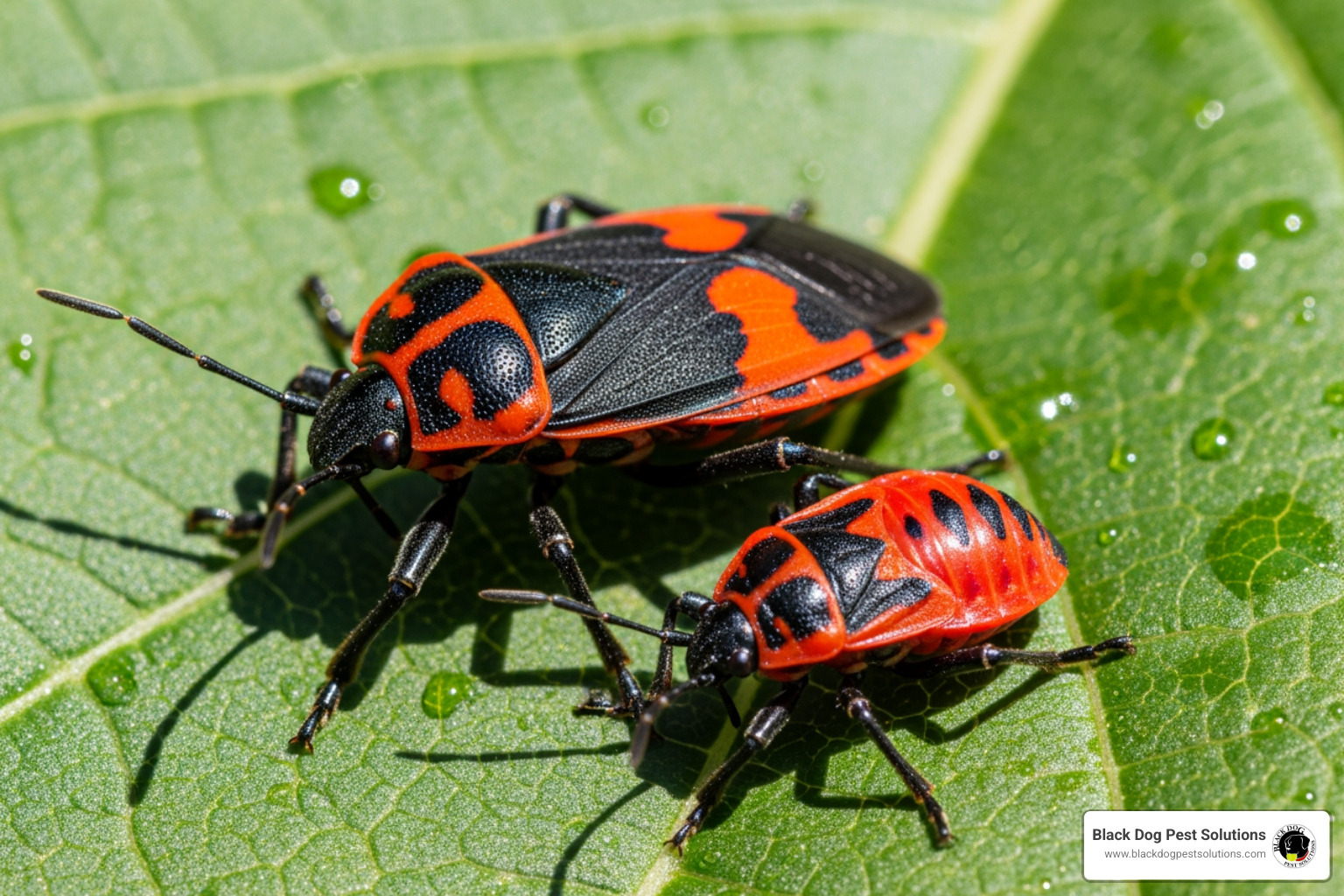
Adult box elder bugs are quite recognizable. They are typically about half an inch long and have a somewhat flattened, elongated oval shape. Their bodies are predominantly black, but they feature striking reddish or orange markings. Look closely, and you’ll often see three distinct red lines on their thorax, the segment behind their head, and fine red lines along the edges of their wings. When their wings are at rest, they lie flat over their backs, often forming a clear “X” pattern. Their abdomen also sports a reddish-orange hue, which can sometimes be seen.
The younger stages, known as nymphs, look quite different from the adults. When they first hatch, box elder bug nymphs are tiny, measuring about 1/16th of an inch, and are a vibrant, bright red color. As they grow, they go through several molts, gradually developing black wing pads and becoming darker red. The eggs, which are laid in the spring, start as a straw yellow color but quickly turn rusty red as the nymphs develop inside.
For a deeper dive into identifying these pests, you can explore our general guide on Pests or get more detailed insights on More on Boxelder Bug Identification.
How to Tell Box Elder Bugs Apart from Other Insects
It’s easy to mistake box elder bugs for other insects, especially those that also invade homes or have similar coloration. However, knowing their key characteristics can help us tell them apart.
| Characteristic | Box Elder Bug | Stink Bug | Milkweed Bug | Asian Lady Beetle |
|---|---|---|---|---|
| Appearance | Black with red/orange markings, 3 thoracic stripes, ‘X’ on back, flattened oval | Shield-shaped, various colors (brown, green, gray) | Orange/red with black markings, often hourglass shape | Orange/red with black spots, often M-shaped marking behind head |
| Size | ~1/2 inch long | ~1/2 to 3/4 inch long | ~1/2 inch long | ~1/4 inch long |
| Odor when crushed | Offensive, foul smell | Very strong, offensive smell | Mild, but present | Mild, but distinct |
| Staining | Reddish stains from feces or crushing | Can stain surfaces | Can stain surfaces | Yellowish stains from secretions |
| Mouthparts | Piercing-sucking | Piercing-sucking | Piercing-sucking | Chewing (predatory on aphids), but can bite defensively |
| Family | Rhopalidae (Scentless Plant Bugs) | Pentatomidae (Shield Bugs) | Lygaeidae (Seed Bugs) | Coccinellidae (Lady Beetles) |
Box elder bugs are “true bugs,” belonging to the family Rhopalidae, often called “scentless plant bugs.” This means they have piercing-sucking mouthparts, which they use to feed on plant sap and seeds. While they are technically “scentless” compared to some other bugs, they do emit an offensive, foul odor when crushed. This, along with the reddish stains their crushed bodies or feces can leave on surfaces like curtains, walls, or clothing, is one of their most annoying traits.
Stink bugs, as their name suggests, are notorious for releasing a very strong, unpleasant odor when disturbed. They are also shield-shaped, unlike the more elongated box elder bug. Milkweed bugs, while similar in size and color, typically have a more distinct orange and black pattern, often resembling an hourglass. Asian lady beetles are often confused with ladybugs but are typically more orange than red and can also stain surfaces with a yellowish secretion when crushed, and they may bite defensively, unlike box elder bugs. Understanding these differences helps us accurately identify the pest and apply the most effective box elder bug control strategies.
Understanding Box Elder Bug Behavior and Seasonal Patterns
To effectively manage box elder bugs, we need to understand their annual rhythm and what drives their behavior. Their life cycle and seasonal movements are key to knowing when and where to target our control efforts.
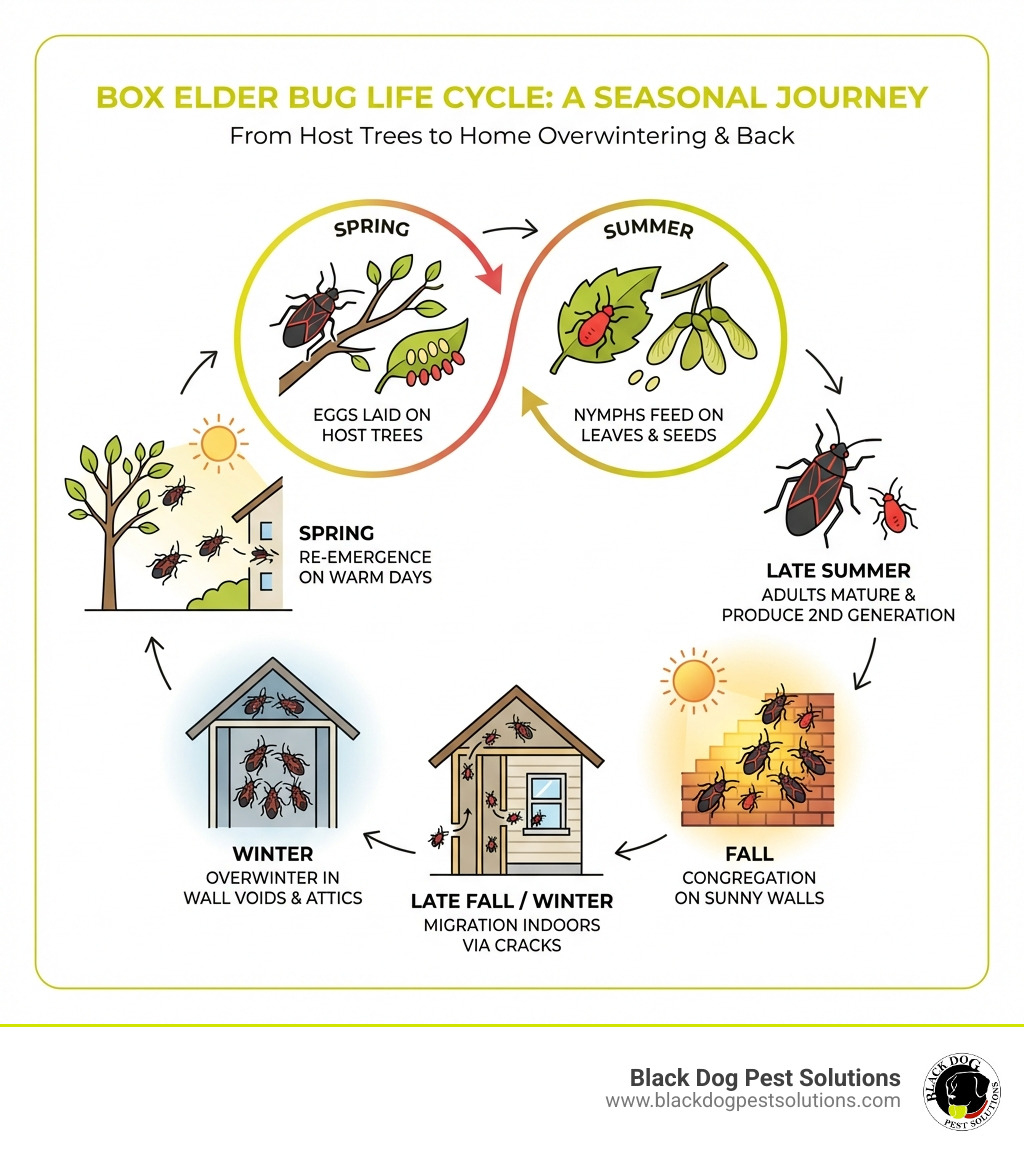
The box elder bug life cycle typically begins in the spring. After overwintering as adults, they emerge in late April to early May. Female box elder bugs lay their straw yellow eggs, which soon turn rusty red, on the leaves and bark of host trees, primarily female box elder trees, but sometimes also on ash and maple.
Throughout the summer, these eggs hatch into bright red nymphs. These nymphs go through five molting stages, or instars, feeding on the developing leaves, flowers, and seeds of their host trees. As summer progresses, they mature into adults, and depending on the weather conditions, there can be one to three generations per year. Hot, dry summers followed by warm springs tend to lead to larger populations.
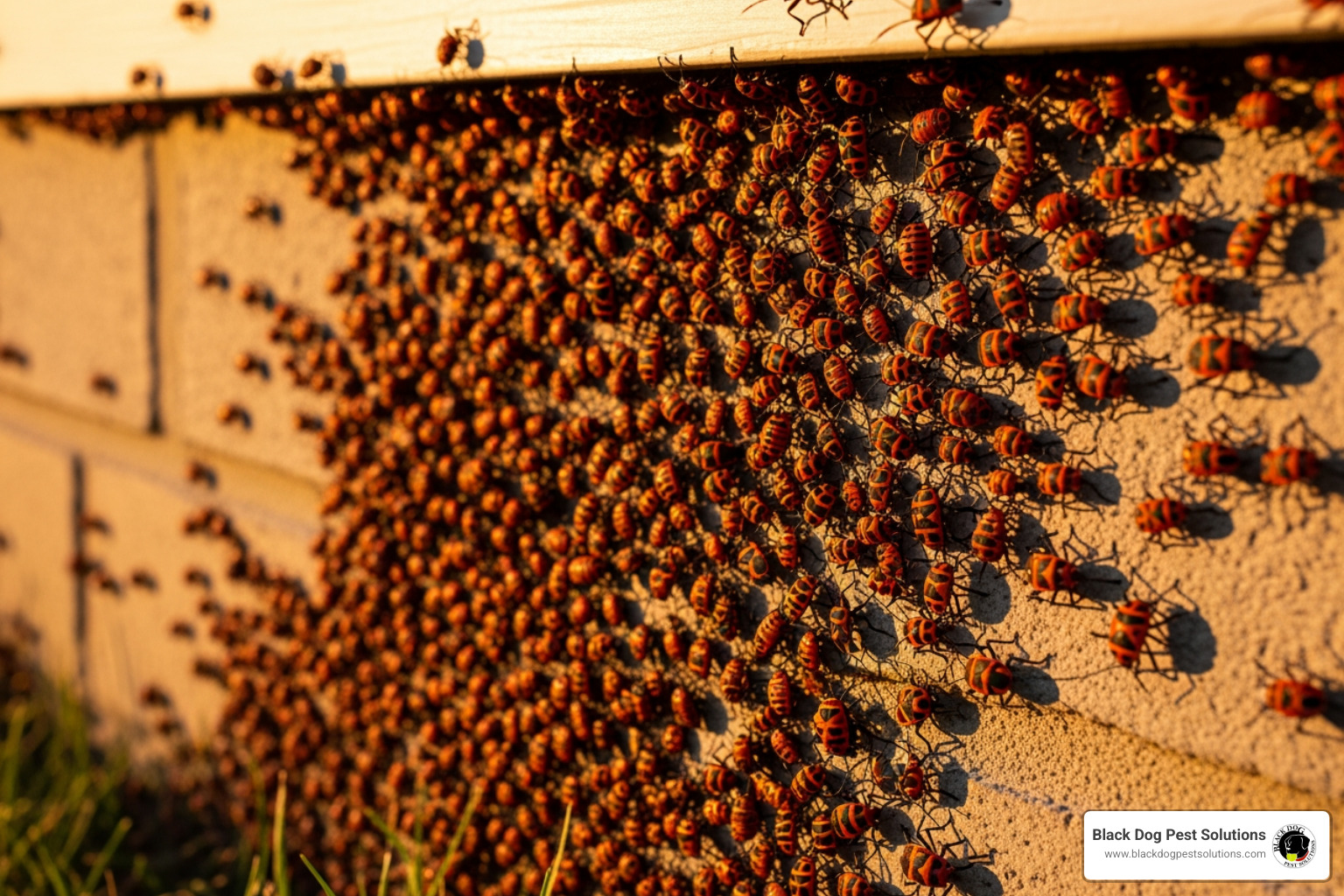
The real nuisance begins in the fall. As temperatures start to drop, adult box elder bugs begin to congregate in large numbers on the sunny, warm exterior walls of homes and other buildings. They are strongly attracted to buildings with a large southern or western exposure, as these surfaces absorb and reflect the most heat. They are seeking warm, protected shelter to overwinter, escaping the harsh Northern Ohio winter. These clusters can be quite startling, sometimes covering entire sections of a house.
From these congregation points, they look for any tiny crack or crevice to enter our homes. They can squeeze through gaps around windows, doors, utility pipes, foundations, and even under siding or roof lines. Once inside, they typically find their way into attics, wall voids, or other hidden spaces, where they remain mostly inactive during the coldest months.
In the spring, as the weather warms up, these overwintering adults awaken. They become active and attempt to find their way back outside to feed and reproduce, which is why we often see them emerging inside our homes, crawling on windowsills and walls. This seasonal re-emergence is a common occurrence for homeowners in Northeastern Ohio. For more insights into how various pests behave with the changing seasons, check out our guide on How to Tackle Northeastern Ohio’s Most Common Spring Pests.
Signs of a Box Elder Bug Infestation
Recognizing the signs of a box elder bug infestation early can make box elder bug control much easier. Here’s what to look for:
- Large Groups on Exterior Walls: This is perhaps the most obvious sign. In late summer and early fall, you’ll see dozens, hundreds, or even thousands of box elder bugs clustering together on the sunny, south or west-facing exterior walls of your home, porch, or deck. They are simply trying to soak up the last bit of warmth before winter.
- Bugs Appearing Indoors: While they don’t reproduce inside, finding box elder bugs crawling around your living space is a clear sign they’ve found a way in. This is most common during warm spells in winter or early spring, as they wake up from dormancy and seek to exit.
- Activity on Sunny Days in Winter/Spring: If you notice box elder bugs crawling on windowsills, curtains, or walls, especially on bright, sunny winter or early spring days, it means they’ve successfully overwintered inside your home and are now trying to get back outside.
- Stains from Feces: Box elder bugs can leave reddish-orange fecal spots on light-colored surfaces like walls, curtains, and furniture. This is particularly noticeable if they’ve been congregating in one area for a while.
- Unpleasant Odor When Crushed: If you accidentally crush a box elder bug, you’ll likely notice a distinct, offensive odor. This is a tell-tale sign of their presence.
- Finding Them in Window Sills and Around Entry Points: These bugs often accumulate in window sills, door frames, and around other potential entry points, both inside and out, as they search for ways to enter or exit your home.
- Entry Through Cracks: A constant influx of box elder bugs, even in small numbers, suggests there are unsealed cracks or gaps in your home’s exterior that they are using as access points.
If you observe any of these signs, it’s time to consider implementing box elder bug control measures to protect your home from these nuisance invaders.
Your Complete Guide to Box Elder Bug Control
Now that we understand box elder bugs and their behavior, let’s dive into the most effective management methods. Our approach focuses on prevention, non-chemical solutions, and chemical treatments when necessary.
Step 1: Prevent Entry with Exclusion Methods
The absolute best way to deal with box elder bugs is to keep them out of your home in the first place. This is where exclusion methods shine. We recommend tackling these tasks before the end of August, well before the bugs start their fall migration. Think of it as “pest-proofing” your home.
- Seal Cracks and Gaps: Carefully inspect your home’s exterior for any cracks, crevices, or openings, even tiny ones as small as 1/8th of an inch. Pay close attention to areas around windows, doors, siding, utility pipes, behind chimneys, and underneath wood fascia. Use a good quality silicone or silicone-latex caulk to seal these gaps. For larger spaces, expandable spray foam or copper mesh can be effective.
- Repair Window and Door Screens: Check all window and door screens for any holes, tears, or damage. Repair or replace them promptly. Don’t forget screens on roof and soffit vents, and those covering bathroom and kitchen fans, as these can also be entry points.
- Install Door Sweeps and Weather-stripping: Ensure all exterior doors have tight-fitting door sweeps or thresholds at the bottom. This prevents bugs from crawling underneath. Similarly, apply weather-stripping around door and window frames to create a tight seal.
- Seal Utility Entry Points: Look for gaps around where cables, phone lines, utility wires, pipes, outdoor faucets, and dryer vents enter your home. Seal these areas thoroughly with appropriate sealants.
- Garage Door Seals: Install a rubber seal along the bottom of your garage door to prevent bugs from crawling under it.
- Check Different Materials: Pay special attention to areas where different building materials meet, such as where brick transitions to wood siding. These junctions often have small gaps that can be exploited by insects.
By taking these proactive steps, you’re building a strong defense against box elder bugs and many other unwelcome pests. Our Residential Services can provide expert assistance with identifying and sealing these vulnerable points.
Step 2: Effective Non-Chemical Box Elder Bug Control
If box elder bugs have gathered on your home or made their way inside, several effective non-chemical methods exist for box elder bug control. These methods are safe for your family and pets and are often our first line of defense.
- Vacuuming Indoor Bugs: For box elder bugs that have already made their way into your home, a vacuum cleaner is your best friend. Simply vacuum them up. We prefer this method over indoor chemical sprays because it avoids introducing pesticides into your living space. After vacuuming, immediately remove the vacuum bag or empty the canister outdoors, as bugs can sometimes crawl out. For extra precaution, you can freeze the vacuum bag overnight to ensure all bugs are dead before disposal.
- Soapy Water Spray: For clusters of bugs on exterior walls, trees, or even inside (if you prefer not to vacuum), a simple solution of dish soap and water can be very effective. Mix about 3-4% mild dish soap (around 5-10 drops per gallon of water) in a spray bottle. Spray this directly onto the bugs; the soap breaks down their exoskeletons, killing them on contact. This solution is generally safe for plants, but it’s always a good idea to test a small, inconspicuous area first.
- Drowning with Water: For large congregations on exterior walls, a strong stream of water from a garden hose can dislodge and drown them. You can spray them down into trays of water placed below, where they will be trapped and perish. This also helps wash away any pheromones that might attract more bugs to the spot.
- Removing Host Trees (Female Box Elder Trees): Box elder bugs predominantly feed and reproduce on female (seed-bearing) box elder trees. Large numbers of these bugs usually occur only on female trees. If you have female box elder trees close to your home, especially within 50 feet, removing them can significantly reduce the local box elder bug population. If you’re planting new trees, consider choosing male box elder trees instead.
- Clearing Fallen Seed Pods: Box elder bugs also feed on fallen seeds. Regularly mow or rake up any fallen seed pods from beneath and near box elder trees. This removes a food source and can deter bugs from congregating in your yard.
- Removing Debris Near the Foundation: Box elder bugs seek shelter in various places as winter approaches, including wood stacks, leaf piles, rock piles, and general debris. Keeping a clean, debris-free strip (6 to 10 feet wide) around your home’s foundation eliminates potential hiding spots and makes your property less attractive to them.
These non-chemical methods are often sufficient for effective box elder bug control and are crucial for an integrated pest management approach. You can find more comprehensive information on non-chemical control methods from the University of California’s IPM program: More on non-chemical control.
Step 3: When to Consider Chemical Box Elder Bug Control
While we prioritize non-chemical methods and exclusion, chemical treatments are sometimes necessary for effective box elder bug control, especially for severe infestations or when bugs consistently breach your home’s defenses.
The best time for chemical treatment is in late summer and early fall, specifically when box elder bugs are first clustering on the exterior of buildings. This is our prime opportunity to intercept them before they attempt to move indoors. An exterior perimeter spray, targeting the sunny walls and around entry points where bugs congregate, can be very effective in reducing their numbers.
However, it’s important to note that insecticide sprays are generally not recommended for box elder bug management as a first resort. If you do consider chemical treatment, we strongly recommend professional application. Licensed pest control operators, like us at Black Dog Pest Solutions, have access to more effective products (such as synthetic pyrethroids) and the expertise to apply them safely and strategically. We ensure that treatments are applied correctly, focusing on congregation areas, and taking care to avoid runoff into storm drains.
Risks of Pesticides and Why Indoor Spraying is Not Recommended:
- Environmental Impact: While modern pesticides are designed to be safer, any chemical application carries some environmental risk. Professional application minimizes this risk by ensuring precise targeting and adherence to safety protocols.
- Limited Residual Effect: Insecticides applied outdoors can have a significantly decreased residual effect due lasting only several days to a week due to breakdown from sunlight and weather. This means repeated applications might be necessary for persistent problems.
- Indoor Use is Problematic: We generally advise against using insecticides inside your home for box elder bugs. Once bugs have entered wall voids or attics, spraying insecticides in these areas is often ineffective and can lead to secondary problems. Dead bugs within wall voids can attract other pests, such as carpet beetles, which then might feed on woolens, stored goods, or other organic materials in your home. Aerosol foggers might kill visible bugs in living areas but won’t prevent more from emerging from hidden spaces. Spraying into cracks and crevices indoors is also not recommended as it doesn’t address the root cause and can leave chemical residues in your home.
For comprehensive and timely pest solutions, especially when dealing with persistent box elder bug issues, explore our Seasonal Services. We can help you determine the most appropriate and safest course of action for your Northern Ohio home.
Frequently Asked Questions About Box Elder Bugs
It’s natural to have many questions when dealing with these common nuisance pests. Here, we address some of the most frequently asked questions about box elder bugs.
Are box elder bugs harmful to humans or pets?
This is one of the most common concerns, and we’re happy to reassure you: box elder bugs are not harmful to humans, your family, or your pets. They are considered nuisance pests and pose no significant health risk.
- Do not transmit disease: They are not known to transmit any diseases to humans or animals.
- Do not bite: Box elder bugs do not sting or typically bite. While there are rare reports of their piercing-sucking mouthparts causing a minor, defensive puncture if they feel threatened, it’s not a common occurrence and usually results in only slight irritation, similar to a mosquito bite. They certainly don’t feed on blood or bite aggressively.
- No structural damage: They do not cause any structural damage to homes or buildings.
- Nuisance pest: Their primary impact is that of being a nuisance—they are annoying when they invade our living spaces in large numbers.
So, while their sheer numbers might be alarming, rest assured that box elder bugs are mostly just an irritating presence.
What kind of damage do they cause to homes and plants?
While box elder bugs are primarily a nuisance, they can cause some minor damage that’s good to be aware of:
- No structural damage to homes: We want to emphasize this again: box elder bugs do not chew wood, tunnel, or cause any structural harm to your house. They are simply seeking shelter.
- Can stain surfaces with feces: When they congregate in large numbers, particularly indoors, their droppings can leave small, reddish-orange fecal spots on light-colored surfaces like walls, curtains, and furniture. If crushed, their bodies can also leave reddish stains, which is why we recommend vacuuming them rather than squashing them.
- Minor plant damage: To plants, the damage is usually minor. Both nymphs and adults feed on the sap of developing leaves, flowers, and seeds of box elder, maple, and ash trees using their piercing-sucking mouthparts. This feeding can occasionally cause minor deformities in fruits and leaves or yellow leaf discoloration (chlorosis). They have also been known to cause puckering or distortion of fruits like plums, apples, pears, peaches, cherries, and grapes in commercial orchards, but this is less common in a home garden setting.
- Primarily a nuisance: Despite these minor issues, their biggest impact remains their tendency to invade homes, making them a significant nuisance rather than a destructive pest.
Do box elder bugs reproduce inside the house?
Another common misconception is that box elder bugs will set up a breeding colony inside your home. We’re here to clarify: box elder bugs do not reproduce indoors.
- No indoor reproduction: They do not lay eggs or breed inside houses, attics, or wall voids. They are simply seeking shelter to overwinter.
- Do not lay eggs indoors: The eggs are laid on host trees in the spring, and the nymphs develop outdoors throughout the summer. They require outdoor conditions and food sources to complete their life cycle.
- All bugs seen in winter entered in the fall: Any box elder bugs you see crawling around inside your home during the winter or spring are adults that entered the previous fall. They are waking up from dormancy and trying to find their way back outside.
- Will eventually die inside: If trapped indoors, they will eventually die from dehydration or starvation, as there are no suitable food sources for them inside your home. They do not feed during their dormant overwintering period.
So, while finding them inside can be annoying, you don’t have to worry about them multiplying within your walls.
Your Partner in Pest-Free Living in Northern Ohio
Dealing with box elder bugs can be a persistent challenge for homeowners in Northern Ohio, especially in communities like Avon, Lorain, Elyria, Avon Lake, Bay Village, North Ridgeville, Westlake, Sheffield Village, Sheffield Lake, Vermillion, Huron, Sandusky, Medina, Grafton, Wellington, Oberlin, Amherst, North Olmsted, Lakewood, Strongsville, Cleveland, Brunswick, and Rocky River. We’ve seen how these nuisance pests can disrupt your peace of mind.
To summarize, the most effective box elder bug control strategies revolve around a few key principles:
- Prevention is Key: The best offense is a good defense. By implementing thorough exclusion methods—sealing up cracks, repairing screens, and installing door sweeps—you can drastically reduce the number of bugs that make it inside.
- Timely Action in Fall: Box elder bugs are attracted to buildings with a large southern or western exposure, congregating on warm walls in late summer and early fall. This is the critical window for intervention, whether through non-chemical methods or targeted exterior treatments.
- Vacuuming Indoors: For any stragglers that do manage to get inside, prompt removal with a vacuum is the safest and most effective solution.
- Consider Host Tree Management: If you have female box elder trees close to your home, managing them or clearing fallen seeds can help reduce the source of the problem.
For persistent or large-scale infestations, especially those that recur year after year, professional help ensures complete and lasting management. At Black Dog Pest Solutions, we understand the unique pest challenges faced by our neighbors in Northern Ohio. We offer comprehensive solutions, distinguished by fast service, professionalism, and a commitment to high customer satisfaction. Our team is equipped to assess your specific situation, identify entry points, and apply the most effective and responsible box elder bug control strategies custom to your home.
Don’t let box elder bugs take over your living space. We’re here to help you reclaim your home and enjoy pest-free living. Contact us for comprehensive pest solutions today, and let us put our expertise to work for you.