
Why Integrated Pest Management for Mice Works Better Than Quick Fixes
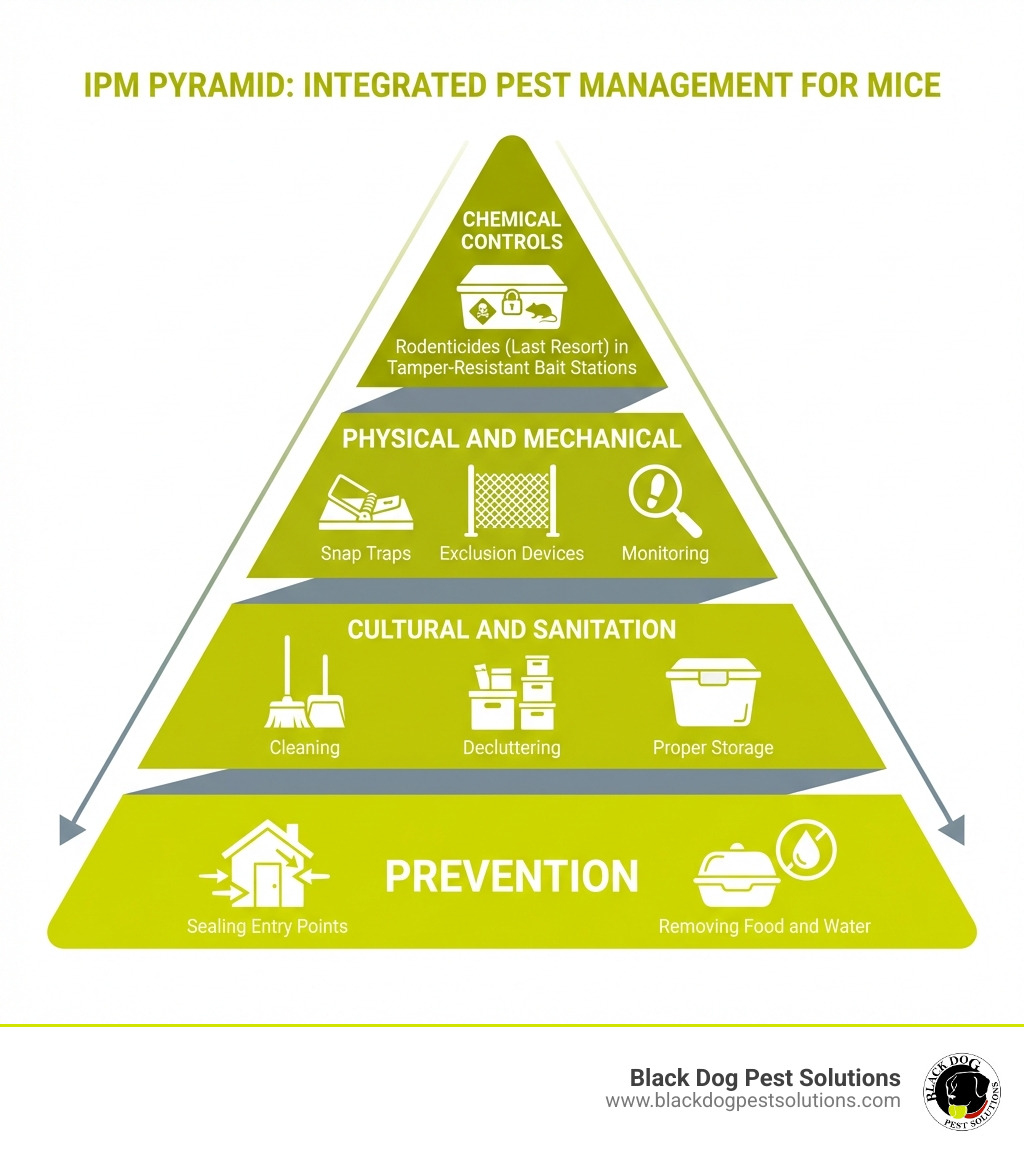
Integrated pest management for mice control is a proven, science-based approach that stops infestations at the source instead of just treating symptoms. Unlike traditional methods that rely heavily on poisons, IPM combines prevention, monitoring, exclusion, and targeted treatments to keep mice out for good.
What is Integrated Pest Management (IPM) for Mice?
- Prevention first: Seal entry points and remove food sources before mice move in
- Monitoring: Inspect regularly for droppings, gnaw marks, and signs of activity
- Exclusion: Close gaps as small as a dime using steel wool, caulk, and door sweeps
- Physical control: Use snap traps and other mechanical methods along walls and in active areas
- Chemical control (last resort): Apply rodenticides only when needed, using tamper-resistant bait stations
- Evaluation: Track results and adjust tactics to prevent future problems
Why IPM is the smarter choice:
It’s safer for your family and pets, reduces pesticide exposure, and solves the root problem instead of creating a cycle of reapplication. Research shows IPM significantly lowers mouse populations and allergen levels compared to pesticide sprays alone.
Mice are more than a nuisance. They contaminate food, trigger asthma in children, gnaw on electrical wiring (a fire hazard), and spread diseases like salmonella and hantavirus through their droppings and urine. A single female mouse can have 5 to 10 litters per year, with up to 6 pups each time. That means a small problem becomes a big one fast.
Traditional pest control often means scheduled pesticide applications—spray, wait, repeat. But mice are smart. They adapt. They squeeze through openings as small as a dime. They nest in walls, behind appliances, and in cluttered storage areas. Poison alone won’t stop them from coming back, and it poses serious risks to pets, children, and wildlife like hawks and owls that eat poisoned rodents.
That’s where Integrated pest management strategies come in. IPM flips the script. Instead of reacting to mice after they’re inside, you make your home or business a place they can’t enter or survive in. You combine multiple tactics—sealing holes, removing food and water, setting traps strategically, and using rodenticides only when necessary and safely. You monitor, adjust, and prevent future invasions.
I’m Mat Ledyard, owner of Black Dog Pest Solutions in Avon, Ohio, and I’ve been solving pest problems since 2005. Over nearly two decades in the field, I’ve seen how Integrated pest management for mice control delivers lasting results for homeowners and businesses across Northern Ohio—without the risks of overusing chemicals or the frustration of recurring infestations.
Step 1: Inspection and Identification – Know Your Enemy
Before we can effectively tackle a mouse problem, we need to know what we’re up against. Identifying the pest correctly is a cornerstone of Integrated pest management strategies. Are we dealing with mice, or perhaps another type of rodent? This distinction is crucial because different species have different habits and require custom control methods.
The house mouse (Mus musculus) is one of the most common and troublesome rodents we encounter in Northern Ohio homes and businesses. They are small, typically weighing about 1/2 ounce and measuring 5 to 7 inches long, including their 3- to 4-inch tail. Their fur is usually light brownish to gray, with relatively large ears and small, black eyes.
Signs of a mouse problem are often subtle at first but become more obvious as populations grow. Here’s what to look for:
- Droppings: Mouse droppings are pointed, about the size of a grain of rice (4-7 mm long). You’ll find them along walls, in cupboards, under sinks, or near food sources. Fresh droppings are dark and soft; older ones are hard and crumbly.
- Gnaw Marks: Mice constantly gnaw to keep their incisors worn down. Look for small, parallel grooves on wood, plastic, food packaging, or electrical wires. This can cause significant damage and even fire hazards.
- Nests: Mice build nests from shredded materials like paper, fabric, insulation, or cardboard. These are often found in secluded, undisturbed areas like attics, basements, wall voids, or behind appliances.
- Musky Odor: A strong, stale, musky odor, especially in enclosed areas, can indicate a large or long-standing mouse infestation. This smell comes from their urine.
- Rub Marks: Over time, mice traveling along walls or pipes will leave dark, greasy rub marks from the oil and dirt on their fur.
- Tracks: In dusty areas, you might see tiny footprints and tail drags. A sprinkle of flour or talcum powder can help reveal these tracks overnight.
- Sightings: While primarily nocturnal, seeing a mouse during the day can indicate a large population, food scarcity, or that a pregnant female is foraging.
For a more comprehensive look at identifying pest issues, check out our guide on Do You Have a Pest Problem? Key Signs Every Owner Must Know.

How to Tell if You Have Mice or Rats
It’s easy to confuse mice with young rats, but knowing the difference is vital for effective control. Here’s a quick comparison:
| Characteristic | House Mouse | Norway Rat (Brown Rat) |
|---|---|---|
| Size | 5-8 inches (body + tail), 1/2-1 oz weight | 13-18 inches (body + tail), 10-17 oz weight |
| Droppings | Small, pointed ends, grain of rice size | Larger, blunt ends, small raisin size |
| Snout | Triangular, pointed | Blunter |
| Ears | Large, floppy | Small, covered by fur |
| Tail | Long, thin, mostly hairless, same length as body and head | Shorter than body and head, thick, scaly, sparsely haired |
| Location | Primarily indoors, rarely ventures far from nest (30 ft) | Indoors and outdoors, often burrowers, travel further (150 ft) |
| Entry Hole | Dime-sized or 1/4 inch | Quarter-sized or 1/2 inch |
In Northern Ohio, we commonly encounter house mice and brown rats (also known as Norway rats). Deer mice are also present, particularly in rural areas, and are important to distinguish due to their potential to carry Hantavirus. Deer mice have larger eyes, larger ears, and a distinct white underside with a clear line separating their dark back from their white belly, and a furred tail. House mice are generally uniform gray/brown.
Step 2: Prevention – Making Your Home Uninviting
Once we’ve identified our foe, the next critical step in Integrated pest management is prevention. This means making your home or business in Avon, Cleveland, or anywhere across our Northern Ohio service area as unappealing and inaccessible to mice as possible. It’s about proactive measures rather than waiting for an infestation to take hold.
Mice are constantly looking for food, water, and shelter. By eliminating these attractants and blocking their entry, we create a long-term solution that reduces the need for reactive treatments. This is especially important in urban environments like Cleveland, where abundant food, water, and shelter can lead to thriving rodent populations. Community efforts, like encouraging neighbors to also practice good sanitation and exclusion, can significantly amplify the effectiveness of individual prevention strategies.
Exclusion: Sealing Entry Points for Good
Mice are incredibly adept at finding their way indoors. We often joke that if a mouse can get its head through an opening, its body can follow. And since a mouse’s skull is roughly the size of a dime (or a pencil’s diameter), they can squeeze through incredibly tiny gaps—as small as 1/4 inch! Rats, being larger, require a quarter-sized hole or 1/2 inch.
To effectively exclude mice, a thorough inspection of your property, from the foundation to the roofline, is essential. We’re looking for any crack, crevice, or opening that could serve as an entry point. Common culprits include:
- Gaps around utility lines (pipes, wires) entering the building.
- Cracks in foundations or exterior walls.
- Loose-fitting doors and windows, or gaps under garage doors.
- Unscreened vents or damaged screens.
- Openings around rooflines, eaves, and soffits.
Once identified, these entry points must be sealed with materials mice cannot gnaw through. Our go-to solutions for exclusion include:
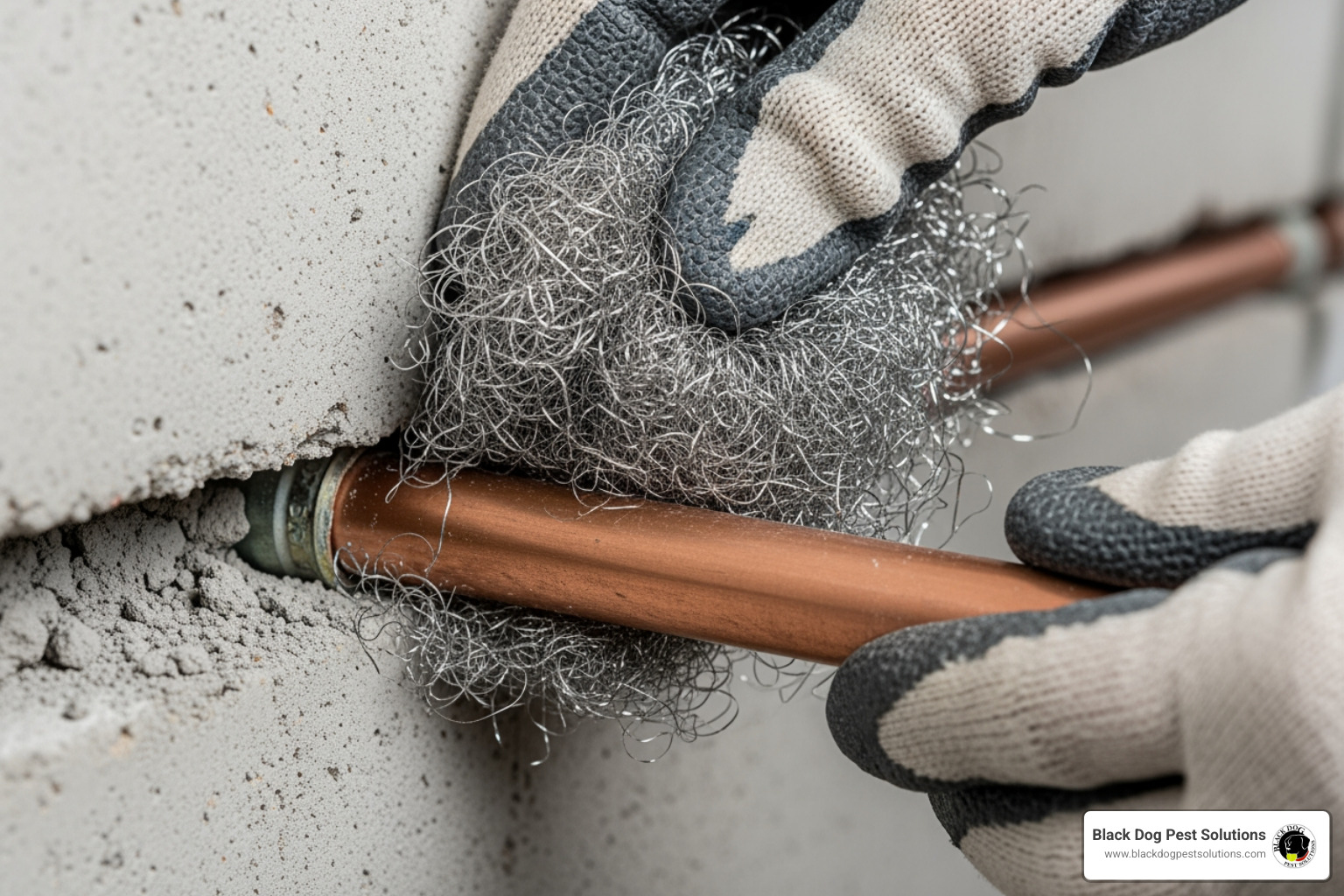
- Steel Wool: Excellent for stuffing into small holes and crevices around pipes or wires. Mice can’t chew through it, and it provides a temporary, effective barrier.
- Caulk/Sealant: Use a good quality, durable caulk or silicone sealant for smaller cracks and gaps once steel wool is in place.
- Hardware Cloth: For larger openings, vents, or areas requiring airflow, secure heavy-gauge hardware cloth (1/4 inch mesh or smaller) over the opening.
- Door Sweeps: Install sturdy door sweeps on all exterior doors, especially garage doors, to eliminate gaps at the bottom.
- Structural Modifications: Repair damaged foundations, seal gaps around dryer vents, and ensure screens on windows and doors are intact. Trim trees and shrubs away from the house to prevent roof rats from using them as bridges to your home.
Sanitation: Removing Food, Water, and Shelter
Even the most mouse-proof home can become attractive if there’s an irresistible buffet inside. Sanitation and proper waste management are crucial components of our Integrated pest management strategy. Mice are omnivorous and opportunistic, consuming up to 20% of their body weight daily across numerous small meals.
Here’s how we help you remove the allure of your home:
- Waste Management: Store all garbage in solid containers with tight-fitting lids. Empty trash cans regularly, especially those containing food waste. For businesses in Cleveland or Akron, ensure dumpsters are secure and located away from building entrances.
- Food Storage: Keep all human and pet food in sealed, airtight containers made of glass, metal, or thick plastic. Never leave food out on countertops overnight. Mice have keen senses of smell and will find even crumbs.
- Cleaning Spills: Promptly clean up food spills and crumbs from floors, counters, and under appliances. A clean kitchen is a less appealing one.
- Fixing Leaks: Eliminate all sources of standing water. Repair dripping faucets, leaky pipes, and improve drainage around your property. Mice, while not needing much water if their food is moist, will readily use available sources.
- Reducing Clutter: Mice love to nest in cluttered, undisturbed areas. Clear out basements, attics, garages, and storage rooms. Store items off the floor and in sealed plastic containers. This also reduces potential nesting materials like shredded paper or fabric.
- Yard Maintenance: Keep your yard tidy. Mow lawns regularly, remove leaf litter, and clear debris piles. Store firewood at least 20 feet away from the house and off the ground. Trim vegetation around buildings to eliminate hiding spots and potential travel routes for mice. Sharing these best practices with your neighbors can contribute to a more effective, community-wide rodent management plan.
For more information on how we can protect your home, explore our Residential Services.
The Core Principles of Integrated Pest Management for Mice
At Black Dog Pest Solutions, we believe in a holistic, common-sense approach to pest control. This is the essence of Integrated pest management for mice control. It’s not just about eliminating pests; it’s about understanding why they’re there and preventing their return. IPM uses information about the pest to choose the safest and most effective control methods, prioritizing prevention and non-chemical tools first.
Our IPM approach differs significantly from traditional pest control methods that often rely on routine, calendar-based pesticide applications. While these may offer a temporary knockdown, they rarely address the root cause of an infestation. IPM, on the other hand, focuses on:
- Monitoring: Continuous inspection for signs of activity helps us understand the extent of the problem and where mice are active.
- Action Thresholds: Determining when a pest population reaches a level that requires intervention. For mice, often even one sighting or evidence of activity is enough to warrant action due to their rapid reproduction.
- Control Methods: Applying a combination of exclusion, sanitation, trapping, and, if necessary, targeted chemical treatments.
- Evaluation: Regularly assessing the effectiveness of our strategies and making adjustments as needed.
This multi-pronged strategy ensures that we solve the problem, not just treat the symptoms.
Applying Integrated Pest Management for Mice with Effective Trapping
Trapping is a cornerstone of our Integrated pest management strategy, especially inside homes and businesses. It’s effective, allows for immediate verification of success, and avoids the use of rodenticides indoors, which can pose risks to children and pets, and lead to unpleasant odors if a poisoned mouse dies in an inaccessible wall void.
The key to successful trapping lies in understanding mouse behavior and proper technique:
- Snap Traps: These are often the most effective and humane choice. They kill mice quickly and prevent direct contact during disposal. Modern plastic snap traps are easy to set and clean.
- Electronic Traps: These traps use a high-voltage shock to kill mice. They can be effective and often signal a catch with a light.
- Live Traps (Multiple-Capture): These traps catch several mice at once without killing them. However, they require frequent checking (at least twice daily) and you’ll need a plan for humane euthanasia, as relocating live mice is often ineffective and can be illegal.
- Trap Placement: Mice are naturally cautious and tend to travel along walls. Place traps perpendicular to walls, with the trigger side facing the wall, or in pairs 1-2 inches apart. Focus on areas with signs of activity: behind appliances, inside cupboards, in attics, basements, and utility closets.
- Baiting Tips: Peanut butter is a classic favorite, but mice can also be lured by chocolate candy, dried fruit, or a small piece of bacon. Use a tiny amount of bait on the trigger plate to ensure the mouse has to work for it, increasing the chance of a successful catch. For females building nests, cotton balls or dental floss can be surprisingly effective bait.
- Trap Shyness (Neophobia): Mice can be wary of new objects. For particularly stubborn mice, place unset traps with bait for a few nights to allow them to get comfortable feeding from them before setting the trap.
- Glue Boards: While available, we generally don’t recommend glue boards. They are widely considered inhumane as they don’t kill the mouse, leading to prolonged suffering. They can also catch non-target animals or pets. If used, they should be checked frequently, and trapped animals must be humanely euthanized.
Best Practices for Trapping Mice:
- Use enough traps! For a suspected infestation, we often recommend placing traps every 2-3 feet in active areas.
- Pre-bait (leave unset) traps for a night or two if mice seem wary.
- Wear gloves when handling traps or dead mice. This prevents transferring human scent to the trap and protects you from potential pathogens.
- Check traps daily.
- If a trap isn’t catching mice, move it. Mice are creatures of habit, but they might be avoiding that specific spot.
- Dispose of dead mice safely. Wear gloves, place them in a sealed plastic bag, and discard in an outdoor trash receptacle. Wash your hands thoroughly afterward.
When to Use Rodenticides in an Integrated Pest Management Mice Strategy
While exclusion and trapping are our preferred first lines of defense, there are situations where rodenticides may be deemed necessary as part of a comprehensive Integrated pest management plan. This is typically when populations are very high, or when mice are accessing areas that are difficult to reach with traps. However, we always consider rodenticides a last resort, used judiciously and with extreme caution.
The risks associated with rodenticides are significant:
- Risks to Pets and Children: Rodenticides are poisons. Accidental ingestion by curious pets or children is a serious concern.
- Secondary Poisoning: If a poisoned mouse is eaten by a predator (like a hawk, owl, or even a neighborhood cat or dog), that predator can also be poisoned. This has serious environmental impacts and can disrupt local ecosystems.
- Cryptic Death and Odor: A poisoned mouse might die inside wall voids or other inaccessible areas, leading to unpleasant odors and attracting secondary pests like flies or carpet beetles.
Because of these risks, strict precautions are always taken:
- Tamper-Resistant Bait Stations: All rodenticides used by Black Dog Pest Solutions are placed inside secured, tamper-resistant bait stations. These stations are designed to allow only mice to access the bait while protecting children, pets, and non-target wildlife. For outdoor applications, these stations are locking and secured to prevent movement.
- Reading the Label: “The label is the law.” We carefully follow all label directions for application rates, locations, and safety precautions.
- Types of Rodenticides:
- Anticoagulants: These work by preventing blood clotting, leading to internal bleeding. First-generation anticoagulants typically require multiple feedings, while second-generation ones can be fatal after a single feeding.
- Non-Anticoagulants: These include active ingredients like bromethalin (affects the nervous system) or cholecalciferol (causes too much vitamin D). These can be faster-acting but also pose higher risks if ingested by non-target animals.
- Targeted Application: Rodenticides are placed strategically in areas of known mouse activity that are inaccessible to non-target species. Outdoors, this means baiting active burrows with pelleted baits placed at least six inches down.
Regulations regarding rodenticide use can vary. We adhere to all federal, state, and local regulations concerning pesticide use. For general information on rodenticide regulations, the U.S. EPA provides guidelines that we follow diligently: U.S. EPA regulations on rodenticides.
Safe Cleanup After an Infestation
Once the mice are gone, the job isn’t over. Proper cleanup after an infestation is a vital, but often overlooked, step in our Integrated pest management approach. This isn’t just about tidiness; it’s about protecting your health. Mouse droppings, urine, and nesting materials can harbor pathogens and allergens that pose serious health risks.
- Health Risks: Mice can transmit diseases such as Salmonellosis (a bacterial infection causing food poisoning) and Lymphocytic Choriomeningitis (LCM), a viral disease. While house mice are not typically carriers of Hantavirus, deer mice can transmit it, which causes a rare but serious respiratory illness. Their droppings and urine also contain allergens that can trigger asthma symptoms, especially in children.
- Personal Protective Equipment (PPE): Never handle mouse droppings or nests with bare hands. We always recommend wearing:
- Gloves: Rubber, latex, or vinyl gloves are essential.
- Mask: A respirator mask (N95 or equivalent) is crucial to prevent inhaling airborne particles that can contain viruses or allergens.
- Disinfecting Droppings: Avoid sweeping or vacuuming dry droppings, as this can stir up hazardous particles into the air. Instead, thoroughly spray the area with a disinfectant solution. A common and effective solution is a mixture of 1 part bleach to 10 parts water. Let the solution soak for at least five minutes to kill any pathogens.
- Wipe and Dispose: After soaking, use paper towels to wipe up the disinfected droppings and nesting materials. Place all contaminated materials in a sealed plastic bag and dispose of it in an outdoor trash receptacle.
- Clean and Disinfect: After removing the bulk of the waste, clean and disinfect all contaminated surfaces (floors, countertops, cupboards) with the bleach solution or another appropriate disinfectant.
- Ventilation: Open windows and doors for at least 30 minutes before and during cleanup to ensure good ventilation and air out the area.
- Hand Washing: After removing and disposing of your PPE, thoroughly wash your hands with soap and water.
For detailed guidance on safe cleanup procedures, especially concerning hantavirus prevention, the CDC offers excellent resources: CDC guidelines for rodent cleanup.
Why IPM is the Smarter, Safer Choice
The evidence is clear: Integrated pest management strategies are superior to traditional, chemical-heavy approaches. IPM isn’t just a buzzword; it’s a commitment to effective, sustainable, and responsible pest control that benefits your family, your pets, and the environment.
We’ve seen across Northern Ohio, from Avon to Cleveland, how IPM delivers lasting results. Studies, such as those conducted in urban public housing, have demonstrated that IPM can significantly reduce pest populations and associated allergen levels, outperforming regular pesticide applications alone. This scientific research underlines IPM’s effectiveness: Scientific research on IPM effectiveness.
Health Risks of Mice and Traditional Control
Mice are tiny but mighty disease vectors. They spread over 35 diseases worldwide, often through their urine, droppings, and saliva. Beyond the diseases mentioned earlier (Salmonellosis, LCM, potential Hantavirus from deer mice), they can also carry bacteria like Listeria. Their constant gnawing can damage electrical wiring, creating fire hazards, and their presence can contaminate food preparation surfaces and stored goods.
Furthermore, mouse allergens (found in their urine and dander) are significant triggers for asthma, particularly in children. Exposure to mouse urinary proteins has been linked to early onset of asthma in sensitized children. This means that merely having mice in the home, even if unseen, can impact respiratory health.
Traditional pest control methods, relying heavily on broadcast sprays and foggers, introduce their own set of health risks. Pesticide exposure, especially from these less-targeted applications, can be harmful to humans and pets. IPM’s focus on non-chemical methods first and targeted, low-risk chemical applications only when necessary drastically reduces these potential exposures, making your living and working spaces safer.
Environmental Impacts of Rodent Control
The environmental consequences of traditional rodent control methods, particularly the widespread use of anticoagulant rodenticides, are a serious concern. These poisons can cause:
- Secondary Poisoning: As mentioned, when predators like hawks, owls, foxes, or even domestic pets consume rodents that have ingested rodenticides, they too can be poisoned. This ripple effect up the food chain can decimate populations of beneficial wildlife and disrupt delicate ecosystems.
- Contamination: Pesticides can contaminate soil and water sources, affecting non-target organisms and potentially entering the broader environment.
IPM, in contrast, champions targeted, low-impact solutions. By prioritizing exclusion, sanitation, and trapping, we minimize the reliance on chemical treatments. When rodenticides are used, they are applied strategically in tamper-resistant stations, reducing the risk of non-target exposure and environmental contamination. This thoughtful approach ensures that we control mice effectively while being mindful of our shared environment in Northern Ohio.
Conclusion: Your Partner for Long-Term Mouse Control in Northern Ohio
When it comes to dealing with mice, a quick fix is rarely a lasting solution. That’s why we at Black Dog Pest Solutions champion Integrated pest management strategies. We’ve seen the power of IPM firsthand—it’s a sustainable, effective, and responsible way to keep your home or business in Northern Ohio pest-free.
By focusing on prevention, identification, exclusion, sanitation, and targeted treatment, we provide comprehensive mouse control that addresses the root cause of the problem. This approach not only eliminates current infestations but also protects your property, your health, and the environment for the long term.
If you’re facing a mouse problem in Avon, Cleveland, or any of our service areas including Lorain, Elyria, Avon Lake, Bay Village, North Ridgeville, Westlake, Sheffield Village, Sheffield Lake, Vermillion, Huron, Sandusky, Medina, Grafton, Wellington, Oberlin, Amherst, North Olmsted, Lakewood, Strongsville, Brunswick, or Rocky River, don’t hesitate to reach out. We are your local experts, ready to implement a customized IPM plan custom to your specific needs.
For professional help with a customized IPM plan, explore our mice control services.