Why Commercial Fly Control Is Critical for Your Business
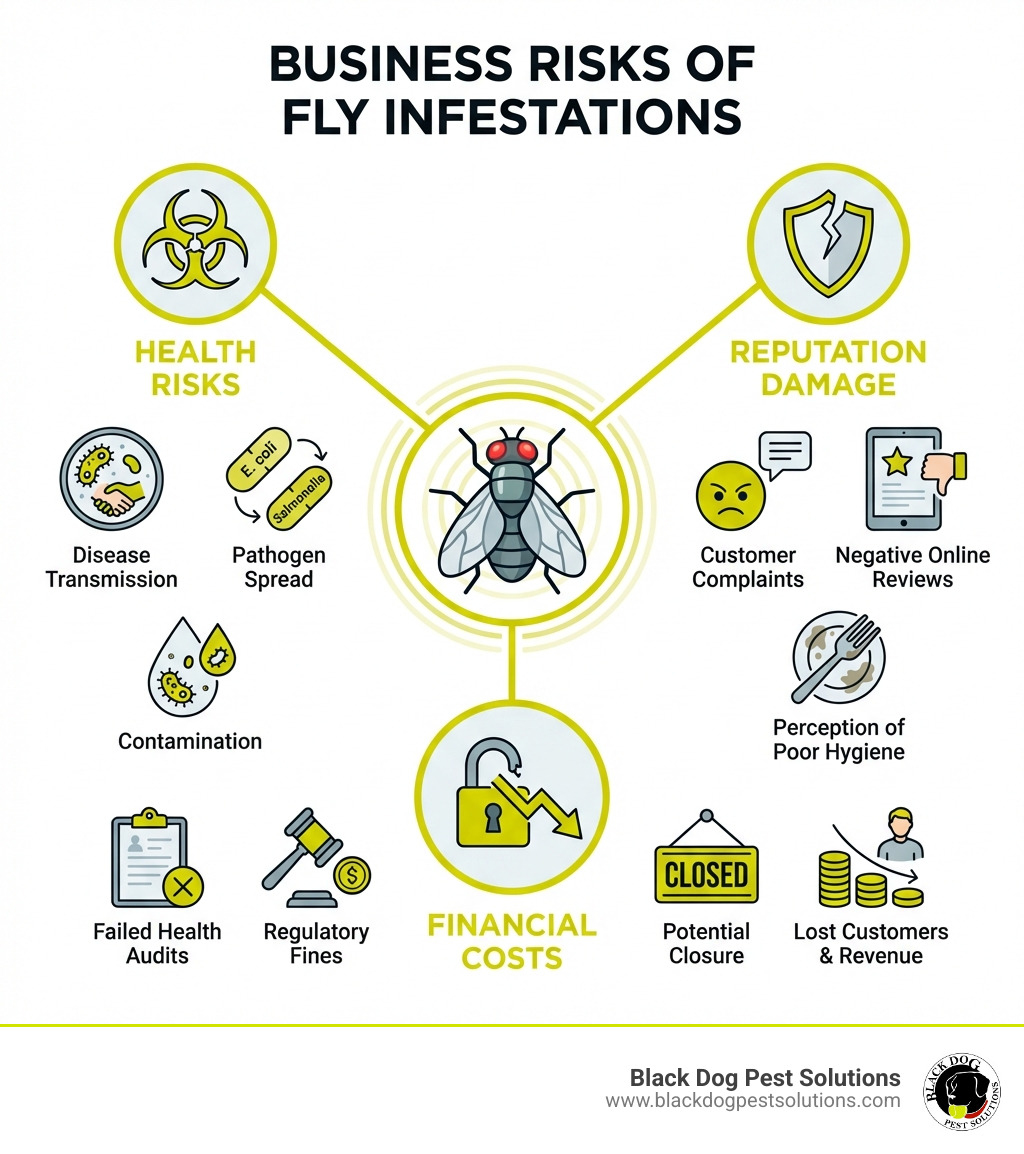
Commercial fly control is essential for protecting your business from disease transmission, customer complaints, and failed health inspections. Flies spread dangerous pathogens like E. coli and Salmonella, damage your reputation, and can result in regulatory fines or even closure if infestations aren’t managed.
A comprehensive commercial fly control program includes:
- Inspection – Identifying fly species and locating breeding sites
- Prevention – Implementing sanitation protocols and sealing entry points
- Exterior Control – Reducing outdoor fly pressure before they enter
- Interior Control – Using insect light traps, baits, and targeted treatments
- Monitoring – Regular inspections and data analysis to maintain effectiveness
Research shows that an ‘outside-in’ approach, which addresses root causes outside your facility, can reduce large fly populations by 49% to 81%. This strategy focuses on eliminating breeding sites to prevent flies from becoming an indoor problem.
Visible flies create an immediate impression of poor hygiene. For businesses like restaurants, grocery stores, and healthcare facilities, a single fly infestation can trigger failed audits, regulatory scrutiny, and lasting damage to brand trust.
The good news? A science-based Integrated Pest Management (IPM) program can effectively control flies while meeting strict health and safety standards. This guide walks you through every step of implementing a commercial fly control program that works.
I’m Mat Ledyard, owner of Black Dog Pest Solutions in Avon, Ohio. Since 2005, I’ve helped businesses across Northeast Ohio implement commercial fly control programs to protect their reputations and pass health inspections using proven IPM strategies.
Understanding the Enemy: Identifying Fly Types and Their Risks
Flies are more than a nuisance; they transmit bacteria and pathogens that pose significant health risks. For businesses, this means potential food contamination, customer complaints, and damage to brand reputation and regulatory compliance. Understanding the specific types of flies is the first step in an effective commercial fly control strategy.
While many fly species exist in Northern Ohio, some pose a greater threat to businesses due to their breeding habits and disease-carrying potential, making professional Pests management crucial.
To learn more about how flies spread disease in commercial environments, the CDC provides comprehensive information on vector-borne diseases, including those transmitted by flies. For additional background on common filth flies and their habits, see Housefly.
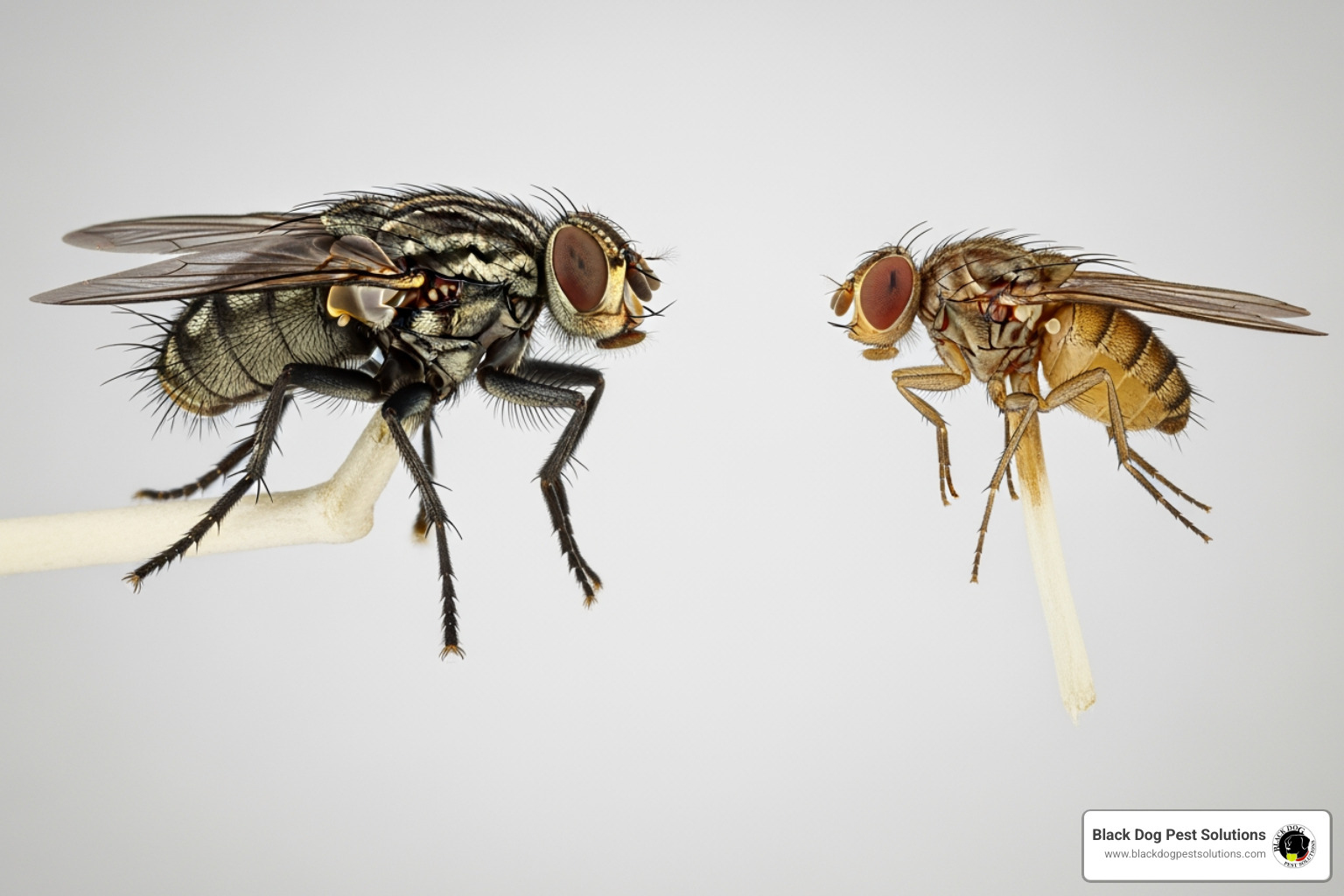
Large Flies vs. Small Flies: Different Pests, Different Plans
For commercial fly control, we categorize flies into two groups: large and small. They require distinct strategies because their behaviors and breeding sites differ.
Large flies, or “filth flies,” include houseflies and bottle/blow flies. They breed in decaying organic matter like garbage and move between filth and food surfaces, quickly transferring pathogens like E. coli and Salmonella.
Small flies, such as Fruit Flies, drain flies, and phorid flies, are attracted to different environments. Fruit flies seek fermenting liquids, drain flies thrive in drain sludge, and phorid flies breed in moist, decaying organic materials. Their small size makes them difficult to locate and eradicate.
A strategy for large flies won’t work for small flies, so proper identification is essential for the correct treatment plan.
The High Cost of Infestations: Health, Safety, and Regulatory Risks
Flies are a serious health concern, transferring pathogens to any surface they touch. This can lead to foodborne illnesses, a major issue for food service, healthcare, and manufacturing industries. The CDC’s information on diseases spread by flies highlights the serious public health implications.
Beyond health risks, a fly infestation carries a hefty price tag:
- Damaged Reputation: Visible flies create an impression of poor hygiene. Customer complaints and negative online reviews can quickly erode trust and drive customers away.
- Regulatory Scrutiny: Failing to address fly infestations can lead to penalties, fines, or even temporary closures for businesses in regulated industries like food or healthcare.
- Financial Losses: Businesses can face lost revenue from decreased customer traffic, product recalls, and remediation costs.
An uncontrolled fly problem is a direct threat to your business’s health, safety, and financial stability.
The Core of an Effective Commercial Fly Control Program: The IPM Approach
An effective commercial fly control program isn’t about swatting flies; it’s a strategic, science-based approach called Integrated Pest Management (IPM). IPM focuses on long-term prevention by combining methods to reduce pests with minimal hazard to people, property, and the environment.
A cornerstone of IPM is the “outside-in” approach. This proactive method addresses fly issues at their source—outside your facility—before they become an indoor problem. It involves understanding fly biology and your business’s specific environment to prevent infestations, not just react to them.
Step 1: Inspection and Identification
The first step in any successful commercial fly control program is a thorough inspection. Our comprehensive pest inspection aims to:
- Identify Fly Species: Correctly identifying whether you have large or small flies is paramount, as they require different treatments.
- Locate Entry Points: We find cracks, gaps, and open doors that flies use to enter your building.
- Pinpoint Attractants: We determine what draws flies to your property, such as food odors or stagnant water.
- Find Breeding Sites: This is crucial. To eliminate flies, we must find and remove their breeding grounds, like decaying matter in dumpsters, drains, or hidden moisture sources.
This assessment allows us to tailor a precise plan. Without addressing the root cause, any control efforts will be temporary.
Step 2: Implementing the ‘Outside-In’ Strategy
After inspection, we implement a robust “outside-in” strategy, which is highly effective because it tackles the problem outdoors.
The goal is two-fold:
- Reduce Outdoor Fly Pressure: We decrease the number of flies around your facility by managing exterior breeding sites like dumpsters and waste areas. Exterior treatment is often the most effective way to keep them from coming inside.
- Prevent Entry: We create a barrier to keep flies out through structural and operational improvements:
- Sealing Cracks and Gaps: We identify and recommend sealing small openings around windows, doors, and utility lines.
- Door Discipline: Keeping exterior doors closed, especially during deliveries, is simple yet effective.
- Air Curtains: Installing air curtains over high-traffic doors creates an invisible barrier against flies.
- Exterior Treatments: Targeted treatments around dumpsters and loading docks significantly reduce outdoor fly populations.
This proactive approach has proven results, with businesses seeing reductions in large fly populations from 49% to 81%. By focusing on the exterior first, we drastically cut down on the number of flies that make it inside.
DIY vs. Professional Commercial Fly Control: A Comparison
While it’s tempting to use DIY sprays or traps, these methods often fall short for commercial establishments. Here’s a comparison of DIY approaches versus professional commercial fly control services:
| Feature | DIY Methods | Professional Services |
|---|---|---|
| Identification | Generalized; often misidentifies species, leading to ineffective treatment. | Expert identification of specific fly species (e.g., fruit, drain, phorid) and their unique breeding habits. |
| Assessment | Superficial; focuses on visible flies, not root causes. | Thorough inspection to locate breeding sites, entry points, and attractants. |
| Treatment | Consumer-grade products; temporary knockdown with no long-term solution. | Integrated Pest Management (IPM) using commercial-grade equipment (ILTs, baits) and targeted treatments. |
| Effectiveness | Limited; addresses only adult flies, so populations quickly return. | Long-term control and prevention; addresses all life stages to reduce populations and prevent recurrence. |
| Regulatory Knowledge | None; may use products unapproved for commercial food environments. | Ensures compliance with health codes (FDA, USDA); safe application in sensitive settings. |
| Safety | Risk of chemical misuse, posing a danger to staff and customers. | Trained technicians use products safely, minimizing risks to people and the environment. |
| Cost | Low initial cost but higher over time due to repeated attempts and potential fines. | An investment in expertise and lasting solutions that protects your reputation and avoids costly fines. |
| Guaranteed Results | No guarantees; trial and error. | Often includes service guarantees and ongoing monitoring for effectiveness. |
| Long-Term Strategy | Reactive, not proactive. | Proactive prevention, ongoing monitoring, and adaptable strategies. |
| Reputation Protection | Worsens customer perception if flies persist. | Protects brand reputation by showing a commitment to hygiene and safety. |
For businesses in Northern Ohio, relying on professional services is an investment in your health, safety, and reputation. We understand the nuances of Benefits of Choosing Local Fruit Fly Exterminator Services and can provide custom solutions that DIY methods simply can’t match.
Prevention and Exclusion: Your First Line of Defense
After we’ve identified the enemy and committed to an “outside-in” IPM approach, the next crucial step in commercial fly control is prevention and exclusion. Think of it as building an impenetrable fortress around your business. This involves meticulous sanitation, smart waste management, and fortifying your facility’s physical barriers. It’s often said that an ounce of prevention is worth a pound of cure, and with flies, this couldn’t be truer.
The Critical Role of Sanitation and Waste Management
Flies are attracted to filth and decaying organic matter like magnets. Therefore, impeccable sanitation and waste management are non-negotiable for effective commercial fly control. This isn’t just about looking clean; it’s about eliminating the very food sources and breeding grounds that flies crave.
Our best practices include:
- Daily Cleaning Schedules: Implement rigorous daily cleaning for all food preparation areas, dining spaces, and restrooms. Keep floors clean of any debris.
- Floor and Drain Cleaning: Flies, especially small flies like drain flies, thrive in the organic sludge that accumulates in drains. Regular deep cleaning of drains, combined with bioremediation treatments, can eliminate these breeding sites. Bioremediation uses beneficial microbes to break down organic matter, effectively removing the flies’ food source and habitat.
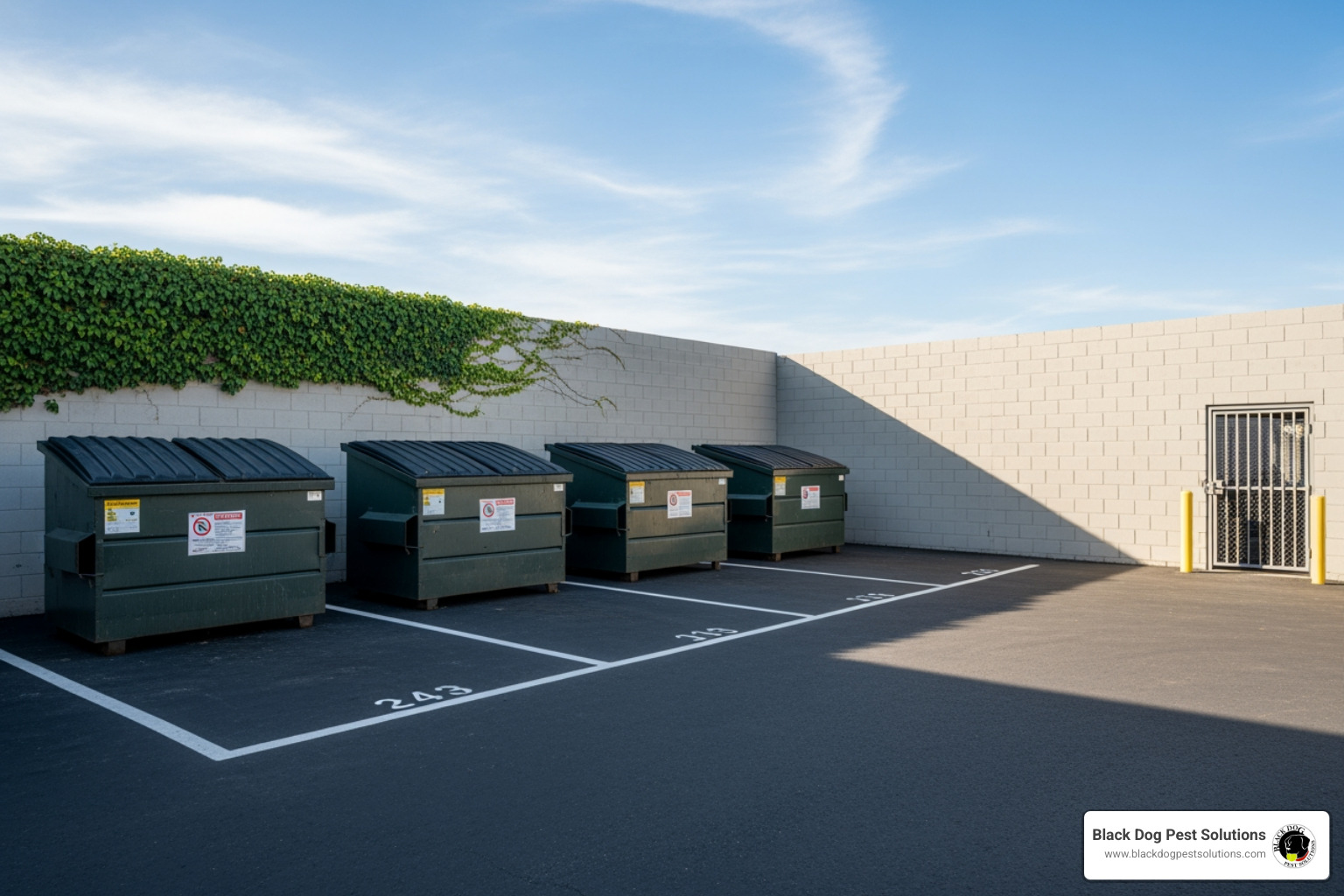
- Proper Garbage Disposal: This is huge. All garbage should be placed in sealed bins with tight-fitting lids. These bins should be emptied frequently, ideally daily, and never allowed to overflow.
- Dumpster Cleaning and Placement: Dumpsters are fly magnets. They should be cleaned and sanitized regularly. Crucially, position dumpsters as far away from building entrances, windows, and air intakes as possible. Treating the areas around dumpsters and dumpster corrals is a key part of our exterior control strategy.
- Removing Food and Moisture Sources: Don’t let standing water accumulate, as it provides moisture that flies need. Promptly clean up food spills, repair leaky pipes, and ensure all food items are stored in airtight containers. Flies are usually drawn into a business by the presence of food or trash that hasn’t been removed in a timely manner.
By adhering to these sanitation protocols, we dramatically reduce the attractiveness of your facility to flies, making it a much less hospitable environment for them to breed and thrive.
Fortifying Your Facility: Proven Exclusion Techniques
Even with impeccable sanitation, flies can still find their way in if your building isn’t properly sealed. Exclusion techniques create physical barriers that prevent flies from entering in the first place, forming a vital part of our “outside-in” approach to commercial fly control.
Here’s how we fortify your facility:
- Sealing Entry Points: We carefully inspect for and recommend sealing any potential entry points. This includes caulking cracks and crevices in walls, around windows, and where utilities enter the building.
- Weather Stripping for Doors: Ensure all exterior doors, especially back doors and loading dock doors, have intact weather stripping and door sweeps. This closes the gap at the bottom and sides, preventing flies from crawling or flying under.
- Window Screens: All windows that open should have well-maintained, tight-fitting screens without any tears or holes.
- Vent Covers: Ensure all vents leading outdoors are properly screened or covered to prevent fly entry.
- Air Curtains: For high-traffic entryways, such as main entrances or loading docks, installing air curtains can create a strong, downward-blowing air current that flies find difficult to fly through.
- Minimize Door Opening Times: Train staff to keep doors closed as much as possible, especially during deliveries. The less time a door is open, the fewer opportunities flies have to sneak in.
By combining rigorous sanitation with robust exclusion methods, we establish a formidable first line of defense, significantly reducing the likelihood of a fly infestation taking hold inside your commercial property.
Control and Elimination: Tools and Tactics for Active Infestations
Even with the best prevention and exclusion strategies, sometimes flies still find a way in, or a particularly stubborn infestation needs more direct intervention. This is where active control and elimination methods come into play. For effective commercial fly control, we use a range of specialized equipment and targeted treatments, carefully chosen for their effectiveness and safety in commercial environments.
Choosing the Right Commercial Fly Control Equipment
Modern commercial fly control relies on sophisticated tools designed to be both effective and discreet. We select equipment based on the type of fly, the specific area (interior vs. exterior), and the sensitivity of the environment.
Here are some common types of equipment we use:
-
Insect Light Traps (ILTs): These are a cornerstone of indoor fly control. ILTs use ultraviolet (UV) light to attract flies, which are then either caught on a disposable glue board or electrocuted.
- Glue Board Traps: These are highly recommended for sensitive areas like dining rooms, kitchens, and healthcare facilities. They discreetly capture flies on a sticky board, preventing shattered insect parts from contaminating surfaces. Many come in decorative styles, like wall sconce traps, that blend seamlessly with decor. The STEALTH™ Maxima Fly Light, for example, can trap up to 1,000 large flies.
- Electrocution Traps (Zappers): While effective, these are generally not suitable for food-handling areas due to the risk of insect fragmentation. They are better used in back-of-house areas or less sensitive environments.
- Placement Strategy: Proper placement is key. ILTs should be positioned away from natural light sources, typically on walls, and strategically located to intercept flies entering from specific areas.
-
Fly Bait Stations: These use an attractive bait, often containing an insecticide, to lure and eliminate flies. They are particularly effective for large flies and can be used in both interior and exterior settings. Exterior bait stations, like the STEALTH™ Fly Station, can discreetly eliminate a significant percentage of flies (up to 50%) before they even enter a facility.
- Exterior Traps: Beyond bait stations, various exterior traps are designed to reduce fly populations around the perimeter of your business. These can include traps that use pheromones or food-based attractants. Treating exterior areas such as dumpsters, dumpster corrals, back doors, and drive-thru windows is critical for reducing the overall fly pressure.
The right combination and strategic placement of this equipment are vital for a successful commercial fly control program.
Targeted Treatments for Maximum Impact
Beyond equipment, we also employ targeted treatments to address active fly infestations, always prioritizing safety and efficacy for your specific commercial setting.
- Indoor Spot Treatments: For specific indoor areas, we use odor-free, safe lures with multi-species attractants to reduce existing fly problems. These are applied in targeted spots where flies congregate, away from direct food contact surfaces.
- Residual Insecticides: In non-food handling areas or exterior perimeters, we may apply professional-grade residual insecticides. These provide longer-lasting control, with some formulations offering effectiveness for several weeks or even months. Application is precise, focusing on fly resting surfaces rather than broad spraying.
- Drain Treatments: For small flies like drain flies, targeted drain treatments using bioremediation products are essential. These products break down the organic sludge in drains, eliminating the breeding source. They also help eliminate drain odors, sugar snakes, and scum.
- Professional Application: All chemical treatments are applied by our licensed and trained technicians who understand the specific regulations and safety protocols for commercial environments in Northern Ohio. This ensures maximum effectiveness with minimal risk to your staff, customers, and products.
By strategically combining the right equipment with targeted treatments, we can actively eliminate existing fly populations and maintain a fly-free environment for your business.
Tailoring and Maintaining Your Fly Control Program
A successful commercial fly control program isn’t a one-size-fits-all solution, nor is it a set-it-and-forget-it endeavor. To achieve lasting success, we must tailor strategies to your specific industry and commit to ongoing monitoring and maintenance. This adaptive approach ensures your business remains protected against these persistent pests.
Custom Strategies for Your Industry
Different industries face unique challenges when it comes to commercial fly control. What works for a manufacturing plant might not be suitable for a hospital, and vice versa. We customize our strategies to meet the specific demands and regulatory requirements of your business type in Northern Ohio.
- Food Service and Restaurants: These establishments are highly vulnerable due to constant food preparation, waste, and customer traffic. Our focus here is on stringent sanitation, rapid waste removal, robust exclusion at entrances and loading docks, and discreet ILTs in dining and kitchen areas. We address both large flies (attracted to dumpsters) and small flies (attracted to fermenting spills and drains).
- Healthcare Facilities: Hospitals and nursing homes demand the highest level of hygiene. Our strategies prioritize non-chemical methods where possible, with precise, low-impact treatments in sensitive patient areas. Exclusion is critical to prevent disease transmission, and discreet monitoring is essential.
- Manufacturing and Warehouses: Large facilities with open loading docks and stored products can attract various fly species, including stored product insects. We focus on perimeter control, sealing large entry points, and strategically placing ILTs and bait stations throughout the facility to intercept flies.
- Hospitality and Hotels: Maintaining a pristine environment for guests is paramount. We implement comprehensive plans for kitchens, laundry facilities, guest common areas, and waste management, ensuring flies don’t deter visitors.
- Retail Stores: Especially those selling food items, need strong exclusion measures and discreet fly control solutions that don’t detract from the customer experience.
By understanding the unique biology and behavior of flies in these varied environments, we craft a plan that’s not just effective but also compliant and sustainable for your specific operations.
Long-Term Monitoring and Maintenance for Lasting Success
Implementing a commercial fly control program is just the beginning. The key to lasting success lies in consistent monitoring and proactive maintenance. Flies are persistent, and their populations can rebound quickly if vigilance drops.
Our long-term strategy includes:
- Regular Professional Inspections: Our technicians conduct scheduled follow-up inspections to assess the effectiveness of the program, identify any new conducive conditions, and proactively address potential issues before they escalate.
- Data Analysis from Traps: We regularly check and document activity levels on ILT glue boards and bait stations. This data helps us understand fly pressure, identify specific problem areas, and fine-tune our strategies.
- Adjusting Strategies: Based on our monitoring data and any changes in your facility or the surrounding environment, we adapt the program as needed. This flexibility ensures your commercial fly control remains effective year-round.
- Scheduled Equipment Maintenance: This includes the regular replacement of glue boards in ILTs and the annual replacement of UV bulbs, as their effectiveness diminishes over time. We also ensure bait stations are replenished and functioning correctly.
- Documentation for Audits: We maintain detailed service logs and documentation, which are crucial for demonstrating compliance during health inspections and audits. This transparency provides peace of mind and helps protect your business’s reputation.
- Staff Training: We can provide guidance to your staff on best practices for sanitation, waste management, and door discipline, empowering them to be an active part of your fly prevention efforts.
Fly problems often require ongoing maintenance, especially in environments like kitchens and restaurants where food can never be completely eliminated. By partnering with us for continuous monitoring and maintenance, we can ensure your business remains fly-free and compliant.
Conclusion
Implementing an effective commercial fly control program is a critical investment in the health, safety, and reputation of your business. We’ve seen how flies are more than just a nuisance; they are carriers of disease, threats to food safety, and powerful destroyers of customer trust.
A comprehensive Integrated Pest Management (IPM) approach, built on the “outside-in” philosophy, is your strongest defense. This involves:
- Inspection: Thoroughly identifying fly species, breeding sites, and entry points.
- Sanitation: Maintaining impeccable cleanliness and waste management to eliminate attractants.
- Exclusion: Fortifying your facility with physical barriers to prevent entry.
- Control: Strategically deploying specialized equipment like ILTs and targeted treatments for active infestations.
- Monitoring: Consistently tracking fly activity and adapting strategies for long-term effectiveness.
By embracing these principles, we can protect your brand, ensure regulatory compliance, and safeguard your bottom line from the damaging effects of a fly infestation. Don’t let flies tarnish your hard-earned reputation.
For expert assistance creating a customized commercial fly control program in Northern Ohio, trust the professionals at Black Dog Pest Solutions. We’re here to provide effective, reliable solutions custom to your business needs, ensuring a clean, compliant, and fly-free environment. Learn more about our comprehensive Commercial Services and protect your business today.