
What’s Hopping Around in Your Houseplants?
How to get rid of springtails in plants is simpler than most people think — and the good news is that these tiny jumpers are rarely dangerous. Here’s a quick overview of the most effective steps:
- Let the soil dry out between waterings to remove the moisture springtails need to survive
- Repot with fresh, well-draining soil if the current mix is old or compacted
- Apply diatomaceous earth or neem oil to the soil surface as a natural treatment
- Improve drainage and ventilation around your plants to prevent recurrence
- Introduce predatory mites (Hypoaspis miles) for biological control in persistent cases
You’re watering your favorite houseplant when suddenly — dozens of tiny white specks start hopping in every direction. It looks like the soil is alive. It is.
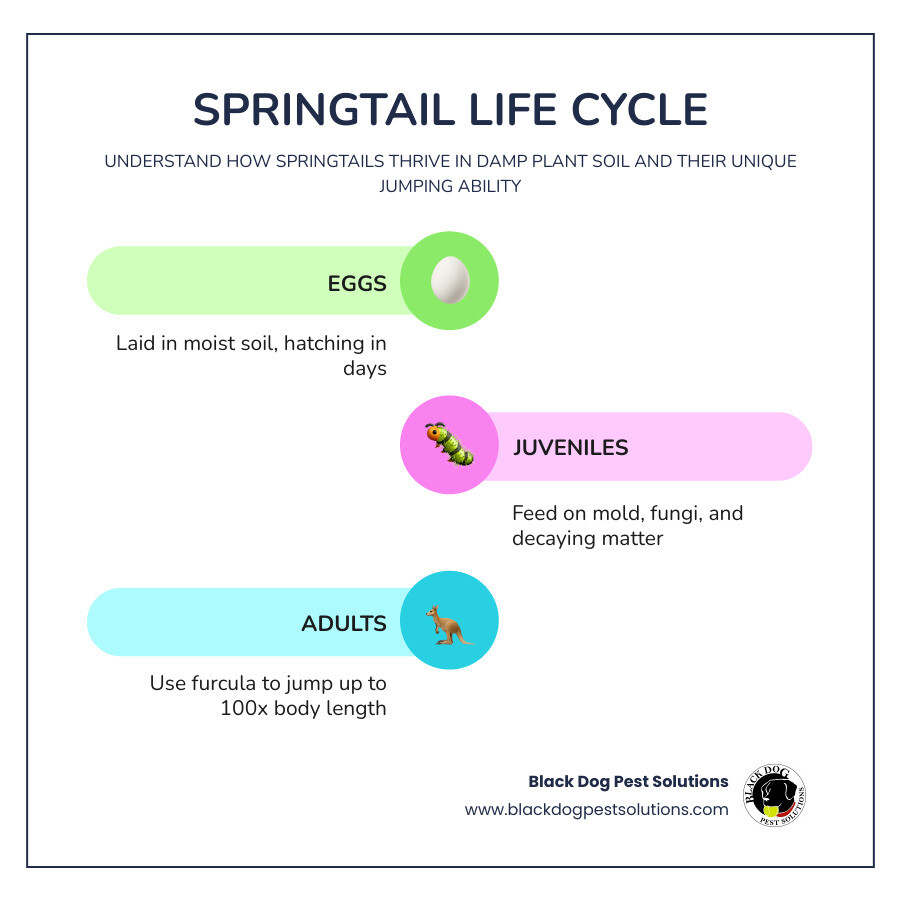
These are springtails. They’re small (often less than 1 mm), wingless, and named for the forked appendage they use to launch themselves into the air — sometimes up to 100 times their own body length. They love damp soil, and they thrive on the mold, fungi, and decaying matter that builds up in potted plants.
The reaction most people have? Panic.
But before you throw the whole plant away, it helps to understand what you’re actually dealing with. Most springtail infestations are a sign of one thing above everything else: too much moisture. Fix that, and you’re most of the way to fixing the problem.
I’m Mat Ledyard, owner of Black Dog Pest Solutions in Avon, Ohio, with nearly two decades in the pest control industry — and knowing how to get rid of springtails in plants is part of what I help Northern Ohio homeowners tackle every season. Let’s walk through exactly what to do.
Identifying the “Jumping Lice” in Your Soil
When you first see them, you might think you have a flea or lice problem. However, if they are in your plant soil, they are almost certainly springtails (Order: Collembola). These creatures are actually hexapods, a group closely related to insects but distinguished by their internal mouthparts.
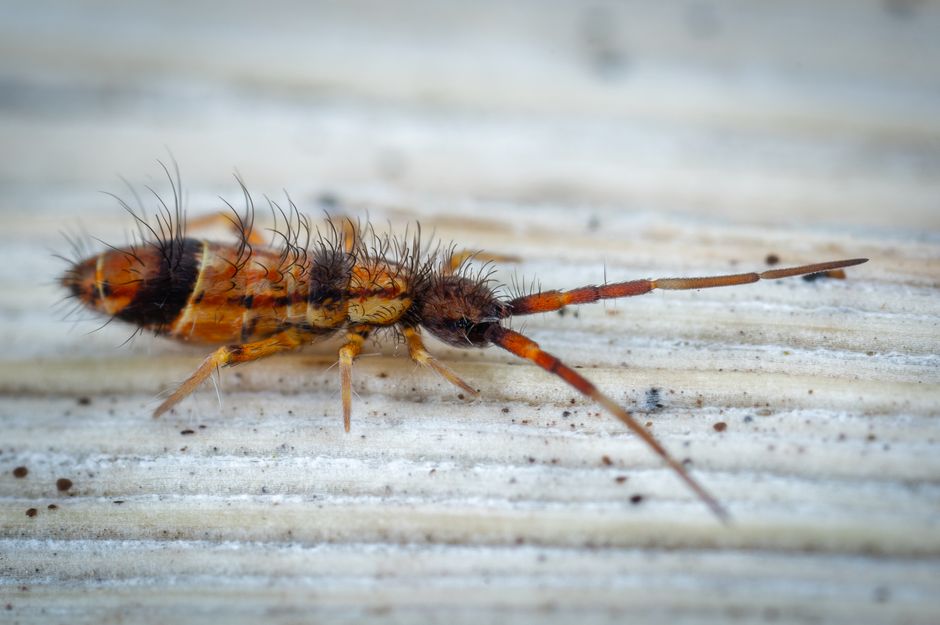
To identify them correctly, look for these specific traits:
- Size: They are incredibly tiny, typically ranging from 0.2 to 0.5 mm on average, though some species can reach up to 6 mm.
- The Furcula: This is the springtail’s most identifiable characteristic. It is a bi-forked, tail-like appendage folded under their abdomen. When threatened, they snap it downward, launching themselves up to 10 centimeters (about 4 inches) into the air. That is equivalent to a human jumping over a multi-story building!
- Appearance: They are wingless with a soft, segmented body and three pairs of legs. While many indoor species appear white or translucent, springtails come in a variety of colors and shapes, including gray, brown, black, and even purple.
Unlike fleas, which are hard-bodied and difficult to crush, springtails are soft-bodied and very delicate. If you find “jumping dust” in your saucers after watering, you’ve found your culprit.
Are Springtails Harmful or Beneficial to Your Plants?
The short answer is: they are mostly the “good guys.” Springtails are detritivores, meaning they spend their lives recycling nutrients. They feed on molds, algae, fungi, and decaying plant material. In a natural ecosystem, they are essential for breaking down organic debris into rich humus.
One of the biggest myths we hear in Northern Ohio is that these bugs bite. We can assure you that springtails do not bite humans or pets. They don’t have stingers, and they don’t carry diseases. They are strictly a “nuisance pest.”
Regarding your greenery, springtails do not feed on live plant matter like foliage or healthy stems under normal conditions. However, if the population explodes because the soil is too wet, they may nibble on tiny, tender root hairs or cause “stippling” (tiny pits) on seedlings.
Springtails vs. Fungus Gnats
It is easy to confuse these two moisture-loving pests. Here is how to tell them apart:
| Feature | Springtails | Fungus Gnats |
|---|---|---|
| Movement | Jumping/Hopping | Flying (Adults) / Crawling (Larvae) |
| Wings | None | Two wings (Adults) |
| Diet | Decaying matter/Fungi | Fungi/Plant roots |
| Sign of Trouble | Overwatering/Old soil | Overwatering/Organic decay |
| Larvae | Nymphs look like small adults | Translucent worms with black heads |
How to Get Rid of Springtails in Plants Naturally
If you want to know how to get rid of springtails in plants without reaching for heavy chemicals, you are in luck. Because these pests are so dependent on moisture, biological and physical controls are often more effective than sprays.
- Diatomaceous Earth (DE): Sprinkle food-grade DE on the surface of dry soil. This powder is made of fossilized algae with sharp edges that dehydrate the springtails upon contact. Note: DE only works when it is dry.
- Neem Oil: A neem oil soil drench can help disrupt the lifecycle of various soil pests. Mix according to the label and water your plant with the solution.
- Cedar Oil: This is another natural repellent that can discourage springtails from damaging your garden or indoor pots by making the environment unappealing.
For more information on identifying other common houseplant invaders, check out our guide on Pests.
Step-by-Step: How to Get Rid of Springtails in Plants Using Moisture Control
Moisture is the “fuel” for a springtail infestation. If you remove the water, you remove the springtails. We recommend this approach as part of any Spring Pest Management in Northeastern Ohio.
- The “Dry Out” Phase: Stop watering immediately. Let the top two to three inches of soil dry out completely. Springtails have a high surface-area-to-volume ratio and will desiccate (dry up) quickly without humidity.
- Improve Ventilation: Stagnant air keeps soil damp. Use a small fan to increase air circulation or check the ventilation in your home to ensure humidity levels stay below 50%.
- Clean the Saucers: Never let your plants sit in standing water. Empty the drainage trays 15 minutes after watering.
- Bottom Watering: Instead of pouring water on top of the soil (where springtails live), place the pot in a tray of water for 20 minutes to let the roots soak it up from the bottom. This keeps the top layer of soil dry and inhospitable.
How to Get Rid of Springtails in Plants by Repotting
If your plant is in old, “mucky” soil that stays wet for weeks, it’s time for a fresh start. Over time, potting mix breaks down and compacts, losing the air pockets that roots need. This creates a perfect breeding ground for springtails.
When you conduct periodic inspections and notice the soil is muddy or smells sour, follow these steps:
- Remove the plant from its pot and gently shake off as much old soil as possible.
- Rinse the roots under lukewarm water to wash away remaining hitchhikers.
- Clean the pot with a mild soap solution.
- Repot using a high-quality, sterile potting mix. Avoid mixes with high peat moss content if you struggle with overwatering, as peat retains significant moisture. Adding perlite or orchid bark can improve drainage.
If you find that pests are spreading from your plants to your baseboards or bathrooms, you may need our Residential Services to address the wider moisture issues in your home.
Advanced Treatments and Biological Controls
For those with large plant collections or persistent issues in greenhouses, biological controls are a fantastic “set it and forget it” solution.
- Predatory Mites (Hypoaspis miles): These tiny mites live in the top layer of soil and actively hunt springtails and fungus gnat larvae. They are harmless to plants, humans, and pets. Once the springtails are gone, the mites can survive on algae and plant debris, providing long-term protection.
- Insecticidal Soap: A soil drench with a labeled insecticidal soap can provide a quick knockdown. Ensure you use a product specifically labeled for indoor plants to avoid root burn.
- AzaMax and PyGanic: These are OMRI-listed (organic) botanical insecticides. AzaMax contains azadirachtin, which prevents pests from molting and feeding, while PyGanic provides a rapid contact kill.
Learning how to tackle Northeastern Ohio’s most common spring pests often involves a mix of these professional-grade products and environmental changes.
Frequently Asked Questions About Springtails
Do springtails bite humans or pets?
No. Despite the “jumping” behavior that reminds people of fleas, collembola do not bite. They do not have the mouthparts necessary to pierce skin. They are entirely harmless to your family and pets. If you feel an “itch” after seeing them, it is likely a psychological response or a reaction to the high-humidity environment (like mold) rather than the bugs themselves.
How long does it take to get rid of a springtail infestation?
If you focus on moisture control, you will see a massive reduction in population within 7 to 14 days. However, springtail eggs can survive in damp crevices. Consistency is key. By keeping the soil drier and improving airflow, you can break the lifecycle permanently within a month.
Can I use bleach or vinegar to kill springtails in soil?
We strongly advise against using bleach in your plant soil. Bleach is toxic to plant tissues and will likely kill your plant before it kills the bugs. While some people use a diluted cider vinegar spray for surfaces, it can drastically alter soil pH and damage sensitive roots. Stick to molds, mildew, fungi, and decaying plant material removal through drying and fresh soil rather than harsh household chemicals.
Conclusion
Springtails are more of a “messenger” than a “villain.” They are telling you that your plants are a little too wet or that your soil is starting to decay. By following the steps in this guide, you can successfully get rid of springtails in plants and create a healthier environment for your indoor jungle.
If you live in Northern Ohio — from Cleveland and Avon to Sandusky and Medina — and find that these tiny jumpers have moved from your plants into your walls, crawl spaces, or bathrooms, don’t tackle it alone. Our team at Black Dog Pest Solutions specializes in finding the root cause of moisture-loving pest invasions.
Ready to stop the hop for good? Contact Us for Professional Pest Services today and let our Avon-based experts restore peace to your home!