
Why Mice in Attic Removal Demands Immediate Action
Removing mice from attics is a critical challenge for Northern Ohio homeowners, especially during colder months. If you hear scratching sounds or find droppings, you likely have an active infestation requiring swift action.
Quick Answer: Essential Steps for Removing Mice from Attic
- Inspect – Look for droppings, gnaw marks, and damaged insulation.
- Trap – Place snap traps along walls and activity areas.
- Seal – Close gaps larger than 1/4 inch with steel wool or metal flashing.
- Sanitize – Remove contaminated insulation and disinfect.
- Monitor – Check traps daily for new activity.
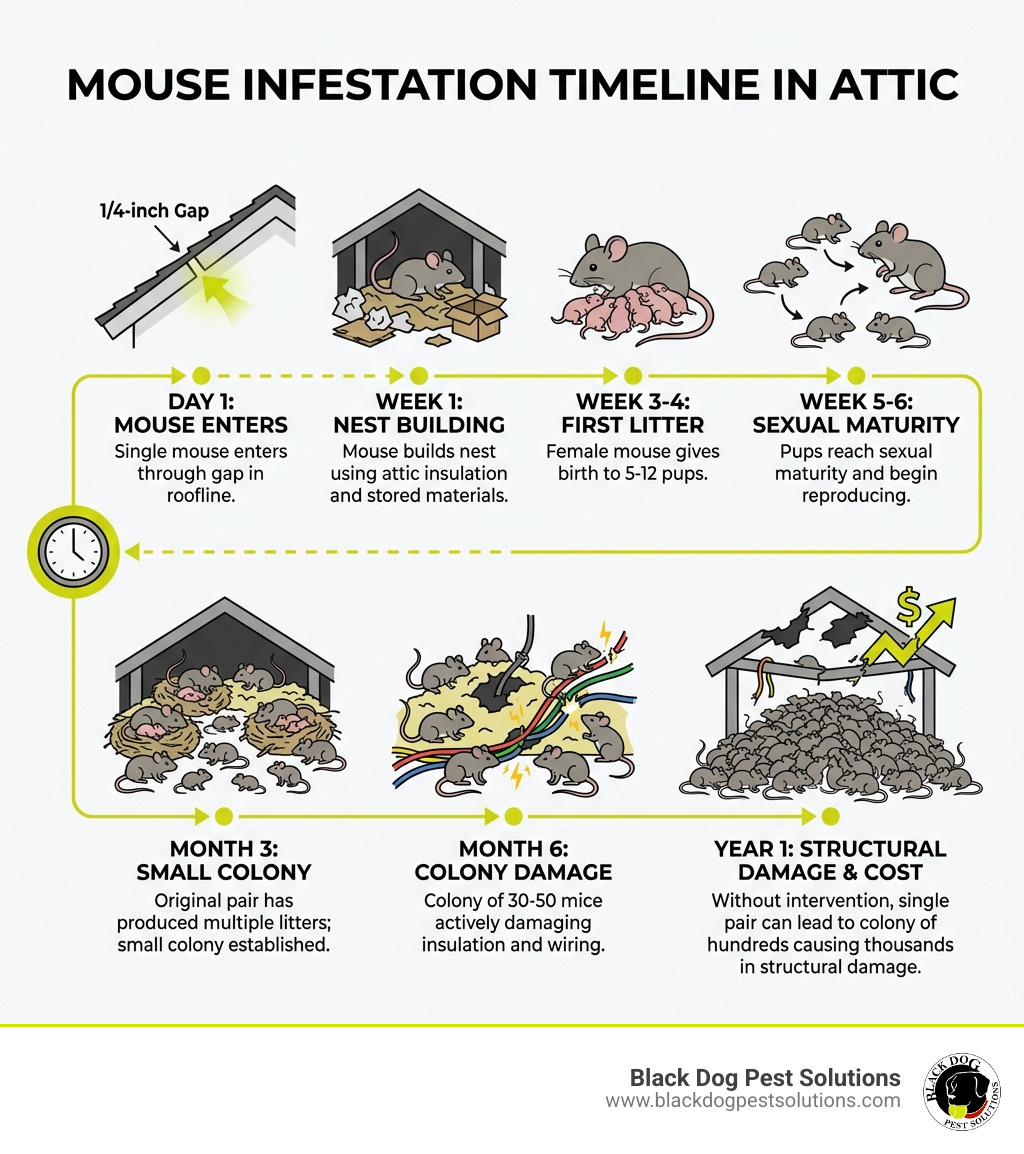
Urgency is vital. A single female mouse can reproduce every three to four weeks, meaning one pair can lead to hundreds within a year. Mice cause serious damage by chewing electrical wiring, destroying insulation, and spreading diseases like Hantavirus and Salmonella. They can squeeze through openings as small as a dime. Once inside, they build nests in insulation, often remaining undetected while contaminating your home.
In Northern Ohio, attic infestations tend to spike when outdoor temperatures drop. Mice follow warmth and food, and attics offer both. Even if the problem seems small (a few droppings near the hatch or occasional sounds at night), it can escalate quickly because mice:
- Hide in insulation where activity is hard to see from the attic entrance.
- Travel along rafters and wall tops, staying out of sight.
- Create multiple nest sites, especially if stored boxes or holiday decorations provide cover.
Property risks are not limited to chewed wiring. Mice also shred insulation for nesting, which reduces R-value and can lead to higher heating bills. Their constant gnawing can damage wood, cardboard, and ductwork, and urine contamination can create persistent odors that seep into living spaces.
Health risks are significant. Droppings can become airborne, transmitting diseases through inhalation, especially if insulation is disturbed during storage retrieval or DIY cleanup. Mice also carry parasites like fleas and ticks. If anyone in the home has asthma, allergies, or a compromised immune system, the presence of rodent allergens in the attic can be an added concern.
I’m Mat Ledyard, owner of Black Dog Pest Solutions in Avon, Ohio. Since 2005, I’ve helped homeowners across Northeast Ohio reclaim their peace of mind through effective removal of mice from attics. The goal is not just to catch a few mice, but to stop the entire cycle: remove the rodents, block entry points, and restore the attic so it is clean and energy efficient again.
Identifying the Signs of an Infestation
Before beginning mice in attic removal, we must confirm their presence. Often, the first signs in Northern Ohio homes are auditory or olfactory rather than visual.
Common Signs of a Mouse Infestation
- Scratching Sounds: Homeowners in Avon, Westlake, and Strongsville often report scurrying or squeaks at night. Mice are nocturnal and most active after dark.
- Musky Odors: A persistent, ammonia-like smell from urine and droppings is a strong indicator, often noticeable in enclosed attic spaces.
- Mouse Droppings: These are small, dark, and pointed, roughly the size of a grain of rice. Feces smaller than 1/4 inch are typically from mice. Learn more on our Do You Have A Pest Problem? Key Signs Every Owner Must Know page.
- Gnaw Marks: Mice chew on wires, wooden beams, and insulation to file their teeth. Fresh marks appear lighter in color.
- Grease Marks and Tracks: Oils from their fur leave greasy smudges along walls. You may also see tiny footprints in dusty areas.
- Nests and Burrows: Mice build round nests from shredded insulation or fabric. They also tunnel through insulation, creating visible “hallways.”
| Trait | Mouse | Rat |
|---|---|---|
| Droppings | Small, < 1/4 inch, pointed | Larger, > 1/4 inch, blunter |
| Size | Small, slender (5-6 inches) | Larger, stockier (up to 15+ inches) |
| Snout | Pointed | Blunter |
| Behavior | Timid, curious | Cautious, bolder when cornered |
If you suspect rats, visit our Rats page.
The Complete Process for Mice in Attic Removal
Effective mice in attic removal requires a multi-faceted approach: thorough inspection, strategic trapping, and sealing entry points.
Our process begins with a detailed inspection using safety gear. We examine the attic for droppings, rub marks, and nesting material, then conduct a perimeter check of your property in areas like Lorain and Elyria. Mice can enter through gaps larger than a quarter-inch. We check foundations, utility lines, and rooflines, as mice are excellent climbers. The Rodent Exclusion Manual highlights the importance of these mechanical proofing techniques.
During inspection, we focus on two questions that determine whether the problem will truly end:
- Where are mice getting in (current entry points and travel routes)?
- What conditions are helping them stay (food sources, nesting material, and shelter)?
Common attic-related entry points we see in Greater Cleveland and surrounding communities include:
- Gaps at roof-to-wall intersections and fascia returns.
- Openings around plumbing stacks, electrical penetrations, and HVAC lines.
- Unscreened or damaged attic vents.
- Gaps near garage rooflines that connect into attic spaces.
We also look for evidence that tells us how active the infestation is right now, such as fresh droppings, newly chewed materials, or visible runways through insulation. This matters because a light, recent intrusion can sometimes be resolved quickly, while established activity typically requires higher trap counts and more extensive exclusion.
Strategic Trapping
- Bait: We recommend peanut butter, bacon, or chocolate, high-protein baits with strong scents.
- Placement: Place snap traps flush against walls with the trigger facing the wall. Focus on high-activity areas in North Ridgeville or Westlake.
- Quantity: Set numerous traps to outpace rapid reproduction.
- Monitoring: Check traps daily to dispose of rodents and reset. Avoid indoor poisons, as poisoned mice may die in walls, causing lingering odors.
Trapping works best when you think like a mouse. Mice typically run tight to edges rather than crossing open spaces. Setting traps in the middle of the attic floor usually underperforms compared to placing them:
- Along top plates (where attic floor meets the wall line).
- Near insulation tunnels, droppings, or nesting pockets.
- On stable surfaces where traps will not tip or get buried.
If you are trapping during an active infestation, consistency matters more than any single bait choice. A daily check schedule helps you confirm progress, remove rodents quickly, and adjust placement if activity shifts.
For comprehensive help in Vermillion or Huron, see our residential services.
Sealing Entry Points
Sealing is the most critical step for long-term mice in attic removal.
- Identify Gaps: We pinpoint holes around utility lines, vents, and rooflines.
- Durable Materials: We use materials mice cannot chew through, such as steel wool, copper mesh, metal flashing, and concrete mortar. Avoid spray foam, as mice easily penetrate it.
- Landscaping: Trim tree branches away from the roof to remove “ladders” for rodents.
- Sanitation: Store food in airtight metal or plastic containers and reduce clutter to eliminate nesting sites.
For homeowners, sealing can be the hardest step because the most important gaps are often the least visible. A thorough approach includes checking:
- Attic venting (gable vents, soffit vents, ridge vents) for damage or missing screens.
- Roof penetrations (pipes, vent stacks, satellite or cable lines) for gaps around flashing.
- Areas where different building materials meet (siding to masonry, roofline to fascia).
It is also important to time exclusion correctly. If you seal without reducing the population inside, you can trap mice in the attic, where they may search for alternate paths into living spaces. The most reliable results come from combining trapping with exclusion work so activity drops as entry points close.
Our What Cleveland Homeowners Need to Know About Pest Problems guide offers further prevention tips.
Health Risks and Professional Attic Restoration
An infestation leaves behind biohazards that impact your family’s health. Professional restoration is often necessary to make your home safe again.
Health Risks
- Hantavirus: Transmitted through airborne particles of dried urine and droppings. Disturbing nests can release these particles.
- Salmonella: Mice contaminate food and surfaces via waste.
- Leptospirosis: A bacterial disease spread through contact with mouse urine.
- Parasites: Mice carry ticks, mites, and fleas, which can transmit Lyme disease or other pathogens.
Cleaning nests without proper gear is dangerous. Professional restoration removes these risks entirely.
Why Restoration is Important
Attic restoration eliminates biohazards, removes persistent odors that simple cleaning can’t reach, and addresses structural damage. Mice tear up insulation, reducing energy efficiency, and gnaw on wires, creating fire risks. Restoration also removes pheromone trails that attract new rodents.
The Professional Process
- Assessment: We inspect the extent of damage and remove any live mice.
- Removal: We extract soiled insulation and droppings using specialized equipment.
- Sanitization: We disinfect the attic with EPA-registered products and HEPA vacuuming.
- Odor Neutralization: Professional-grade neutralizers eliminate musky smells.
- Repair and Exclusion: We fix structural damage and seal all entry points.
- New Insulation: We install fresh insulation to restore efficiency.
For help choosing a pro, see our Key Questions to Ask an Exterminator in Northern Ohio page.
Frequently Asked Questions
How small of a hole can a mouse fit through?
Mice can squeeze through openings as small as a dime or a quarter-inch gap. Their flexible skeletons allow them to compress their bodies through tiny cracks, making thorough sealing essential.
Why do mice prefer nesting in the attic?
Attics provide warmth, safety from predators, and abundant nesting materials like insulation. They also offer easy access to the rest of the home for food foraging.
Is DIY mice removal effective for large colonies?
DIY methods often fail against established colonies due to rapid reproduction rates and hidden nests. Homeowners frequently miss entry points or fail to use enough traps. Professional services ensure complete eradication and long-term prevention.
Conclusion
Mice in your attic are a serious threat to your home’s integrity and your family’s health. While DIY steps can help, effective mice in attic removal requires professional expertise to ensure complete elimination and restoration. At Black Dog Pest Solutions, we provide reliable pest control throughout Northern Ohio, including Avon, Cleveland, and surrounding communities. Don’t let rodents compromise your peace of mind. Contact us today to reclaim your home.