
The Truth About Brown Recluse in Ohio: What Homeowners Need to Know
Brown recluse Ohio is one of the most searched — and most misunderstood — spider topics in the state. Here’s what the science actually says:
Quick Answer:
- Brown recluse spiders are rare in Ohio
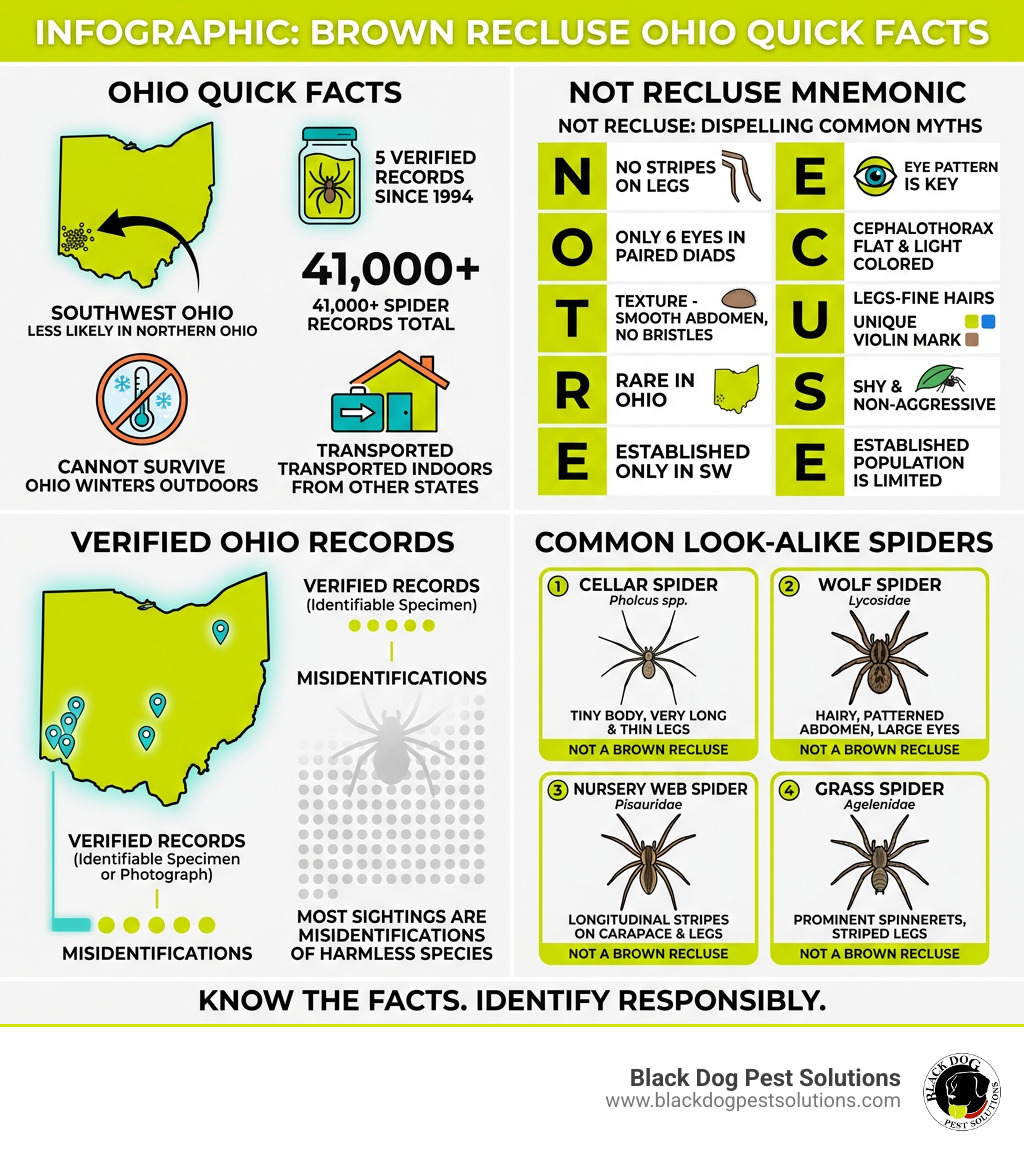
- Only 5 verified records exist in Ohio since 1994, out of 41,000+ spider records
- Most sightings are misidentifications of harmless look-alike species
- The few that do turn up are almost always transported indoors from other states
- Brown recluses are most likely to appear in southwestern Ohio, near the Indiana border
- They cannot survive Ohio winters outdoors and are not an established wild population
The fear around brown recluses in Ohio is largely driven by media coverage and urban legends, not hard evidence. Ohio State University Extension regularly receives spider specimens from worried homeowners — and the vast majority turn out to be something else entirely. This phenomenon is often called “arachno-hype,” where a single unverified report can trigger a wave of panic across social media groups in Cleveland, Columbus, and beyond. If you found a brown spider in your basement, odds are it is not a brown recluse.
I’m Mat Ledyard, owner of Black Dog Pest Solutions in Avon, Ohio, with nearly two decades in the pest control industry serving Northeast Ohio homeowners. In all my years handling spider concerns across the region, confirmed brown recluse Ohio cases are genuinely rare — but knowing how to identify and respond to them correctly makes all the difference. To help homeowners, experts often use the “NOT RECLUSE” mnemonic to rule out these spiders based on leg spines, eye count, and markings.
Are Brown Recluse Spiders Common in Ohio?
When people hear the words Brown recluse, they often imagine an army of venomous spiders lurking in every dark corner of their Cleveland or Akron home. However, the reality is much less cinematic. According to the Ohio Spider Survey, which has collected over 41,000 spider records since 1994, there have been only five separate records of brown recluse spiders supported by an identifiable photograph or actual specimen.
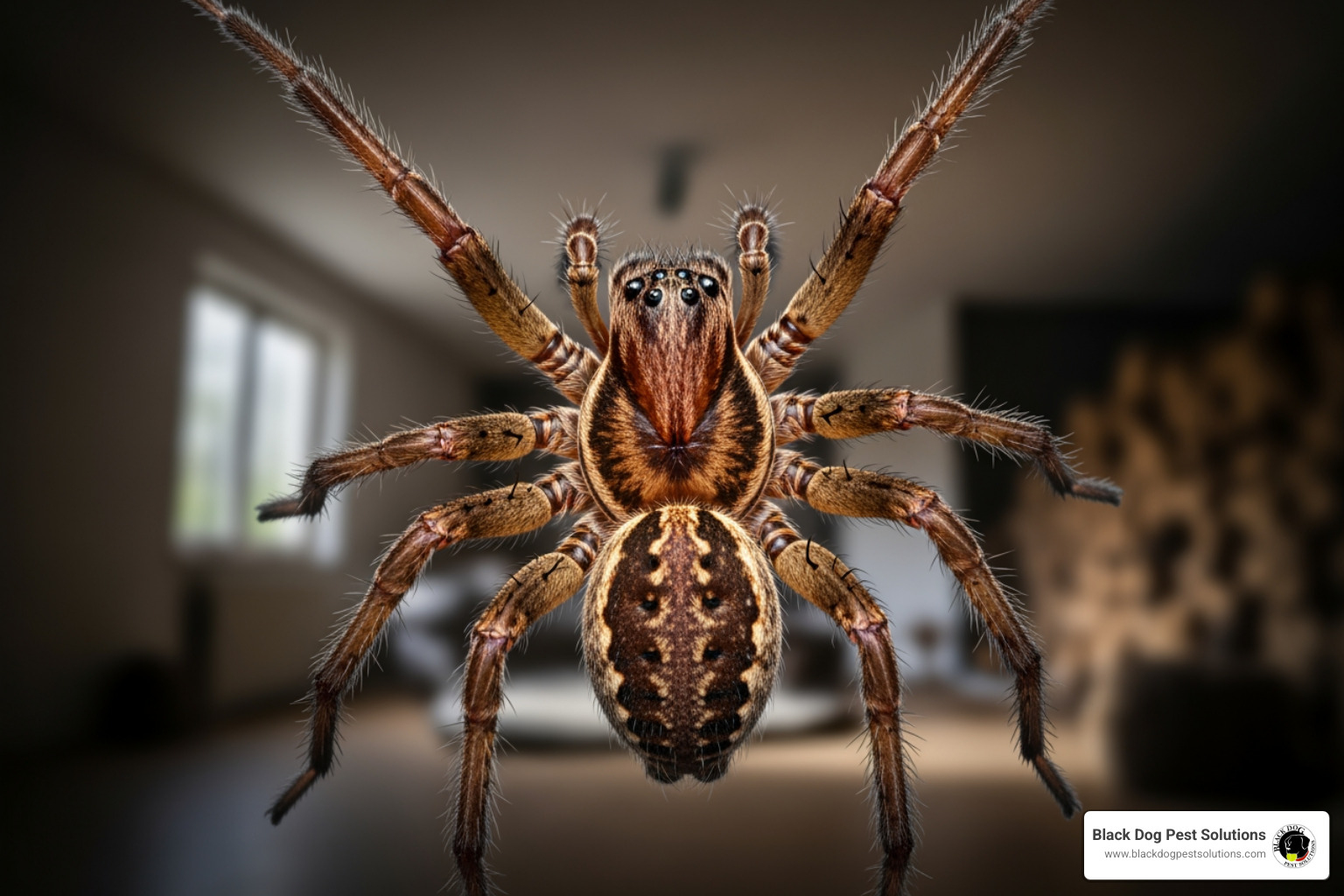
The native range of the brown recluse (Loxosceles reclusa) actually stops just at the edge of southwestern Ohio. While they are established in states like Kentucky and Indiana, their presence in Northern Ohio—including areas like Avon, Lorain, and Elyria—is almost exclusively due to “hitchhiking.” These spiders are often transported in boxes, furniture, or cargo from endemic southern regions. Because they are not fans of our freezing winters, they are found almost strictly indoors in climate-controlled buildings.
Interestingly, you are actually more likely to encounter the Mediterranean recluse (Loxosceles rufescens) in Ohio than the actual brown recluse. This cousin looks nearly identical but is also an introduced species.
| Feature | Brown Recluse (L. reclusa) | Mediterranean Recluse (L. rufescens) |
|---|---|---|
| Origin | Native to South-Central US | Introduced from Mediterranean |
| Ohio Status | Rare; mostly southwestern | Rare; scattered indoor records |
| Habitat | Buildings, woodpiles (South) | Deep infrastructure, basements |
| Venom | Medically significant | Medically significant |
Identification and Misidentification
The biggest challenge with the Brown recluse in Ohio conversation is that many people think “brown spider = brown recluse.” In reality, we have over 620 species of Spiders in Ohio, and many of them are brown.
To accurately identify a recluse, you have to look closer than just the color. A detailed identification guide is essential because the famous “violin” mark isn’t always a “smoking gun.”
Physical Characteristics of the Brown Recluse in Ohio
If you are brave enough to get close (or have a good magnifying glass), look for these specific traits:
- The Eyes: Most spiders have eight eyes. The recluse has only six, arranged in three pairs (dyads).
- The “Fiddle”: They have a dark, violin-shaped marking on the cephalothorax (the front body part), with the neck of the fiddle pointing toward the abdomen.
- The Legs: Their legs are smooth. If you see thick, prominent spines or “thorns” on the legs, it is definitely not a recluse.
- The Abdomen: The abdomen is a uniform color—usually tan or brown—with fine hairs but no patterns, spots, or stripes.
Common Spiders Mistaken for Recluses
In Northern Ohio, we see several “look-alikes” that frequently cause panic.
- Wolf Spiders: These are large, hairy, and move fast. They have eight eyes and often have stripes on their backs.
- Grass Spiders: These build funnel webs in the grass and have prominent “tail” structures (spinnerets).
- Cellar Spiders: Often called “daddy long-legs,” these have extremely long, thin legs and a vibrating defense mechanism. They are common in Ohio basements and are completely harmless to humans, though they are often confused with recluses due to their color and habitat.
- Running Crab Spiders: These are often flat and brown, but their eye patterns are completely different.
Understanding the Bite: Symptoms and Realities
The reputation of the Brown recluse bite is often worse than the bite itself. According to scientific research on bite severity, about 90% of brown recluse bites result in no reaction or a small red bump that heals on its own. Only about 10% result in the “dermonecrotic” lesions (skin death) that make the news.
It is also vital to remember that these spiders are not aggressive. They are called “recluse” for a reason—they want to stay away from you. Most bites happen when a spider is accidentally crushed against the skin, such as when someone puts on a pair of shoes that has been sitting in a dark garage or rolls over on one in bed.
What to Do if You Suspect a Brown Recluse Bite
If you think you’ve been bitten, don’t panic. Follow these bite treatment protocols:
- Clean the wound: Wash with soap and water.
- Apply Ice: Use a cool compress or ice pack to reduce swelling and slow the venom.
- Seek Medical Care: Especially if the bite develops a “bullseye” pattern or you start feeling systemic symptoms like fever or nausea.
- Catch the Spider: If possible, safely catch the spider in a jar. Doctors cannot easily diagnose a spider bite by looking at a wound alone; having the specimen is the only way to be 100% sure.
Why Misdiagnosis is Common in Ohio
Many “spider bites” reported in Ohio are actually not caused by spiders at all. Medical professionals often see necrotic wounds that look like recluse bites but are actually caused by:
- MRSA: A type of staph infection that creates painful, ulcerated sores.
- Diabetic Ulcers: Poor circulation can lead to skin death that mimics venom effects.
- Poison Ivy: Severe allergic reactions can sometimes blister and look like bites.
You can find more info about other causes of necrotic wounds to help distinguish between an infection and a rare arachnid encounter.
Prevention and Professional Control
Preventing Brown recluse encounters is all about Integrated Pest Management (IPM). We focus on making your home less attractive to spiders and their food sources. IPM isn’t just about applying treatments; it’s a holistic approach that involves environmental modification.
- Declutter: Recluses love cardboard boxes. Switch to plastic bins for storage in your basement or attic to eliminate hiding spots.
- Seal the Gaps: Use caulk to seal cracks around windows, doors, and foundations. This prevents spiders and the insects they eat from entering.
- Manage Humidity: Many of the insects that spiders prey upon thrive in damp environments. Using a dehumidifier in your basement or crawlspace can make your home less hospitable to the entire pest food chain.
- Shake it Out: If you keep shoes or gloves in the garage, shake them out before putting them on.
- Sticky Traps: Placing sticky traps along baseboards is a great way to monitor for spider activity and identify exactly what species are present.
If you are seeing multiple brown spiders and aren’t sure what they are, it’s time to get more info about spider services.
Frequently Asked Questions about Ohio Spiders
Can brown recluses survive the winter in Ohio? Outdoors? No. They are southern spiders that can’t handle the deep freeze of Northern Ohio. Indoors? Yes, they can live for years in a heated basement or warehouse, which is why they are almost exclusively found in climate-controlled structures in our state.
Are they aggressive? Not at all. They would much rather run away than fight. They are actually scavengers that often prefer eating dead insects over hunting live ones! Most bites occur only when the spider is trapped against human skin.
Where do they hide? They prefer dark, undisturbed areas like crawl spaces, behind baseboards, or inside stacks of old newspapers and cardboard. They are nocturnal hunters, meaning they are most active at night when the household is quiet.
Conclusion
While the Brown recluse in Ohio is a real species, it isn’t the pervasive threat that local legends suggest. Most of the spiders we encounter in the Greater Cleveland area are harmless neighbors that actually help control other pests. However, we understand that “rare” doesn’t mean “never,” and the peace of mind that comes with a pest-free home is invaluable.
At Black Dog Pest Solutions, we pride ourselves on providing peace of mind to our neighbors in Avon, Westlake, Rocky River, and beyond. Whether you are in Lorain, Elyria, or the heart of Cleveland, our team is equipped with the latest tools and knowledge to identify exactly what is crawling in your home. We don’t just treat the symptoms; we address the root causes of infestations to ensure long-term protection for your property and your family’s safety. If you’re worried about spiders in your home, don’t rely on internet myths. Let us provide a professional inspection and a custom plan to keep your family safe.
Schedule a professional spider inspection with us today and rest easy knowing your home is protected.