
Why Dead Mouse Removal Requires Immediate Action
Dead mouse removal is a task every homeowner dreads, but acting quickly protects your family’s health and eliminates foul odors before they spread throughout your home. Whether you’ve finded a carcass in the open or suspect one hidden inside your walls, knowing how to remove it safely prevents exposure to serious diseases.
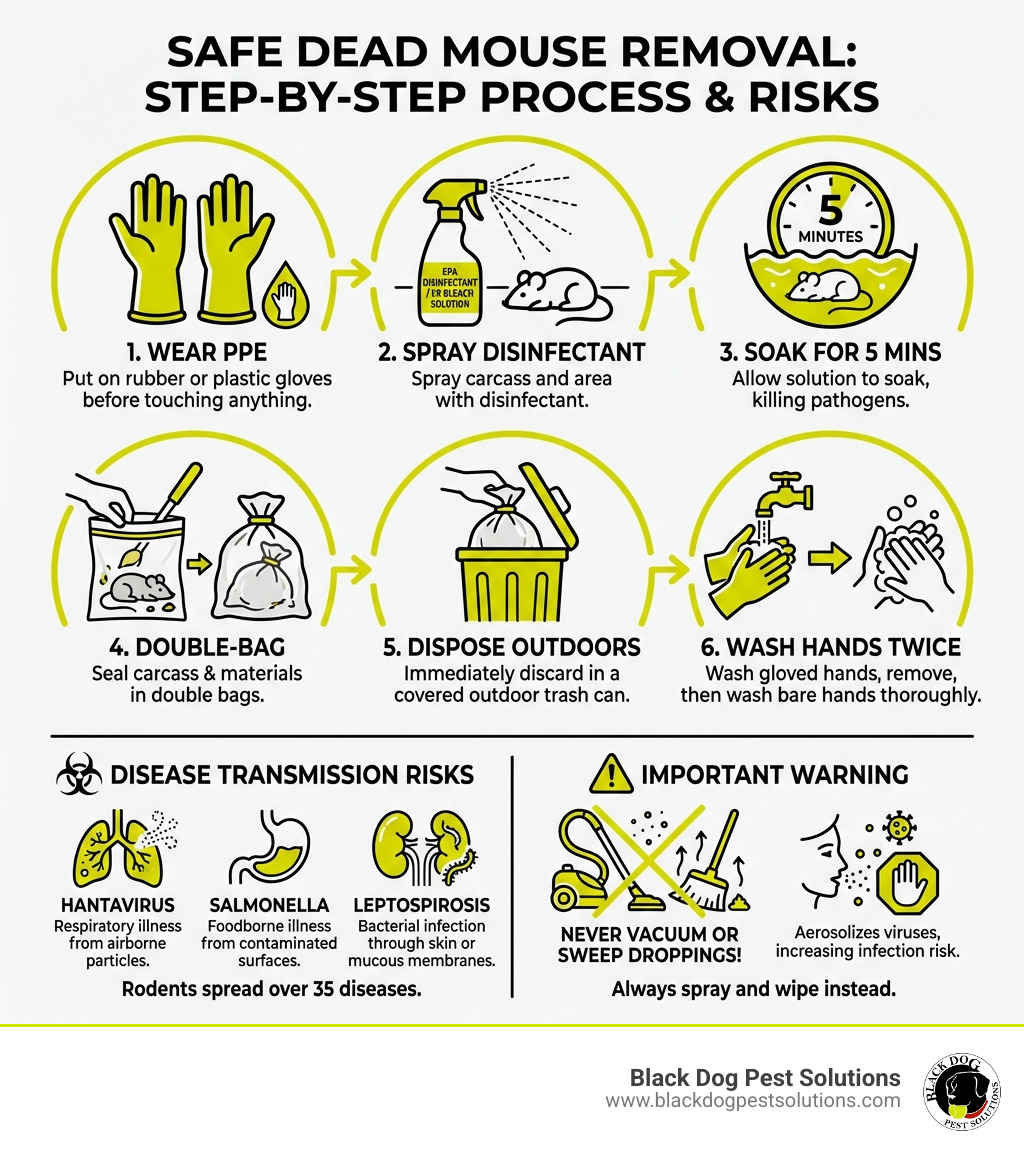
Quick Steps for Safe Dead Mouse Removal:
- Put on rubber or plastic gloves before touching anything
- Spray the dead mouse and surrounding area with disinfectant or a 1:9 bleach solution
- Let the disinfectant soak for 5 minutes to kill pathogens
- Place the mouse in a sealed plastic bag, then place that bag inside another sealed bag
- Dispose in a covered outdoor trash can immediately
- Wash your gloved hands with soap, remove gloves, then wash bare hands thoroughly
Never vacuum or sweep mouse droppings or nesting materials—this can send dangerous viruses airborne. Always spray and wipe instead.
The stakes are real. Rodents spread over 35 diseases worldwide, including Hantavirus, salmonella, and leptospirosis. Their bodies and droppings harbor these pathogens even after death. Dead mice also attract secondary pests like flies, beetles, and even larger scavengers such as snakes and raccoons, creating a cascade of problems if left unaddressed.
Rodents invade about 21 million homes in the United States every winter, and in Northern Ohio’s cold months, mice seek warmth in attics, walls, and crawlspaces. When they die in hard-to-reach locations, the decomposition odor can last two weeks or longer, depending on humidity and airflow. Worse, the smell doesn’t pinpoint the exact location—it disperses through wall voids and ventilation systems, making detection frustrating.
I’m Mat Ledyard, owner of Black Dog Pest Solutions in Avon, Ohio, and I’ve been handling dead mouse removal and rodent infestations across Northeast Ohio since 2005. Over nearly two decades in pest control, I’ve helped hundreds of homeowners safely eliminate rodent problems and prevent future invasions through thorough exclusion and prevention strategies.
Dead mouse removal word guide:
Why Safe Dead Mouse Removal Matters
When we talk about dead mouse removal, we aren’t just talking about getting rid of a smell. We are talking about biological safety. A mouse might be small, but it is a powerhouse for pathogens. According to the CDC, rats and mice can transmit a number of diseases to humans, including Hantavirus Pulmonary Syndrome, Hemorrhagic Fever, and even the Bubonic Plague.
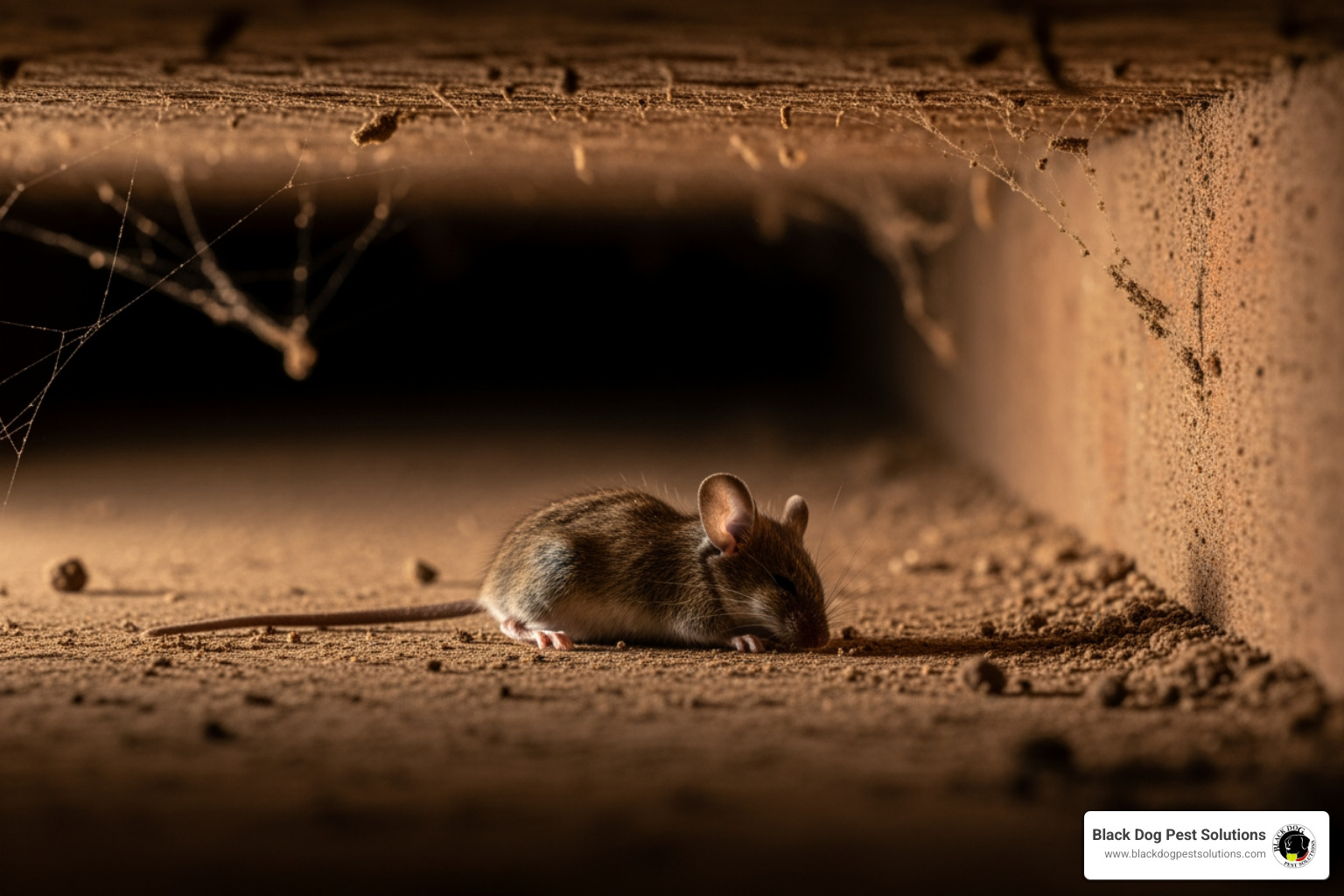
In our service areas like Lorain and Elyria, we often see how a single dead rodent can compromise an entire crawlspace. It isn’t just the mouse itself; it’s the “hitchhikers” it brings along. Fleas, ticks, and mites often leave a cooling carcass in search of a new, warm-blooded host—which could be your dog, your cat, or you. This is why we emphasize that you should never handle a mouse directly, even if it looks “dried out.”
Professional Dead mouse removal for Heavy Infestations
In cases of heavy infestation, the risks multiply. Rodents are capable of dropping up to 25,000 fecal pellets each year—that’s about 70 times a day! When these droppings or nesting materials are disturbed during a DIY dead mouse removal, viruses can become aerosolized. This means you could literally breathe in Hantavirus just by sweeping up a mess.
For these high-risk situations, we use professional-grade Personal Protective Equipment (PPE), including HEPA respirators and full-body protective coveralls. If you walk into a shed or attic in Sandusky or North Ridgeville and see “carpets” of droppings, stop what you are doing. This is the point where residential services become a matter of health and safety rather than just convenience.
| Disease | Primary Symptoms | Transmission Method |
|---|---|---|
| Hantavirus | Fatigue, fever, muscle aches, shortness of breath | Inhaling dust contaminated with urine/droppings |
| Salmonella | Diarrhea, fever, abdominal cramps | Consuming food/water contaminated by rodent waste |
| Rat-Bite Fever | Fever, vomiting, joint pain, rash | Contact with dead rodents or contaminated surfaces |
Preparation and PPE for Rodent Cleanup
Before you start your dead mouse removal journey, you need to gear up. We recommend a “safety first” mindset. You wouldn’t handle toxic chemicals without protection, and a dead rodent is a biological hazard.
Personal Protective Equipment
- Gloves: Use non-absorbent gloves, such as rubber, vinyl, or nitrile. Avoid fabric gloves, which can trap pathogens against your skin.
- Clothing: Wear long sleeves and pants that you can wash immediately after the cleanup.
- Repellents: Since fleas often jump off dead rodents, consider applying EPA-registered repellents containing DEET to your clothing and shoes before entering a heavily infested area like an attic or basement.
Ventilation and Dust Suppression
Before you begin cleaning, open windows and doors to ventilate the area for at least 30 minutes. However, stay out of the room while it airs out to avoid breathing in any initial dust. The most important rule in dead mouse removal is dust suppression. Never use a broom or a standard vacuum. Instead, use a liquid disinfectant to wet down the area, which keeps the “dust” (and the viruses it carries) on the ground.
Disinfectant Solutions for Dead mouse removal
You don’t need fancy equipment to kill rodent-borne germs, but you do need the right chemistry. We recommend:
- Bleach Solution: Mix 1.5 cups of household bleach with 1 gallon of water (a 1:9 ratio). This is highly effective but can bleach fabrics and carpets.
- EPA-Registered Disinfectants: Look for a disinfectant cleaning product that specifically lists “disinfectant” on the label.
- Enzyme Cleaners: These are fantastic for breaking down the organic proteins in urine and “body juices” that cause the lingering “dead mouse smell.”
Always allow the solution to soak for at least 5 minutes before wiping. This “dwell time” is what actually kills the viruses.
Step-by-Step Guide to Dead mouse removal
Once you are suited up and your disinfectant is ready, follow these steps to ensure the mouse—and its germs—are gone for good.
- Spray the Target: Thoroughly soak the dead mouse, any nesting material, and droppings with your disinfectant. Don’t be shy; you want the material to be wet.
- The Wait: Let it sit for 5 minutes. This is crucial for safety.
- The Scoop: Using a paper towel or a disposable scoop, pick up the mouse and the nesting material.
- Double-Bagging: Place the mouse and soiled materials into a plastic bag. Seal it. Now, take that bag and place it into a second plastic bag and seal that one too. This “double-bagging” technique is the industry standard for minimizing odors and preventing leaks.
- Disposal: Throw the double-bagged rodent into a covered outdoor trash can. Do not leave it in your kitchen trash!
- Clean the Area: Mop or wipe the floor/surface where the mouse was found with more disinfectant.
- Hand Hygiene: This is the part people miss. Wash your gloved hands with soap and water or disinfectant. Remove the gloves and dispose of them. Then, wash your bare hands thoroughly with warm water and soap.
Safe Dead mouse removal in Walls and Attics
What if the mouse isn’t lying on the kitchen floor? Finding a dead mouse in a wall is a common complaint we hear from customers in Westlake and Bay Village.
- Odor Tracking: Use your nose. The smell will be strongest right next to the carcass.
- The Sniff Test: Move your nose along the wall. When the scent shifts from “generally bad” to “overwhelming,” you’ve found the spot.
- Drywall Saws: If the mouse is in a wall void, you may need to use a drywall saw to cut a small “peek hole” to extract it.
- Thermal Cameras: Professionals often use thermal imaging. While a dead mouse doesn’t produce heat, the decomposition process can sometimes create a slight temperature difference that a sensitive camera can detect.
- Air Ducts: If you suspect a rodent died in your HVAC system, don’t try to fish it out yourself. Companies specializing in duct cleaning have the specialized cameras and vacuum equipment to handle this without spreading germs through your vents.
Trap Cleaning and Reuse
If you caught the mouse in a snap trap and want to reuse it:
- Submerge the entire trap (with the mouse still in it) in disinfectant.
- After 5 minutes, wear gloves to release the mouse into your disposal bag.
- Scrub the trap, rinse it, and let it air dry completely before rebaiting.
Cleaning Contaminated Surfaces and Vehicles
Mice don’t just stay on the floor. They climb into drawers, nest in car engines, and shred your favorite books.
Porous vs. Non-Porous Surfaces
For hard surfaces like tile or laminate, a simple wipe-down with disinfectant works. For porous items, things get trickier:
- Clothing and Bedding: Wash in hot water with laundry detergent. Dry on a high-heat setting.
- Carpets and Upholstery: Use a commercial disinfectant or with a commercial-grade steam cleaner or shampoo to deep-clean the fibers.
- Books and Papers: These cannot be “washed.” The best method is to leave them in a sunny, well-ventilated area for several days. Sunlight (UV rays) is a natural disinfectant. For valuable papers, sometimes waiting several weeks is necessary to ensure any viruses have naturally died off.
Rodents in Vehicles
In Northern Ohio, mice love nesting in car engines during the winter.
- Inspect: Check the air intake, cabin air filter, and under the engine cover.
- Disinfect: Spray any nesting material before removing it.
- Professional Help: If you find a nest in your car’s blower motor or deep in the dash, take it to a mechanic. Turning on the AC with a dead mouse in the vent can blast your cabin with pathogens.
Understanding Decomposition and Odor Timelines
Why does one dead mouse smell like a biological weapon? It’s all about the biology of decay.
- The Timeline: A mouse typically takes about 2 weeks to fully decompose. The odor is usually at its peak between days 3 and 10.
- Environmental Factors: High humidity and low airflow (like in a basement in Lakewood or Cleveland) will make the smell linger much longer. In a dry, breezy attic, the mouse might “mummify” into what we call “mouse jerky,” which smells less but can attract “larder beetles” and other scavengers.
- Secondary Pests: A dead mouse is a buffet for blow flies and beetles. If you suddenly see large, lazy flies in your windows, it’s a sign there is a carcass nearby.
- Odor Masking: Don’t waste money on heavy perfumes or body sprays. Trying to mask the smell often creates a “floral-decay” scent that is even more nauseating. Use room deodorizers that contain charcoal or baking soda to absorb the smell rather than cover it up.
Frequently Asked Questions about Dead Mouse Removal
How long does the smell of a dead mouse last?
In most Northern Ohio homes, the smell of a single dead mouse lasts about 10 to 14 days. However, if the mouse is large (like a rat) or if there are multiple mice, it can last for several weeks. Temperature plays a huge role; heat accelerates the smell, while cold preserves the carcass and stretches out the timeline.
Can I vacuum mouse droppings?
Absolutely not. This is the most common mistake homeowners make. Vacuuming—even with a shop vac—exhausts air back into the room. This air can carry microscopic Hantavirus particles directly into your lungs. Always use the “spray-and-wipe” method with a liquid disinfectant.
How do I prevent mice from dying in my walls?
The best way to prevent a “mystery smell” in your walls is to stop using rodenticide (poison) indoors. When a mouse eats poison, it doesn’t die instantly. It crawls into the deepest, warmest part of your house—usually a wall void or under insulation—to die. Use snap traps or electronic traps instead, so you can find and remove the mouse immediately.
Conclusion
Dead mouse removal is more than a chore; it’s a necessary step in keeping your home in Northern Ohio safe and healthy. From Avon to Rocky River, we’ve seen how a small rodent problem can turn into a major headache if not handled with the right PPE and disinfection protocols.
If the smell is too much to handle, or if you suspect a heavy infestation in your attic or crawlspace, don’t risk your health. At Black Dog Pest Solutions, we specialize in not just removing the problem, but ensuring it never comes back. We look for those tiny 1/4 inch gaps—the size of a pencil—where mice squeeze in, and we seal them tight.
Don’t live with the “bouquet of decay” any longer. Whether you need an inspection in Strongsville or a full clean-out in Cleveland, we are here to help.
Schedule your dead mouse removal today and let us help you take your home back!