
What Does Chipmunk Removal Cost? A Quick Answer for Northern Ohio Homeowners
Chipmunk removal cost typically ranges from $200 to $600 for professional service, depending on the size of the infestation, the removal method used, and your location.
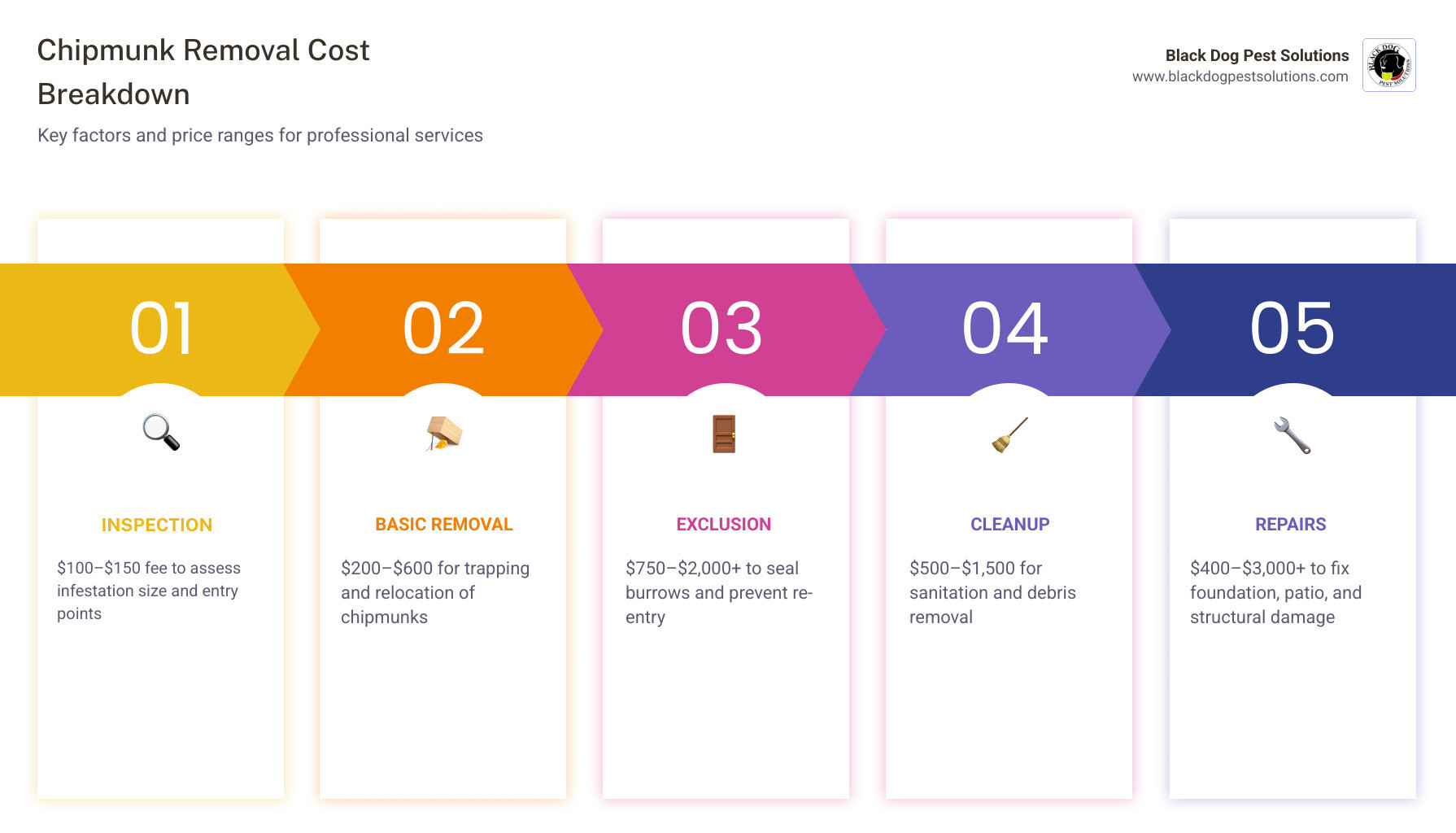
Here’s a quick breakdown to answer your question fast:
| Service Type | Typical Cost Range |
|---|---|
| Professional chipmunk removal (basic) | $200 – $600 |
| Inspection fee | $100 – $150 |
| Exclusion (sealing entry points) | $750 – $2,000+ |
| Cleanup and sanitation | $500 – $1,500 |
| Damage repairs | $400 – $3,000+ |
| DIY traps and repellents | $20 – $100 |
These are national averages. Your actual cost will depend on how severe the infestation is and what methods are needed.
Chipmunks may look harmless, but don’t let that fool you. Their burrows can reach 3 feet deep and up to 30 feet long, threatening foundations, patios, and landscaping. When a small problem goes unaddressed, costs can climb fast.
I’m Mat Ledyard, owner of Black Dog Pest Solutions in Avon, Ohio, and I’ve been working in pest control since 2005 — giving me a front-row seat to how quickly chipmunk damage escalates and what chipmunk removal cost looks like across Northeast Ohio. Keep reading for a full breakdown of what to expect before you hire a pro.
Understanding the Average Chipmunk Removal Cost
When you realize those cute “striped squirrels” are actually undermining your front porch, the first thing you probably want to know is the bottom line. On average, homeowners in areas like Cleveland, Lorain, and Elyria can expect a chipmunk removal cost between $255 and $600 for a standard trapping and removal project.
However, “standard” is a loose term in wildlife. If you have a single chipmunk that wandered into your garage, you might be on the lower end of that scale. If you have a multi-generational colony that has turned your flower beds into a Swiss cheese of tunnels, the price will reflect the extra labor and equipment required.
The Breakdown of Professional Fees
Professional wildlife removal isn’t just about setting a trap and walking away. Most reputable companies break their pricing down into several phases:
- The Inspection ($100 – $210): This is the most critical step. A technician will walk your property in Westlake or North Ridgeville to identify active burrows, entry points into your home’s foundation, and food sources that are attracting the critters. Some companies may waive this fee if you move forward with a treatment plan, but it is a standard starting point for wildlife removal services.
- Setup and Trapping: This covers the cost of the traps themselves, the bait used, and the labor to strategically place them.
- Ongoing Monitoring: Because chipmunks are active during the day, traps need to be checked frequently. Most professional quotes include a certain number of visits to remove captured animals and reset traps.
- Exclusion: This is the “permanent” part of the solution. It involves sealing the holes chipmunks have made or installing barriers to keep them out for good. According to national wildlife removal cost data, high-end exclusion work can range from $750 to $2,000 depending on the size of the structure.
Professional vs. DIY Chipmunk Removal Cost
It is tempting to head to the local hardware store in Avon Lake or Sandusky, grab a $30 live trap, and try to handle the problem yourself. While the upfront chipmunk removal cost for DIY is lower, the “hidden” costs often make it more expensive in the long run.
- Trap and Bait Expenses: You’ll spend $20 to $50 on a quality trap and another $10 on bait (sunflower seeds or peanut butter).
- The Learning Curve: Professional technicians know exactly where to place traps based on “runways” and burrow entrances. A DIYer often places traps in ineffective spots, leading to weeks of frustration while the chipmunks continue to dig.
- Reinfestation Risks: If you remove three chipmunks but don’t seal the burrows or address the attractants, three more will move in by next Tuesday. Professionals provide the pest identification resources and expertise to stop the cycle.
- Time Investment: Your time has value. Checking traps daily, transporting animals (if legal), and researching removal methods can take hours of your week.
- Legal Risks: In many parts of Northern Ohio, there are specific regulations about where and how you can relocate wildlife. Releasing an animal in a public park without a permit could lead to fines that far exceed the cost of hiring a pro.
Regional Variations in Chipmunk Removal Cost
Location matters. If you live in a densely populated urban area like Lakewood or Cleveland, travel fees might be lower, but the complexity of trapping in small, fenced-in yards can increase labor time. Conversely, in more rural areas like Wellington or Oberlin, the sheer volume of chipmunks in the surrounding woods means that a one-time trapping service might not be enough—you may need more extensive exclusion work to create a “chipmunk-proof” zone around your home.
Local permit requirements also vary by county in Northern Ohio. Some municipalities require specific licensing for wildlife “nuisance” control, which is factored into the professional’s overhead and pricing.
Factors and Methods Influencing Professional Pricing

Not all chipmunk problems are created equal. Several physical factors will influence the final quote you receive from a specialist in Westlake or Strongsville.
Burrow Complexity and Tunnel Length
The biggest factor is often what you can’t see. A single chipmunk entrance hole is only about 2 inches wide, but underneath lies a complex network. These tunnels can be 30 feet long and feature multiple chambers for sleeping, food storage, and waste. If the burrow system has multiple “bolt holes” (escape exits), the technician will need more traps and more time to ensure the entire colony is accounted for.
The Method of Removal
- Live Trapping: This is the most common humane method. The chipmunk removal cost for trapping usually includes a setup fee plus a “per-animal” or “per-visit” charge.
- Exclusion Doors: For chipmunks that have moved into a crawlspace or under a porch, one-way exclusion doors can be installed. These allow the animal to leave but prevent them from getting back in. This is often more cost-effective than trapping if the entry point is easily accessible.
- Physical Barriers: To protect gardens or foundations long-term, professionals may install underground fencing. The Humane Society barrier recommendations suggest bending the bottom of the mesh into an “L” shape to prevent animals from simply digging under the fence. This type of labor-intensive installation will naturally increase the project cost.
Hidden Expenses: Repairs, Cleanup, and Prevention
The cost to “get the chipmunk out” is often just the beginning. The real financial sting comes from the damage they leave behind. Chipmunks love to burrow against hard surfaces like foundations, retaining walls, and sidewalks. Over time, the hollow space they create can cause the ground to settle, leading to cracked concrete or shifted stairs.
A List of Potential Additional Costs:
- Foundation Reinforcement ($400 – $3,000+): If burrows have compromised the soil under your porch or foundation, you may need to have the area backfilled with gravel or concrete to prevent structural failure.
- Cleanup and Sanitation ($500 – $1,500): If chipmunks have entered an attic or crawlspace, they leave behind droppings, urine, and nesting material. This isn’t just gross—it’s a health hazard. Professional biohazard cleaning ensures your home is safe for your family.
- Attic Remediation ($8,000 – $25,000): While rare for chipmunks compared to squirrels or raccoons, a full attic “blow-out” (replacing all insulation) is the most expensive scenario if a large colony has lived indoors for years.
- Garden and Landscape Repair: Replacing prize-winning bulbs and filling in holes in the lawn can add hundreds to your total “recovery” budget.
For more information on how to protect your property before these costs spiral, check out our residential pest control resources.
Frequently Asked Questions about Chipmunk Removal
Is chipmunk removal covered by homeowners insurance?
Generally, no. Most homeowners insurance policies view pest and rodent infestations as a “maintenance issue.” Because chipmunk damage happens gradually over time (like those 30-foot tunnels), it doesn’t qualify as “sudden and accidental” damage. However, if a chipmunk were to chew through an electrical wire and cause a fire, the fire damage might be covered, even if the removal of the animal is not. It is always best to check your specific policy for “nuisance wildlife” clauses.
How long does the professional removal process typically take?
A standard trapping project usually takes between 5 and 10 days. The first few days are spent “pre-baiting” or setting traps to catch the most active members of the colony. After a few days of empty traps, the technician will perform a final inspection to ensure no new holes have been dug. If exclusion work (like installing mesh barriers) is required, that can add another day or two to the timeline.
What are the health risks associated with chipmunk infestations?
While they look clean, chipmunks are hosts for various parasites. They can carry ticks and fleas that transmit Lyme Disease, Colorado Tick Fever, and even the Plague. When they burrow near your home, these parasites can easily find their way onto your pets or into your living space. Furthermore, their waste can attract secondary pests like cockroaches and flies, making professional sanitation a vital part of the removal process.
Conclusion
At the end of the day, the chipmunk removal cost is an investment in your home’s structural integrity. Whether you are in Avon, Rocky River, or Brunswick, ignoring a chipmunk problem only leads to more expensive foundation repairs and landscaping headaches down the road.
At Black Dog Pest Solutions, we are Northern Ohio’s experts in humane, effective wildlife control. We understand the local geography—from the sandy soils near Sandusky to the residential gardens of Westlake—and we know exactly how to handle our local chipmunk populations. We pride ourselves on fast service, professional communication, and a satisfaction guarantee that has earned us a 4.9-star rating from your neighbors.
Don’t let a small burrow turn into a major foundation crack. Schedule your professional chipmunk removal service with us today and reclaim your yard!