
Why Pillbugs Show Up in Northern Ohio Homes and Gardens
Get rid of pillbugs by removing moisture, debris, and hiding spots around your home and garden. Here’s a quick overview:
- Remove decaying organic matter – leaves, mulch, and rotting wood near your foundation
- Fix moisture problems – repair leaks, improve drainage, and use a dehumidifier indoors
- Seal entry points – caulk cracks around doors, windows, and your foundation
- Use traps or barriers – beer traps, diatomaceous earth, or duct tape collars around seedlings
- Keep mulch thin – no deeper than 2 inches, pulled 6-12 inches back from your foundation
If pill bugs are chewing holes in your seedlings or showing up inside your home, you’re not alone. These small, armored crustaceans — the ones kids know as “roly-polies” — are a common springtime nuisance for Northern Ohio homeowners. In April and May, as gardens are planted and soil begins warming, pill bug activity often increases. In the Lake Erie region, persistent humidity and wet spring conditions can leave behind the soggy mulch, leaf litter, and decaying debris that help them thrive.
Most pill bug problems can be improved without heavy treatment, but recurring infestations are usually tied to moisture conditions around the structure or garden beds.
Black Dog Pest Solutions is a family-owned pest control company based in Avon, Ohio. Owner Mat Ledyard has worked in pest control since about 2005, and the company has served local customers since 2014. Like many pest control companies in Avon, Ohio, Black Dog addresses moisture-related pests as part of a broader Integrated Pest Management approach focused on inspection, identification, treatment, and monitoring.
This guide focuses on pill bugs, but they fit into a larger seasonal pest pattern across Northern Ohio. Lake Erie humidity and changing temperatures can influence different pest issues throughout the year, including rodents in winter; carpenter ants, termites, and stinging insects in spring; mosquitoes and cockroaches in summer; and fall invaders such as stink bugs, earwigs, boxelder bugs, silverfish, and centipedes.
Must-know Get rid of pillbugs terms:
Identifying Pill Bugs and Their Damage
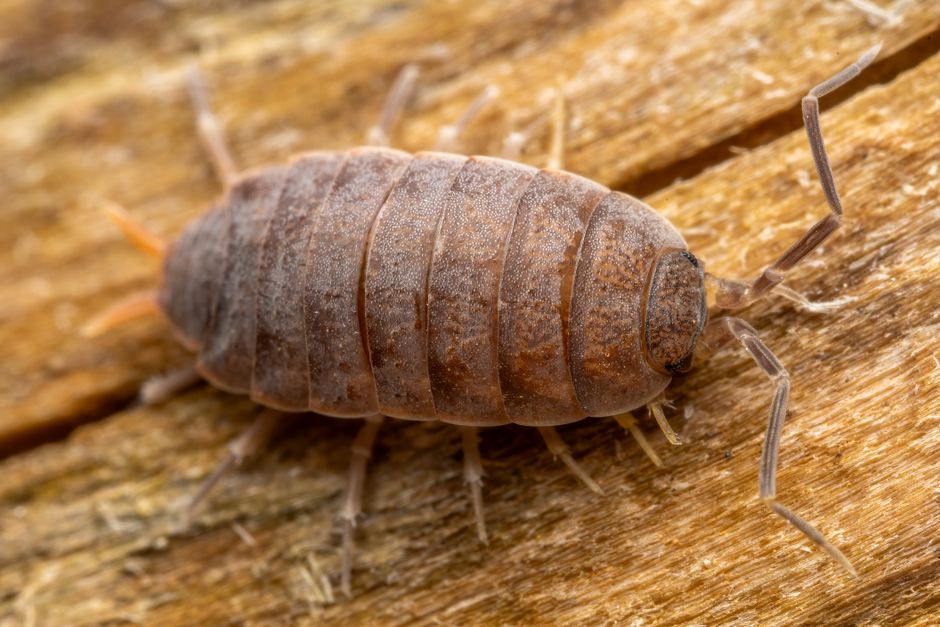
Before you can effectively get rid of pillbugs, you need to make sure you aren’t fighting a different battle. Pill bugs (Armadillidium vulgare) are often confused with their close cousins, sow bugs. While they look similar at a glance, their behavior is the giveaway.
Pill bugs are terrestrial crustaceans, not insects. They are more closely related to lobsters and crayfish than to beetles. They typically measure between 1/4 and 5/8 inches long, featuring a slate-gray or brown oval body composed of seven hard, overlapping plates. They have seven pairs of legs and two pairs of antennae (though one pair is very small).
The most famous characteristic of the pill bug is “conglobation” — the ability to roll into a tight, armored ball when they feel threatened. This is where the name “roly-poly” comes from. Sow bugs, on the other hand, cannot roll up. They also have two small tail-like structures at the rear of their bodies that pill bugs lack.
The Pill Bug vs. Sow Bug Breakdown
| Feature | Pill Bug (Roly-Poly) | Sow Bug (Woodlouse) |
|---|---|---|
| Scientific Name | Armadillidium vulgare | Oniscus asellus / Porcellio scaber |
| Shape | Oval, high-backed | Flat, oval |
| Defense | Rolls into a ball | Runs away |
| Tails | None visible | Two small “tails” (uropods) |
| Habitat | Moist soil, under debris | Moist soil, under debris |
While these creatures are technically “decomposers” that help your garden by breaking down dead leaves and organic matter, they become pests when their numbers explode. When decaying matter is scarce or the population is too high, they turn their attention to your living plants. We often see them nibbling on tender seedlings like zucchini, beans, and radishes, or boring holes into low-hanging fruit like strawberries and hostas.
For more detailed identification tips, you can check out How to Get Rid of Pill Bugs: Identification and Control.
Why You Have a Pill Bug Infestation
If you’re seeing hundreds of these little tanks in your garden or finding them dead on your basement floor, it’s usually due to one thing: moisture. Because they are crustaceans, pill bugs breathe through gill-like structures. They must have moisture to survive.
In Northern Ohio, climate patterns shaped by Lake Erie often keep humidity elevated, especially during spring and early summer. In cities like Avon, Elyria, and Lakewood, wet soil and consistently damp mulch can create favorable conditions for pill bugs.
Common causes for an infestation include:
- Over-mulching: Mulch that is deeper than 2 inches traps too much moisture and provides a deep hiding spot.
- Debris piles: Piles of grass clippings, fallen leaves, or stacked firewood right against the house.
- Drainage issues: Clogged gutters or downspouts that dump water right at the foundation.
- Leaky pipes: Indoors, pill bugs are often an indicator of a leak or high-humidity issue.
When searching for Pill Bugs information, it helps to remember they don’t enter your home to eat pantry food. They usually wander indoors because exterior conditions, nearby moisture, and available entry gaps make that movement possible. Finding them inside can suggest a larger outdoor population living close to the structure. If DIY steps don’t reduce the issue, some homeowners compare pest control companies in Avon, Ohio to identify providers that can inspect the exterior perimeter, moisture sources, and exclusion gaps.
Pill bugs are also part of a broader pattern of seasonal pest pressure in this region. Depending on the time of year, local homes and businesses may also deal with rodents in winter, carpenter ants and termites in spring, mosquitoes and cockroaches in summer, and fall invaders such as stink bugs, earwigs, boxelder bugs, silverfish, and centipedes.
How to Get Rid of Pillbugs in the Garden Naturally
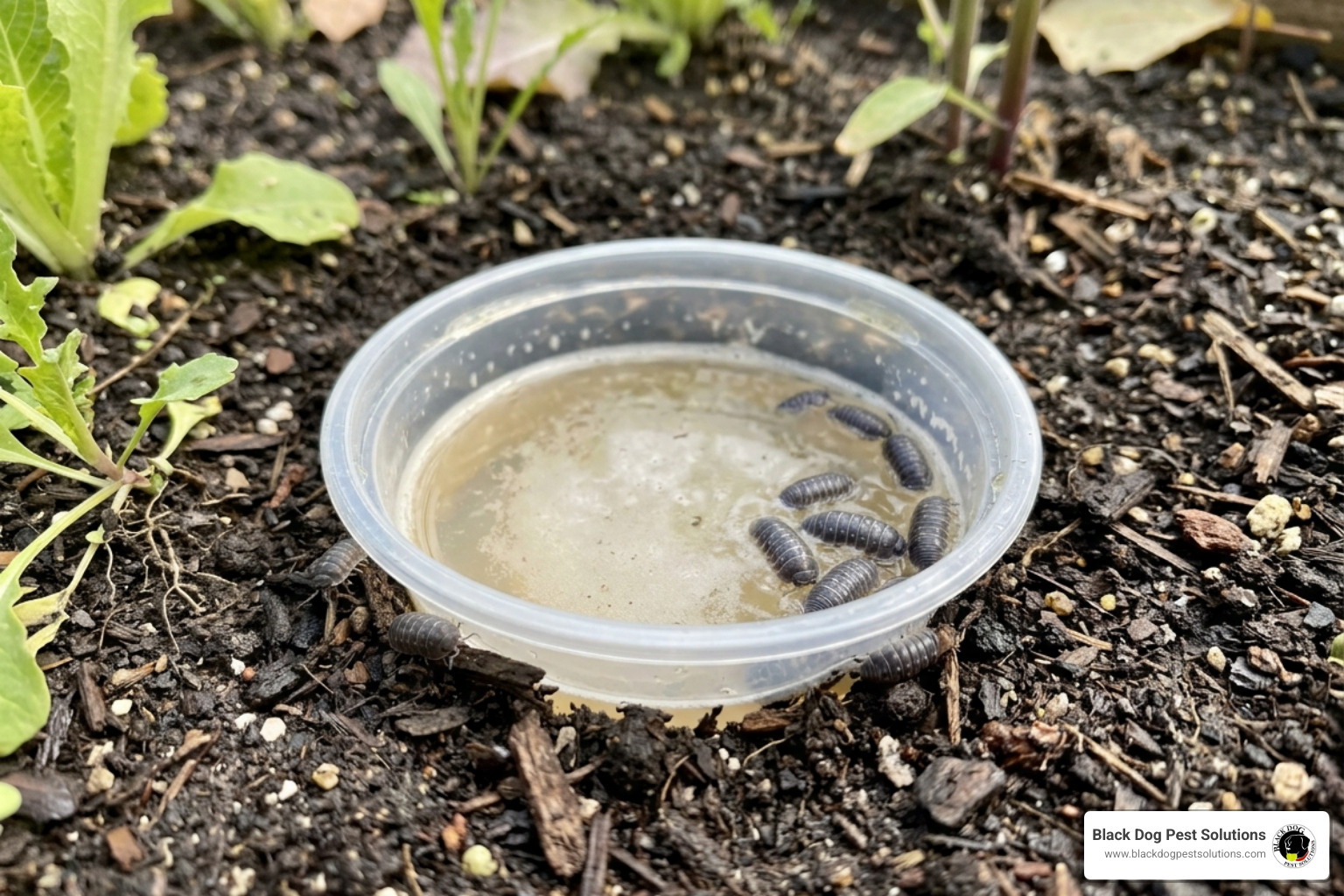
You don’t always need heavy chemicals to protect your vegetable garden. In fact, because pill bugs are crustaceans, many standard insecticides aren’t as effective against them as they are against ants or spiders. Here are the most effective natural ways to get rid of pillbugs:
1. The Classic Beer Trap
This is a favorite for many organic gardeners. Bury a shallow container (like a tuna can or a plastic butter tub) into the soil so the rim is flush with the ground. Fill it with about a half-inch of beer. Pill bugs are attracted to the yeast, crawl in, and drown. It’s simple, cheap, and surprisingly effective. Just remember to empty it and refill every couple of days.
2. Fruit and Vegetable Baits
If you don’t want to share your brew with the bugs, use fruit. Place hollowed-out orange halves, potato slices, or damp pieces of cardboard around the garden at night. In the morning, the pill bugs will have gathered underneath these “treats” to feed and hide from the sun. You can then simply pick up the bait and relocate the bugs to a compost pile far from your garden or drop them into a bucket of soapy water.
3. Diatomaceous Earth (DE)
Food-grade diatomaceous earth is made of fossilized algae with microscopic sharp edges. While it feels like soft powder to us, it cuts through the exoskeleton of pill bugs, causing them to dehydrate and die. Sprinkle a thin layer around the base of your plants. Note: DE only works when it is dry, so you’ll need to reapply after rain or heavy watering. Always wear a mask when applying it to avoid breathing in the dust.
4. Seedling Collars
To protect tender young sprouts, you can create a physical barrier. Cut the bottom out of a plastic cup or use a cardboard toilet paper roll to create a “collar” around the plant. Pushing this an inch into the soil makes it much harder for pill bugs to reach the stem. For an extra layer of protection, some gardeners wrap the stem in duct tape (sticky side out) near the soil line.
5. Overplanting
Sometimes, the best defense is a good offense. If you know you have a high pill bug population, try planting 3 or 4 seeds for every one plant you actually want. This ensures that even if the roly-polies get a few, you’ll still have survivors to thin out later.
For more DIY strategies, see How To Get Rid of Pill Bugs.
Preventing Pill Bugs from Entering Your Home
While pill bugs are mainly a garden nuisance, many homeowners would still prefer not to find them in laundry rooms, mudrooms, or basements. To keep them out, focus on making your home’s perimeter less damp and less attractive.
Moisture Control is Key
Pill bugs cannot survive indoors for long unless they find a very damp area. To get rid of pillbugs more reliably, address the moisture source:
- Dehumidify: Use a dehumidifier in basements and crawl spaces to keep humidity below 50%.
- Fix Leaks: Repair dripping faucets or AC condensate lines that pool water near the foundation.
- Ventilation: Make sure crawl space vents and other ventilation points are unobstructed where appropriate.
The “Dry Zone” Strategy
A 6-to-12-inch “dry zone” around the foundation can help reduce moisture-loving pests. This means:
- Pulling mulch back from the foundation so it doesn’t touch the siding.
- Keeping mulch depth to 2 inches or less.
- Removing stones, boards, or leaf litter from this zone.
- Trimming back bushes and trees so sunlight can reach the soil near the house and help it dry out.
Fast Ways to Get Rid of Pillbugs Indoors
If they’ve already made it inside, simple removal is usually enough.
- Vacuuming: This is one of the fastest ways to remove them. Empty the canister or bag outside afterward.
- Essential Oils: Sprays made with peppermint, cinnamon, or tea tree oil may act as a light repellent around baseboards.
- Garlic Solution: A mixture of crushed garlic and water sprayed around thresholds may deter them temporarily.
Long-term Strategies to Get Rid of Pillbugs
Evaluate the exterior of your home. Are your gutters clean? Do your downspouts extend at least 3 feet away from the house? Are there cracks in the foundation or gaps under doors? Sealing these entry points with caulk and installing door sweeps can help as part of a broader exclusion plan. Homeowners comparing pest control companies in Avon, Ohio may want to prioritize providers that focus on moisture correction, exclusion, and inspection rather than relying only on chemical applications.
These same prevention steps can also help reduce other seasonal pests common in Northern Ohio, including ants, cockroaches, stinging insects, and fall invaders.
Professional Pest Control and IPM in Northern Ohio
Sometimes, despite your best efforts, the pill bug population is simply too large to manage easily. That can happen in older homes with settled foundation cracks, in newer developments where grading is still shifting, or on properties with persistent drainage issues.
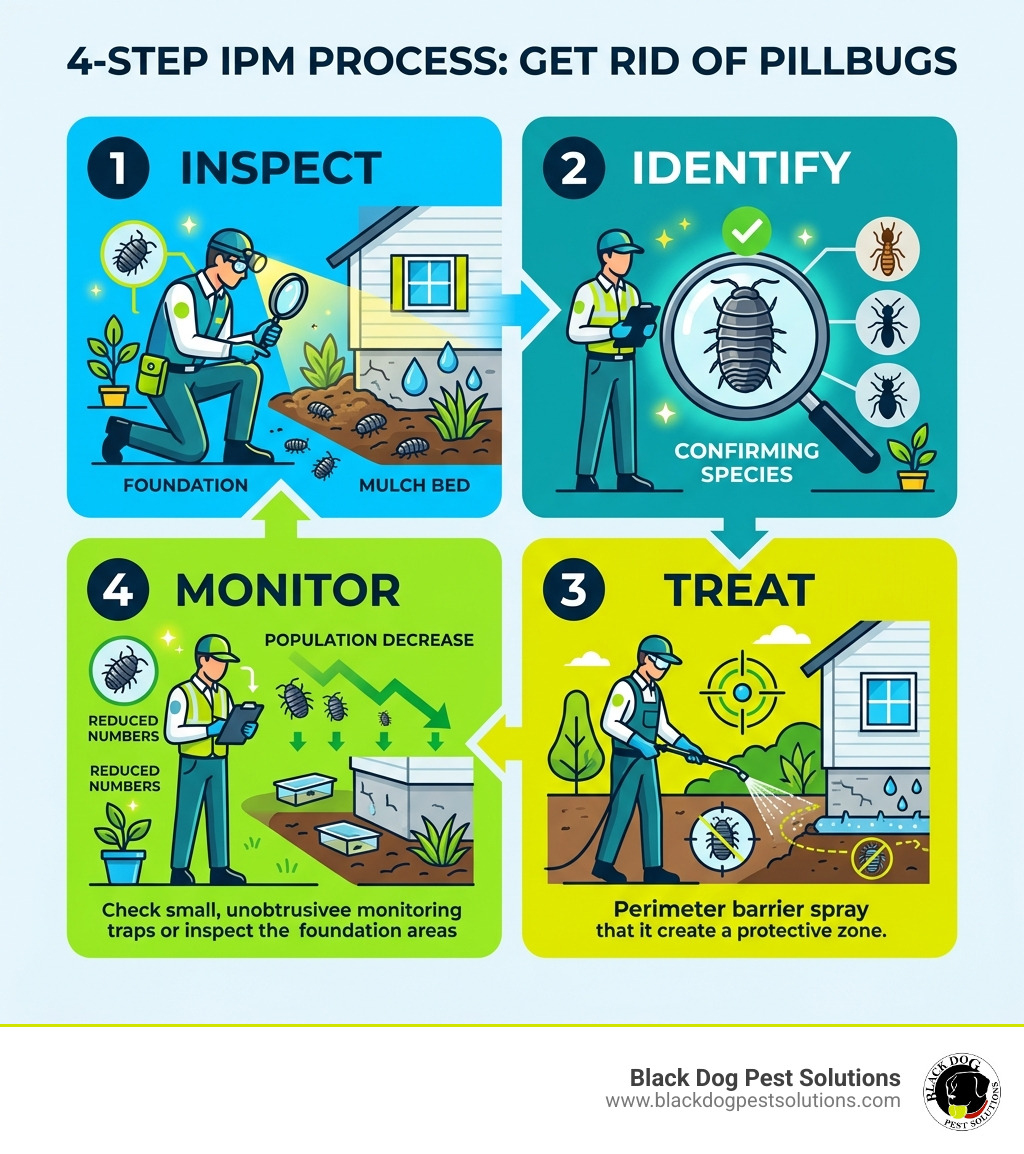
Many pest control companies in Avon, Ohio use some form of Integrated Pest Management (IPM). In general, that process includes four core steps:
- Inspect: Find where pests are breeding, harboring, and entering.
- Identify: Confirm the pest species so treatment matches the problem.
- Treat: Use targeted control measures based on the pest and conditions.
- Monitor: Recheck activity and adjust the plan if needed.
Black Dog Pest Solutions in Avon is one local option. The company is family-owned, has served the area since 2014, and is led by Mat Ledyard, who has worked in pest control since about 2005. When comparing pest control companies in Avon, Ohio, it helps to evaluate each provider’s inspection process, communication, treatment methods, warranties, scheduling, and whether the company addresses exclusion and moisture management in addition to treatment.
When evaluating providers, ask whether they are licensed through the Ohio Department of Agriculture and whether they carry appropriate business insurance. Those are basic considerations for both residential and commercial pest work. Some companies also provide wildlife removal services, which may be relevant in Lorain and Medina counties where raccoons, squirrels, skunks, or other nuisance animals can become an issue around homes and buildings.
Pill bugs are only one part of the annual pest cycle in Northern Ohio. Depending on the season, property owners may also need help with rodents in winter; carpenter ants, termites, and stinging insects in spring; mosquitoes and cockroaches in summer; and fall invaders such as stink bugs, earwigs, boxelder bugs, silverfish, and centipedes.
For more on the science of pest management, visit the EPA Integrated Pest Management (IPM) Principles.
Frequently Asked Questions about Pill Bugs
Do pill bugs bite humans or spread diseases?
No. Pill bugs do not bite, sting, or spread diseases to people. They are generally considered nuisance pests and often point to excess moisture nearby.
How long can pill bugs survive inside a house?
In a typical dry home, a pill bug often dies within a couple of days. If it finds a damp basement, crawl space, or leak area, it may survive longer.
Are pill bugs beneficial to the environment?
Yes. Outdoors, they are helpful decomposers that break down dead plant material and return nutrients to the soil. They mainly become a concern when populations are high around seedlings, low fruit, or foundation areas.
What should I look for when hiring pest control companies?
Look for Ohio Department of Agriculture licensing, insurance, a clear inspection process, and an IPM-based plan that includes inspection, identification, treatment, and monitoring. It can also help to ask whether the company handles exclusion work and wildlife removal if your property has multiple pest issues.
Are pill bugs a sign of a bigger pest problem?
Not usually, but they can be a sign of excess moisture. That same moisture can also support other pests common in Northern Ohio, including carpenter ants, cockroaches, earwigs, silverfish, and centipedes.
Conclusion
Pill bugs are a normal part of the outdoor ecosystem, but they can become a nuisance in gardens and around damp parts of the home. In Northern Ohio, managing moisture, reducing excess mulch, removing debris, and sealing entry points are usually the most practical ways to get rid of pillbugs.
Because Lake Erie humidity affects pest activity throughout the year, it can also help to think beyond pill bugs alone. Seasonal pest patterns in this region often include rodents in winter; carpenter ants, termites, and stinging insects in spring; mosquitoes and cockroaches in summer; and stink bugs, earwigs, boxelder bugs, silverfish, and centipedes in fall.
Homeowners and property managers comparing pest control companies in Avon, Ohio may want to consider service approach, licensing, insurance, communication, and whether the provider offers IPM-based service and wildlife removal. Black Dog Pest Solutions is one local option among several serving the area. For more local information, visit Pill Bugs.