
Why Fruit Fly Removal in Avon Is More Complicated Than It Looks
Fruit fly removal in Avon usually comes down to finding and removing the source. This guide focuses on common household fruit flies — the tiny flies that gather around ripe produce, drains, trash, recycling, and spills — not agricultural quarantine pests handled by state or federal agencies.
Fruit flies multiply quickly, so a few flies near your fruit bowl can become a larger kitchen problem within weeks. The key is to target larvae and breeding sites, not just the adult flies you can see.
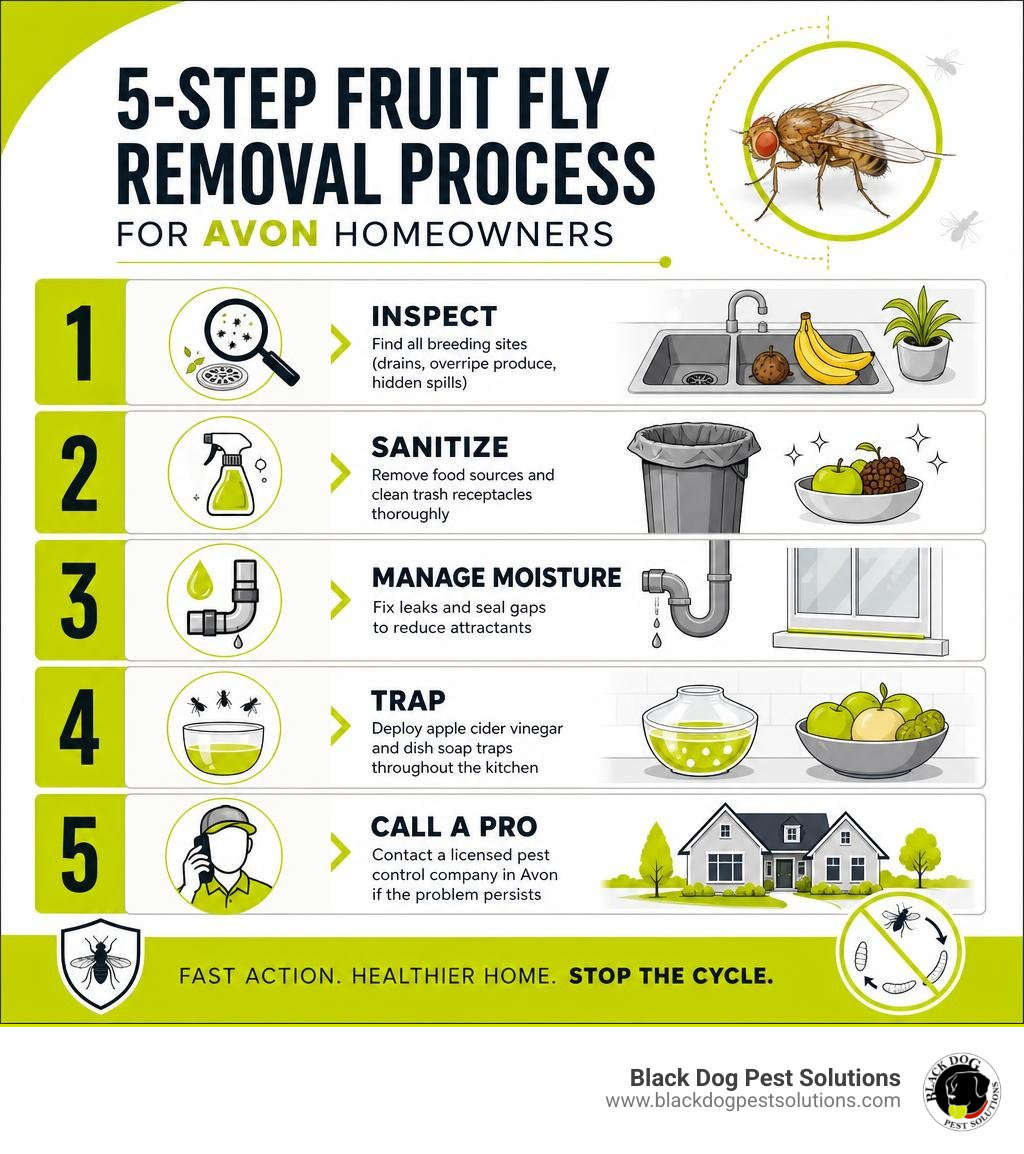
Here’s how to remove fruit flies in Avon in 5 steps:
- Inspect — Find breeding sites, including drains, overripe produce, hidden spills, trash, and recycling
- Sanitize — Remove food sources and clean trash receptacles
- Manage moisture — Fix leaks and reduce damp areas that attract small flies
- Trap — Use apple cider vinegar and dish soap traps to reduce adult flies
- Call a pro — Contact a licensed pest control company in Avon if the problem persists
Most DIY efforts fail because larvae hiding in drains, garbage disposals, and organic buildup keep hatching. Fruit flies are mainly a sanitation nuisance, but fast cleanup matters because they can move from dirty breeding areas to food-prep surfaces.
I’m Mat Ledyard, owner of Black Dog Pest Solutions in Avon, Ohio, and I’ve worked in pest control since 2005. If you’re dealing with a stubborn infestation, this guide walks you through the steps that work for fruit fly removal in Avon.
5 Steps for Effective Fruit Fly Removal Avon Residents Can Trust
A systematic Integrated Pest Management approach can usually resolve fruit flies by removing the source, reducing moisture, and trapping remaining adults. For more help choosing the right team, see our guide on Choosing Local Fruit Fly Exterminators.
Step 1: Identify and Inspect Breeding Sites
Adult fruit flies are attracted to fermenting organic material, so inspect kitchens, pantries, utility rooms, and anywhere food scraps or sugary liquids may collect.
Check sink drains, garbage disposals, trash cans, recycling bins, mop buckets, and the floor beneath appliances. One overlooked spill or drain buildup can keep the infestation going.
Step 2: Eliminate Food Sources and Sanitize
Sanitation is the most important part of long-term fly control.
- Store produce properly: Keep ripe fruits and vegetables in the refrigerator.
- Clean trash cans: Wash indoor and outdoor garbage bins with hot, soapy water.
- Flush drains: Clean sink drains and garbage disposals to remove organic buildup.
- Rinse recycling: Empty and rinse cans, bottles, and containers before storing them.
Step 3: Manage Moisture and Seal Gaps
Fix slow plumbing leaks, dry wet mops and towels, and reduce standing moisture around sinks, floor drains, and utility areas. Sealing gaps around pipes, baseboards, and windows can also reduce pest entry points and hidden harborage.
Step 4: Deploy Targeted Traps
Set apple cider vinegar and dish soap traps near active areas. The vinegar attracts adult flies, while the soap breaks surface tension and causes them to sink. Traps reduce adults, but they only work long term when breeding sources are removed.
Step 5: Partner with Professionals for Fruit Fly Removal
If you have cleaned, sealed, and trapped but the flies keep returning, bring in professional help. A licensed pest professional can locate hidden breeding sites, confirm whether the pest is truly a fruit fly, and use targeted tools such as biological drain treatments for stubborn infestations.
Commercial vs. Residential Fly Control in Northern Ohio
Commercial kitchens and restaurants need a more aggressive strategy than most homes because health standards are higher and one pest sighting can hurt customer confidence.
| Fly Species | Typical Size | Key Physical Features | Primary Breeding Sites | Behavior & Flight Patterns |
|---|---|---|---|---|
| Fruit Fly | ~1/8 inch | Tan body, often with red eyes | Overripe fruit, garbage bins, beer/soda drains | Hovers around sweet, fermenting items |
| Drain Fly | ~1/8 to 1/6 inch | Fuzzy, moth-like appearance | Biofilm inside plumbing and floor drains | Weak flier, often rests on walls near drains |
| Phorid Fly | ~1/16 to 1/8 inch | Humpbacked thorax, dark body | Decaying organic matter, sewer or drain issues | Runs rapidly across surfaces in short bursts |
In commercial kitchens, flies often breed in floor sinks, beverage lines, and damp mop closets. Standard aerosol sprays may kill visible adults, but they do not address larvae or organic buildup inside drains.
For stronger control, pest control companies in Avon may use biological drain cleaners that digest organic biofilm inside drains and reduce breeding conditions without harsh odors in food-prep areas.
If you manage a business, read our guide on How to Effectively Eliminate Fruit Flies in Commercial Settings to keep your facility audit-ready.
What About Invasive Oriental Fruit Flies?
Most fruit fly removal calls involve common household fruit flies, not agricultural quarantine pests. Some invasive species, such as the Oriental fruit fly (Bactrocera dorsalis), are handled through official agricultural programs rather than residential pest control.
Those programs are separate from household fruit fly control. Homeowners in Avon dealing with tiny flies around drains, produce, trash, or recycling should focus on sanitation, moisture reduction, trapping, and professional pest identification when needed.
If you are dealing with domestic flies, learning more about Fruit Flies and their behaviors can help you keep your home clean and protected. You can also find practical household tips from Michigan State University Extension.
Frequently Asked Questions About Fruit Fly Removal Avon
How long does it take to resolve a fruit fly infestation?
With proper sanitation and targeted trapping, many residential infestations improve within 7 to 10 days. Keep cleaning and monitoring for two to three weeks to confirm the source is gone.
Why do I have fruit flies if there is no visible fruit?
Fruit flies can breed in moist areas with fermenting organic matter, including sink drains, dirty garbage disposals, recycling bins with unrinsed cans, damp mops, and spills beneath appliances.
When should I call experts for fruit fly removal in Avon?
If you have spent more than two weeks cleaning and trapping but still see fly activity, you may have a hidden breeding source or a different small fly species. A licensed pest professional can inspect drains, plumbing areas, and nearby moisture sources.
Conclusion
A fruit fly infestation can be frustrating, but you do not have to handle it alone. At Black Dog Pest Solutions, led by Mat Ledyard, we have spent over two decades helping homeowners and businesses throughout Northern Ohio solve pest problems with practical, local service.
Ohio requires a pesticide business license for anyone applying pesticides for hire. Working with a licensed and insured professional helps ensure treatments are performed safely and legally.
If you are dealing with other moisture-loving pests, such as springtails, we can help with those as well. For springtails, we prioritize moisture control and exclusion over chemical treatments: keep mulch 12-18 inches back from the foundation, fix drainage issues, extend downspouts, avoid overwatering, trim vegetation, and seal entry points. Learn more on our springtail control page.
If you are ready to schedule a professional inspection or need expert assistance with fruit fly removal in Avon, contact us today to get started!