
Vole control in Northern Ohio is one of those jobs homeowners only think about in spring, after the snow melts and the lawn damage is impossible to miss. By then the damage is done. The work that prevents a chewed-up spring lawn happens in September and October, while voles are caching food and shifting their diet toward bark.
Voles are easy to misread. People see a small brown rodent and assume mice, then treat for mice and wonder why the runways in the grass keep appearing. The two animals behave differently, live in different places, and cause completely different problems.
What a vole actually is
Voles, sometimes called meadow mice or field mice, are New World rodents in the genus Microtus. The Internet Center for Wildlife Damage Management counts 23 vole species in the United States, 7 of which cause meaningful economic damage. They’re compact and stocky with short legs, short tails, small eyes, and ears that barely show, which is the quickest way to separate them from a house mouse with its big ears and long tail.
Two species matter most in Ohio yards. Meadow voles (Microtus pennsylvanicus) are the most widely distributed Microtus in the country, run 5½ to 7½ inches nose to tail tip, and prefer wet meadows and grassland. Pine or woodland voles (Microtus pinetorum) are smaller at 4 to 6 inches, with soft dense brown fur and a tail that’s barely bicolored, and they favor heavy ground cover in deciduous forests, abandoned fields, and orchards across the eastern United States.
Legally they’re non-game mammals, and ICWDM notes they can be controlled whenever they’re causing damage. Rules do change, so it’s worth confirming details with the state wildlife agency for anything unusual.
Why voles are a fall and winter problem
Voles eat mostly grasses and forbs through the growing season. What changes in autumn is the menu. According to ICWDM’s vole biology summary, voles store seeds, tubers, bulbs, and rhizomes in late summer and fall, then feed primarily on bark in fall and winter.
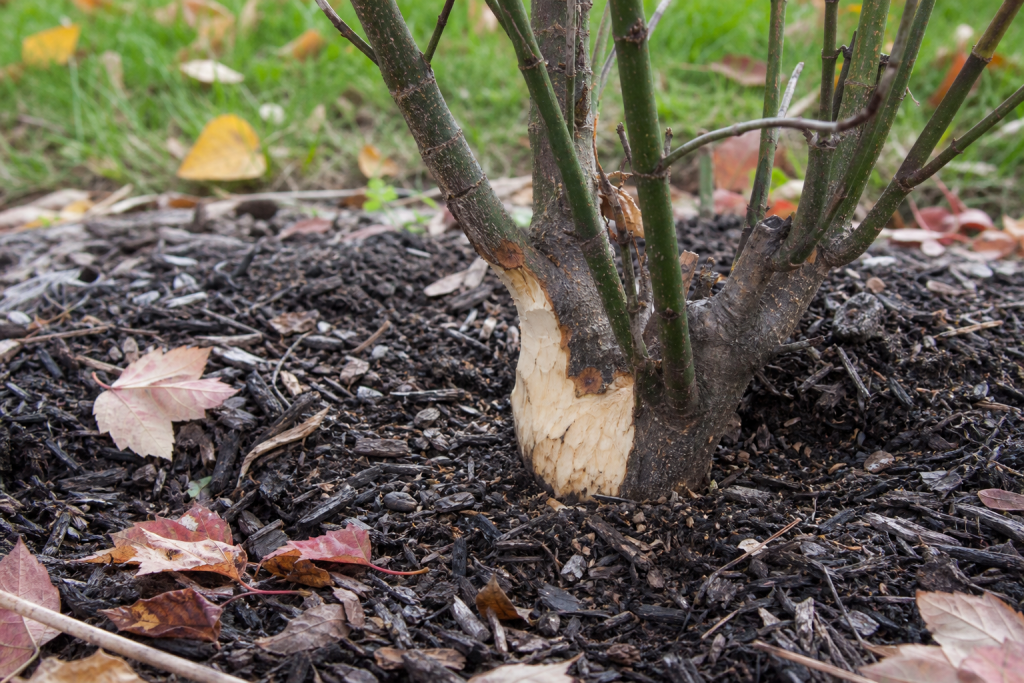
Bark feeding is where lawn damage turns into replacement cost. A vole working under snow cover has protection from hawks and owls and free access to the base of young trees and shrubs, and the chewing goes on out of sight until spring. They’re active day and night, year-round, and they don’t hibernate.
They also breed fast enough that a mild year turns into a bad one. Here’s what the numbers look like.
| Vole trait | What the research shows |
| Gestation | About 21 days |
| Litters per year | Usually 1 to 5 |
| Litter size | 1 to 11 young, averaging 3 to 6 |
| Age at maturity | Females mature in 35 to 40 days |
| Lifespan | Short, roughly 2 to 16 months |
| Population peaks | Every 2 to 5 years, on an unpredictable cycle |
| Peak densities | Up to 4,000 voles per acre during population irruptions |
| Home range | Usually a quarter acre or less |
Source: Internet Center for Wildlife Damage Management, Vole Biology, based on the chapter in Prevention and Control of Wildlife Damage (Hygnstrom, Larson, Timm, eds., 1994).
Those numbers explain the pattern homeowners describe. Voles are a non-issue for a few seasons, then a property gets hit hard, because populations cycle rather than climbing steadily.
Signs of vole damage, and how to rule out mice
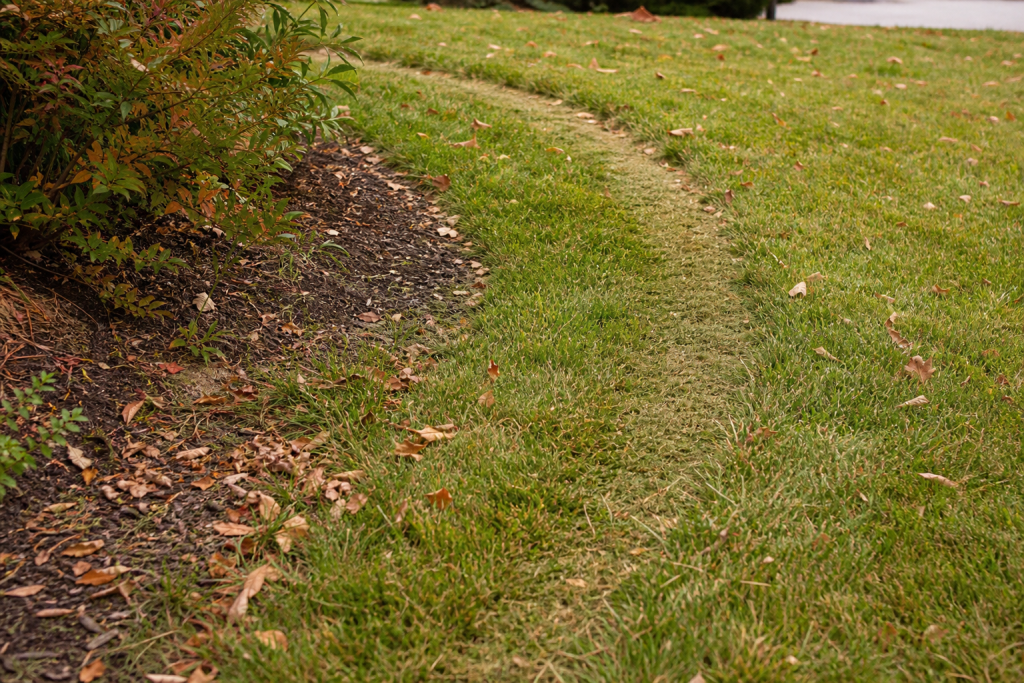
The clearest sign is surface runways. Voles are semi-fossorial, meaning they tunnel and also travel above ground, and they wear narrow paths through turf and ground cover with several entrance holes leading into a burrow system. One burrow can hold several adults plus young. ICWDM also notes that vole tracks may be visible after a light snow, though most people notice the damage before they notice the animal.
Other things to look for around Avon, North Ridgeville, and Westlake properties:
- Chewed bark at the base of young trees, shrubs, and ornamentals, often close to the ground.
- Missing bulbs and damaged root systems in beds that were fine in August.
- Surface runways along the edge of mulch beds, under low junipers, and beside foundation plantings.
- Damage that gets dramatically worse under snow cover.
Pine voles are harder to catch in the act because they build complex burrows as much as 4 feet below ground, so their damage often reads as a plant problem before anyone suspects a rodent. Prairie voles, by contrast, nest above ground or up to about 18 inches down.
What vole control in Northern Ohio actually involves
Vole work is habitat-first pest control. Voles respond to cover before they respond to anything else. They prefer heavy ground cover of grasses, forbs, and litter, so the properties that get hit are the ones offering that cover right up against the plants worth protecting.
Reducing thick ground cover near vulnerable trees and beds, keeping mulch pulled back from trunks, and cutting grass along fence lines and field edges all make a yard less attractive before winter sets in.
That habitat-first sequence is standard integrated pest management, which EPA describes as an effective and environmentally sensitive approach that uses information about pest life cycles and their interaction with the environment, combined with available control methods, to manage damage by the most economical means and with the least hazard.
Our vole control service starts with an inspection that maps runways, burrow entrances, and the plants already showing feeding damage, since the treatment plan depends on which species is present and how the property is laid out.
Depending on inspection findings and the service selected, work may include habitat recommendations, exclusion around specific plantings, and targeted control where damage is active. Results vary with property size, surrounding land, snow cover, and how much adjacent field or wooded edge keeps feeding animals back in.
If you’re also finding droppings indoors or hearing activity in walls, that’s a different animal and a different plan, and our rodent control page covers the indoor side.
Timing your fall check
Late September into October is the window worth using, before ground cover dies back and while runways are still easy to read. Waiting until you see girdled bark in March means paying for plant replacement on top of control.
Walk your property and look at the base of every young tree and shrub, then follow the mulch line and any spot where lawn meets taller grass. If you find worn paths about an inch or two wide with clean-cut grass along them, you have voles working the yard right now.
Frequently asked questions
How do I tell a vole from a mouse?
Voles have stocky bodies, short legs, short tails, small eyes, and ears that barely show. House mice look leaner with prominent ears and a long tail. Voles also leave surface runways through turf, which mice don’t.
What damage do voles do in winter?
They shift to eating bark in fall and winter, so they chew the base of young trees and shrubs, often hidden under snow. They also feed on stored bulbs, tubers, and roots.
How many voles can be on one property?
Home ranges are usually a quarter acre or less, and densities swing widely. ICWDM reports that during population irruptions densities have reached 4,000 voles per acre, with normal populations far lower and peaks arriving every 2 to 5 years.
Do voles come inside the house?
Voles are outdoor animals living in runways and burrows. Rodents you find indoors are usually mice or rats, which need a different approach.
Will mowing and cleanup fix a vole problem?
Reducing heavy ground cover near trees and beds makes a property less suitable and is part of any good plan, though a property next to open field or woods can be recolonized. Habitat work plus targeted control usually beats either one alone.
When should I schedule vole work?
Late September through October is a practical window, since runways are still visible and the bark-feeding season hasn’t started. Inspections at other times of year still work, and damage that’s already happening should be looked at right away.
Closing
Contact Black Dog Pest Solutions for an inspection and we’ll tell you what’s actually using the property and what vole control in Northern Ohio should cover before winter. Call 440-654-8234 to schedule an inspection and protect your trees, shrubs, and lawn before winter.