
Restaurant pest control isn’t a housekeeping preference in Ohio. It’s written into the State of Ohio Uniform Food Safety Code. The language your local health district cites during an inspection is specific about what you have to do and who is allowed to do it.
If you run a kitchen, a bar, a bakery or a grocery from Avon Lake to Lakewood, the rules below are the ones that turn a fly problem into a violation on a public report. Knowing them changes how you handle the back door, the dock and the dry storage room.
The rule that defines your program
Rule 3717-1-06.4(K) of the Ohio Administrative Code says the presence of insects, rodents and other pests is to be controlled to minimize their presence on the premises. It names four required activities (Ohio Laws, OAC 3717-1-06.4):
- Routinely inspecting incoming shipments of food and supplies.
- Routinely inspecting the premises for evidence of pests.
- Using methods such as trapping devices or other pest control if pests are found.
- Eliminating harborage conditions.
Read that list again and notice what it asks for. Three of the four items are things your staff does. They aren’t things a vendor does on a monthly visit. Checking deliveries, walking the building, and clearing the clutter and moisture that give pests a place to live are all operator jobs. A service contract supports that work. It doesn’t replace it.
What inspectors cite, rule by rule
| Requirement | Where it lives in the code | What it means on the floor |
| Control pests, inspect shipments and premises, clear harborage. | OAC 3717-1-06.4(K) | Receiving checks and routine walkthroughs. Cleanup of clutter, moisture and voids. |
| Remove dead or trapped pests from devices and the premises. | OAC 3717-1-06.4(L) | Traps get serviced often enough that nothing piles up. |
| Keep the premises free of unnecessary items and litter. | OAC 3717-1-06.4(N) | Broken equipment and stored junk come out. It’s harborage. |
| Rodent bait goes in covered, tamper-resistant stations. | OAC 3717-1-07.1(K) | Loose bait or an open tray in a kitchen is a finding. |
| No tracking powder pesticides, with a narrow nontoxic exception. | OAC 3717-1-07.1(L) | Powder products don’t belong in a food operation. |
| Pesticides applied only by a licensed commercial applicator, or a trained service person under direct supervision. | OAC 3717-1-07.1(C)(3) | Routine spraying by staff isn’t allowed. Incidental use is narrow. |
| Applications must prevent drip, drain, fog, splash or spray onto food. | OAC 3717-1-07.1(C)(2) | Food and utensils get moved or covered. Surfaces are cleaned after. |
| Physical facilities kept in good repair and cleaned as often as needed. | OAC 3717-1-06.4(A) and (B) | Gaps, bad doors and grease are pest issues first. |
Source: Ohio Administrative Code Chapter 3717-1, State of Ohio Uniform Food Safety Code, rules 3717-1-06.4 and 3717-1-07.1, current text at codes.ohio.gov. Rule 3717-1-06.4 is effective September 5, 2024.
The applicator rule catches people off guard. Under 3717-1-07.1(C)(3), a general use pesticide applied on a regular or routine basis has to come from a commercial applicator licensed under section 921.06 of the Revised Code. A trained service person can apply it under that applicator’s direct supervision. The code defines incidental use as an occasional, isolated, site-specific application to avoid immediate personal harm. That’s a much smaller category than the closer spraying the dock on Fridays.
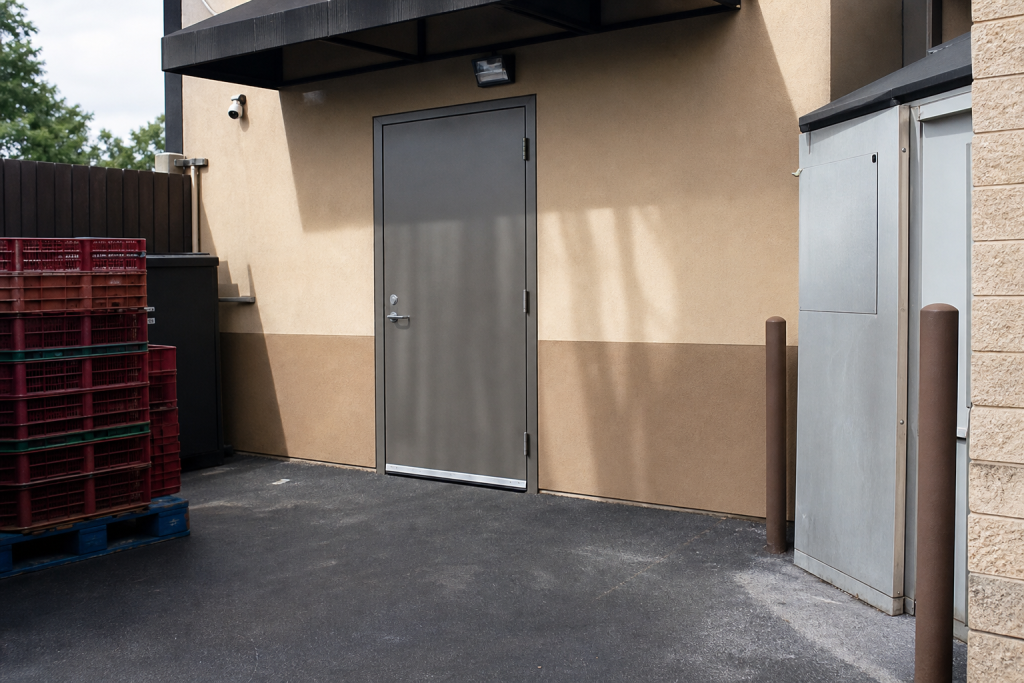
Harborage is the part most kitchens underestimate
Clearing harborage is the fourth requirement in 06.4(K). It’s also the one that decides whether the other three work. Harborage is any spot where a pest can live undisturbed with food and moisture nearby. In commercial kitchens it’s usually a short list you already know:
- Floor drains and the organic film in them, where small flies breed.
- The void under and behind cook line equipment, where grease and crumbs collect.
- Cardboard, which arrives with deliveries and gives roaches a place to hide.
- Wet mop heads, mop sinks and the corner where the bucket lives.
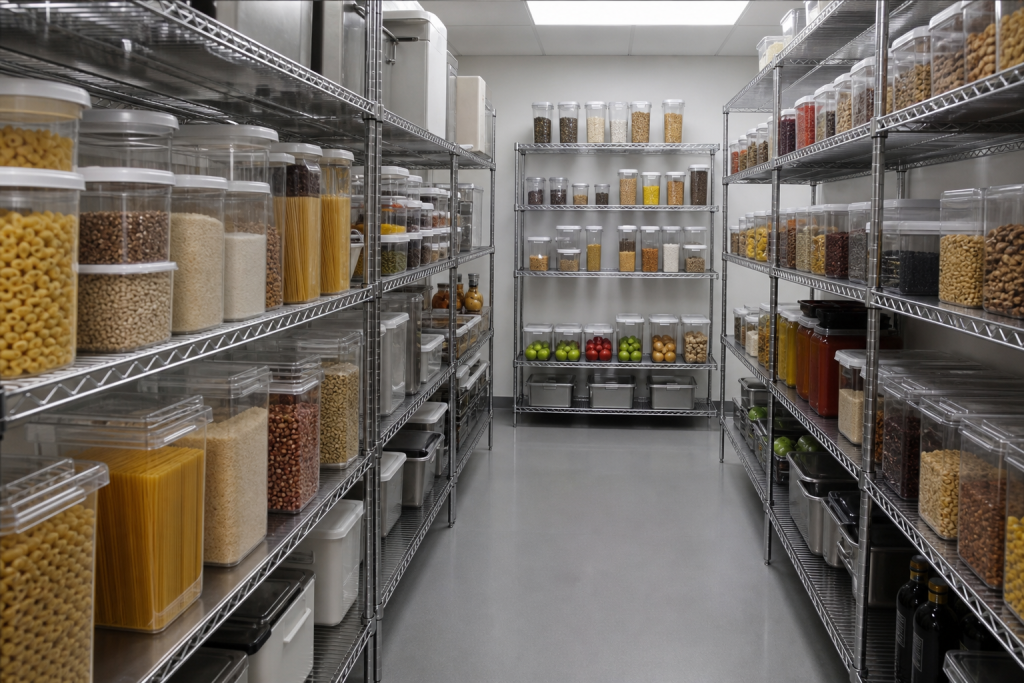
- Dry storage shelving pushed to the wall with no gap to inspect.
- The dumpster pad, the grease bin and the ground around them.
Fix those and the trapping program has less to do. Leave them and you’ll refill traps forever. Our commercial services page covers how we build recurring visits around these areas instead of around a spray schedule.
Roaches, small flies and rodent control
Three problems account for most commercial pest control calls we take from food businesses.
Roaches usually arrive in deliveries. That’s exactly why the code puts inspection of incoming shipments first. Break down boxes outside and get the cardboard off the property, and you remove both the ride in and the harborage. Our cockroach page explains what treatment in a working kitchen involves.
Small flies usually trace back to a moisture and organic-matter source rather than the air. Drain lines, the base of soda fountains, mop closets and cracked floor tile hold the film they breed in. Cleaning the source does more than fogging the room. The fly control page covers identification, since the fix differs by species.
Rodent control in a food operation looks different than it does in a house. Mice and rats come in through gaps in the building envelope and through doors propped open on delivery days. Bait has to sit in covered, tamper-resistant stations under 3717-1-07.1(K), so the normal approach pairs exterior stations with interior trapping and exclusion work.
Building a restaurant pest control program that survives an inspection
The Environmental Protection Agency describes integrated pest management as a strategy built on knowing pest life cycles and how they interact with the environment. It uses the most economical means, and the least possible hazard to people, property and the environment (EPA, Integrated Pest Management Principles). Pest control in restaurant kitchens follows that same logic, and the routine has four moving parts.
Monitor with devices placed where pests travel, and write down what you find. Trends show up before infestations do. Correct the conditions the monitoring points to, whether that’s a door sweep, a drain or a delivery habit. Treat when it’s warranted, with the product and placement matched to the species and the food environment. Document all of it. A service log, a walkthrough checklist and a corrective action list are what you hand the inspector who asks how you control pests.
The FDA Food Code is the model that Ohio’s rules are built on, and states use it for retail food safety (FDA, Food Code 2022). Local health districts license and inspect food service operations, so your inspector is the authority on how these rules apply in your building.
Setting up a commercial account
Restaurant pest control services work best when the schedule matches how your building runs. That means delivery days, cleaning routines and the hours when a treatment won’t interfere with service. We work with food businesses across Avon, Avon Lake, Westlake, North Ridgeville, Rocky River, Lorain, Elyria, Cleveland, Lakewood, Medina and Sandusky. We’ll walk the building with your manager, point out the harborage an inspector would flag, and put a monitoring and service plan in writing. Call 440-654-8234 or use our contact page to set up a walkthrough.
FAQ
Does Ohio law require restaurants to have pest control?
Ohio Administrative Code 3717-1-06.4(K) requires that the presence of insects, rodents and other pests be controlled to minimize their presence. It lists routine inspection of incoming shipments, routine inspection of the premises, use of trapping devices or other pest control when pests are found, and elimination of harborage conditions.
Can my staff spray for bugs in the kitchen?
Not as a routine. Under OAC 3717-1-07.1(C)(3), general use pesticides applied on a regular, routine or maintenance basis and all restricted use pesticides must be applied by a commercial applicator licensed under Ohio Revised Code 921.06, or by a trained service person under that applicator’s direct supervision.
Is loose rodent bait allowed in a food service operation?
No. OAC 3717-1-07.1(K) requires rodent bait to be contained in a covered, tamper-resistant bait station.
How often should a food business get service?
It depends on the building, the pest pressure and the food handled, so the code sets no single interval. It does require routine premises inspection and prompt removal of dead or trapped pests from devices, which sets a practical floor for how often someone needs to be looking.
What should I ask restaurant pest control companies before signing?
Ask who holds the commercial applicator license, what the service log and reporting look like, how the plan handles harborage and exclusion rather than spraying alone, and how quickly they respond between scheduled visits.
What is harborage in a commercial kitchen?
Any undisturbed place with food and moisture nearby where pests can live. Floor drains, voids behind cook line equipment, stored cardboard, mop areas, tight dry storage and the dumpster pad are the common ones.
Who inspects restaurants for pests in Northern Ohio?
Food service operations are licensed and inspected by local health districts under the State of Ohio Uniform Food Safety Code. Your inspector applies these rules to your specific operation.