
Fall pest control in Northern Ohio is a question of timing. Through September and October, several insects stop feeding outdoors and start hunting for a dry place to spend the winter. Your house is the best option in the neighborhood, and the ones that find a gap in your siding will still be there in February.
You’ve probably seen it. Brown shield-shaped bugs on the sunny wall by the driveway, orange beetles crawling across a bedroom ceiling in March, red and black bugs piled near the front step. None of them are breeding inside your walls. They walked or flew in through openings that were already there.

Why autumn pushes insects toward your walls
Most of the pests people find indoors flew or crawled in from outside, and they move in response to weather, including extended rain, drought, and cooling temperatures in fall. University of Kentucky Extension makes that point directly in its guide on pest-proofing a home, and it’s the reason blocking entry works better than chasing bugs later.
The calendar matters. Brown marmorated stink bugs start looking for overwintering sites in September and continue through October, according to Penn State Extension. Asian lady beetles fly to buildings in the same window, and the useful timing for professional exterior work in Kentucky runs late September to early October. Along the lakeshore in Avon, Avon Lake, and Bay Village, that’s when nights start cooling off quickly.
Once they’re in a wall void or attic, warm days wake them up. They crawl toward light and end up in living space, coming out from behind baseboards, around window trim, and near ceiling fixtures. That’s why a house can look clear in November and full of bugs on a mild afternoon in February.
The three fall invaders you’re most likely to see
| Pest | What it looks like | What it does indoors | What it doesn’t do |
| Brown marmorated stink bug | Shield shaped, about 0.66 inch long. Look for light bands on the antennae. | Gathers in wall voids and attics. Odor is obvious if crushed or vacuumed. | It won’t reproduce inside or damage the structure. |
| Multicolored Asian lady beetle | Small round beetle, often orange. Gathers on sunny walls. | Congregates in attics, wall cavities, and window frames. Can stain surfaces with a yellowish secretion. | It doesn’t attack wood, food, or clothing. |
| Boxelder bug | Black with reddish-orange markings. Often clusters on siding. | May stain fabrics with fecal matter. Releases a pungent odor when crushed. | It doesn’t bite or sting, and it can’t build a lasting indoor population. |
Sources: Penn State Extension, Brown Marmorated Stink Bug. University of Kentucky Extension, ENTFACT-416 and ENTFACT-444, rev. 3/26.
The stink bug was first collected in Allentown, Pennsylvania in 1998 and has since spread across most of North America. It feeds on fruit, vegetables, field crops, and ornamentals, so a property near orchards, gardens, or brushy edges tends to see more of these bugs on the walls. Penn State notes their defensive chemicals can act as an aeroallergen, so people sensitive to cockroach or lady beetle odors may react to them indoors.
Boxelder bugs usually spend the cold months in leaf litter rather than inside a house, though they do sometimes cling to siding or slip indoors. They haven’t been reported to harm people, pets, or livestock, and since females depend on boxelder trees to lay eggs, they can’t establish long term inside. A boxelder tree in the yard is the likely source of the ones on your siding and around the doors.
Lady beetles get the most complaints because they show up twice, in fall and again in late winter. The ones crawling around in March are the same individuals that came in the previous autumn.
Lady beetles pick the sunny side of your house
Asian lady beetles are drawn to illuminated surfaces, and they gather on the sunnier southwest walls that catch afternoon light. Kentucky Extension found that contrast matters more than the color or construction of the house. Dark shutters on light siding, light trim around windows, and downspouts against a contrasting wall all pull beetles in. Homes shaded from afternoon sun attract fewer of them, and properties next to woods or open fields tend to get hit harder.
That gives you something to check. Walk the southwest and west walls on a warm afternoon in late September, and if beetles are landing there, the gaps near those windows, soffits, and fascia boards are where they’ll get in.
These beetles generally don’t injure people, though they emit an acrid odor and can stain surfaces when disturbed. Kentucky Extension notes studies suggesting infestations can cause allergies in some people, from eye irritation to asthma, so avoid touching your eyes after handling them. When large numbers are flying, they may bite or pinch, which feels like a pinprick and is seldom serious.
What fall pest control in Northern Ohio actually involves
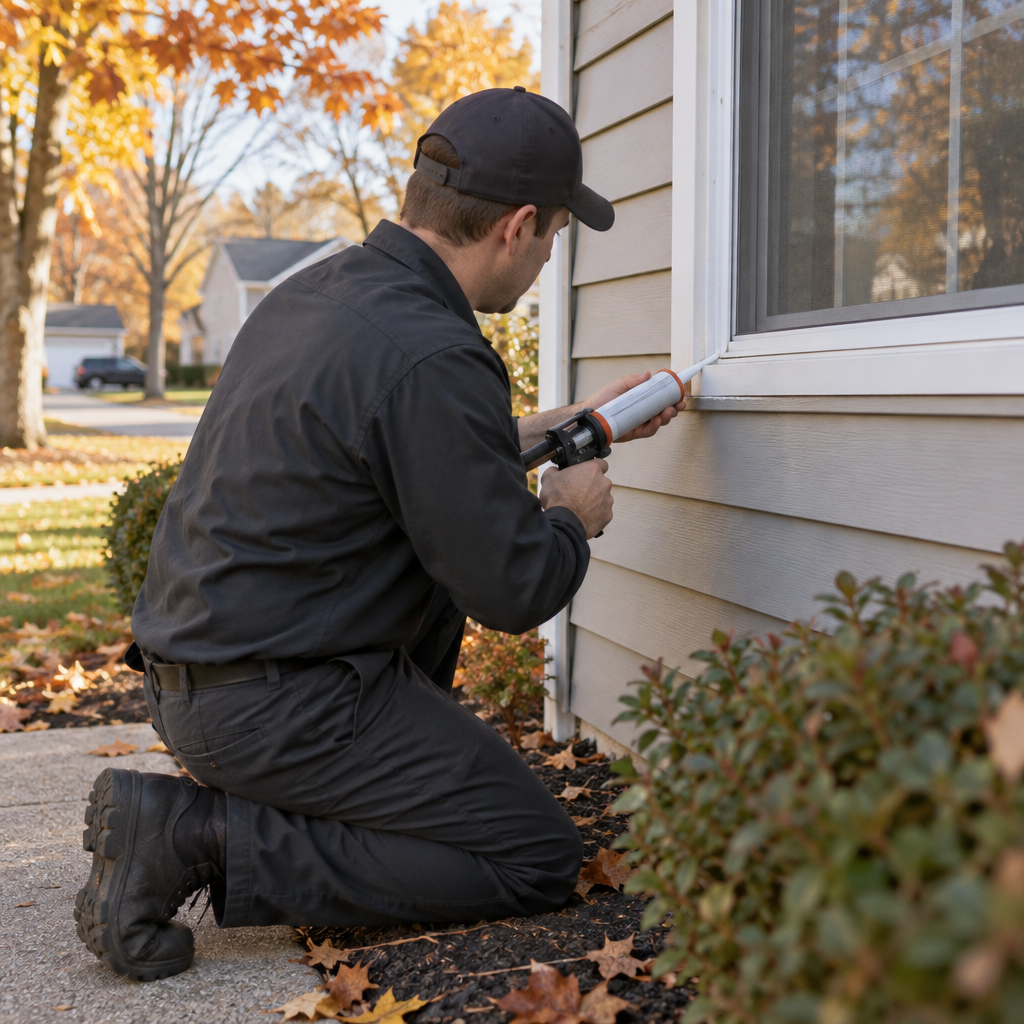
Mechanical exclusion does the heavy lifting. Penn State calls it the best method for keeping these insects out of homes and buildings. The targets are cracks around windows, doors, siding, and utility pipes, behind chimneys, and under the fascia, all sealed with quality silicone or silicone-latex caulk. Damaged door and window screens get repaired or replaced.
University of Kentucky Extension adds the measurements that make a walk-around useful:
- Door sweeps and thresholds at every exterior door. Gaps of 1/16 inch or less let insects and spiders through.
- Utility openings sealed where pipes and wires enter the foundation and siding, including outdoor faucets, gas meters, and dryer vents.
- Caulk in cracks around windows, doors, and fascia boards, applied after the surface is cleaned so it adheres.
- Quarter-inch wire mesh over attic, roof, and crawl space vents to keep out birds, bats, squirrels, and rodents.
Exterior insecticide work supplements sealing rather than replacing it. Penn State says exterior applications may offer minor relief where sealing the whole exterior is impractical, and both sources are blunt about the limit: sunlight breaks these products down, so the residual effect may not last much beyond several days or a week. Treatments applied before the insects congregate do more than treatments applied after. The extension guidance is equally direct that there’s no quick fix for annual lady beetle invasions, and that vacuuming, pest proofing, and properly timed exterior work give relief without stopping every beetle.
That order lines up with how EPA describes integrated pest management, which starts with identifying the pest and removing what attracts it, then uses pesticides as one tool rather than the first move. Our seasonal service work follows the same order, and what a visit includes depends on the inspection.
What not to do once they’re inside
The instinct is to spray or set off a fogger in the attic. Both extension sources advise against treating wall voids and attics after these insects are already in. Dust treatments can kill large numbers of them, and then carpet beetles feed on the dead insects and move on to woolens and stored dry goods. Foggers kill what’s exposed and don’t stop more insects from emerging once the room airs out.
A vacuum is the better answer indoors, and for lady beetles the extension guidance calls it more sanitary and more effective than insecticide. Expect a lingering smell after stink bugs, and sweeping works for boxelder bugs.
If bugs keep appearing in a room, find where they’re coming out. Cracks behind baseboards, gaps around window and door trim, and openings around exhaust fans and ceiling lights are the usual routes.
Frequently Asked Questions
When should fall pest work happen in Northern Ohio?
Before the insects congregate on the house. Stink bugs start looking for overwintering sites in September and continue through October, and Kentucky Extension puts useful timing for exterior lady beetle treatments at late September to early October. Work done in late winter accomplishes little, because the insects got in the previous autumn.
Will stink bugs or lady beetles damage my house?
No. Penn State says stink bugs won’t reproduce inside a structure or cause damage, and the extension guidance says lady beetles don’t attack wood, food, or clothing. The problems are staining, odor, and the nuisance of finding them indoors.
Do boxelder bugs bite?
They don’t bite or sting. University of Kentucky Extension reports no harm to people, pets, or livestock, though their fecal matter may stain fabrics and they produce an unpleasant odor when crushed.
Can I just seal everything myself?
Some of it, yes. Door sweeps, caulk, and hardware cloth are hardware store items. Comprehensive pest proofing is labor intensive, and multi-story homes, long soffit runs, and roofline gaps are hard to reach safely.
Are these insects a health risk?
For most people they’re a nuisance. Penn State notes the odor can trigger rhinitis or conjunctivitis in sensitive people, and a crushed bug can cause dermatitis where it contacts skin. Lady beetle infestations can cause allergic reactions in some people. Ask a physician if you suspect a reaction.
Protect Your Home Before the Weather Turns
If insects are already gathering on your siding, this is the right week to act. Contact Black Dog Pest Solutions and we’ll inspect the exterior, point out the openings that matter, and explain what fall pest control in Northern Ohio can do for your home before the weather turns. Call 440-654-8234 to schedule a visit and protect your living space through the winter.