
Friend or Foe in the Garden?
Organic pill bug control is possible through a combination of environmental modifications, physical traps, and natural products that keep these crustaceans in check without using synthetic pesticides. The most effective methods include reducing moisture and debris, using potato or fruit traps, applying diatomaceous earth around plants, and deploying beneficial nematodes to target populations at their source.
Quick Organic Control Methods:
- Reduce moisture – Water in the morning and remove wet debris
- Set traps – Use halved potatoes, citrus rinds, or beer containers
- Create barriers – Apply diatomaceous earth or protective collars
- Use natural products – OMRI-listed baits or beneficial nematodes
- Improve soil health – Strong roots make plants less vulnerable
Pill bugs (also called roly-polies or potato bugs) are fascinating creatures—they’re actually land crustaceans related to lobsters and shrimp, not insects at all. They play an important role as decomposers, breaking down dead plant matter and recycling nutrients back into your soil. But when their populations explode and natural food sources run low, these same helpful creatures can become garden pests, munching on seedlings, strawberries, and other tender plants.
The good news? You don’t need harsh chemicals to bring them back into balance. Most pill bug problems stem from too much moisture, too many hiding spots, or not enough decaying matter for them to eat. By understanding what attracts them and what makes plants vulnerable, you can manage populations organically while still benefiting from their role in your garden ecosystem.
I’m Mat Ledyard, owner of Black Dog Pest Solutions in Avon, Ohio, and I’ve been helping homeowners solve pest problems since 2005. Through two decades of field work, I’ve learned that organic pill bug control succeeds when you address the environmental conditions that allow populations to surge, rather than just treating symptoms.
Identifying a Pill Bug Problem
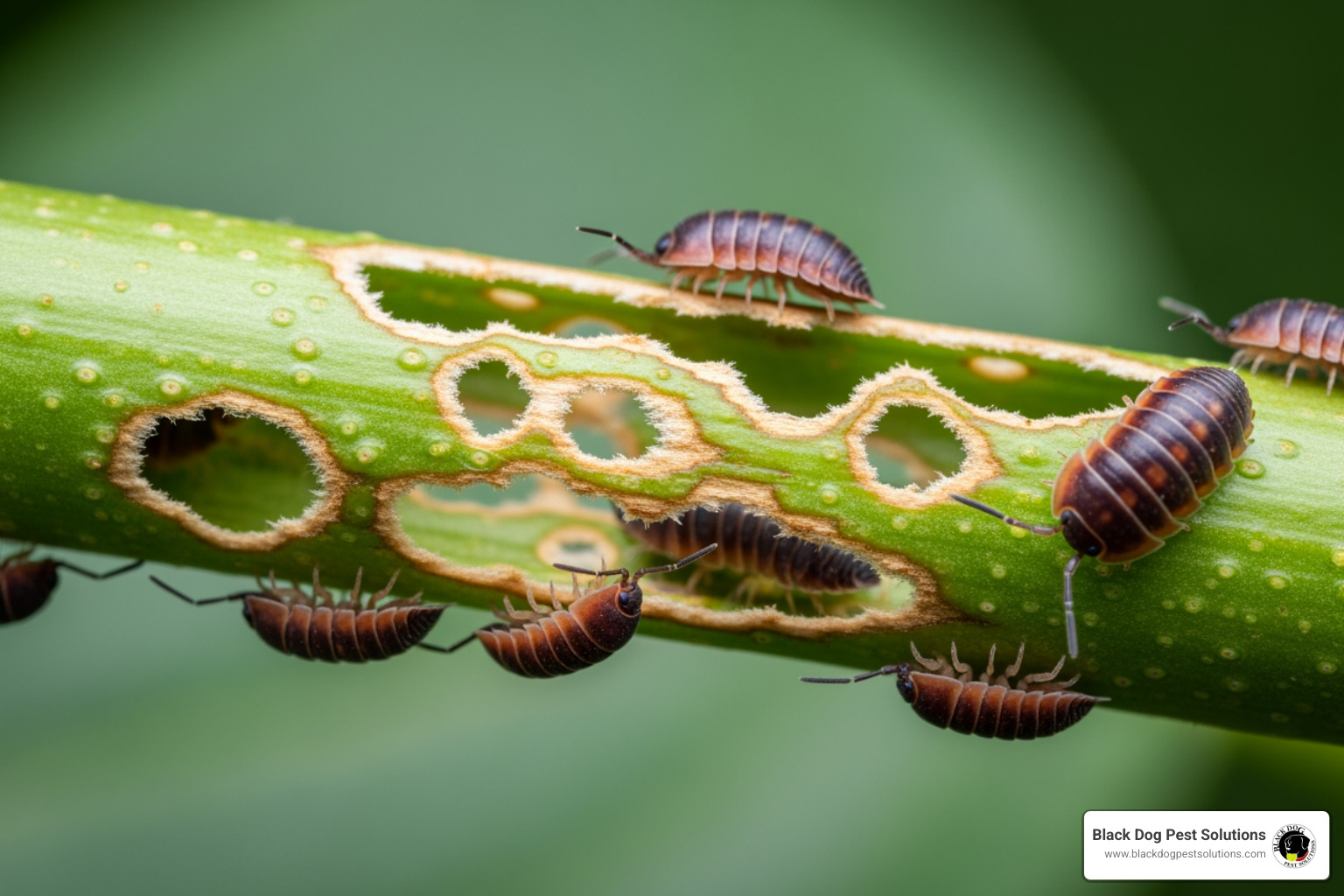
Before we dive into control methods, it’s crucial to understand when pill bugs cross the line from beneficial decomposers to problematic pests. Pill bugs are generally considered harmless, feeding primarily on decaying organic matter. They’re like tiny, armored cleanup crews in our gardens. However, when their populations become overabundant, or when their preferred food sources (like decaying leaves and wood) are scarce, they will turn their attention to live plant material. This is when they become a problem, especially for young, tender plants.
Signs of Infestation that Requires Intervention:
- Nibbled Seedlings: This is often the first and most heartbreaking sign. If you find your newly sprouted seedlings (like beans, lettuce, spinach, or peppers) with ragged edges, holes, or completely devoured stems, pill bugs are likely the culprits. They particularly love the soft, succulent tissues of young plants.
- Damaged Low-Hanging Fruit: Strawberries, melons, and other fruits that rest directly on the soil are prime targets. Pill bugs will chew irregular holes in the ripening fruit, especially where it touches the damp ground, making it unappetizing or unusable.
- Other Plant Damage: While less common, they can also feed on the lower leaves of mature plants, especially if those leaves are touching the moist soil. They may also target roots or tubers, though this is usually secondary to other damage.
- Nighttime Activity: Pill bugs are nocturnal. If you suspect an infestation, grab a flashlight and head out to your garden about an hour after sunset. You’ll likely see them crawling over plants, under debris, and on the soil surface. Seeing large numbers actively feeding is a clear indicator of a problem.
- High Numbers in Hiding Places: During the day, pill bugs seek out damp, dark places. If you lift a rock, a piece of wood, or a garden pot and find dozens or hundreds of pill bugs scurrying away, you have a high population. An overabundance in these areas suggests they might be looking for additional food sources.
Differentiating Between Beneficial and Problematic Behavior:
The key difference lies in what they’re eating. If pill bugs are primarily found under mulch, in compost piles, or munching on dead leaves, they’re doing their job as decomposers. They play a vital role in breaking down organic matter and returning nutrients to the soil, contributing to a healthy soil food web. We often find them more effective than earthworms in certain composting tasks!
However, if you observe them actively feeding on your live plants—especially young, vulnerable seedlings or ripening fruits—then their behavior has become problematic. They aren’t intentionally trying to destroy your garden; they’re simply opportunistic feeders seeking moisture and sustenance. Our goal with organic pill bug control is not total eradication, but rather to manage their populations and redirect their feeding habits so they focus on their beneficial role.
A Complete Guide to Organic Pill Bug Control
Successfully managing pill bug populations organically involves a multi-pronged approach. We focus on making our gardens less hospitable to large numbers of pill bugs while providing alternative food sources and using natural barriers.
Cultural Controls: Modifying Your Garden Environment
The first line of defense in organic pill bug control is to modify the environment to make it less appealing for them to thrive in excessive numbers. Pill bugs need moisture to survive, as they breathe with gill-like structures. They also seek out dark, damp hiding places during the day.
- Moisture Management:
- Water Early in the Day: Water your garden in the morning. This allows the soil surface and plant foliage to dry out completely before evening, when pill bugs become most active. This reduces the moist conditions they crave.
- Avoid Overwatering: Excessive watering creates the damp environment pill bugs love. Ensure your irrigation is efficient and not creating standing water.
- Reduce Indoor Humidity: If pill bugs are venturing indoors, it’s often a sign of high moisture levels. Use bathroom fans, stove hood vents, and ensure crawl spaces and attics are well-ventilated. Fix any leaky faucets or broken downspouts around your home’s exterior.
- Garden Hygiene:
- Remove Leaf Litter and Debris: Pill bugs love to hide under wet leaves, fallen fruit, and dead plant matter. Regularly clean up these materials from your garden beds and around the perimeter of your home. This eliminates crucial hiding spots and food sources.
- Clear Excess Vegetation: Keep the areas around your planting beds and home’s foundation tidy. Remove dense, low-growing vegetation that can create damp, shaded conditions.
- Keep Gutters Clean: Ensure rain gutters and downspouts are clear and diverting water away from your foundation.
- Mulch Management:
- Use Coarse Mulches: While mulch is beneficial for soil health and moisture retention, it can also create ideal pill bug habitats. If you must use mulch, opt for coarse materials that allow water to pass through quickly and dry out more effectively on top.
- Remove Mulch from Around Foundation: Avoid having bark mulch directly against your home’s foundation, as this can serve as a breeding site and encourage pill bugs to venture indoors.
- Consider Temporary Mulch Removal: If you have a severe pill bug problem, temporarily removing mulch from affected areas can force them out of their hiding spots and into traps, or expose them to predators and desiccation.
- Elevating Produce:
- For fruits and vegetables that ripen on the ground (like strawberries or squash), lift them using old strawberry baskets, small trellises, or even a layer of pebbles. This keeps the fruit dry and away from hungry pill bugs.
- Companion Planting:
- While not a direct deterrent for pill bugs specifically, companion planting with strong-smelling herbs and garlic can help deter a variety of general garden pests, potentially making your plants less attractive overall. Some gardeners report success with garlic spray as well.
Physical Traps & Barriers for Organic Pill Bug Control
When cultural controls aren’t enough, or when you need to reduce a large population quickly, physical traps and barriers are highly effective tools in our organic pill bug control arsenal.
- Effective DIY Traps:
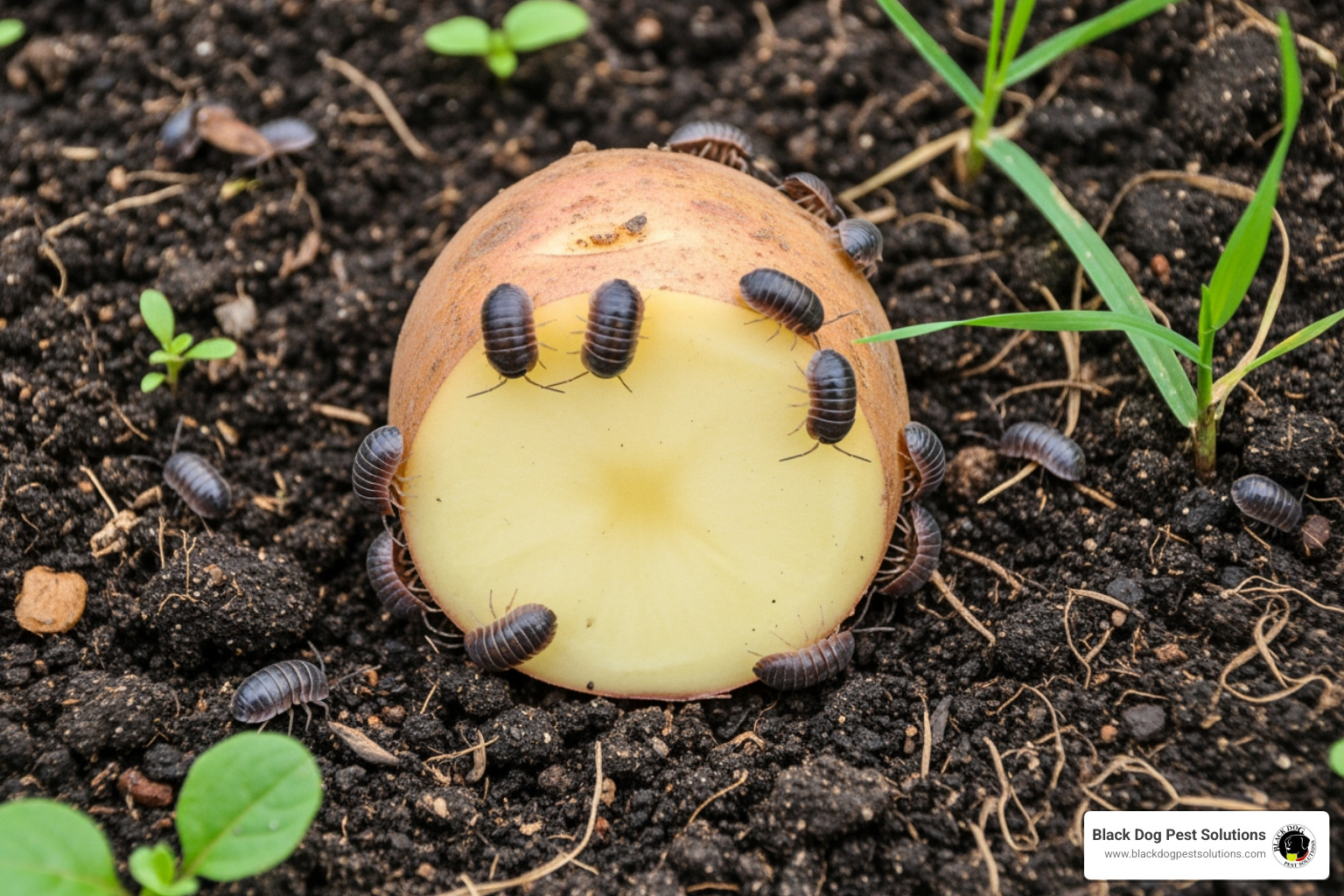
- Potato Traps: This is a classic and highly effective method. Cut a potato in half and scoop out a small depression in the cut side. Place the potato half cut-side down in the affected garden area. The pill bugs will be drawn to the potato for food and shelter. Check the traps daily, preferably in the morning, and either discard the collected pill bugs or relocate them far from your garden. You can often reuse a potato half for 2-3 days.
- Fruit/Vegetable Rind Traps: Similar to potato traps, halved citrus fruits (like oranges or grapefruits), cantaloupe rinds, or even apple cores can be placed cut-side down. Pill bugs are attracted to the decaying fruit. Check and empty these traps daily.
- Beer or Yeast Traps: Pill bugs, like slugs, are attracted to the fermenting smell of beer. Sink a shallow container (like a pie plate or tuna can) flush with the ground in the infested area. Fill it with beer or a solution of 1-2 tablespoons of yeast dissolved in water. Pill bugs will be drawn to the liquid, fall in, and drown.
- Rolled Newspaper Traps: A simple and non-toxic method is to roll up a newspaper or a piece of cardboard into a tube. Place it on the soil surface overnight. Pill bugs will crawl inside seeking shelter. In the morning, shake the contents of the tube into a pail of soapy water to dispatch them.
- Protective Barriers:
- Duct Tape Collars: For individual seedlings, especially those prone to pill bug damage, wrap the stems in duct tape with the sticky side facing outwards. This creates a barrier they can’t cross. The seedlings will thrive without pest damage.
- Plastic or Paper Cups: For young sprouts, particularly in raised beds or greenhouse environments (like the Growing Domes we see in some of our clients’ gardens in Northern Ohio), cut the bottom off a plastic or paper cup. Place the cup around the seedling, pressing it slightly into the soil. This forms a physical barrier that protects the delicate stem.
- Toilet Paper Tube Collars: Similar to cups, toilet paper rolls can be used as collars around seedlings. Slide the tube over the seedling and bury it an inch or two into the soil. While some gardeners report mixed success with this method (pill bugs sometimes find their way inside), it can still offer protection.
- Overplanting: If you’re consistently losing seedlings to pill bugs, consider planting 3-4 seeds instead of just 1-2. In our experience, at least one seedling often survives and thrives, even if others are eaten. You can then thin the additional seedlings by cutting them at soil level (pulling can disturb the roots of the remaining plants).
Advanced Solutions and Natural Products
When environmental modifications and physical barriers need a boost, we turn to targeted organic products and biological controls. These methods offer more direct intervention while remaining safe for your organic garden.
Advanced Organic Pill Bug Control: Products and Biologicals
- Diatomaceous Earth (DE):
- How DE Works: Diatomaceous earth is a natural powder made from the fossilized remains of diatoms, tiny aquatic organisms. Under a microscope, DE particles have sharp, abrasive edges. When pill bugs crawl over DE, these sharp particles scratch their exoskeletons, causing them to dehydrate and eventually die. It essentially dries them out.
- Application: Spread a thin layer of food-grade DE along the edges of your planting beds, around the base of vulnerable plants, or in areas where pill bugs are known to congregate. Apply it in the late afternoon when pill bugs are becoming active.
- Considerations: DE is safe to handle for humans, animals, and pets, but it’s crucial to wear a mask during application to avoid inhaling the fine dust, which can irritate lungs. Reapply after rain or heavy watering, as moisture reduces its effectiveness. It can also harm some beneficial insects, so use it judiciously and target specific problem areas rather than broadcasting it widely.
- Beneficial Nematodes (Steinernema carpocapsae):
- Targeted Control: For a biological approach, Steinernema carpocapsae nematodes are highly effective at targeting and killing pill bugs. These microscopic, soil-dwelling organisms are applied to the soil.
- How Nematodes Work: Once in the soil, the nematodes actively seek out pill bugs. They penetrate the pill bug’s skin, release a bacteria that quickly multiplies inside the host, and kills the pill bug. The nematodes then reproduce within the dead host, continuing their lifecycle and providing ongoing control.
- Application: Follow the product instructions carefully. Nematodes are typically mixed with water and applied to moist soil, usually in the evening or on a cloudy day to protect them from UV light. Soil temperature and moisture are critical for their survival and effectiveness.
- Iron Phosphate Baits (OMRI-Listed):
- Organic Certification: Products like Garden Safe Slug & Snail Bait or Sluggo Plus contain iron phosphate, which is an active ingredient deemed compliant for use in organic production and is OMRI (Organic Materials Review Institute) Listed.
- Effectiveness: These baits are very effective against a wide range of pests, including earwigs, cutworms, sowbugs, pill bugs, slugs, and snails.
- Safety: While OMRI-listed and generally considered safer for birds and other wildlife than older chemical baits, they are not safe for human consumption and can still pose a risk to some beneficial insects if not used carefully. We often recommend applying them after watering your garden to dilute them slightly and minimize impact on non-target organisms. Always follow package directions precisely.
Pros and Cons of Common Organic Treatments
Choosing the right organic treatment depends on your specific situation, the severity of the infestation, and your comfort level with different methods. Here’s a comparison of some popular options:
| Treatment | How it Works | Pros | Cons – |
| Diatomaceous Earth (DE) | Scratches the exoskeleton of insects, causing dehydration. | Effective against a wide range of crawling pests. Non-toxic to mammals. | Must be reapplied after rain. Can harm beneficial insects like bees and ladybugs if not used carefully. Inhalation risk during application. – |
| Beneficial Nematodes | Microscopic worms that seek out and kill pill bugs in the soil. | Highly specific to soil-dwelling pests, so it’s safe for beneficial insects above ground, pets, and humans. Provides long-lasting control. | Requires specific soil moisture and temperature conditions to be effective. Can be more expensive than other options. – |
| Iron Phosphate Baits | Acts as a stomach poison for pill bugs, slugs, and snails. | OMRI-listed and generally safe for pets and wildlife when used as directed. Effective and easy to apply. | Can be harmful to earthworms and some beneficial insects. Must be reapplied after heavy rain. – |
Encouraging Natural Predators
Another powerful, long-term organic strategy is to encourage natural predators of pill bugs in your garden. Creating a habitat that welcomes birds, toads, frogs, and predatory insects like ground beetles and spiders can provide a natural and self-sustaining form of pest control. These animals see pill bugs as a food source. You can attract them by providing a water source, shelter, and planting a diverse range of native plants. For more tips, you can learn about attracting birds to your garden.
Conclusion: Maintaining a Balanced Garden Ecosystem
Effective organic pill bug control isn’t about eliminating every single pill bug from your garden; it’s about fostering a balanced ecosystem where their populations remain at levels that don’t harm your plants. By implementing an integrated pest management (IPM) approach that combines environmental modifications, physical controls, and targeted organic products, we can successfully manage pill bugs without resorting to harsh chemicals.
Healthy soil and strong plants are your best defense against pests. When plants have enough organic matter and moisture in the soil, they’re less likely to be seen as a food source by pill bugs. Consistent effort in managing moisture, cleaning up debris, setting traps, and using organic barriers and products will go a long way in protecting your precious plants.
For persistent or overwhelming infestations of pill bugs in Northern Ohio, including areas like Avon, Lorain, Elyria, and across Greater Cleveland, sometimes professional help is the most effective solution. If you’ve tried these organic methods and are still struggling to keep your garden thriving, our team at Black Dog Pest Solutions is here to help. We offer comprehensive and reliable pest control services custom to the unique needs of our community. Explore our professional Pill Bugs control options.