
Identifying Springtails in Bathroom Settings
To the untrained eye, springtails in bathroom sinks or tubs look like tiny moving specks of pepper. However, if you get close enough—or try to touch one—you’ll notice their most defining characteristic: they launch themselves into the air.
Springtails are minute, wingless hexapods (six-legged creatures closely related to insects). In a bathroom environment, they typically measure between 1 and 2 mm in length—roughly the size of a pinhead. While they can be various colors, the ones we most commonly see in Northern Ohio homes, from Cleveland to Sandusky, are gray, white, or a translucent brown.
Their bodies are soft and cylindrical, which makes them very easy to crush. Unlike many true insects, springtails have internal mouthparts, a primitive feature that technically places them in a separate class called Collembola. Their most famous feature is the furcula, a forked, spring-like appendage tucked under their abdomen. When threatened, they release this “spring,” snapping it against the ground to catapult themselves several inches—a massive distance for something so small.
Springtails vs. Fleas: How to Tell the Difference
Because they jump, many homeowners in Westlake or Bay Village panic, thinking they have a flea infestation in their bathroom. However, they are very different pests.
| Feature | Springtails | Fleas |
|---|---|---|
| Body Shape | Soft, cylindrical/rounded | Hard, flattened side-to-side |
| Mouthparts | Internal (chewing mold/fungi) | External (piercing/sucking blood) |
| Host | None (moisture-dependent) | Mammals and birds |
| Bite | No | Yes (itchy red bumps) |
| Survival | Die quickly in dry air | Can survive in carpets for weeks |
According to the University of Minnesota Extension, springtails are easily distinguished by their soft bodies, which are crushed instantly under light pressure, whereas fleas have a tough exterior designed to survive being scratched by pets.
Why are springtails in my bathroom?
If you are seeing springtails in bathroom areas, it is because your bathroom is providing two things they cannot live without: high humidity and a buffet of microscopic food.
Springtails are “biological moisture meters.” They require a relative humidity of at least 60% to survive. If the air drops below 50% humidity, most species will desiccate (dry out) and die within hours to days.
In your bathroom, they are attracted to:
- Mold and Fungal Spores: Their primary food source. Even if you can’t see the mold, microscopic spores on damp drywall or grout are enough to feed a colony.
- Bacterial Biofilms: The “slime” that builds up inside drains and around faucet bases.
- Organic Debris: Skin cells, hair, and soap scum that accumulate in corners.
- High Humidity: Steam from showers that lingers due to poor ventilation.
The University of Missouri Extension notes that in optimal outdoor conditions, springtails can reach densities of 50,000 per cubic foot. While indoor populations are usually smaller, similar explosions can happen behind your bathroom tiles if a leak provides constant moisture.
Signs of a springtail infestation
How do you know you have an infestation rather than just a few stragglers?
- Mass Gatherings: You might see hundreds of them huddled together in the corner of a walk-in shower or around the base of the toilet.
- Constant Jumping: When you turn on the light or move a bath mat, the floor seems to “shimmer” as hundreds of tiny bugs hop simultaneously.
- Presence Near Drains: They often congregate in sinks and tubs because they are seeking the water film near the drain.
- Sightings After Rain: In Ohio, heavy spring rains often saturate the soil, forcing springtails to migrate from the foundation into the drier (but still damp) voids of your home.
The Hidden Dangers of a Springtail Infestation
While the bugs themselves aren’t dangerous, what they represent can be. Seeing springtails in bathroom tiles is often the first “early warning” of a structural issue.
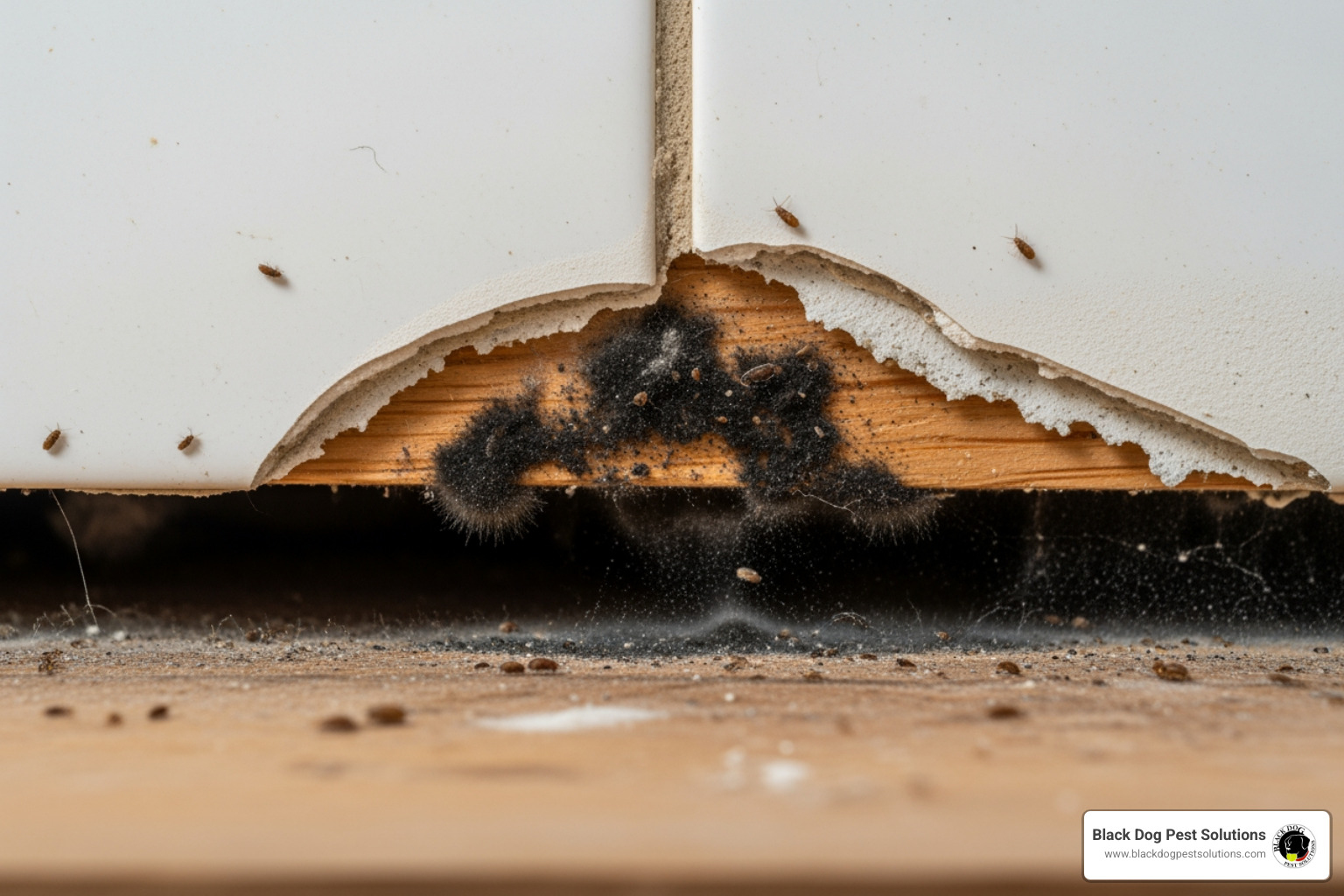
Think of springtails as a red flag. Because they eat mold and fungi, their presence often indicates hidden mold growth behind your walls or under your flooring. According to the Nebraska Extension, springtails serve as indicators that humidity levels are high enough to sustain wood rot and serious mold colonies.
If you ignore them, you might eventually deal with:
- Structural Damage: Persistent moisture can rot the floor joists under your tub or the studs behind your shower.
- Attracting Other Pests: Damp wood and mold are also magnets for silverfish, carpenter ants, and even termites. You can learn more about what Cleveland homeowners need to know about pest problems to see how one issue often leads to another.
Are springtails harmful to humans or pets?
The short answer is no. Springtails are non-parasitic. They do not have stingers, and they do not have the mouthparts required to bite humans or pets. They do not transmit diseases, and they don’t eat your food or your furniture.
In very rare cases, extremely high populations might cause minor skin irritation or allergic reactions in sensitive individuals if they come into direct contact with the bugs, but for 99% of homeowners in Northern Ohio, they are simply a nuisance that signals a moisture problem.
How to Get Rid of Springtails in Your Bathroom
The secret to winning the war against springtails in bathroom environments is not a bigger can of bug spray—it’s a better dehumidifier.
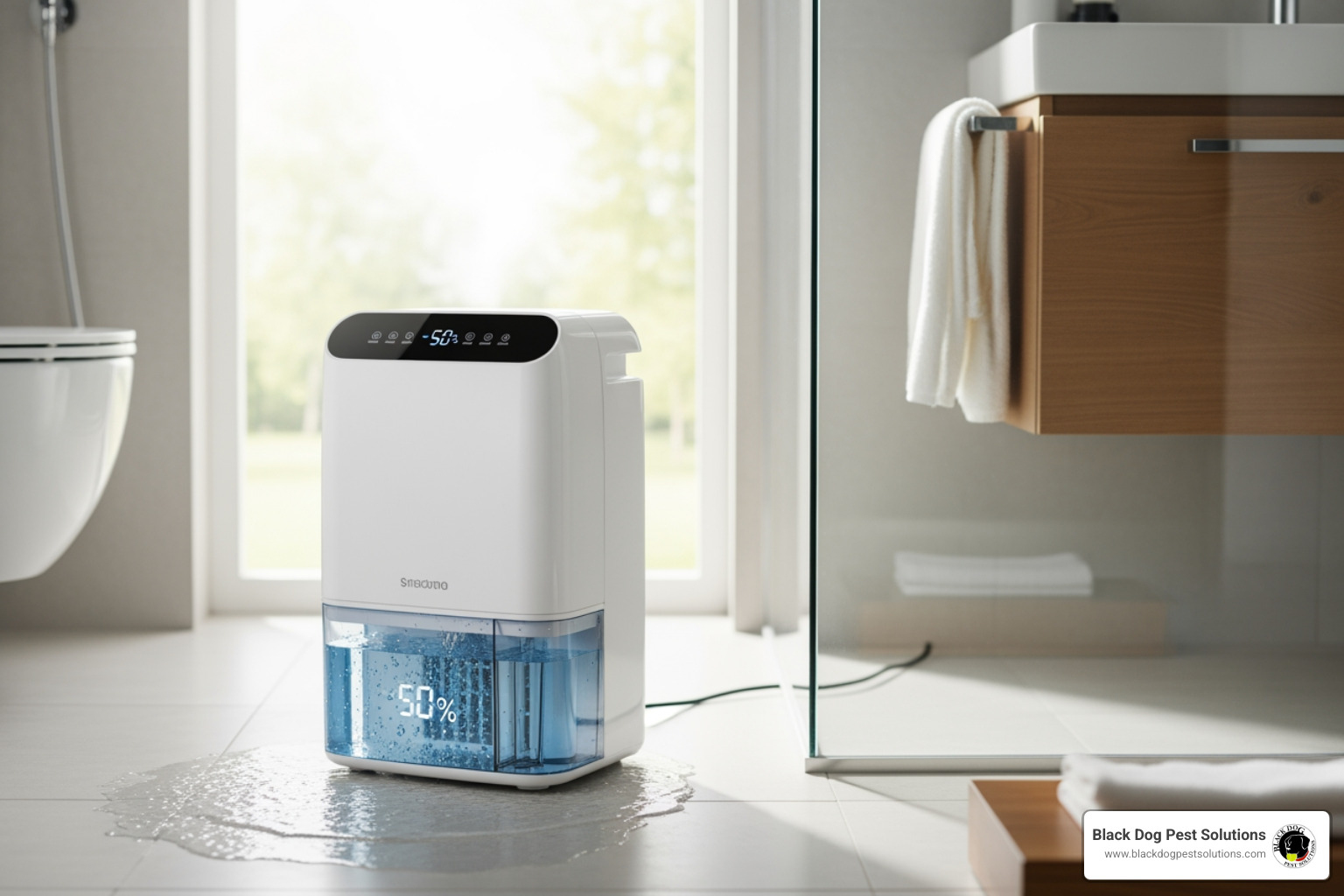
Research from the Clemson University Extension shows that most springtail populations die off naturally within a few days to a week once the relative humidity is reduced below their survival threshold.
Step 1: Moisture Control
- Fix Leaks: Check the P-trap under the sink, the wax ring at the base of the toilet, and the shower valves. Even a tiny “pinhole” leak can sustain thousands of springtails.
- Improve Ventilation: Ensure your bathroom exhaust fan is moving at least 80 CFM (cubic feet per minute) and is actually venting to the outside—not just into your attic.
- Run the Fan Longer: Keep the exhaust fan running for at least 20 to 30 minutes after every shower.
Step 2: Environmental Correction
- Use a Dehumidifier: If your bathroom feels “muggy,” run a small dehumidifier to bring the humidity down to 40-45%.
- Squeegee and Dry: After showering, squeegee the walls and wipe down the tub. Don’t leave damp towels in a heap on the floor.
If you’ve tried these steps and the jumping bugs persist, it’s time to look deeper. You can find more information about professional springtail control to understand how we locate hidden nesting sites.
DIY methods for removing springtails in bathroom drains
If you see them primarily around your sink or tub drain, they are likely feeding on the bacterial slime inside the pipes.
- The Vinegar and Baking Soda Flush: Pour half a cup of baking soda down the drain, followed by half a cup of white vinegar. Let it fizz for 15 minutes, then flush with boiling water. This breaks down the biofilm they eat.
- HEPA Vacuuming: Use a vacuum with a HEPA filter to suck up visible springtails. Be sure to empty the canister or bag into a sealed trash can outside immediately.
- Grout Cleaning: Use a stiff brush and a mold-killing cleaner to scrub the grout lines between your tiles.
For more hands-on advice, check out our effective residential pest control tips for Cleveland homes.
Why insecticides often fail
One of the most common mistakes we see in places like North Ridgeville or Avon Lake is homeowners dumping bleach or heavy pesticides down their drains. Don’t do this.
Insecticides often fail against springtails for three reasons:
- Resistance: Many springtail species have shown a natural resistance to common household pyrethroid sprays.
- Hidden Nesting: They often live deep inside wall voids or under the subfloor where surface sprays can’t reach.
- Repellency: Some sprays just scatter the colony, causing them to move to a different room (like your kitchen or bedroom).
As the University of Minnesota Extension points out, the key is moisture control, not chemical treatment. Without fixing the water issue, the bugs will just keep coming back.
Preventing Future Springtail Outbreaks
Once you’ve cleared the current “crop” of springtails, you need to ensure they don’t return.
- Seal the Gaps: Use a high-quality, mold-resistant silicone caulk to seal gaps around the base of the tub, the sink backsplash, and where the toilet meets the floor.
- Monitor Humidity: Buy a cheap hygrometer (a humidity meter) and keep it in the bathroom. If it regularly reads above 50%, you need better ventilation.
- Weatherstrip: Check the windows in your bathroom. If there are gaps, springtails can crawl in from the wet mulch outside your foundation.
- Landscaping: Keep mulch and wet leaves at least 12 inches away from your home’s foundation. Switch to gravel or stone around the perimeter if you have recurring issues.
For a broader look at seasonal prevention, read the ultimate guide to spring pest management in Northeastern Ohio.
Frequently Asked Questions about Springtails
Can springtails live in my hair or bed?
This is a common fear, but the answer is almost always no. Springtails need constant moisture to breathe. Your hair and your bed are far too dry for them to survive. While they might accidentally hop onto a person or a bed if the room is extremely humid, they cannot live there, they aren’t parasitic, and they won’t “infest” you.
Do springtails come up from the drains?
It certainly looks that way! However, they usually don’t “live” in the sewer. They are more likely entering the bathroom through a tiny crack in the baseboard or window and then gravitating toward the drain because it’s the dampest spot in the room. In some cases, they can live in the “gunk” inside the P-trap, but they aren’t coming from the city’s main sewer lines.
When should I call a professional for springtails?
You should call Black Dog Pest Solutions if:
- You have fixed all visible leaks and the bugs are still there after two weeks.
- You see them in multiple rooms (kitchen, basement, and bathroom).
- You suspect a leak behind a wall or under a concrete slab that you can’t reach.
- The population is so large that DIY vacuuming isn’t making a dent.
Persistent springtails are often the only sign of a “slow leak” that could be costing you thousands in future structural repairs. We can help you identify exactly where the moisture is coming from. Explore our comprehensive pests list to see how we handle these and other moisture-loving invaders.
Conclusion
At Black Dog Pest Solutions, we know that a home in Northern Ohio is a major investment. Whether you’re in a historic home in Lakewood or a new build in Avon, springtails in bathroom areas are a nuisance you shouldn’t have to live with.
While these tiny jumpers aren’t a direct threat to your health, they are a loud-and-clear message from your home that something is too damp. By focusing on moisture remediation, improving your ventilation, and sealing entry points, you can reclaim your bathroom.
If you’re tired of sharing your morning shower with thousands of tiny acrobats, we’re here to help. We provide professional inspections and long-term relief for homeowners across the Greater Cleveland area.
Ready to dry out your pest problems for good? Schedule your residential pest services with Black Dog Pest Solutions today.