
Why Chipmunk Traps Matter More Than You Think
Chipmunk traps are one of the most common tools homeowners reach for when these small, striped rodents start tearing up their yard — and for good reason.
Here’s a quick overview of your best options:
| Trap Type | Best For | Humane? | Avg. Cost |
|---|---|---|---|
| Live cage trap | Single or small numbers | Yes | $20–$80 |
| Multi-catch trap | Active infestations | Yes | $40–$120 |
| Snap trap | Fast population control | No | $7–$20 |
| Electronic trap | Indoor use | No | $30–$60 |
Chipmunks may look harmless, but they’re natural diggers. A single chipmunk can create an extensive burrow network under your lawn, garden, or even your home’s foundation. Over time, that underground digging can undermine patios, damage plant roots, and create entry points for water and other pests.
The good news? You don’t always need a professional to get started. With the right trap, bait, and placement, many homeowners can manage a small chipmunk problem on their own.
I’m Mat Ledyard, owner of Black Dog Pest Solutions in Avon, Ohio, with nearly two decades in the pest control industry — and chipmunk traps are something I’ve worked with extensively across Northeast Ohio properties. Whether you’re dealing with one curious critter or a full-blown burrow colony, understanding your trapping options is the first step to getting your yard back.
Understanding Different Types of Chipmunk Traps
When you start looking for chipmunk traps, the sheer variety can be overwhelming. Retailers like Wildlife Control Supplies offer as many as 42 different models, ranging from simple $13 body-grip traps to high-end $120 multi-catch stations. At Home Depot, you’ll find around 13 specialized results. To help you choose, we’ve broken down the most common types used here in Northern Ohio.
Live Cage Traps
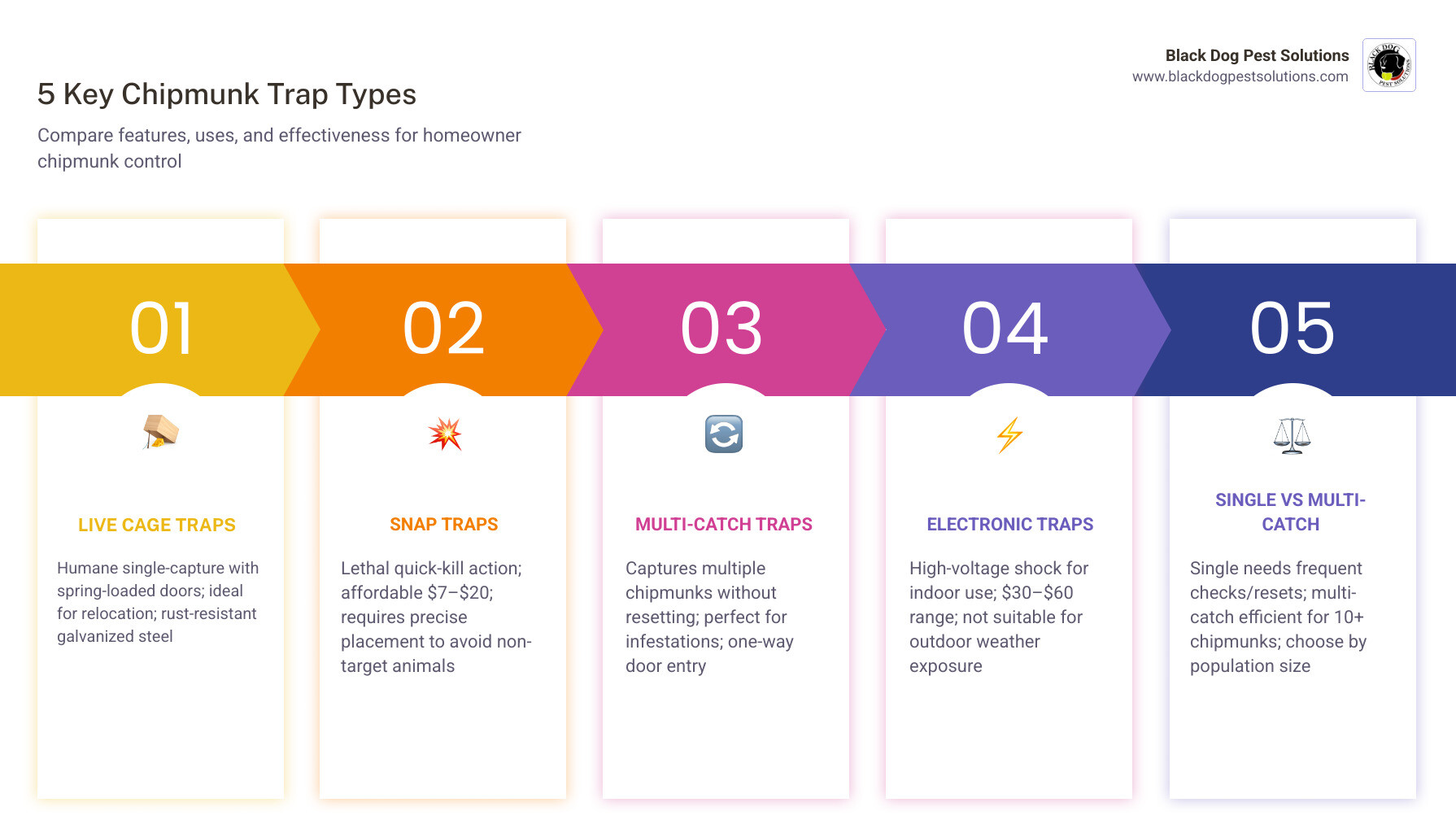
These are the gold standard for humane control. Brands like Havahart are famous for their Small 1-Door Live Animal Traps. These traps use a sensitive trip plate; when the chipmunk steps on it to reach the bait, a gravity-action or spring-loaded door snaps shut. They are typically made of galvanized steel to resist rust, which is vital given our humid Ohio summers.
Snap Traps
If you aren’t looking to relocate the animal, snap traps are a more traditional route. The JT Eaton JAWZ Plastic Rat and Chipmunk Trap is a popular choice because it can be set easily by hand or foot. These are “lethal” traps designed for a quick kill. While effective, they must be placed carefully to avoid snapping on a curious bird or a neighbor’s cat.
Multi-Catch Traps
For those dealing with a “chipmunk city” under their porch, multi-catch traps like the “Chipmunkinator” or the Kwik-Katch XL are game-changers. These allow multiple animals to enter through one-way doors without the trap needing to be reset after every capture. We often see these used on larger properties in Medina or Westlake where the population is high.
Electronic Traps
Primarily used for indoor areas like garages or attics, electronic traps (like those from Victor or Owltra) deliver a high-voltage shock. They are effective but usually more expensive than a standard snap trap and aren’t built for the outdoor elements.
Single-Catch vs. Multi-Catch
The choice here depends on your patience. A single-catch trap requires you to check it, release the animal, and reset it every time. If you have ten chipmunks, that’s ten trips. A multi-catch trap can handle the whole “family” in one afternoon, making it much more efficient for heavy infestations.
Selecting Effective Baits and Appropriate Trap Sizes
You could have the most expensive trap in the world, but if the “menu” isn’t right, that chipmunk isn’t going inside. Chipmunks are foragers that love high-protein and high-energy foods.
The Best Baits
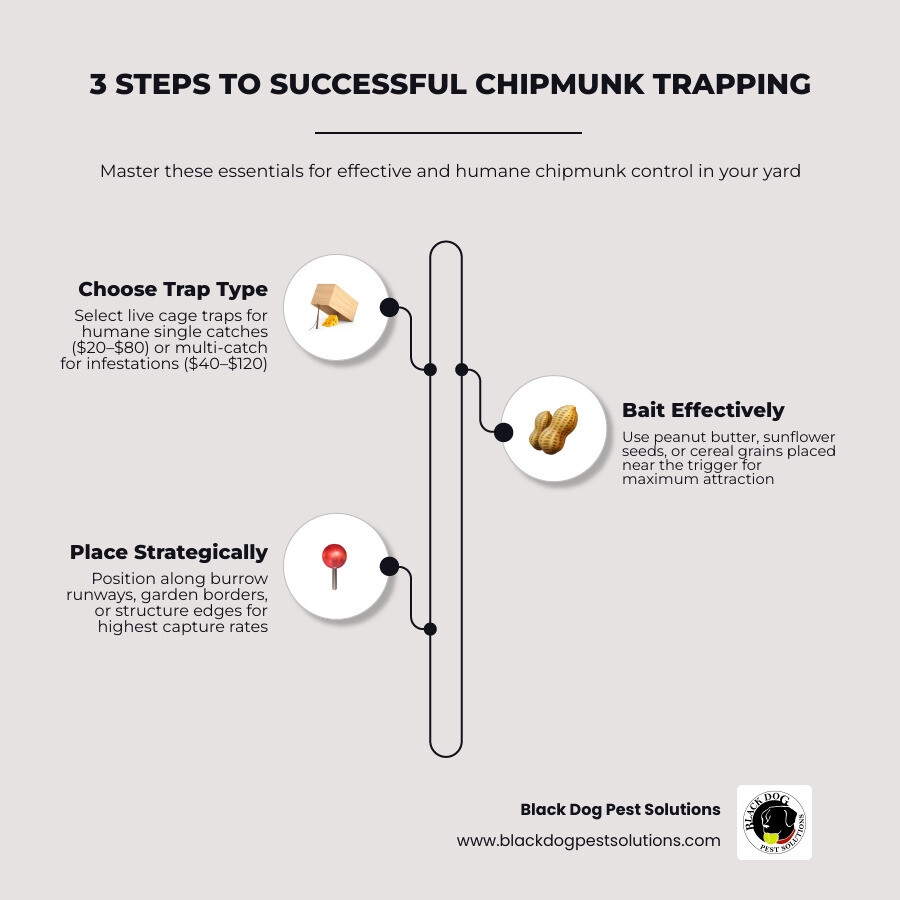
- Peanut Butter: This is the “secret weapon.” It’s sticky, so the chipmunk has to work to get it off, ensuring they stay on the trigger plate long enough to trip the door.
- Sunflower Seeds and Bird Seed: If you have a bird feeder, you already know chipmunks love these. They are great for creating a “breadcrumb trail” leading into the trap.
- Cereal Grains and Nuts: Unsalted peanuts or pecans are irresistible.
- Fruit: Occasionally, a slice of apple or a few berries can work if seeds aren’t doing the trick.
Sizing Considerations
Size matters. If the trap is too big (like a raccoon-sized trap), the chipmunk might be too light to trigger the plate, or the mesh might be wide enough for them to squeeze right back out. Look for traps labeled “Small” or “X-Small.” A standard size for a chipmunk trap is roughly 16 inches long by 5 or 6 inches wide. This size is also perfect for rats or weasels but too small for skunks—which is a good thing, because nobody wants to accidentally trap a skunk!
Bait Placement Strategies
Don’t just toss the bait in the middle. Place the primary bait (like a dollop of peanut butter) behind the trip plate. This forces the animal to walk fully across the trigger. You can also smear a tiny bit of peanut butter on the trigger plate itself to encourage that final step.
Key Considerations for Trap Setting and Placement
In Northern Ohio, we see chipmunks everywhere from the rocky shores of Sheffield Lake to the wooded yards of Strongsville. The key to successful trapping is “location, location, location.”
Identifying Runways
Chipmunks are creatures of habit. They rarely run across the middle of a wide-open lawn because they are afraid of hawks and cats. Instead, they follow “runways” along structure edges. Look for them scurrying along:
- The foundation of your house.
- The edges of garden borders.
- Stone walls or woodpiles.
- Under the cover of low-hanging bushes.
Proper Trap Placement
Place your chipmunk traps directly in these runways. The trap should be flush against the wall or edge. If you find a burrow entrance (a clean, 2-inch wide hole in the ground with no dirt mound), place the trap a few inches away from the opening.
Scent Masking and Safety
Animals have a keen sense of smell. If your trap smells like a human, they might stay away. We recommend wearing safety gloves while handling and baiting the trap. Not only does this keep your scent off the device, but it also protects you from any sharp edges on the metal mesh.
Trigger Sensitivity
Before you leave the trap for the day, do a “test fire” with a pen or a small twig. You want the trigger to be sensitive enough that a light-weight chipmunk will set it off, but not so sensitive that a heavy gust of wind or a falling leaf triggers it.
Safe Release Tactics and Legal Regulations
Once you’ve successfully captured your striped intruder, the job isn’t quite over. You need to handle the release safely and legally.
Handling Safety
Never stick your fingers through the mesh of the trap. Even a small chipmunk can deliver a painful bite if it’s scared. Most quality traps, like the Havahart models, come with a handle guard to protect your hand during transport.
Recommended Relocation Distance
If you release a chipmunk in your neighbor’s yard, it will be back at your foundation before you’ve finished your coffee. To ensure they don’t return, relocate them at least 5 to 10 miles away from your property. Choose an area with plenty of cover, like a local woods or a park (ensure you have permission first).
Local Regulations and State Laws
In Ohio, wildlife laws can be specific. Generally, chipmunks are not protected, but there are rules regarding the relocation of trapped animals to prevent the spread of disease. It is always a good idea to check with the Ohio Department of Natural Resources (ODNR) or local ordinances in cities like Westlake or North Ridgeville to ensure you are following current guidelines for catch-and-release.
Maintenance Tips and Non-Trap Alternatives
To keep your chipmunk traps effective for years, a little maintenance goes a long way. After a successful catch, the trap will often have “stress scents” or urine on it. Wash the trap with mild, unscented soap and water. This removes the scent of the previous occupant, which might otherwise scare off the next one.
Non-Trap Alternatives
Sometimes, trapping isn’t the first choice. If you want to discourage them from moving in, consider these methods:
- Hardware Cloth: Burying 1/4 inch mesh (hardware cloth) around the base of a deck or porch can prevent them from burrowing underneath.
- Natural Repellents: Some homeowners find success with peppermint oil or capsaicin-based sprays. Tomcat offers rodent repellents that use essential oils like cinnamon and garlic.
- Ultrasonic Devices: These emit a high-frequency sound that is supposed to be annoying to rodents. While results vary, some people in the Cleveland area swear by them for keeping chipmunks out of garages.
- Habitat Modification: The best way to get rid of chipmunks is to make your yard boring. Remove woodpiles, clean up spilled birdseed, and keep your grass trimmed.
Frequently Asked Questions
What are the best locations for chipmunk traps?
The best spots are along “hard lines” where chipmunks feel safe. This includes foundation edges, stone walls, woodpiles, and right next to burrow entrances. If you see a chipmunk consistently running along a certain path, that is exactly where the trap should go.
Are there legal restrictions on trapping chipmunks?
Yes. While chipmunks aren’t usually protected species, many municipalities have rules about where you can release them. Some areas prohibit releasing animals on public land without a permit. Always check your local city hall website in places like Rocky River or Bay Village before you drive off with a caged critter.
How do multi-catch traps compare to single-catch?
Multi-catch traps are superior for large infestations because they don’t “lock out” other chipmunks after the first one enters. However, they are usually bulkier and more expensive. If you only have one or two chipmunks, a single-catch cage trap is more than enough. If you’re seeing five or six at a time, it’s time to upgrade to a multi-catch system or call in the pros.
Conclusion
Managing a chipmunk problem with chipmunk traps is a project many Northern Ohio homeowners can tackle with a bit of patience and the right bait. From choosing between a live cage and a snap trap to finding the perfect spot along your garden wall, these steps can help you protect your foundation and your landscaping.
However, we know that DIY trapping isn’t for everyone. It can be time-consuming, and if you have a massive colony, it can feel like a losing battle. If you’ve tried the birdseed and the cages and the chipmunks are still winning, we are here to help.
At Black Dog Pest Solutions, we provide professional, humane, and reliable wildlife control throughout Avon and the surrounding Northern Ohio communities. We don’t just trap the animals; we look at the big picture to help you prevent them from coming back. Whether you’re in Westlake, Medina, or right here in Avon, our team is committed to fast, professional service that keeps your home safe.
If you’re ready to stop the digging for good, reach out to us for a comprehensive solution. With a 4.9-star rating and deep roots in the community, we’ll make sure your “unwanted friends” find a new home far away from yours.