
Why You Need to Get Rid of Mice Fast

If you need to get rid of mice fast, here’s what works:
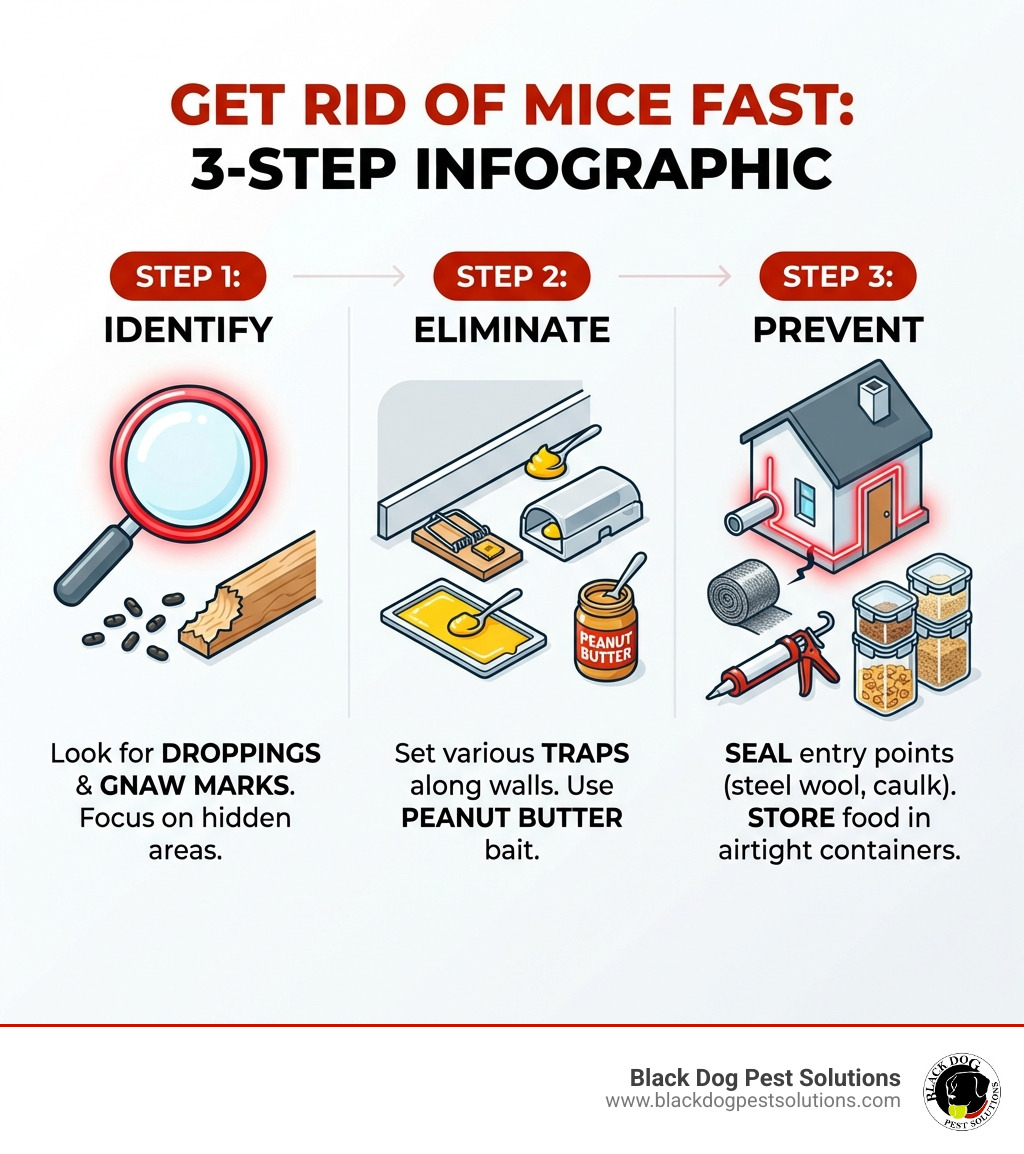
- Set multiple traps immediately – Use snap traps or electric traps with peanut butter bait along walls and in areas of high activity
- Place traps strategically – Position them every 2-3 feet perpendicular to walls with the bait side facing the wall
- Seal all entry points – Use steel wool and caulk to block any holes larger than a dime (mice can squeeze through openings as small as 1/4 inch)
- Remove food sources – Store all food in airtight containers and clean up crumbs immediately
- Call a professional – For large infestations or if DIY methods fail after one week
Seeing a single mouse scurrying across your kitchen floor isn’t just unpleasant—it’s a warning sign. That one mouse likely has friends and family hiding nearby. The research shows that a single female mouse can produce up to 100 offspring per year through 5-10 litters, with each litter containing 3-12 pups. This explosive reproduction rate means that a small problem can become a major infestation in just weeks.
Beyond the “ick factor,” mice pose serious health risks to your family. According to the CDC, mice can spread over 35 diseases through their droppings, urine, and saliva—including Hantavirus, Salmonellosis, and Leptospirosis. Each mouse drops up to 75 pellets per day, contaminating your countertops, pantries, and living spaces. They also gnaw through electrical wiring, creating fire hazards, and cause structural damage to insulation and building materials.
The good news? You can evict these unwanted tenants quickly with the right strategy. This guide provides a fast, proven 3-step plan: Identify the invasion, Eliminate the mice, and Prevent future problems. These methods combine the most effective DIY tactics with professional insights to help you reclaim your home as quickly as possible.
Time is critical when dealing with mice. The longer you wait, the larger the population grows and the more damage they cause. Whether you’re hearing scratching in your walls at night, finding droppings in your cabinets, or spotting gnaw marks on food packaging, acting immediately is essential. For more guidance on identifying pest problems early, check out our article on Do You Have a Pest Problem? Key Signs Every Owner Must Know.
I’m Mat Ledyard, owner of Black Dog Pest Solutions in Avon, Ohio, and I’ve been helping Northeast Ohio homeowners get rid of mice fast since 2005. Over nearly two decades in pest control, I’ve seen every type of mouse infestation imaginable and developed streamlined methods that deliver the quickest results for families who need their homes back to normal immediately.
Step 1: Confirm the Invasion & Understand the Enemy
Before we can effectively get rid of mice fast, we need to confirm their presence and understand their habits. Mice are secretive creatures, often active at night, which is why recognizing the subtle signs of an infestation is crucial. The sooner you identify the problem, the faster you can act.

Mice aren’t just a nuisance; they are a significant health risk. According to the Centers for Disease Control and Prevention (CDC), mice can directly and indirectly spread diseases to humans through their urine, feces, saliva, and even through ticks they carry. These diseases can include serious illnesses like Hantavirus, Salmonellosis, and Leptospirosis. Beyond disease, their constant gnawing can damage structures and electrical wiring, posing fire hazards. Their prolific breeding means a small problem can quickly escalate into a full-blown crisis, making prompt action vital.
Common Signs of a Mouse Infestation
Spotting a mouse in broad daylight is a strong indicator of a larger problem or a disturbed nest. However, mice are nocturnal, so we often rely on other clues. Here’s what to look for:
- Droppings: This is often the first and most common sign. Mouse droppings are small, dark, and pellet-shaped, often compared to black rice grains, about a quarter-inch long. A single mouse can leave up to 75 pellets a day! You’ll find them along walls, in cabinets, under sinks, near food sources, or in undisturbed areas.
- Gnaw Marks: Mice need to constantly gnaw to keep their incisors sharp and prevent overgrowth. Look for small, irregular gnaw marks on food packaging, wooden structures (baseboards, furniture), plastic pipes, or electrical wires. These can be a serious issue, as chewed wires are a fire hazard. For more on what these pests can do, read our insights on What Cleveland Homeowners Need to Know About Pest Problems.
- Scratching or Scurrying Noises: If you hear scratching, scampering, or squeaking sounds coming from your walls, ceiling, attic, or basement, especially at night, it’s a strong indicator of rodent activity. Mice are most active during evening hours, so these nocturnal noises are a classic sign.
- Nests: Mice build nests in secluded, warm places using soft, shredded materials like paper, fabric, insulation, or cardboard. Check hidden areas like behind appliances, in cluttered storage boxes, inside wall voids, or in attics and crawl spaces.
- Greasy Rub Marks: As mice travel along walls and baseboards, the oils and dirt from their fur can leave dark, greasy smudges. These runways indicate active travel paths.
- Unusual Odors: A persistent, musky smell, especially in enclosed areas like pantries or cabinets, can indicate a significant mouse presence. This odor comes from their urine and droppings.
What Attracts Mice to Your Home?
Mice aren’t looking for luxury; they’re looking for the basics: food, water, and shelter. Our homes, especially in Northern Ohio where we experience varied seasons, offer a perfect haven from the elements and a buffet of resources.
- Food Sources: This is the primary attractant. Any accessible food, from crumbs on the floor to unsecured dry goods in your pantry, is an open invitation. Mice can survive on very little food, so even a few overlooked crumbs can sustain them. They love nuts, cereal, grains, pet food, birdseed, and even chocolate.
- Warmth and Shelter: As temperatures drop, mice seek warm, secluded places to nest and reproduce. Attics, basements, crawl spaces, wall voids, and cluttered storage areas provide ideal conditions. Garages, with their often-warm car engines, are also prime targets.
- Water Sources: While mice don’t need much water, they will take advantage of any available source, such as leaky pipes, condensation, or pet water bowls left out overnight.
- Clutter: Piles of boxes, old newspapers, unused furniture, or overgrown vegetation around your home provide excellent hiding spots and nesting materials, making it easier for mice to move undetected.
Understanding these attractants is the first step in prevention. By eliminating what draws them in, we can make our homes less appealing to these tiny invaders. For more tips on making your home less attractive to pests, check out our Effective Residential Pest Control Tips for Cleveland Homes.
How to Get Rid of Mice Fast: Traps, Baits, and Tactics
Once you’ve confirmed a mouse infestation, the next step is swift action. When you need to get rid of mice fast, trapping is generally the quickest and most effective DIY method. The key is to be aggressive, use the right tools, and place them strategically. If you see one mouse, there are likely many more, so don’t be shy about setting multiple traps.

When handling traps and captured mice, always wear gloves. This not only protects you from potential diseases but also prevents transferring your scent to the traps, which can deter cautious mice.
Choosing the Right Trap for a Fast Solution
There are several types of mouse traps available, each with its own advantages. When speed is the goal, we recommend traditional snap traps or electric traps.
| Trap Type | Effectiveness | Cost | Reusability | Humaneness | Notes |
| Snap Traps | Good | Low | Yes | Minimal | Widely available, quick-kill, low cost. Can be disturbing to some. |
| Electric Traps | Good | Medium | Yes | Minimal | Quick-kill, reusable, and often enclosed for safer use. Higher cost. |
| Live Traps | Fair | Medium | Yes | High | Captures mice alive for release. Requires frequent checking for humane release. | Snap Traps | Good | Low | Yes | Minimal | Widely available, quick-kill, low cost. Can be disturbing to some. |
| Live Traps | Fair | Medium | Yes | High | Captures mice alive for release. Requires frequent checking for humane release. |
The Best Baits to Get Rid of Mice Fast
Mice are attracted to high-calorie foods, and they have an excellent sense of smell. Forget the old cartoon image of cheese; while they’ll eat it, there are far more effective baits:
- Peanut Butter: This is our top recommendation. It’s sticky, high in fat and protein, and its strong scent is irresistible to mice. A tiny dab, just enough to cover the bait pan, is perfect.
- Chocolate: Another high-calorie favorite. Small pieces of chocolate or even chocolate spread can be very effective.
- Hazelnut Spread: Similar to peanut butter, its rich aroma and caloric content make it highly appealing.
- Other High-Calorie Foods: If you know what they’ve been nibbling on, use it! Pet kibble, birdseed, nuts, or even a small piece of hot dog can work wonders.
- Nesting Materials (in winter): During colder months, mice are also seeking materials for their nests. A small piece of cotton ball, dental floss, or even twine can be used as bait, especially if food baits aren’t working. They’ll try to pull it away for nesting, triggering the trap.
The trick is to use only a tiny amount of bait. We want the mouse to try and pull the bait, not just lick it off, ensuring the trap triggers effectively.
Strategic Trap Placement for Quick Results
Effective trap placement is just as important as the type of trap and bait you choose. Mice are creatures of habit and prefer to travel along walls, using them for guidance and security. They avoid open spaces.
- Along Walls: Always place traps perpendicular to walls. The baited end should face the wall so that a mouse running along the wall will encounter the trap head-on.
- Areas of High Activity: Set traps where you’ve seen signs of mice—droppings, gnaw marks, or rub marks. Common hotspots include kitchens, pantries, basements, attics, and laundry rooms.
- Behind Appliances: Check behind refrigerators, stoves, dishwashers, and washing machines. These areas offer warmth, darkness, and often crumbs.
- Under Sinks and in Cabinets: These are secluded areas where mice often explore for food.
- In Pantries: Any place food is stored is a potential target.
- Multiple Traps, Close Together: Don’t just set one or two traps. For a fast solution, we recommend setting traps every 2 to 3 feet along walls in areas of activity. In particularly high-traffic zones, place them even closer. The more traps you set, the higher your chances of a quick catch.
- Regular Checking: Check your traps daily, preferably in the morning. Dispose of captured mice promptly and reset the traps. Continue this process until you haven’t caught a mouse for at least a week. This aggressive approach is how we get rid of mice fast.
For more detailed guidance on trapping, the CDC provides additional information on how to trap up to remove rodents.
Step 3: Fortify Your Home for Long-Term Prevention
Trapping is excellent for eliminating existing mice, but it’s only half the battle. To truly get rid of mice fast and keep them gone, we need to make your home an impenetrable fortress. Prevention is the key to a permanent, mouse-free solution. This involves sealing entry points and eliminating attractants, ensuring they can’t get in, and if they do, they won’t want to stay.
Find and Seal Every Entry Point
Mice are surprisingly adept at squeezing through tiny spaces. They can fit through holes as small as a quarter-inch in diameter—about the size of a pencil or a dime. This means we need to be vigilant in identifying and sealing every potential entry point.
- Inspect Your Home’s Exterior: Walk around your entire home, paying close attention to the foundation, exterior walls, and areas around windows and doors. Look for cracks, gaps, and holes.
- Gaps Around Pipes and Utility Lines: Mice often enter where pipes, wires, or utility lines penetrate your home’s foundation or walls. Check around plumbing, electrical conduits, gas lines, and dryer vents.
- Garage Doors and Basement Entrances: These are common entry points. Ensure weather stripping around garage doors and basement windows is intact and tight.
- Roof and Attic: Don’t forget to check your roofline, especially around eaves, soffits, and vents. Any gaps can provide access.
Once identified, sealing these entry points requires the right materials:
- Steel Wool or Copper Mesh: For holes larger than 1/2-inch, stuff them tightly with steel wool or copper mesh. Mice cannot gnaw through these materials.
- Caulk or Foam Insulation Pest Blocker: After stuffing with steel wool or mesh, seal the opening completely with 100% silicone caulk for narrow gaps or a foam insulation pest blocker for larger holes. These will create a durable, impenetrable barrier.
- Door Sweeps and Weather Stripping: Install or replace door sweeps at the bottom of all exterior doors and ensure weather stripping around windows and doors is in good condition.
Even the smallest gap can be an open door for a mouse. Thoroughness here is key to long-term prevention.
Clean Up and Clear Out Mouse Habitats
Mice are attracted to food and shelter. By eliminating these resources, we make your home far less appealing.
- Secure Food Storage: Store all food, including dry goods, pet food, and birdseed, in airtight containers made of metal or thick plastic. Do not leave produce out on counters overnight. Promptly clean up any spills or crumbs.
- Maintain Proper Sanitation: This is fundamental. Vacuum floors regularly, wipe down countertops and surfaces, and wash dishes immediately after use. Don’t leave pet food or water bowls out overnight. Mice can survive on very little, so vigilance in cleanliness makes a big difference.
- Secure Trash Cans: Use garbage cans with tight-fitting lids, both indoors and outdoors. Empty them frequently. Consider elevating outdoor bins to make them less accessible.
- Declutter Basements and Attics: These areas often become unintentional mouse hotels. Remove unnecessary clutter like old newspapers, magazines, and cardboard boxes, which provide nesting materials and hiding spots. Store items on shelves, ideally in sealed plastic bins, rather than directly on the floor.
- Clear Out Garages: Garages are a common entry point, and mice love the warmth of a car engine. This can lead to them chewing on wires, causing serious and expensive damage to your vehicle. Clear clutter, store items in sealed containers off the floor, and ensure garage doors seal tightly. If you have firewood, store it at least 20 feet from your house and liftd off the ground. Trim back any shrubbery or branches that touch your home, as these can provide easy access.
Implementing these sanitation and decluttering strategies creates an environment where mice struggle to find food, water, and shelter, significantly reducing their desire to move in or stay. For more comprehensive seasonal advice, check out The Ultimate Guide to Spring Pest Management in Northeastern Ohio.
When DIY Isn’t Fast Enough: Calling a Professional
While our DIY strategies are highly effective for many homeowners in Northern Ohio, there are times when a mouse problem is simply too big or persistent to tackle alone. When you need to get rid of mice fast and effectively, and DIY methods aren’t cutting it, it’s time to call in the professionals.
Here’s when professional pest control becomes necessary:
- Large Infestations: If you’re seeing multiple mice regularly, hearing constant activity, or finding extensive droppings and gnaw marks, you likely have a large, established population. A professional pest control service, like ours at Black Dog Pest Solutions, has the expertise, tools, and specialized products to manage and eliminate significant infestations quickly and safely.
- Recurring Problems: Have you tried everything, only for the mice to return a few weeks or months later? This often indicates persistent entry points you haven’t found, or a colony living in an inaccessible area of your home (like within walls). Professionals can identify and address these hidden issues.
- DIY Methods Fail: If you’ve diligently followed the trapping and prevention steps for a week or two and are still seeing signs of mice, it’s a clear signal that the problem requires more advanced intervention. We have access to different bait formulations and exclusion techniques that are not available to the public.
- Health Concerns: Given the serious diseases mice can carry, a professional cleanup and eradication can offer peace of mind, especially if you have children, elderly family members, or individuals with compromised immune systems in the home.
- Realistic Timeline: While DIY methods can work, a large infestation can take a solid month or more to resolve completely, even with professional help. Rats, in particular, are more intelligent and cautious, making them even harder and slower to eliminate. Professionals can implement an efficient rodent bait program and exclusion work that targets the entire population, including those hard-to-reach areas.
Calling a professional like Black Dog Pest Solutions means you’re getting experienced technicians who understand mouse behavior in Northern Ohio. We perform thorough inspections, accurately identify the species and severity of the infestation, and implement a custom treatment plan. This ensures the problem is resolved quickly, safely, and with lasting results. Our goal is to provide you with peace of mind and a guaranteed mouse-free home. To understand what to expect, review our guide on Key Questions to Ask an Exterminator in Northern Ohio.
Frequently Asked Questions about Getting Rid of Mice
We understand that dealing with mice can bring up a lot of questions. Here are some of the most common inquiries we receive from homeowners across Northern Ohio:
How long does it really take to get rid of a mouse infestation?
The answer largely depends on the size of the infestation and the methods used. If you have a single mouse, you might be able to trap it overnight. However, for a full-blown infestation with multiple mice, it typically takes longer.
With aggressive DIY trapping and exclusion, you might see significant reduction in activity within a few days to a week. However, to completely eliminate an established colony and ensure no new mice enter, it can take several weeks to a month. This is because mice reproduce rapidly, and you need to ensure you’ve caught every individual, including those that might hatch after your initial efforts.
For larger problems, or if you’re not seeing results with DIY methods, professional pest control is often the fastest way to resolve an infestation. We can implement comprehensive strategies that accelerate the process, often bringing the problem under control within a month, with follow-up services to ensure complete eradication.
Are natural repellents like peppermint oil or cats effective?
Many homeowners in Northern Ohio wonder about natural solutions. While some people swear by them, our experience and scientific research suggest these methods have limitations:
- Peppermint Oil and Other Scents: Mice dislike strong scents, and peppermint oil can temporarily deter them from entering a specific area. However, the scent dissipates quickly, requiring frequent reapplication, and mice can simply find another route around the treated area. It’s generally not a long-term or standalone solution for an active infestation.
- Cats: A cat can certainly help reduce mouse populations, and a Scripps Research Institute study even found that “mice are hard-wired to feel fear if they smell pheromones from cat urine.” The presence of a cat (or even a dog) can act as a deterrent. However, a cat is not a guaranteed solution for an established infestation. Some cats are better hunters than others, and they can’t access all the hidden spots where mice live and breed. For a serious infestation, you’ll need more than just a feline friend.
While these methods might offer some mild deterrence, we always recommend combining them with robust trapping and exclusion strategies for effective and lasting results.
What are the most common health risks associated with mice?
Mice, despite their small size, pose significant health risks to humans. They are known to carry and spread over 35 diseases worldwide, making their presence in your home a serious concern. The most common ways these diseases are transmitted include:
- Droppings and Urine: As mice move through your home, they constantly excrete droppings and urine. When these dry, tiny particles can become airborne and inhaled, leading to illnesses like Hantavirus Pulmonary Syndrome, Salmonellosis, and Leptospirosis.
- Saliva: Direct contact with mouse saliva, though rare, can also transmit diseases.
- Bites: While uncommon, a mouse bite can transmit diseases.
- Indirect Transmission: Mice can also carry parasites like fleas, ticks, and mites, which can then bite humans and transmit other diseases, such as Lyme disease (especially from deer mice) or even Bubonic Plague (though rare in our region).
Beyond infectious diseases, a buildup of rodent waste can aggravate allergies and asthma, particularly in sensitive individuals. Symptoms of rodent-borne diseases can vary widely but may include fever, stomach pain, vomiting, and diarrhea. Due to these potential dangers, it’s crucial to act quickly and safely when you find mice in your home, and to properly clean up any areas where they’ve been, always wearing protective gear like gloves and masks.
Conclusion
When mice invade your Northern Ohio home, acting quickly is paramount. Their rapid breeding cycles mean that a small problem can quickly escalate into a full-blown infestation, bringing with it health risks and potential damage to your property.
Our proven 3-step plan to get rid of mice fast is designed to empower you: Identify the subtle signs of their presence, Eliminate them using effective traps and baits, and Prevent future invasions by sealing entry points and maintaining a clean, clutter-free home. By following these steps diligently, you can reclaim your space and enjoy a mouse-free environment.
However, we understand that sometimes the problem is simply too big, too persistent, or too overwhelming to tackle on your own. For large-scale infestations, recurring mouse problems, or if you simply want the fastest, most reliable solution, professional pest control is the answer. Our team at Black Dog Pest Solutions is equipped with the expertise and tools to handle even the toughest mouse challenges, offering comprehensive residential services custom to your specific needs.
Don’t let mice compromise your home or your family’s health. If you’re in Northern Ohio and need help with a mouse problem, contact us today for a complete solution to your mice problem. We’re here to help you get rid of mice fast and for good.