
The Truth About Pill Bugs: Harmless Garden Helpers or Basement Invaders?
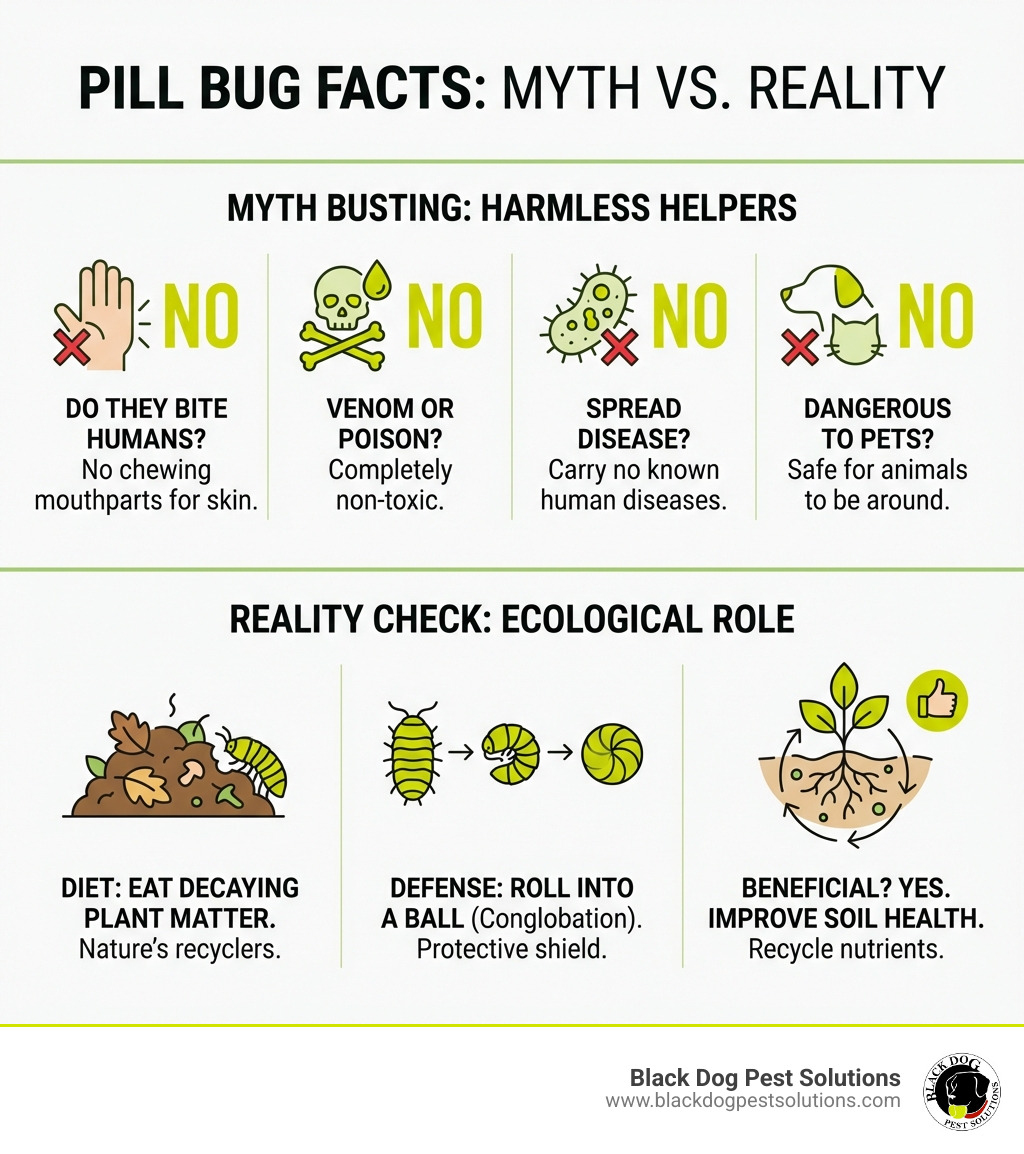
Do pill bugs bite? No. Pill bugs do not bite humans or pets. They have chewing mouthparts designed for eating decomposing plant matter, not for biting or piercing skin. They are completely harmless, do not sting, and do not transmit diseases.
Quick Facts:
- Bite? No – their mouthparts cannot pierce human or pet skin
- Poisonous? No – safe to handle and non-toxic
- Spread Disease? No – they carry no known human diseases
- Dangerous? No – they are considered nuisance pests, not health threats
As children, many of us knew the joy of rolling over a rotten log or long-standing rock and finding the fascinating creatures living beneath. These little gray “bugs” that curl into a tight ball—often called roly-polies—are pill bugs, and they’re far more friend than foe. While they’re completely harmless to people and pets, large numbers indoors can signal a moisture problem that needs attention.
Pill bugs are actually land-dwelling crustaceans—more closely related to shrimp and lobsters than to insects. They spend their days hidden under rocks, mulch, and leaf litter, feeding on decaying vegetation and recycling nutrients back into the soil. Most of the time, they’re doing important work in your garden. But when moisture levels spike or entry points open up, they can wander into basements and crawl spaces in surprising numbers.
I’m Mat Ledyard, owner of Black Dog Pest Solutions in Avon, Ohio, and I’ve been helping homeowners across Northeast Ohio manage pest issues since 2005. Over nearly two decades in the industry, I’ve fielded countless questions about whether pill bugs bite, and I’ve helped many clients address the moisture conditions that invite them indoors.
So, Do Pill Bugs Bite? The Definitive Answer
Let’s get straight to the point: do pill bugs bite? The resounding answer is no. Pill bugs, also commonly known as roly-polies or woodlice, lack the necessary mouthparts to bite humans or pets. Their tiny chewing mouthparts are specifically adapted for their diet of decaying organic matter, which is soft and easily broken down. They simply aren’t equipped to pierce skin.
These gentle creatures are entirely harmless to people and animals. They don’t possess stingers, nor do they produce any venom. You can pick them up, observe them, and even let them crawl on your hand without any risk of harm. The most they’ll do if disturbed is roll up into a tight, protective ball, a behavior known as conglobation. This defensive posture is their primary way of dealing with perceived threats.
Why You Don’t Need to Worry: Do Pill Bugs Bite Humans or Pets?
The concern about whether pill bugs bite often stems from their appearance, which can be mistaken for other, less benign critters. However, our research consistently shows that these fascinating crustaceans pose no threat.
When a pill bug encounters danger, its instinct isn’t to bite or fight, but to retreat and protect itself. They exhibit conglobation, effectively turning themselves into a tiny, armored sphere. This makes them difficult for many predators to eat and also helps them conserve moisture. This gentle nature means they are perfectly safe for children to observe and interact with. Many of us have fond childhood memories of playing with these “roly-polies” without ever experiencing a bite or sting.
Similarly, pill bugs are harmless to our furry friends. Pets might bat at them out of curiosity, but a pill bug cannot bite or injure a cat or dog. They don’t carry diseases that can be transmitted to pets, nor do they pose an internal threat if accidentally ingested, though we wouldn’t recommend them as a regular snack!
Dispelling Myths: Poison, Venom, and Disease
Beyond the question of biting, another common concern is whether pill bugs are poisonous or venomous. Again, the answer is a definitive no. Pill bugs are neither poisonous nor venomous. They don’t inject toxins (like venom) and they aren’t toxic if ingested (like poison). Woodlice, including pill bugs and sowbugs, are not poisonous and do not bite humans. They may release a mild, non-toxic defensive secretion if handled, but it’s completely harmless.
Furthermore, pill bugs do not carry or transmit any known human diseases. Unlike some insects that can act as vectors for pathogens, pill bugs are clean decomposers. They do not infest food, clothing, or wood. Their presence indoors is primarily a nuisance, indicating an underlying moisture problem, rather than a direct health risk. For more information on what makes a pill bug a pill bug, WebMD offers a helpful guide: What to Know About Pill Bugs .
Identifying the “Roly-Poly”: More Crustacean Than Creepy Crawler
Pill bugs are quite distinct once you know what to look for. They are typically oval-shaped, slate gray, and range from about 1/4 to 5/8 inches long. Their bodies are segmented, resembling tiny armored plates, with seven hard plates covering their middle section. They have seven pairs of legs and two pairs of antennae, though one pair of antennae might be less visible.
What truly sets them apart is their unique classification: they are land-dwelling crustaceans. This means they are more closely related to marine animals like shrimp, crabs, and lobsters than to insects, which are arthropods with different body structures. They even breathe through gills, albeit modified ones adapted for terrestrial life, which is why they need constant moisture to survive.
Pill Bug vs. Sowbug and Other Pests
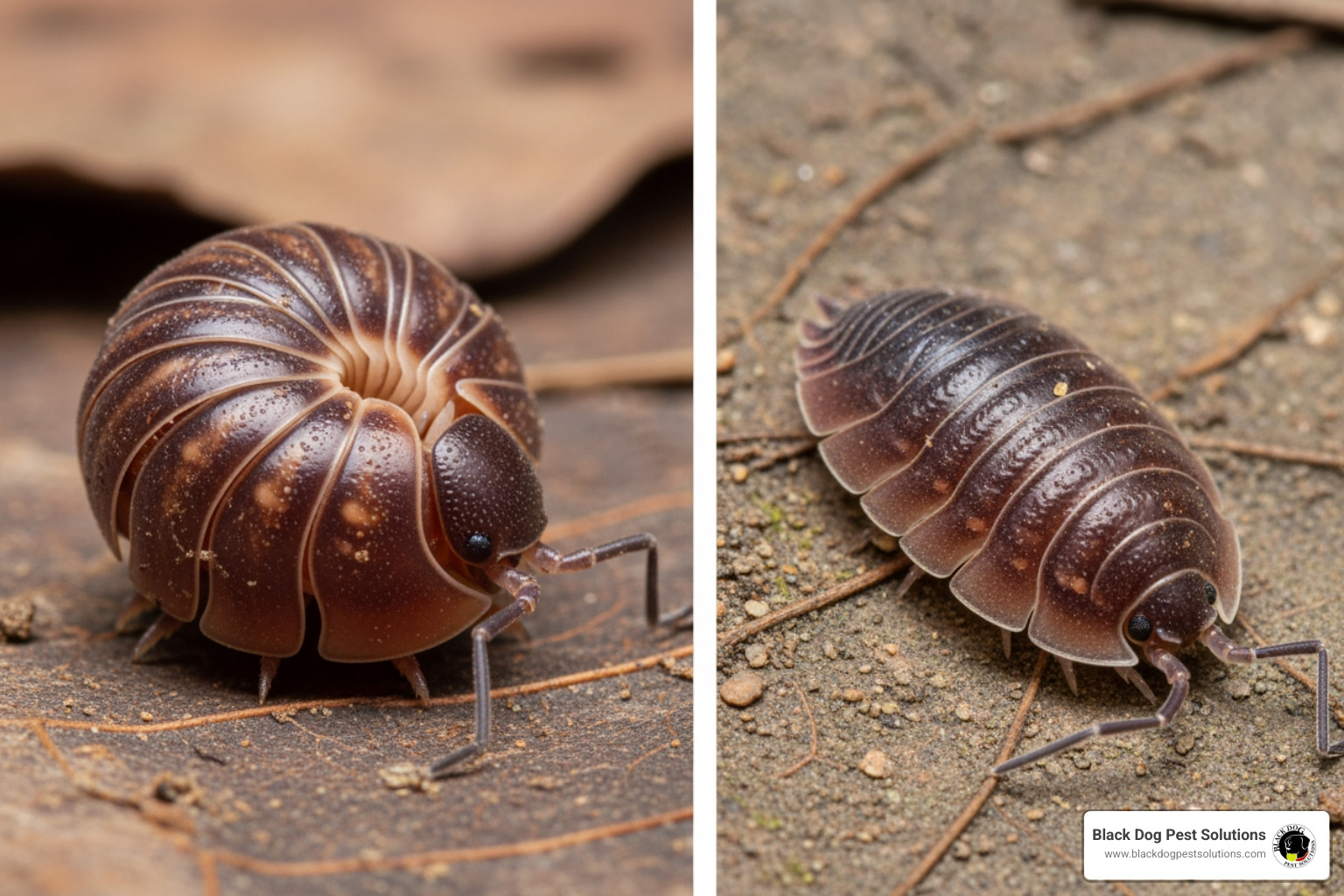
It’s easy to confuse pill bugs with their close relatives, sowbugs. While both are terrestrial isopods and often found in similar moist environments, there’s a key difference:
- Pill Bugs (Armadillidium vulgare): These are the true “roly-polies” that can roll themselves into a perfect, tight ball when disturbed. This ability is called conglobation and helps them protect their softer undersides and conserve moisture.
- Sowbugs: Sowbugs (Porcellionides pruinosus, among others) look very similar to pill bugs but have two distinct, tail-like appendages protruding from their rear end. Crucially, they cannot roll completely into a ball. When disturbed, they will typically flatten themselves or try to scurry away.
Both pill bugs and sowbugs are harmless decomposers. However, they are often grouped with other “occasional invaders” like centipedes and millipedes, which have very different characteristics and behaviors. For more details on these and other crawlers we encounter in Northern Ohio, you can visit our dedicated page.
- Centipedes: These are predators, typically flatter, with many legs (one pair per body segment), and move very quickly. Larger centipedes can inflict a painful bite with venomous claws (forcipules), though smaller species often cannot pierce human skin. They are venomous, not poisonous.
- Millipedes: Often worm-like and cylindrical, millipedes have two pairs of legs per body segment and move much slower than centipedes. When disturbed, they coil up and some can secrete a foul-smelling fluid, but they do not bite or sting. They are primarily detritivores like pill bugs.
Understanding these distinctions helps clarify that while some multi-legged creatures can be problematic, pill bugs are not among them.
The Pill Bug’s Role in Your Garden’s Ecosystem
Despite their occasional appearance as indoor nuisances, pill bugs are largely beneficial organisms, playing a vital role in our outdoor ecosystems, especially in gardens and yards across Northern Ohio.

Pill bugs thrive in moist environments. You’ll typically find their habitats under rocks, logs, leaf litter, compost piles, and mulch beds. They are nocturnal, preferring to be active at night when it’s cooler and damper, which helps them avoid desiccation. During the day, they seek out damp, shady spots to rest.
Their diet consists primarily of decaying plant material, fungi, and other detritus. As detritivores, they are nature’s recyclers. They break down dead leaves, wood, and other organic matter, helping to return essential nutrients to the soil. This process is crucial for soil health and plant growth. They can also stimulate beneficial soil bacteria. While they occasionally feed on young plants, especially seedlings, this usually only happens when their populations are very high and other food sources are scarce. Even then, the damage is generally minor.
By assisting in decomposition and nutrient cycling, pill bugs contribute to a healthier garden. They are part of the intricate web of life that keeps our local environment thriving. For a deeper dive into the biology of these fascinating creatures, the University of Kentucky Entomology department provides an excellent resource on Sowbugs & Pillbugs | Entomology .
When Good Bugs Go Bad: Managing a Pill Bug Infestation
While pill bugs are generally harmless and beneficial, their presence can become a nuisance when they decide to move indoors. The primary sign of a pill bug infestation is simply finding large numbers of them inside your home, particularly in areas with high moisture.
In Northern Ohio, we often see pill bugs congregating in basements, crawl spaces, and ground-level rooms. These areas often provide the damp, cool conditions that pill bugs crave. They are attracted to excessive moisture caused by leaky pipes, condensation, poor drainage, or damp foundations. If you find a surprising number of pill bugs indoors, it’s a strong indicator of an outdoor population that’s found its way in, likely drawn by moisture.
Outdoors, pill bugs can occasionally become pests if their populations explode. They might nibble on seedlings, vulnerable flowers, or vegetables, especially new transplants. This damage is more likely during periods of abundant rain when their numbers are high and traditional decaying matter might be less available or less appealing than fresh greenery. However, this is relatively rare, and most of the time, their outdoor activities are beneficial.
Their nuisance factor comes mainly from their presence. No one enjoys finding dozens of these little crawlers in their home, even if they’re harmless. They don’t bite, sting, or cause structural damage, but they can be unsettling to find.
How to Get Rid of Pill Bugs
If you’re finding pill bugs indoors in your Northern Ohio home, the good news is that management primarily focuses on environmental control rather than harsh chemical treatments. Since they rely so heavily on moisture, eliminating damp conditions is key.
Here’s a list of effective prevention and control methods:
- Reduce Moisture: This is the most critical step. Repair any leaky pipes, faucets, or foundation cracks that allow water to seep into your home. Ensure proper drainage around your house, so water flows away from the foundation and doesn’t pool.
- Improve Ventilation: Basements, crawl spaces, and other damp areas should be well-ventilated to reduce humidity. Consider using dehumidifiers in persistently moist areas.
- Seal Cracks and Entry Points: Inspect your home’s foundation, windows, and doors for any cracks or gaps. Seal these entry points with caulk or weatherstripping to prevent pill bugs and other pests from entering. Pay special attention to sliding-glass doors on ground levels.
- Remove Yard Debris: Clear away leaf litter, mulch, grass clippings, rotting wood, and other organic debris from around your home’s foundation. These provide ideal moist hiding spots for pill bugs. Keep firewood stacked off the ground and away from the house.
- Adjust Watering Schedules: Avoid overwatering your garden, especially near the foundation of your house. Water in the morning so the soil has time to dry out during the day.
- Vacuuming Indoors: If pill bugs have already made their way inside, a simple vacuum cleaner is often the most effective way to remove them. Since they don’t bite or cause damage, physical removal is usually sufficient.
By focusing on these preventative measures, you can significantly reduce the likelihood of pill bugs becoming an indoor nuisance. If you have persistent problems or a large outdoor population that you can’t seem to control, it might be time to call in the professionals.
Frequently Asked Questions about Pill Bugs
We often get asked various questions about these intriguing creatures. Here are some of the most common ones:
Are pill bugs poisonous if eaten?
No, pill bugs are not poisonous. They are not toxic to humans or pets if accidentally ingested. In fact, some cultures even consider them edible, though they’re not a common food source in most of Northern Ohio! They are reported to have a slightly salty taste and crunchy texture. So, while we don’t recommend making them a part of your diet, there’s no inherent danger if a curious child or pet happens to sample one.
What is the life cycle of a pill bug?
The life cycle of a pill bug is quite interesting and differs from that of insects. Female pill bugs carry their eggs in a specialized pouch on the underside of their body called a marsupium. This pouch provides a moist, protected environment for the developing eggs.
Once hatched, the young pill bugs, called mancas, emerge from the marsupium. Mancas resemble miniature adults but undergo several molts (shedding their exoskeleton) as they grow, gradually increasing in size until they reach adulthood. This molting process continues throughout their lives.
Pill bugs typically live for about 2 to 3 years. They can reproduce multiple times a year, with females producing several broods. It takes about 2-3 months for freshly hatched isopods to grow into mature adults. Their lifespan is heavily dependent on maintaining a moist environment, as they quickly dehydrate in dry conditions.
Why do I have so many pill bugs in my house?
If you’re noticing a large number of pill bugs indoors, it almost always points to one thing: excess moisture. Pill bugs cannot survive in dry conditions for long—often less than two days.
Here in Northern Ohio, common culprits for indoor pill bug presence include:
- Leaky Pipes or Faucets: Even small drips can create the damp conditions they need.
- Damp Basements or Crawl Spaces: Poor ventilation, condensation, or water seepage through foundations can make these areas attractive.
- Cracks in the Foundation: These provide easy entry points from the moist outdoor environment.
- Nearby Outdoor Population: A thriving population in your garden’s leaf litter or mulch beds will naturally lead to some individuals wandering indoors if conditions are right.
- Entry Points: Gaps around doors (especially sliding glass doors), windows, or utility penetrations are common access routes.
Pill bugs don’t seek food indoors, as their diet of decaying organic matter is rarely found inside our homes. They enter primarily in search of moisture or by accident. Their presence is a natural indicator that you might have a moisture issue that needs addressing.
Conclusion: Harmless, Helpful, but Sometimes a Hassle
So, to recap, the answer to “do pill bugs bite” is a definitive no. These fascinating creatures are completely harmless to humans and pets, neither biting, stinging, nor transmitting diseases. We’ve learned that pill bugs are unique land-dwelling crustaceans, more akin to tiny lobsters than typical insects, and they play a beneficial role in our environment by breaking down decaying organic matter and recycling nutrients back into the soil.
However, their strong need for moisture means that when they appear in large numbers inside our homes, particularly in damp basements and crawl spaces common in Northern Ohio, they become a nuisance. This usually signals an underlying moisture problem that needs attention. By reducing moisture, sealing entry points, and removing outdoor debris, you can effectively manage their presence.
For persistent pill bug problems in your home, especially if you suspect deep-seated moisture issues or struggle with effective exclusion, the experts at Black Dog Pest Solutions are here to help. We provide effective, reliable residential and commercial pest control across Greater Cleveland, Avon, Lorain, Elyria, Avon Lake, Bay Village, North Ridgeville, Westlake, Sheffield Village, Sheffield Lake, Vermillion, Huron, Sandusky, Medina, Grafton, Wellington, Oberlin, Amherst, North Olmsted, Lakewood, Strongsville, Cleveland, Brunswick, and Rocky River. Our team can identify the root cause of your pill bug problem and implement comprehensive solutions to keep your home pest-free.