
Why Effective Mosquito Control Matters for Your Home and Health
Mosquito control means reducing mosquito populations to protect people from bites, nuisance, and disease risk. The most reliable approach is integrated mosquito management: remove breeding sites first, use larvicides for water that cannot be removed, and use adulticides selectively when conditions justify them.
Quick answer — how to control mosquitoes:
- Remove standing water — empty, cover, clean, or drain water-holding items weekly.
- Use larvicides — apply Bti dunks or methoprene to water that cannot be drained, following the label.
- Use adulticides selectively — choose EPA-registered products based on the label, site conditions, and applicable regulations.
- Use repellents and barriers — EPA-registered personal repellents, intact screens, and spatial repellents can reduce bites.
- Call a professional — persistent mosquito pressure or disease-risk concerns may warrant licensed help.
Mosquitoes are more than a backyard nuisance. They can transmit viruses such as West Nile, dengue, and Eastern Equine Encephalitis. Mosquito activity in Northeast Ohio commonly runs from spring into fall and varies with rainfall and temperature.
Most mosquito problems are easier to manage when prevention comes first. I’m Mat Ledyard, owner of Black Dog Pest Solutions in Avon, Ohio, and I’ve worked in mosquito control and pest management since 2005. This guide explains practical source reduction, larvicides, selective adult treatments, and when professional service makes sense.
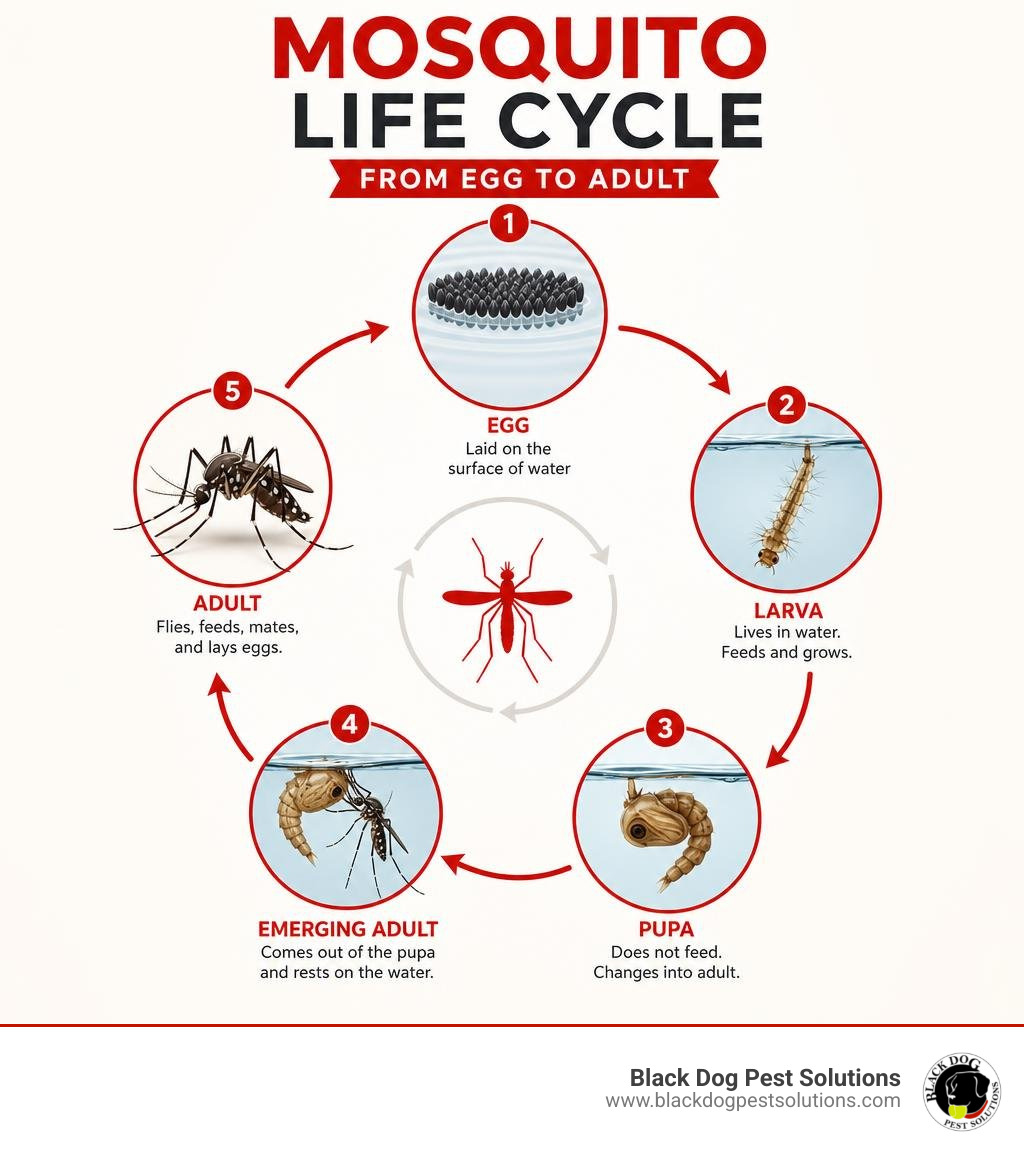
Understanding Integrated Mosquito Control
Quick sprays may provide temporary relief, but they do not solve the breeding problem. Effective mosquito control works best as a system that targets mosquitoes at different life stages while limiting unnecessary pesticide use.
What is Integrated Mosquito Management (IMM)?
At Black Dog Pest Solutions, we use Integrated Mosquito Management (IMM), also called integrated vector management. Instead of relying only on chemical sprays, IMM combines prevention, monitoring, larval control, and targeted adult control.
The CDC describes Integrated Mosquito Management around four core activities:
- Surveillance: Track mosquito populations, identify species, and monitor disease risk.
- Source reduction: Remove or manage standing water where mosquitoes lay eggs.
- Larval and pupal control: Treat aquatic stages before mosquitoes become biting adults.
- Adult control: Use targeted applications when adult mosquito pressure or public-health risk warrants it.
For homeowners, source reduction is usually the most effective and least costly first step. Emptying, covering, cleaning, or draining water-holding items weekly can reduce breeding pressure before treatments are needed. For ongoing seasonal support, Black Dog Pest Solutions can incorporate mosquito prevention into regular Seasonal Services.
Climate, Rainfall, and Mosquito Habitats
Mosquito activity changes with temperature, rainfall, humidity, and available standing water. Warm, wet periods can speed breeding, while dry periods may temporarily reduce open-water breeding sites. Once rain returns, containers, clogged gutters, tires, and low spots can quickly become active again.
Warmer conditions can also affect where certain species survive and how efficiently mosquito-borne viruses develop inside mosquito hosts. For Northeast Ohio homeowners, the practical takeaway is simple: inspect after rain, remove water weekly, and use treatment only where prevention alone is not enough.
Larviciding vs. Adulticiding: Two Fronts in the Battle
Mosquito control happens in two main places: in the water where immature mosquitoes develop and in the air or resting areas where adults bite. Understanding the difference helps homeowners choose the right control step.
| Feature | Larviciding | Adulticiding |
|---|---|---|
| Target Stage | Larvae and pupae in water | Flying or resting adults |
| Application Area | Drains, ponds, rain barrels, and standing water | Foliage, yards, and selected outdoor areas |
| Primary Goal | Prevention before adults emerge | Short-term reduction of active biters |
| Use Pattern | Targeted and often lower-impact | Selective and label-dependent |
| Common Agents | Bti and methoprene | EPA-registered adulticides selected by label and site conditions |
Both approaches are part of what professional mosquito control programs use to protect public health and improve outdoor comfort.
Larval Control and Biological Mosquito Control
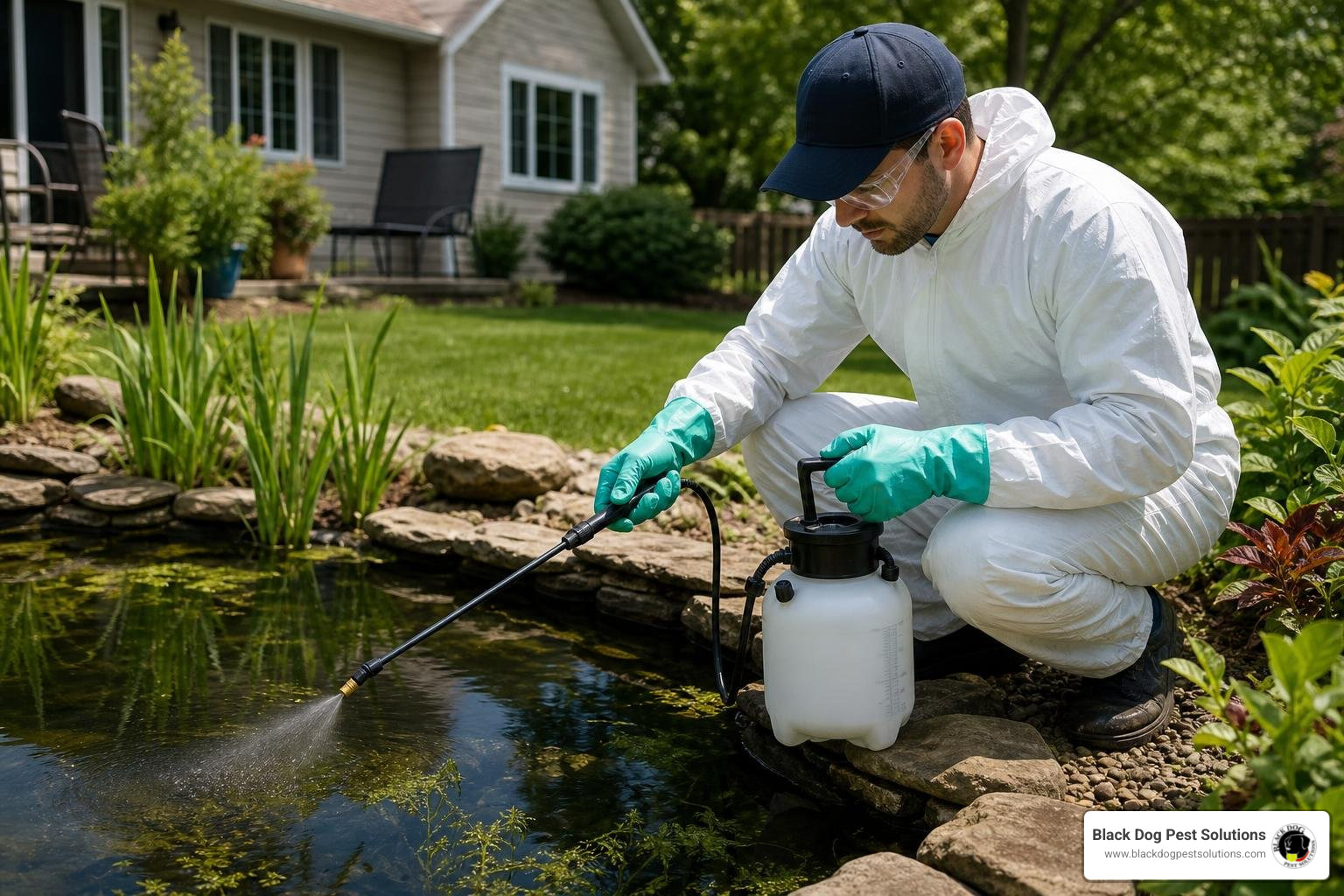
Larval control is often efficient because larvae are concentrated in water before they disperse as adults. Treating breeding areas can reduce future biting pressure with less broad exposure than repeated adult spraying.
Bacillus thuringiensis israelensis (Bti) is a naturally occurring soil bacterium used in mosquito dunks and granules. Bti is highly targeted and, when used as labeled, has no known toxicity to people and minimal toxicity to honey bees. It can be useful in birdbaths, rain barrels, ornamental ponds, and other water that cannot be drained.
S-methoprene is an insect growth regulator that prevents immature mosquitoes from developing into adults. It does not provide instant adult mosquito relief, but it can help interrupt the life cycle in suitable larval habitats.
Mosquitofish may consume larvae in some managed water features, but they are non-native in Ohio and should never be released into natural waterways. Even stocking ornamental ponds warrants local guidance, because animal releases vary by location and situation.
Wolbachia-based mosquito control is an emerging public-health technology, not a homeowner DIY option. Programs using Wolbachia or sterile-insect approaches are typically coordinated by public-health or research organizations.
Adulticiding and Chemical Mosquito Control
Adulticiding can reduce active biting mosquitoes when populations are high or disease concerns justify treatment. It should be used selectively, not as a substitute for eliminating breeding sites.
Common adult-control products include pyrethroids and natural pyrethrins. Organophosphate references should be understood in a broader vector-control context, not as a standard residential mosquito-treatment choice. Product selection should follow the pesticide label, site conditions, and applicable regulations.
Insecticide resistance is one reason pest control companies in Avon avoid relying on one product or one repeated treatment pattern. Monitoring, rotating products when appropriate, and treating only when conditions warrant it can help preserve effectiveness.
Responsible applications also depend on weather and label directions. Applications should not be made when weather conditions could cause off-target drift; always follow the pesticide label.
Ohio also regulates pesticide work. Pesticide work performed for hire requires appropriate Ohio pesticide business and commercial applicator licensing.
Practical Steps for Homeowners to Eliminate Breeding Grounds
Professional treatments can help, but prevention is the best long-term approach. The most important homeowner task is weekly source reduction: empty, cover, clean, or drain water-holding items before mosquitoes can develop.
For more year-round prevention advice, see Black Dog Pest Solutions’ Effective Residential Pest Control Tips.
Identifying Common Sources of Standing Water
Some container-breeding species can develop in very small amounts of water. Check these common areas every week, especially after rain:
- Clogged gutters: Leaves and debris trap water near the roofline. Clean gutters at least twice a year and after heavy leaf drop.
- Flowerpot saucers: Empty trays beneath outdoor plants weekly.
- Birdbaths and pet bowls: Scrub and replace water at least weekly to remove eggs and organic buildup.
- Ornamental plants: Bromeliads and similar plants can hold water in leaf cups. Flush them weekly or use labeled Bti where appropriate.
- Old tires and containers: Tires, buckets, toys, tarps, and lids can hold warm, shaded water. Store them dry, covered, or upside down.
These simple habits reduce mosquito pressure and may reduce the need for chemical intervention. If breeding sites are hard to find or the problem persists, experienced pest control companies in Avon can inspect the property and recommend a targeted plan.
Evaluating Spatial Repellents and Mechanical Traps
Spatial repellents, such as patio devices that release a localized repellent vapor, may provide temporary relief in calm outdoor seating areas. Their performance can drop in wind or open spaces.
Traditional bug zappers are usually not reliable mosquito-control tools and may kill many non-target insects. Carbon dioxide traps can catch mosquitoes, but they are not a complete yard-control solution by themselves.
Physical barriers still matter. Keep window and door screens intact, repair gaps, and seal small potential entry points around the home to reduce indoor mosquito problems.
Community Programs, Legal Measures, and Emerging Technologies
Mosquitoes move across property lines, so neighborhood and municipal efforts can support what homeowners do in their own yards.
Municipal Abatement and Citizen Science
Local governments and vector-control programs may use public education, larval habitat reduction, surveillance traps, and targeted treatments to reduce disease risk. Tire collection events, drainage maintenance, and public reporting can all help reduce breeding sites.
Some programs also monitor mosquito-borne viruses through mosquito testing or sentinel animals. These efforts help officials understand local risk before outbreaks occur.
Citizen reporting tools can also help map invasive or nuisance species. For a larger public-program example, the Brevard County Mosquito Control Department shows how integrated public mosquito programs can combine surveillance, source reduction, and treatment across broad areas.
Next-Generation Tech: AI and Genetic Modification
New tools are changing mosquito surveillance and public-health response. AI-assisted trap analysis, automated species identification, LiDAR research, sterile-insect techniques, and Wolbachia-based approaches may help public agencies and researchers track or suppress certain mosquito populations.
For homeowners, these technologies are worth understanding, but they are not substitutes for practical source reduction, labeled larvicides, and selective professional treatment when needed.
Frequently Asked Questions about Mosquitoes
Here are concise answers to common mosquito-control questions from Northeast Ohio homeowners.
Do bats and purple martins provide effective mosquito control?
Bats, purple martins, and other insect-eating animals are not reliable mosquito-control tools. They may eat some mosquitoes, but they do not usually consume enough to manage a yard-wide mosquito problem.
If you encounter a bat indoors or suspect possible contact, avoid handling it and seek public-health guidance about exposure risk.
Why do only female mosquitoes bite?
Only female mosquitoes bite because they need blood proteins for egg development. Male mosquitoes feed on nectar and do not have the same biting behavior.
What weather conditions prevent mosquito spraying?
Mosquito spraying must follow the pesticide label and local conditions. Applications should not be made during rain or when weather conditions could cause off-target drift; always follow the pesticide label.
Conclusion
Long-term mosquito control works best when prevention comes first. Remove standing water weekly, use larvicides where water cannot be drained, and reserve adulticides for selective, label-directed use when mosquito pressure or risk warrants treatment.
Black Dog Pest Solutions is a licensed, family-owned pest control company serving Avon and the Greater Cleveland area. Before publishing, current business claims such as Google rating, BBB status, owner information, years in business, service area, and license details should be verified from live records.
If mosquitoes continue to make your yard uncomfortable, contact one of the local pest control companies in Avon for a professional inspection and targeted treatment plan. Ready to take back your yard this summer? Protect your home with professional mosquito control and contact Black Dog Pest Solutions today!