Finding a Reliable Commercial Exterminator
If you’re searching for a commercial exterminator near you, here’s what you need to know right away:
How to find a reliable commercial exterminator:
- Verify state licensing and liability insurance
- Look for certifications like QualityPro or GreenPro
- Choose a provider with experience in your specific industry
- Confirm they offer Integrated Pest Management (IPM) — not just one-time sprays
- Ask about response time guarantees and re-treatment policies
A pest problem at your business isn’t just an inconvenience. It can trigger health code violations, damage your reputation, and cost you customers — fast. Ants alone cause millions of dollars in commercial property damage every year. Rodents, bed bugs, and cockroaches can shut down a food service operation or send hotel guests straight to a competitor.
The good news: the right commercial exterminator can stop an infestation before it becomes a crisis — and keep it from coming back.
I’m Mat Ledyard, owner of Black Dog Pest Solutions in Avon, Ohio, and I’ve been working as a commercial exterminator for businesses across Northeast Ohio since 2005. In this guide, I’ll walk you through everything you need to choose the right provider for your property and your industry.
Commercial exterminator terms explained:
When you are looking for a commercial exterminator in Northern Ohio, you aren’t just looking for someone to spray a baseboard. You are looking for a partner to protect your livelihood. Whether you operate a retail shop in Lakewood, a restaurant in Avon, or a warehouse in Lorain, your business’s reputation is on the line every time a customer walks through the door.
Reliability starts with credentials. In the pest control industry, we look for QualityPro Certification, which is often called the “Mark of Excellence” in pest management. This ensures the company meets rigorous standards for hiring, training, and environmental stewardship. Similarly, GreenPro Credentials signal that the exterminator prioritizes low-impact, environmentally friendly solutions.
Local expertise is equally vital. A national chain might have a big name, but a local commercial exterminator understands the specific pest pressures of the Greater Cleveland area. We know when the subterranean termites are most active in Elyria and why the rats in downtown Cleveland behave differently than the ones in Medina. To find a team that truly knows your neighborhood, you can find licensed experts through the National Pest Management Association or learn more about our local roots on our About Us page.
Comprehensive Services and Industry Solutions
Commercial pest control is not a one-size-fits-all service. A hospital has vastly different needs than a logistics hub or a multi-unit apartment complex in North Ridgeville. When searching for a commercial exterminator, ensure they have a deep understanding of your specific sector.
Our Commercial Services are designed to meet the unique regulatory and operational demands of various industries:
- Food Service & Restaurants: In these environments, even a single fly or cockroach can lead to a failed health inspection. We focus on discreet, effective treatments that keep your kitchen pristine without interrupting your dinner rush.
- Healthcare & Education: These sensitive environments require the lowest-impact treatments possible. We use specialized protocols to protect patients, students, and staff from both pests and unnecessary chemical exposure.
- Hospitality & Hotels: Bed bugs are the nightmare of the hotel industry. We provide proactive inspections and rapid-response treatments to ensure your guests stay happy (and your Yelp reviews stay positive).
- Warehousing & Logistics: Large facilities in areas like Sheffield Village or Amherst face constant pressure from rodents and stored product pests. We implement large-scale monitoring and exclusion programs to protect your inventory.
- Multi-Unit Housing: Managing pests in apartments requires coordination and a systematic approach to prevent pests from moving between units.
No matter the industry, our Services are built on a foundation of thorough inspection and customized planning.
Specialized Solutions for a Commercial Exterminator
Modern pest management goes far beyond traditional sprays. A top-tier commercial exterminator should offer specialized services that address the root causes of infestations and maintain high hygiene standards.
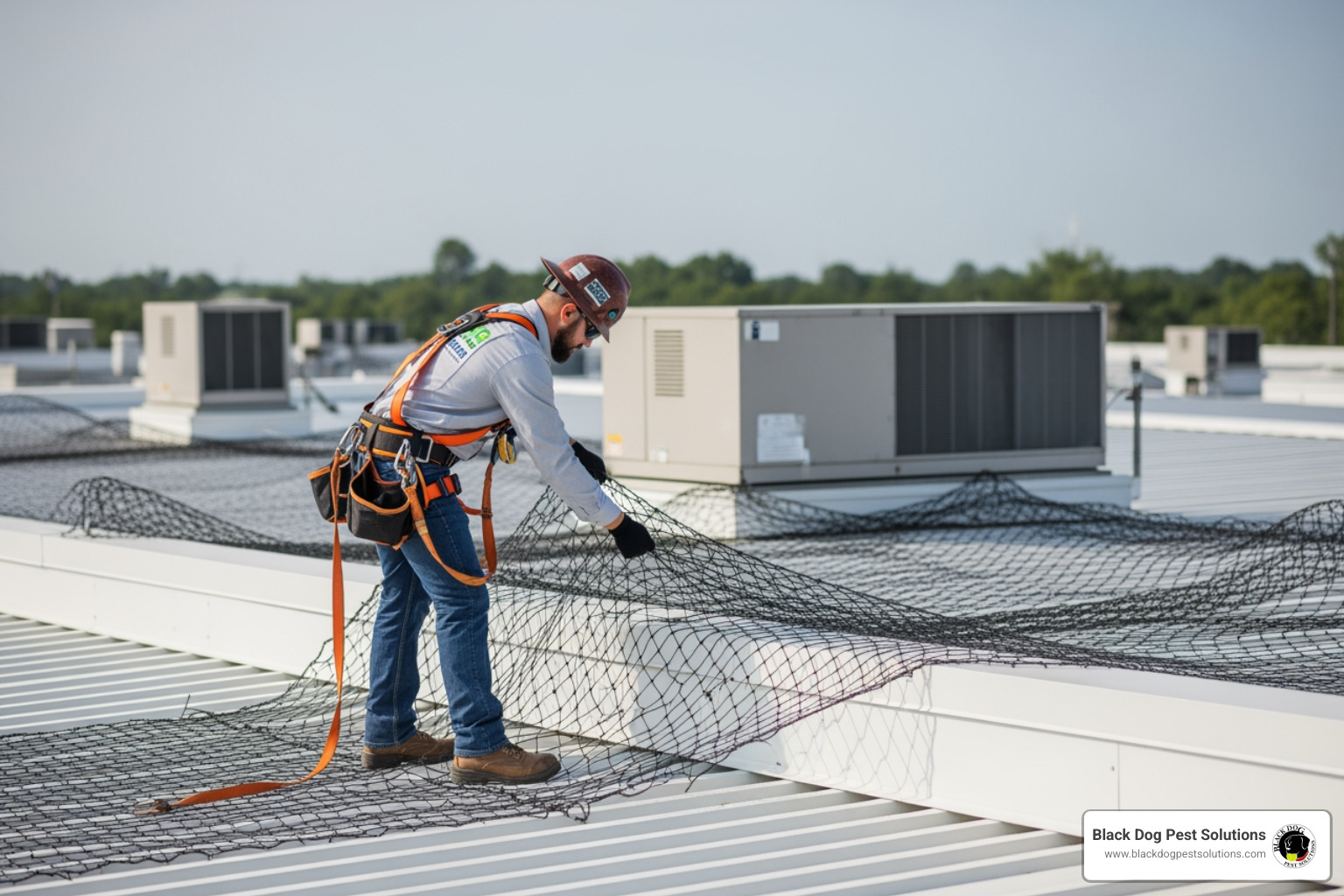
- Bird Exclusion: Birds like pigeons and starlings can cause significant structural damage and health hazards. We use humane deterrents, netting, and spikes to keep them off your ledges and out of your rafters.
- Odor Management: Sometimes the problem isn’t what you see, but what you smell. Professional odor control addresses the source of the scent—whether it’s from pests or sanitation issues—rather than just masking it.
- K9 Bed Bug Detection: For large-scale facilities like hotels or dormitories, specially trained dogs can sniff out bed bugs with incredible accuracy, allowing us to target treatments only where they are needed.
- Drain Line Maintenance: In commercial kitchens, organic buildup in drains is a primary breeding ground for flies. We use biological cleaners to keep your drains clear and fly-free.
- Hygiene Services: This includes washroom care, hand sanitizer stations, and even SHARPS waste removal for healthcare clients.
To ensure you are getting the highest level of expertise, look for companies that employ an Associate Certified Entomologist. This certification proves the technician has a deep scientific understanding of pest biology and behavior.
Integrated Pest Management and Proactive Prevention
If a commercial exterminator suggests “spraying once a month” as their entire plan, keep looking. Modern commercial pest control relies on Integrated Pest Management (IPM).
IPM is a common-sense approach that focuses on long-term prevention. Instead of just reacting when you see a bug, we work to make your business a place where pests can’t survive in the first place.
| Feature | Traditional Pest Control | Integrated Pest Management (IPM) |
|---|---|---|
| Primary Goal | Kill pests on contact | Long-term prevention and suppression |
| Method | Routine chemical application | Inspection, sanitation, and exclusion |
| Chemical Use | High/Scheduled | Targeted/Minimal (only when needed) |
| Risk Level | Higher exposure | Lower environmental and health risk |
| Documentation | Basic | Extensive (monitoring and trend analysis) |
The IPM process involves several critical steps:
- Inspection: We perform multi-point inspections of your facility in Avon, Westlake, or Rocky River to find entry points and nesting sites.
- Identification: We don’t guess. We identify the specific species of Pests to determine the most effective treatment.
- Sanitation: We advise your team on cleaning protocols that remove food and water sources.
- Monitoring: We use traps and digital tracking to catch pest activity early.
- Exclusion: We seal cracks, install door sweeps, and fix screens to keep pests outside.
This proactive approach is essential for audit preparation and regulatory compliance. We provide detailed service documentation and trend analysis reports so you can prove to inspectors—and yourself—that your facility is protected.
Common Pests and Business Risks
Pests are more than just a nuisance; they are a threat to your bottom line. Understanding the risks associated with the most common invaders can help you prioritize your pest management plan.
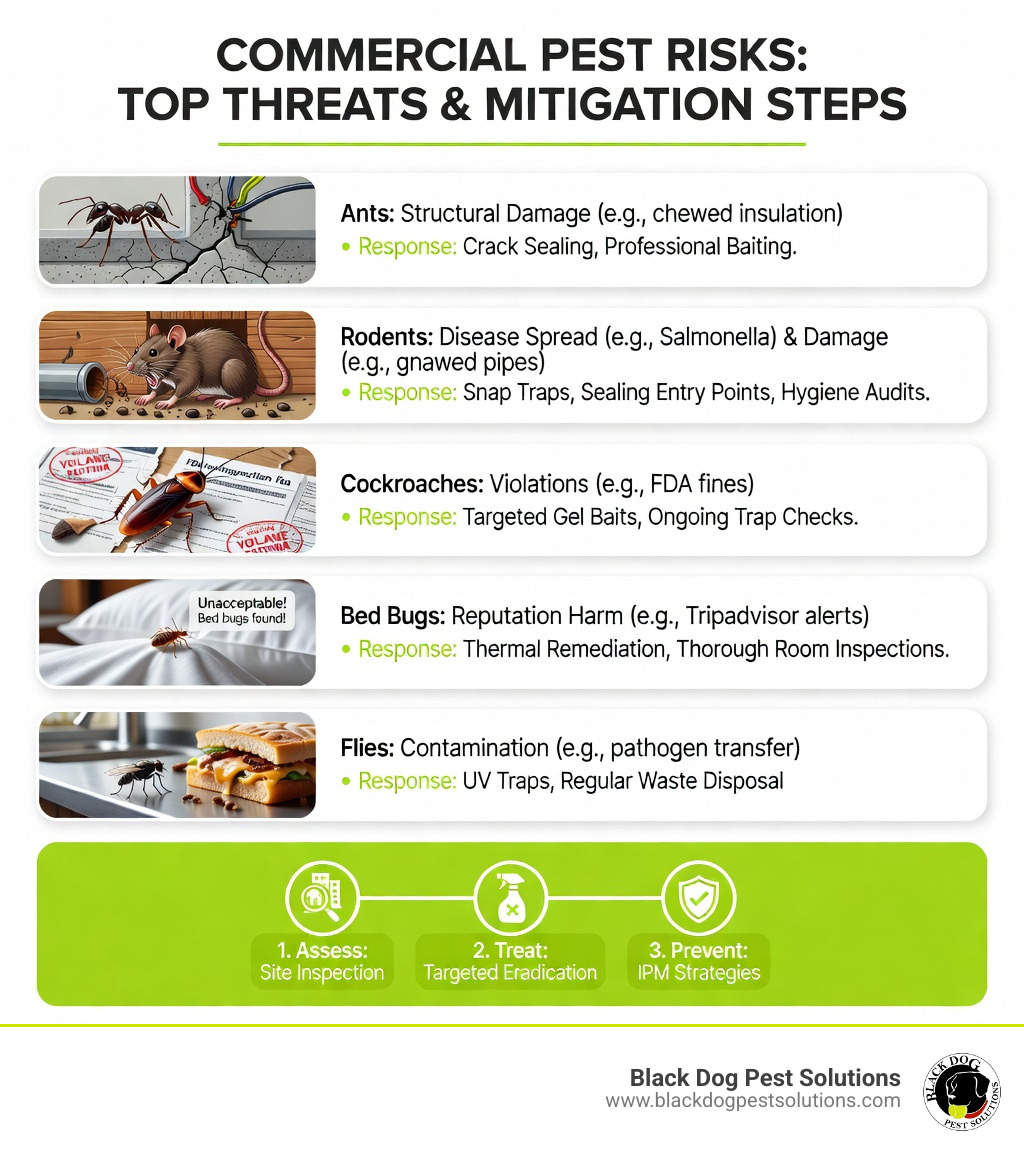
- Ants: These social insects can find their way into the smallest cracks. Carpenter ants can cause structural damage, while pavement ants can contaminate food supplies.
- Rats and Mice: Rodents are perhaps the most dangerous pests for businesses. They chew through wiring (causing fires), destroy insulation, and spread diseases like Hantavirus and Salmonella.
- Roaches: Cockroaches are nocturnal and multiply rapidly. They are a major trigger for allergies and asthma and are synonymous with poor sanitation in the eyes of the public.
- Bed Bugs: In the hospitality and healthcare sectors, bed bugs can lead to lawsuits and massive revenue loss. They are hitchhikers that can enter your building on luggage or clothing.
- Flies: House flies and fruit flies carry hundreds of different bacteria. In a restaurant or food processing plant, they are a direct threat to food safety.
The risks aren’t just physical. A single viral video of a rat in a dining room can destroy a reputation built over decades. This is why having a reliable commercial exterminator on speed dial is essential for employee safety and financial stability.
Urgent Response from a Commercial Exterminator
When you spot a pest, you don’t have time to wait. You need a team that can respond immediately to prevent a small sighting from becoming a full-blown PR crisis.
We understand the urgency of commercial issues. That’s why we offer:
- Rapid Dispatch: We prioritize our commercial clients in Northern Ohio to ensure we are on-site as quickly as possible.
- 24-Hour Response: Many commercial issues require immediate attention, and we strive to provide answers and action within a day of your call.
- Satisfaction Guarantees: We stand behind our work. If the pests come back between scheduled visits, we do too—at no extra charge.
- Warranty Coverage: Our treatments are backed by solid warranties, giving you peace of mind that your investment is protected.
If you are facing an urgent pest issue right now, don’t wait. Contact Us immediately to get a technician to your property.
Frequently Asked Questions about Commercial Pest Control
How much does commercial pest control cost?
This is the most common question we get when someone searches for a commercial exterminator. The truth is, pricing varies based on several factors:
- Facility Size: A 50,000-square-foot warehouse in Sandusky will cost more to service than a boutique shop in Bay Village.
- Industry Type: High-risk industries like food service or healthcare require more intensive monitoring and documentation, which can influence the price.
- Infestation Severity: It is always cheaper to prevent a problem than to cure one. A massive roach infestation will require more labor and materials than a standard maintenance plan.
- Frequency: Monthly maintenance plans are generally more cost-effective over the long term than emergency one-time treatments.
On average, commercial treatments can range from $80 to several hundred dollars per visit, depending on the scope of work.
How often should commercial properties be treated?
The frequency of service depends on your “pest pressure.”
- Monthly Inspections: This is the standard for most restaurants, grocery stores, and healthcare facilities.
- Quarterly Service: This may be sufficient for lower-risk environments like office buildings or retail shops with no food handling.
- Weekly/Bi-Weekly: High-risk food processing plants or facilities with active infestations may require more frequent visits.
We also make seasonal adjustments. For example, we might increase rodent monitoring in the fall as mice head indoors to escape the Ohio winter.
Is pest control safe for food service and healthcare?
Yes—when done correctly. By using IPM protocols, we focus on non-chemical methods first. When we must use products, we choose non-toxic baits and apply them in targeted areas where pests travel but humans and food do not. This ensures full health department compliance and maintains the safety of your patients, customers, and employees.
Conclusion
Choosing the right commercial exterminator is one of the most important decisions you can make for your business. In Northern Ohio, you need a team that combines national-level expertise with local, personalized service.
At Black Dog Pest Solutions, we are proud of our 4.9-star rating and our reputation for professionalism and fast service. Whether you are in Avon, Cleveland, or any of our surrounding service areas like Brunswick or Strongsville, we are here to provide the effective, reliable protection your business deserves.
Don’t let pests take over your business. Contact us today to learn more about our Commercial Services and schedule your first inspection. Let’s work together to keep Northern Ohio pest-free.