

Many funnel weavers seen indoors in September developed outdoors nearby. They matured over the summer, mating season put them on the move, and some may wander indoors.
Ohio State University Extension describes the pattern for funnel weavers, one of the most common spider groups in Ohio homes. Mature males wander indoors in autumn while looking for females (OSU Extension, ENT-76). Finding one indoors does not necessarily mean there is an indoor infestation. Knowing the difference is what keeps a nuisance from feeling like a problem.
The spiders you’re most likely to see this month
| Spider | Where you find it | Web | Worth knowing |
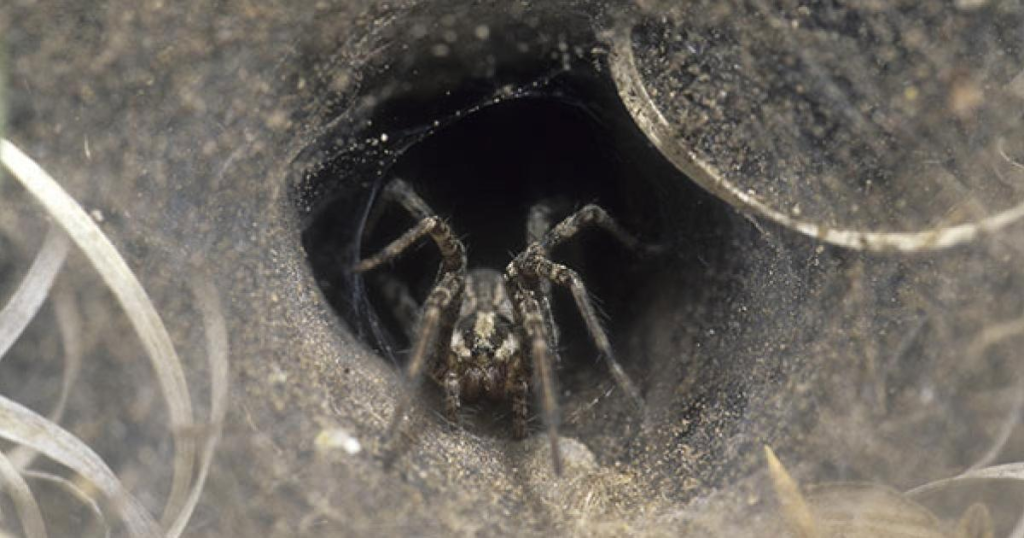
| Grass spider (Agelenopsis) | Lawns, shrubs and hedges. | Flat sheet web that narrows into a funnel. | Matures in late summer and mates in autumn. Females lay eggs under bark or debris. The female remains with her egg sac until she dies with the first hard frost. |
| Cellar spider | Closets, basements and garages. | Loose tangled web. | Not generally medically significant. A common source of the webbing people find overhead. |
| Outdoor web-building spiders | Outdoors under rocks, boards and yard debris. | Loose cobweb. | Most outdoor web-building spiders are not generally medically significant. Black widows are a separate concern, covered below. |
Sources: OSU Extension fact sheet ENT-76, Ohio’s Natural Enemies: Funnel Weaver Spiders, for grass spiders. University of Kentucky Extension ENTFACT-623, Eliminating Spiders Around Homes and Buildings, for cellar spiders and black widow habits.
Most spiders found around homes are not generally medically significant. University of Kentucky Extension is blunt about it in ENTFACT-623. Most spiders are useful, since they prey on flies and other pests. The majority have fangs too small or weak to puncture human skin. The ones that can bite generally won’t unless they’re harmed or threatened (University of Kentucky Extension, ENTFACT-623). OSU Extension makes the same point about funnel weavers, calling them generalist predators that reduce pest populations in a landscape.
Webbing around siding and entryways can still be a nuisance.
Why the wandering starts in late summer
Grass spiders mature in late summer and begin mating in autumn. Males leave the web they’ve held all season and travel looking for females. That’s why you see one crossing a room instead of sitting in a corner. They’re moving, not settling.
September adds another pressure. The insects spiders feed on cluster around exterior lights and doorways. A house with bright entry lights, gaps under the doors and firewood against the foundation collects both the prey and the predators.

What actually reduces spiders around the house
Routine cleaning and web removal are important first steps. University of Kentucky Extension ranks routine house cleaning first. A vacuum or broom removes spiders, webs and egg sacs. Destroying the egg sacs matters, since each one can hold hundreds of young spiders. The rest of the list from ENTFACT-623 comes down to removing shelter and blocking entry.
- Cut clutter in closets, garages, basements and attics. Spiders prefer quiet, undisturbed space.
- Move firewood, stacked items and debris away from the foundation. This reduces shelter near potential entry areas.
- Trim shrubs, vines and limbs touching the house. They act as shelter and as a bridge to the structure.
- Add tight window screens and door sweeps. Gaps under doors are a common entry point.
- Try yellow or sodium vapor bulbs at entrances. They draw fewer night-flying insects.
These steps can help reduce webbing, harborage and entry opportunities. What they don’t reach is outdoor harborage and difficult-to-reach exterior areas.
Where spider control in Northern Ohio needs a professional
University of Kentucky Extension notes that insecticides can be applied as a barrier treatment around a building to reduce spider entry. The targets are door thresholds, garage and crawl space entrances, foundation vents and the bottom edge of siding. Those applications may need to be repeated during warmer parts of the year. Product choice, placement and timing are the whole job, and the product label governs all three. Professional pesticide treatment should be performed by a properly licensed provider. Ohio requires pest control businesses that apply pesticides for hire to hold a license.
Pest control for spiders is mostly exterior work. Depending on inspection findings and the service selected, treatment may include identifying pest activity along with the contributing conditions and potential entry points behind it, removing webbing from accessible eaves, entries and window frames, recommending or applying appropriately labeled exterior treatment where warranted, and preventive recommendations for the conditions we cannot treat. Results vary with landscaping, moisture, exterior lighting and nearby wooded ground. A treatment may help reduce activity. It won’t clear spiders out of an outdoor environment. Our spider control page covers what a visit includes. If spiders are one of several things you’re dealing with, our residential services page shows how a recurring plan handles the fall lineup together.
When a spider is worth taking seriously
Spiders of medical concern are uncommon in typical indoor living spaces. Black widows are among the spiders of medical concern. University of Kentucky Extension describes the adult female as about half an inch long and shiny black, usually with a red hourglass under the abdomen, and reports that black widows are seldom found indoors, living instead under rocks, boards or yard debris such as stacked flowerpots. People usually get bitten when they lift an object or reach into a hidden space. Wear gloves during fall yard cleanup.
Call Poison Control at 1-800-222-1222 or seek medical care for severe symptoms or a suspected medically significant bite. We handle the spiders. Medical questions belong with medical professionals.
Getting ahead of it before the weather turns
The window between now and the first hard frost is when exterior work pays off. Males are traveling, and egg sacs are already placed around the structure. A fall visit may help reduce seasonal spider activity before colder weather arrives.
Black Dog Pest Solutions serves Avon, Avon Lake, Bay Village, North Ridgeville, Westlake, Rocky River, Lorain, Elyria, Cleveland, Lakewood, Medina, Sandusky and surrounding communities. Spider control in Northern Ohio works best as a planned fall visit, before the first hard frost.
Contact Black Dog Pest Solutions today to schedule a spider inspection.
FAQ
Why am I suddenly seeing spiders indoors in September?
Mature male funnel weavers travel in autumn looking for females, and OSU Extension notes they sometimes wander into homes while doing it. Grass spiders mature in late summer and begin mating in autumn, so some may have developed outdoors nearby.
Are the spiders in my basement dangerous?
Most aren’t. University of Kentucky Extension reports that the majority of spiders have fangs too small or weak to puncture human skin, and those that can bite generally won’t unless harmed or threatened. Cellar spiders and funnel weavers are not generally medically significant.
Do I need to worry about black widows in Northern Ohio?
They’re uncommon in living space. University of Kentucky Extension describes black widows as living outdoors under rocks, boards and yard debris, and says they’re seldom found indoors, usually turning up in vestibules, garages, sheds and outbuildings when they do. Wear gloves when moving stored items and yard debris.
What is the fastest way to get rid of spider webs?
Vacuum or sweep them, including the egg sacs. University of Kentucky Extension says destroying egg sacs is crucial, since each can contain hundreds of young spiders.
Will one treatment get rid of spiders for good?
No. Spiders live in the outdoor environment around a structure, and treatments may help reduce activity along entry points and harborage. Results vary with landscaping, moisture, exterior lighting and nearby habitat, and exterior applications may need to be repeated during warmer parts of the year.
Does exterior lighting attract spiders?
Indirectly. Lights draw night-flying insects, and spiders follow the food. University of Kentucky Extension suggests yellow or sodium vapor bulbs at outside entrances because they’re less attractive to those insects.