
Bed bugs in Northern Ohio do not have a season the way wasps or mosquitoes do. They have a travel pattern. Late August moves a huge amount of luggage, mattresses, futons and used furniture between apartments, dorms and family homes across Cuyahoga and Lorain counties. The bugs move with all of it.
That is the whole reason this stretch of the calendar matters for pest control. Weather does not change their behavior. What changes is how many bags come home.
Bed bugs in Northern Ohio: a national hotspot, and Cleveland is on the list
This is not a scare line. It sits in the extension literature. Ohio State University Extension says Ohio has become a hotspot, with Cleveland among the Ohio cities ranking in the top infested cities in the United States (OSU Extension, ENT-0103, The Bed Bug Threat).
The same fact sheet ties the comeback to two drivers: more human movement and insecticide resistance. These insects now resist many common classes of insecticide. Their small size and fast breeding let a bug infestation take hold quickly (OSU Extension, ENT-0103).
The consequences go past itching. Exposure to feces, histamines, shed skins and bites can trigger breathing issues, skin reactions and mental distress. Nationwide, bed bug control is estimated to cost $5 billion a year (OSU Extension, ENT-0103).
The biology that explains why they are hard to find
These insects are built to hide. They are only about the width of a credit card, so if a crack will hold a credit card, it could hide a bed bug (EPA, How to Find Bed Bugs).
| Bed bug fact | Detail | Source |
| Time from egg to adult | 37 days at optimum temperatures above 72°F, with a blood meal | OSU ENT-0103 |
| Eggs per female | Up to 113 | OSU ENT-0103 |
| Eggs per day / lifetime | 1–3 per day; 200–500 over a lifetime of 6–12 months | EPA |
| Survival without feeding | Up to 70 days | OSU ENT-0103 |
| Peak activity | Most active between midnight and 5 a.m. | OSU ENT-0103 |
| Distance traveled to feed | Readily 5–20 feet from harborage | EPA |
| Feeding time | 3–12 minutes | EPA |
| Lethal body temperature | Die when body temperature reaches 45°C (113°F) | EPA |
| Cold tolerance | Survive and remain active down to 7°C (46°F) | EPA |
Read that table as a detection problem. This is an insect that lasts 70 days without a meal. It feeds for ten minutes at 3 a.m. Then it walks a few feet back into a seam. You will meet it through evidence, not by spotting it.

What to actually look for after a trip
The evidence usually beats the insect. Rusty or tarry spots on sheets come from adults and large nymphs voiding old blood meals while they feed. That happens about 20% of the time (EPA, How to Find Bed Bugs).
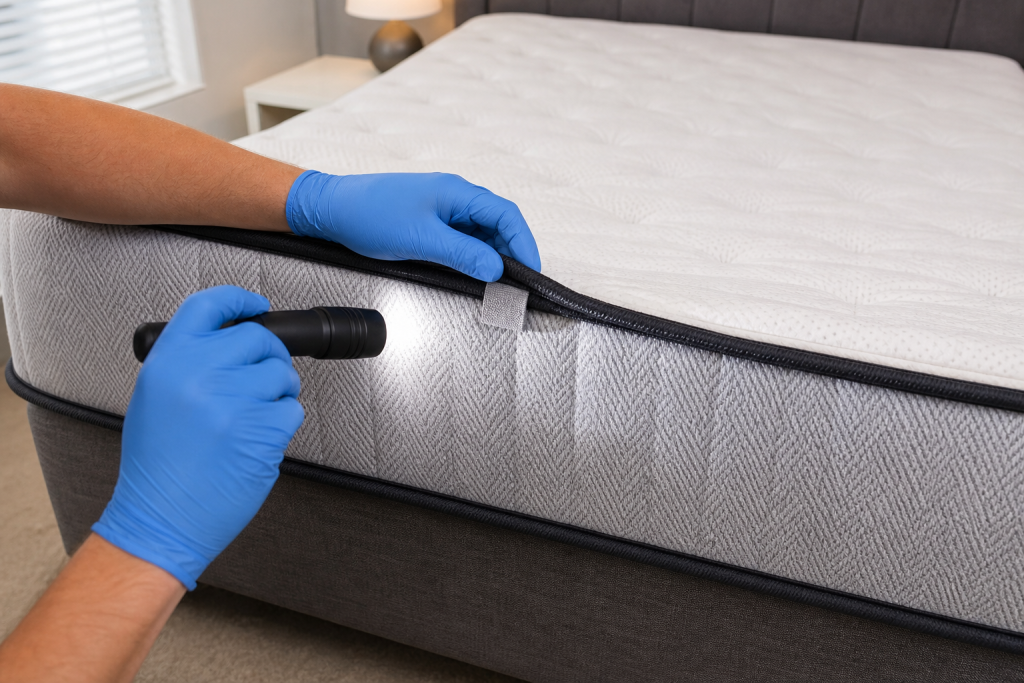
Around the bed they hide near the piping, seams and tags of the mattress and box spring, and in cracks on the frame and headboard. In a heavily infested room, EPA notes they also turn up in the seams of chairs and couches, between cushions and in the folds of curtains. The list runs on: drawer joints, electrical receptacles, appliances, loose wallpaper, wall hangings, the wall-ceiling junction, even the head of a screw (EPA).
So the first place to inspect after a hotel stay or a dorm move-in is not the mattress surface. Check the seams, the tags and the joints of the frame. Then check the luggage itself.
Why DIY bed bug control so often stalls
Two things quietly defeat homeowner treatment. The first is resistance to many common classes of insecticide (OSU Extension, ENT-0103). A retail spray that kills on contact does little to a population inside a hollow bed frame.
The second is heat. They die when body temperature reaches 113°F. To kill them with heat, the room must run hotter still, so the heat reaches bugs wherever they hide (EPA). A space heater does not do that. Bed bug extermination gear is built to hold and verify those temperatures through a structure.
One homeowner measure has real published support: the laundry. Tumble drying infested clothing or bedding on high heat, at 130°F or above for 30 minutes, kills them (OSU Extension, ENT-0103). Decluttering, sealing cracks, HEPA vacuuming and encasing mattresses and box springs are the steps that make a treatment stick (OSU Extension, ENT-0103).
Those measures are complements to a treatment plan. They are not a substitute for one.
Choosing help, and choosing it early
OSU’s guidance on hiring a bug exterminator is specific. Confirm the company is licensed by the Ohio Department of Agriculture, belongs to the Ohio Pest Management Association and keeps up with training. Ask for proof of insurance, compare bids and understand the plan before work begins (OSU Extension, ENT-0103).
Early detection is the other half. Spotting the early signs can prevent severe outbreaks and costly damage (OSU Extension, ENT-0103). With a 37-day egg-to-adult cycle, calling in week one and calling in week six are two different jobs.
Found evidence in a bedroom? Our bed bug service starts with an inspection to confirm what is there and map the harborage. For homes, that folds into ongoing residential pest control. For landlords, student rentals, hotels and senior-living operators around Cleveland, our commercial services cover unit-by-unit inspection.

Frequently asked questions
Is Ohio really worse than average for these pests?
OSU Extension describes Ohio as a hotspot, with Cleveland among the Ohio cities ranking in the most infested cities in the country (OSU Extension, ENT-0103).
How long can they survive in an empty apartment?
Up to 70 days without feeding (OSU Extension, ENT-0103). An unoccupied unit does not clear itself out.
What do the stains on my sheets mean?
Rusty or tarry spots come from adults and large nymphs voiding earlier blood meals while feeding, which occurs about 20% of the time (EPA).
Will washing and drying my clothes kill them?
Tumble drying on high heat at 130°F or above for 30 minutes kills them in clothing and bedding (OSU Extension, ENT-0103).
Do they only come out at night?
They are most active between midnight and 5 a.m. (OSU Extension, ENT-0103), but EPA notes that if hungry they will seek hosts in full daylight (EPA).
Why do store-bought sprays often fail?
Because they resist many common classes of insecticide, and populations sit in cracks a surface spray does not reach (OSU Extension, ENT-0103).
Suspect a problem after a move or a trip? Call Black Dog Pest Solutions and schedule a bed bug inspection. Early treatment protects your home and costs far less than a spread-out infestation.