Bed bug treatment works best when the home is ready for it. The U.S. Environmental Protection Agency calls preparation an essential first step, whether you hire a professional or try to handle the problem yourself, and says good prep can speed up the process. It also makes it easier to spot any bugs that survive, which matters when you’re checking results in the weeks after.
The hard part is doing prep without making the problem bigger. Bed bugs hide in clutter, bedding and furniture, and moving those things around the house can carry bugs into rooms that were clean. This checklist covers what to do, what to leave alone, and what to ask your pest control provider first.
If you’re still not sure you have bed bugs, start with our post on spotting bed bugs after the back-to-school weeks, which covers the signs to look for.
Ask before you start prepping
Prep instructions vary from company to company, so call before you pull the house apart. University of Kentucky Extension notes that pest managers have their own policies about preparation, which may depend on the treatment method. Some firms want beds stripped and furniture moved before they arrive. Others prefer to inspect first and handle those tasks themselves.
The size of the problem also changes the list. According to the same extension guide, extensive prep may be needed when infestations are large and the bugs have spread out. Light infestations may need little or none, since the bugs usually stay close to beds and sofas at that stage.
Ask your provider a few questions before the visit:
- Which rooms need prep, and which should I leave alone?
- Should I strip the beds, or will you inspect them first?
- Do I need to wash and dry clothing and bedding, and which items?
- How long should people and pets stay out after the visit?
What to do before bed bug treatment
EPA’s prep guidance groups the work into four areas: reduce clutter, make the bed an island, clean items in the living area, and remove bed bug hiding spots. Here’s what each one involves.
| Prep task | What EPA recommends | Why it matters |
| — | — | — |
| Reduce clutter | Keep clothing off the floor. Replace cardboard boxes with plastic ones. Get rid of excess magazines and newspapers. | Clutter gives bed bugs more places to hide. |
| Bag as you go | Put trash and infested items straight into plastic bags. Carry full bags to an outside bin. | Bagging keeps bugs from falling off on the way out. |
| Heat what can take it | Run clothing, bedding and other dryer-safe items on high heat for 30 minutes. | EPA says washing alone might not do the job. |
| Store clean items sealed | Keep treated items in sealed plastic bags. | Clean items stay bug free until the work is done. |
| Seal hiding spots | Caulk cracks around baseboards. Fix loose wallpaper and wallboard damage. | Fewer cracks leave fewer places to hide. |
Source: U.S. EPA, Preparing for Treatment Against Bed Bugs.
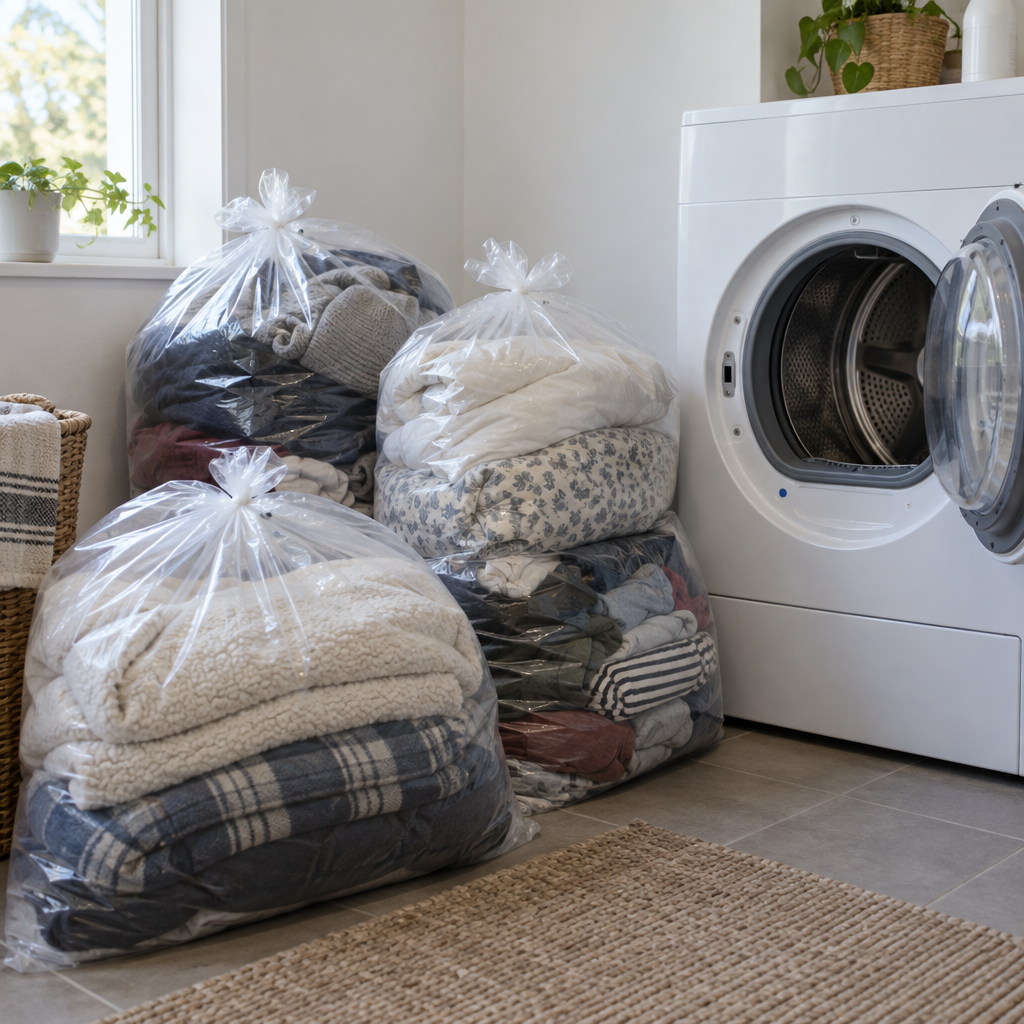
Laundry is where most of the prep time goes. Use plastic bags to move clothes and bedding to the dryer, so bugs don’t drop off along the way. Bedding and garments often need laundering because they can’t be treated with insecticides, UK Extension notes. The same guide says most “dry clean only” fabrics won’t be harmed if they’re dry before going in the dryer at a moderate setting.
Make the bed an island
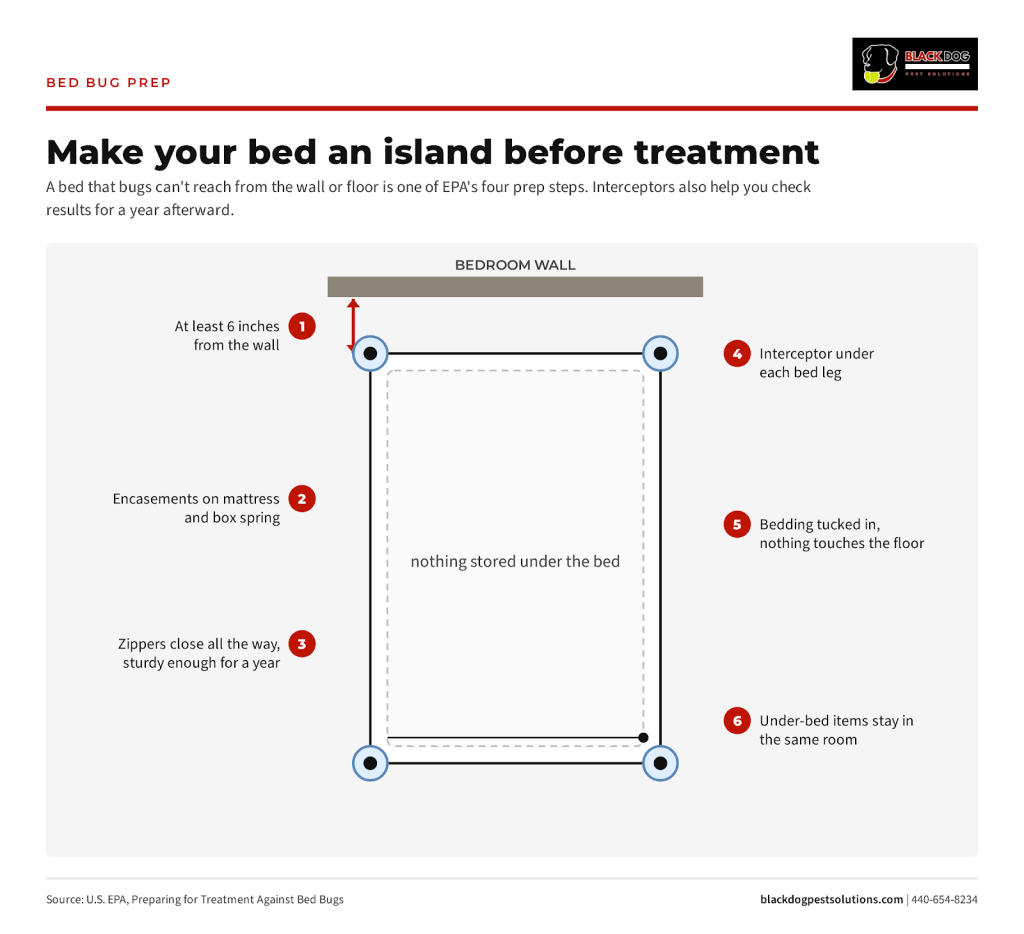
The bed is where bed bugs are most likely to be found, so EPA’s prep list treats it as its own step. The goal is a sleep surface that bugs can’t reach from the floor or wall.
- Move the bed at least 6 inches away from the wall.
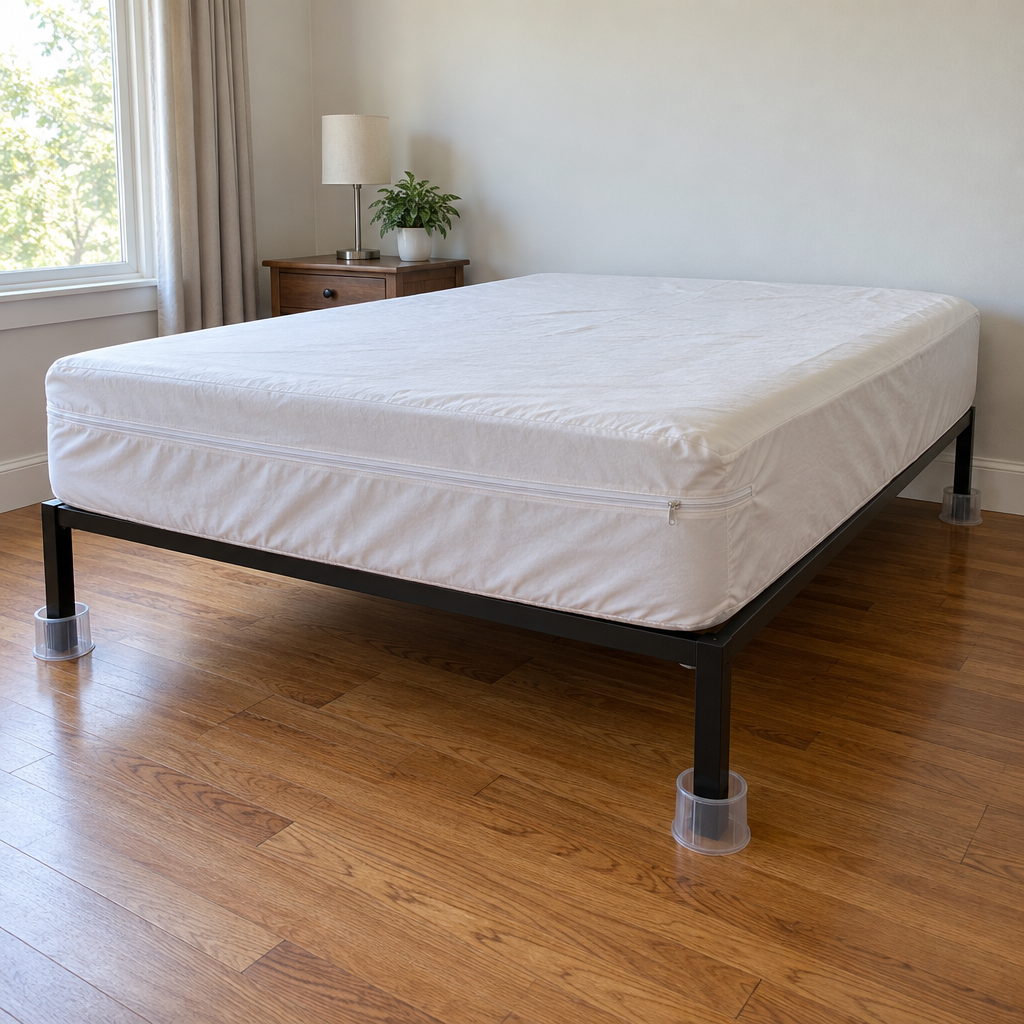
- Put bed-bug-proof encasements on the mattress and box spring. Check that the zippers close all the way and that the covers are sturdy enough to last a year.
- Tuck all bedding under the mattress so nothing touches the floor.
- Place interceptors under each bed leg to catch bugs that try to climb up.
- Remove everything stored under the bed. Keep it in the same room so you don’t spread the problem.
Encasements help in two ways. Any bed bugs trapped inside will eventually starve, EPA says, and others can’t hide in the mattress or box spring. Encasements are also an economical alternative to throwing out infested beds, according to UK Extension.
Mistakes that spread bed bugs
Some common reactions make the job harder. EPA’s first clutter rule is simple: don’t move items from an infested area to one that isn’t infested. That includes carrying pillows to the couch or boxing up bedroom clothes and storing them in the basement.
A few more mistakes to avoid:
- <b>Turning up the thermostat.</b> EPA says raising your indoor temperature with a thermostat, space heater or fireplace doesn’t work and is dangerous. Professionals who use heat work with special equipment and sensors.
- <b>Foggers, bleach, alcohol or open flames.</b> UK Extension says these are ineffective against bed bugs and can cause fires and other dangerous outcomes.
- <b>Throwing out furniture too soon.</b> UK Extension says most belongings don’t need to be discarded. If you do throw something out, wrap it in plastic and mark it so no one else takes it home.
- <b>Leaving the home empty to starve them out.</b> UK Extension says that’s usually impractical, since bed bugs can go months without feeding.
What to expect after treatment
You should plan for follow-up. The EPA do-it-yourself guide says treating bed bugs can take weeks to months, depending on how many there are, how much clutter there is, and whether everyone in the home or building takes part. Follow-up visits are usually needed after insecticide work, UK Extension notes.
Keep monitoring, too. EPA recommends checking interceptors daily at first and keeping them in place for at least a year. It also suggests inspecting for bed bugs at least every 7 days in case any eggs remain. If you live in an apartment, our post on bed bugs in apartment buildings explains why nearby units often need inspection too.
Black Dog Pest Solutions provides bed bug service for homes and businesses in Northern Ohio. Your technician will tell you which prep steps apply to your home and treatment plan.
Frequently asked questions
<b>How long should clothes go in the dryer?</b>
EPA says to heat dryer-safe clothing, bedding and other items on high heat for 30 minutes. Move items in sealed plastic bags and store them sealed afterward.
<b>Do I need to throw away my mattress?</b>
Usually not. According to UK Extension, most belongings don’t need to be discarded, and encasements are an economical alternative to replacing infested beds.
<b>Should I vacuum before the technician comes?</b>
It’s worth asking your provider. EPA suggests vacuuming and sealing the bag in plastic before throwing it out. UK Extension notes that routine vacuuming seldom reaches where bed bugs hide, so many firms see it as less important than other prep.
<b>Can I sleep in another room during treatment?</b>
Talk with your provider first, since EPA advises against moving items from an infested area to a clean one, because belongings can carry bugs with them.
<b>How soon will the bed bugs be gone?</b>
It varies. EPA says treatment can take weeks to months, and follow-up visits are common. Keep interceptors in place and check them regularly.
FAQPage JSON-LD
“`json
{
“@context”: “https://schema.org”,
“@type”: “FAQPage”,
“mainEntity”: [
{“@type”: “Question”, “name”: “How long should clothes go in the dryer?”, “acceptedAnswer”: {“@type”: “Answer”, “text”: “EPA says to heat dryer-safe clothing, bedding and other items on high heat for 30 minutes. Move items in sealed plastic bags and store them sealed afterward.”}},
{“@type”: “Question”, “name”: “Do I need to throw away my mattress?”, “acceptedAnswer”: {“@type”: “Answer”, “text”: “Usually not. According to UK Extension, most belongings don’t need to be discarded, and encasements are an economical alternative to replacing infested beds.”}},
{“@type”: “Question”, “name”: “Should I vacuum before the technician comes?”, “acceptedAnswer”: {“@type”: “Answer”, “text”: “It’s worth asking your provider. EPA suggests vacuuming and sealing the bag in plastic before throwing it out. UK Extension notes that routine vacuuming seldom reaches where bed bugs hide, so many firms see it as less important than other prep.”}},
{“@type”: “Question”, “name”: “Can I sleep in another room during treatment?”, “acceptedAnswer”: {“@type”: “Answer”, “text”: “Talk with your provider first, since EPA advises against moving items from an infested area to a clean one, because belongings can carry bugs with them.”}},
{“@type”: “Question”, “name”: “How soon will the bed bugs be gone?”, “acceptedAnswer”: {“@type”: “Answer”, “text”: “It varies. EPA says treatment can take weeks to months, and follow-up visits are common. Keep interceptors in place and check them regularly.”}}
]
}
“`
Closing CTA (place this at the end of the post body, above the FAQ block)
If you think you have bed bugs, or you want help planning prep for an upcoming bed bug treatment, call Black Dog Pest Solutions at 440-654-8234 or contact us online. We’ll inspect, explain what your home needs, and help you protect the rest of the house while the work gets done.