
Why Mice Love Garage Couches — And How to Stop Them
Knowing how to keep mice out of a couch stored in the garage can save you from a frustrating — and potentially costly — pest problem. Here’s a quick summary of the most effective steps:
- Seal entry points in your garage using metal materials that are more resistant to chewing, focusing on gaps about 1/4 inch or smaller
- Clean the couch thoroughly before storing it — remove crumbs, vacuum crevices, and eliminate any organic odors
- Elevate the couch off the concrete floor using wooden pallets or heavy-duty shelving
- Wrap the couch in heavy-duty plastic to reduce access and nesting opportunities
- Set and monitor traps along walls near the couch, checking them frequently
- Remove food sources from the garage entirely to reduce what’s drawing mice in
Mice are drawn to garage couches for simple reasons: warmth, soft nesting material, and shelter from predators. An upholstered couch sitting in a garage is, as one source put it, basically a five-star hotel for pests. The problem tends to get worse quickly, because mice reproduce quickly once they find a comfortable spot.
In Northern Ohio, local weather and building conditions can make garages especially attractive to mice — particularly as temperatures drop in fall and winter.
I’m Mat Ledyard, owner of Black Dog Pest Solutions in Avon, Ohio, and I’ve been working in pest control since 2005 helping homeowners across Northeast Ohio deal with exactly this kind of problem, including helping people figure out how to keep mice out of a couch stored in the garage before a small issue turns into a full infestation. Read on for a practical, step-by-step guide built around Integrated Pest Management principles that actually work long-term.

How to Keep Mice Out of a Couch Stored in the Garage
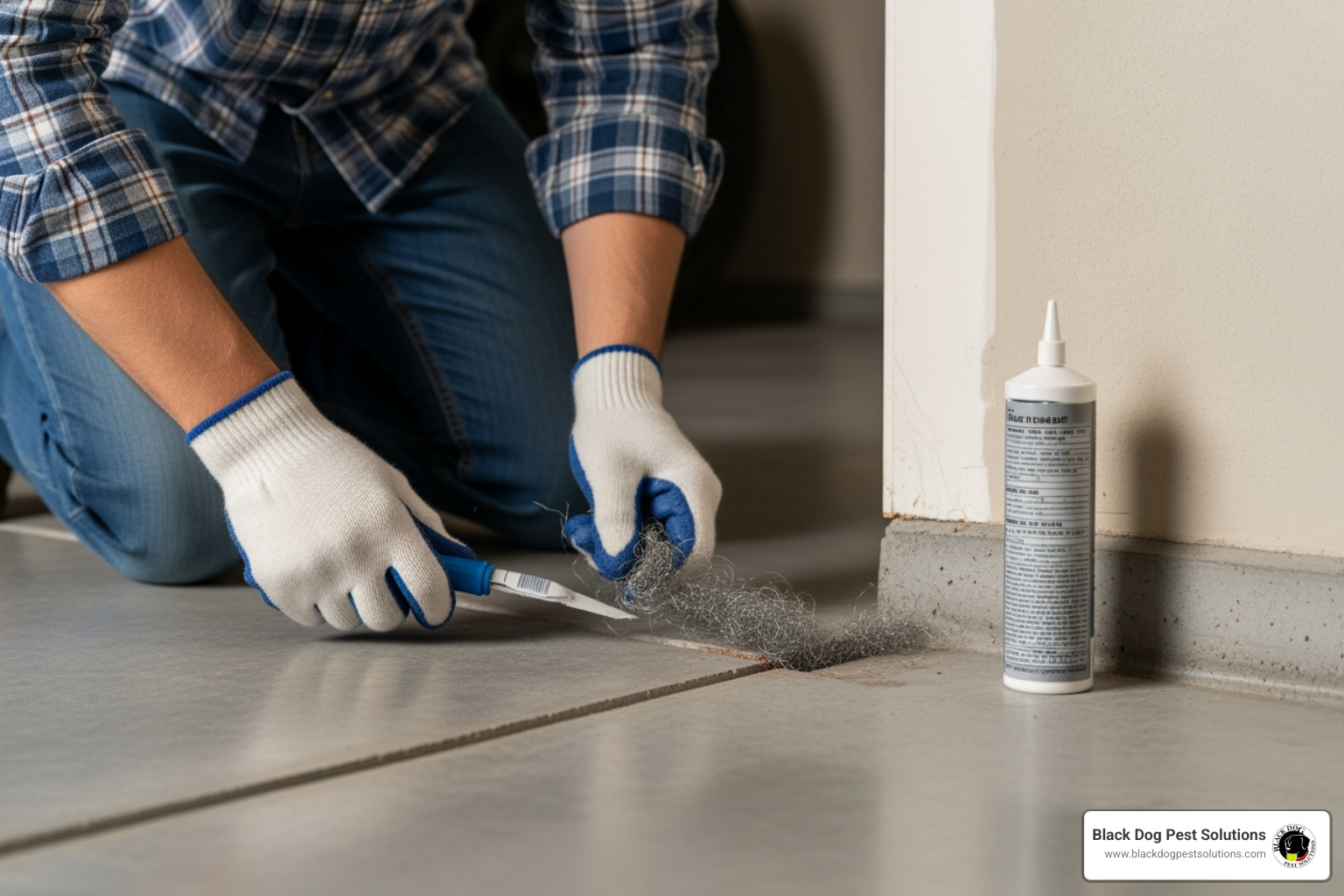
To truly master how to keep mice out of a couch stored in the garage, we recommend following the principles of Integrated Pest Management (IPM). This isn’t just about setting a single trap and hoping for the best; it’s a comprehensive approach that focuses on inspection, sanitation, and exclusion. By making the environment less hospitable, we can often prevent the problem before it starts.
A clean garage is your first line of defense. Mice love clutter because it provides “runways” and hiding spots. By keeping your garage squeaky clean, you remove the sense of security that mice need to set up a permanent residence in your furniture.
Inspecting and Sealing Entry Points
Mice are incredibly flexible. Because of their soft cartilage, they can squeeze through openings as small as a dime, or about 1/4 inch or smaller. This means the standard rubber weatherstripping on your garage door or thin screening on vents isn’t enough—mice can simply chew through these materials.
To properly mouse-proof your garage, you need to use metal materials like steel wool or hardware cloth, which are more resistant to chewing. We suggest walking the perimeter of your garage and looking for:
- Gaps where the wall meets the foundation.
- Spaces around utility pipes or electrical conduits.
- Worn-out door sweeps or gaps at the corners of the garage door.
According to scientific research on garage exclusion, sealing these physical entry points is the most effective long-term way to keep rodents out of your storage space.
Strategic Cleaning to Prevent Mice in a Couch Stored in the Garage
Mice aren’t just looking for a bed; they’re looking for a snack. A single forgotten potato chip crumb deep in the cushions can act as a beacon for a hungry mouse. Before you move that sofa into the garage, you must perform a deep “sanitation” sweep.
- Vacuum every crevice: Use a crevice tool to get deep into the frame.
- Remove organic odors: Spills from milk, soda, or food leave behind organic scents that mice can detect long after the spot has dried.
- Steam clean if possible: This helps remove the “human” and “food” scents that attract pests.
Understanding mouse behavior is key here; they are creatures of habit and will repeatedly visit areas where they previously found food. If your couch is “clean” by human standards but still smells like a buffet to a mouse, it’s at risk.
Proper Storage Methods for Long-Term Protection
If you must store a couch in the garage, how you position it matters. Never leave a couch sitting directly on the concrete. Concrete is porous and can wick moisture from the ground, leading to mold and mildew—which softens the fabric and makes it even more attractive for nesting.
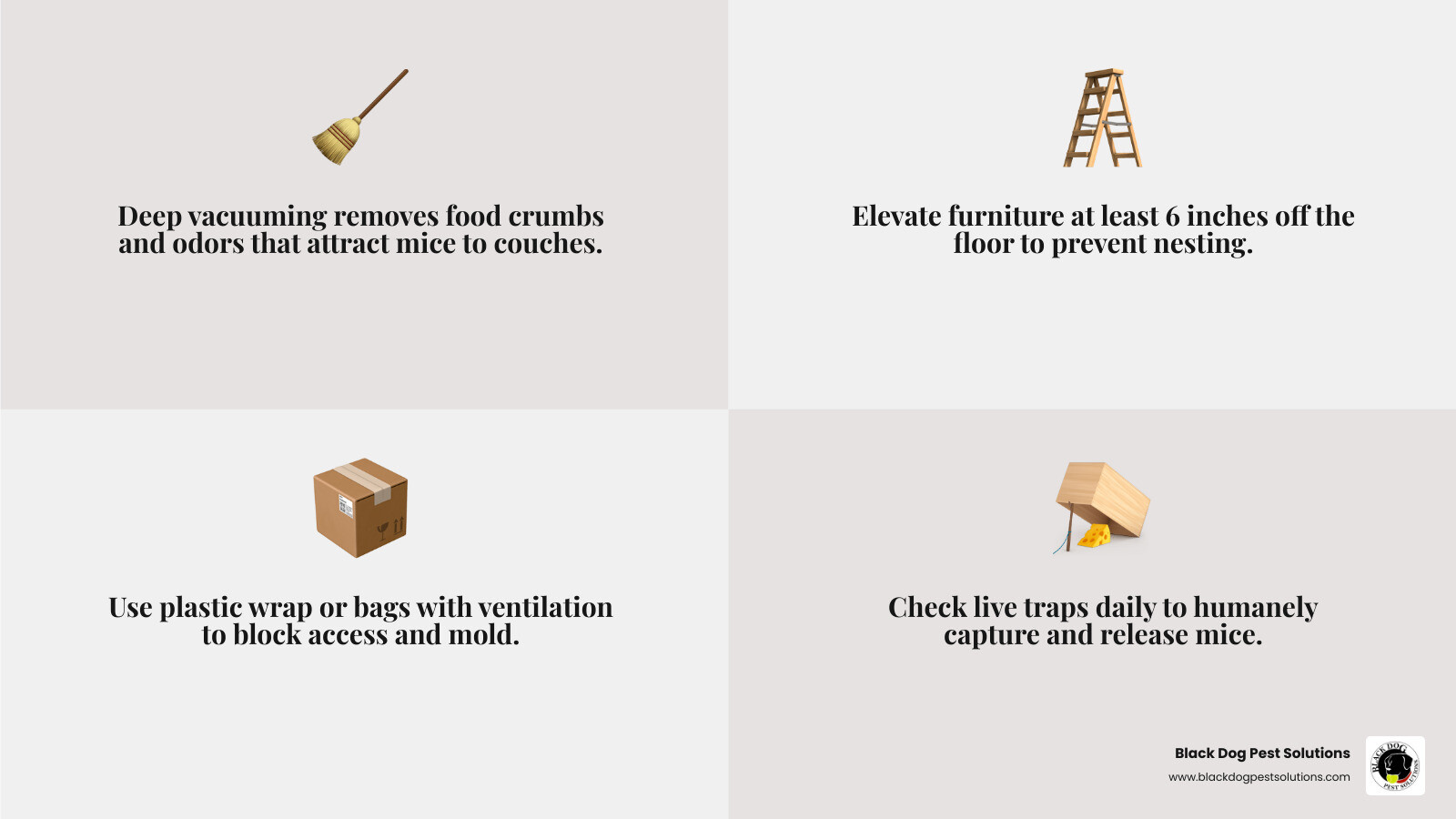
- Elevation: Use wooden pallets or heavy-duty plastic shelving to keep the couch at least 6 inches off the ground.
- Smooth barriers: Some homeowners find success placing aluminum foil under the legs of the furniture, as mice may be reluctant to cross the noisy, slippery texture.
- Wrapping: Use heavy-duty plastic furniture bags or professional-grade stretch wrap. However, ensure there is some ventilation if your garage is prone to humidity, as trapping moisture inside the plastic can lead to mold.
For more detailed research on furniture protection, elevation and physical barriers are your best friends in a non-climate-controlled environment.
Humane Trapping and Monitoring Techniques
Even with the best sealing, a mouse might slip in through an open garage door while you’re pulling the car in. This is where monitoring comes in. We advocate for humane mouse control, which focuses on minimizing stress and suffering for the animal while protecting your home.
- Live-catch traps: These allow you to capture the mouse without lethal force.
- Frequent checks: If you use live traps, you must check them at least once a day—ideally every few hours. Leaving a mouse in a trap for too long is inhumane and causes unnecessary stress.
- Placement: Mice are timid and prefer to run along walls. Place your traps or monitoring boards perpendicular to the wall, near the couch, but not inside it.
Using these IPM strategies allows you to keep an eye on activity levels without resorting to heavy chemicals or poisons that could end up causing a mouse to die inside your couch frame, leading to terrible odors.
When to Call Pest Control Companies in Avon
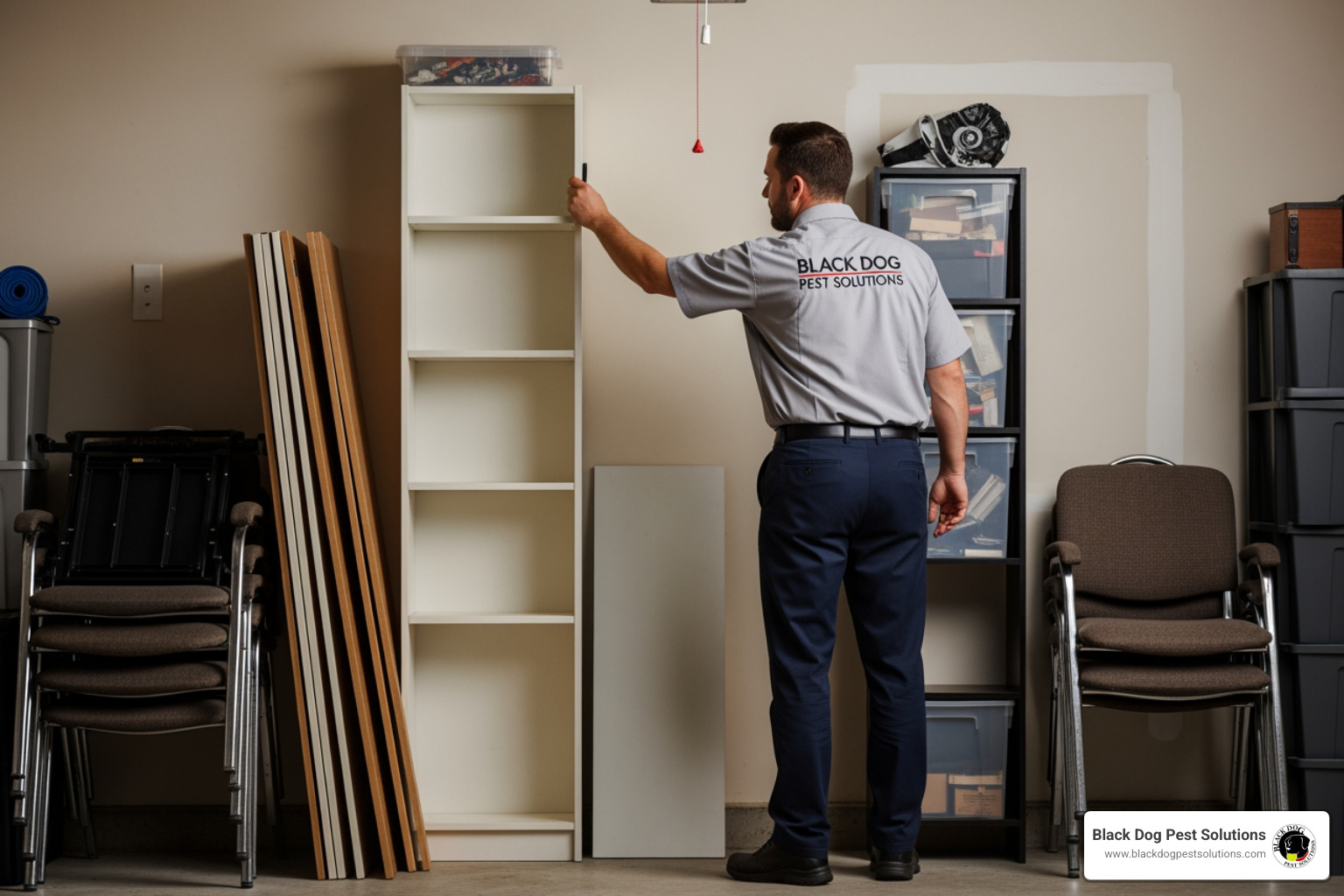
Sometimes, despite your best efforts, the mice win the first round. Because mice reproduce quickly—a single female can have upwards of 60 babies in a year—a small problem can become a major health and property risk in just a few weeks. If you see signs of an infestation, it’s often time to look for professional pest control companies in Avon.
Identifying Signs of an Active Infestation
How do you know if the “five-star hotel” is currently occupied? Look for these telltale signs:
- Droppings: Small, dark, rice-shaped pellets (a single mouse can produce 50-75 a day!).
- Gnaw marks: Look for chewed fabric, wood, or even electrical wires around the base of the couch.
- Musky odor: A distinct, ammonia-like smell often indicates a nest is nearby.
- Nesting material: Shredded paper, insulation, or fabric gathered in a corner or under the cushions.
If you’re seeing these signs, don’t wait. You can find more info about finding an exterminator to help you handle the situation before it spreads to the rest of your home.
Professional Solutions for a Couch Stored in the Garage
At Black Dog Pest Solutions, we pride ourselves on being one of the leading pest control companies in Avon. We are a family-owned business led by Mat Ledyard, and we’ve maintained a 4.9-star rating by providing honest, effective service to our neighbors in Northern Ohio.
Whether you are in Avon Lake, North Ridgeville, or Westlake, we understand how local weather conditions and the construction of Ohio homes can make garages vulnerable. We don’t just set traps; we help you identify the root cause of the infestation and provide long-term exclusion solutions.
If you’re worried about the health risks—like hantavirus or salmonella—associated with rodent droppings in your furniture, or if you’re concerned about the cost of replacing a destroyed sofa, we are here to help. For more information about professional mouse removal, give us a call or visit our website. We provide reliable service across Greater Cleveland, from Sandusky to Lakewood, ensuring your garage stays a place for your car and your couch—not a breeding ground for pests.
Frequently Asked Questions
Is it safe to keep a couch that had mice in it? It depends on the extent of the damage. If the mice have nested deep in the frame, the urine and droppings can be nearly impossible to fully remove, posing a health risk. If the damage is minor and localized to the cushions, you may be able to deep clean and disinfect it. However, if there is a persistent ammonia smell, it’s usually safer to replace the item.
Do dryer sheets or peppermint oil keep mice away from furniture? While many people swear by these natural repellents, their effectiveness is often temporary. Mice have been known to actually use dryer sheets as nesting material once the scent fades. These methods are best used as a supplement to—not a replacement for—sealing entry points and proper sanitation.
How do I clean mouse droppings off my couch? Never vacuum or dry-sweep droppings, as this can aerosolize pathogens like hantavirus. Instead, wear a mask and gloves, spray the area with a 1:10 bleach-to-water solution, let it sit for five minutes, and then wipe it up with paper towels.
Can mice climb up the legs of a couch? Yes, mice are excellent climbers and can easily scale wooden or fabric legs. Elevating the couch on smooth metal or plastic risers, or using aluminum foil barriers, can make it more difficult for them to gain access.
For more information on keeping your home pest-free, visit the EPA’s guide on Integrated Pest Management.