
What to Do About a Springtail Infestation Outside Your Home
A springtail infestation outside your home is almost always a moisture problem — and the good news is that it’s very manageable once you know what’s driving it.
Here’s the short answer if you’re in a hurry:
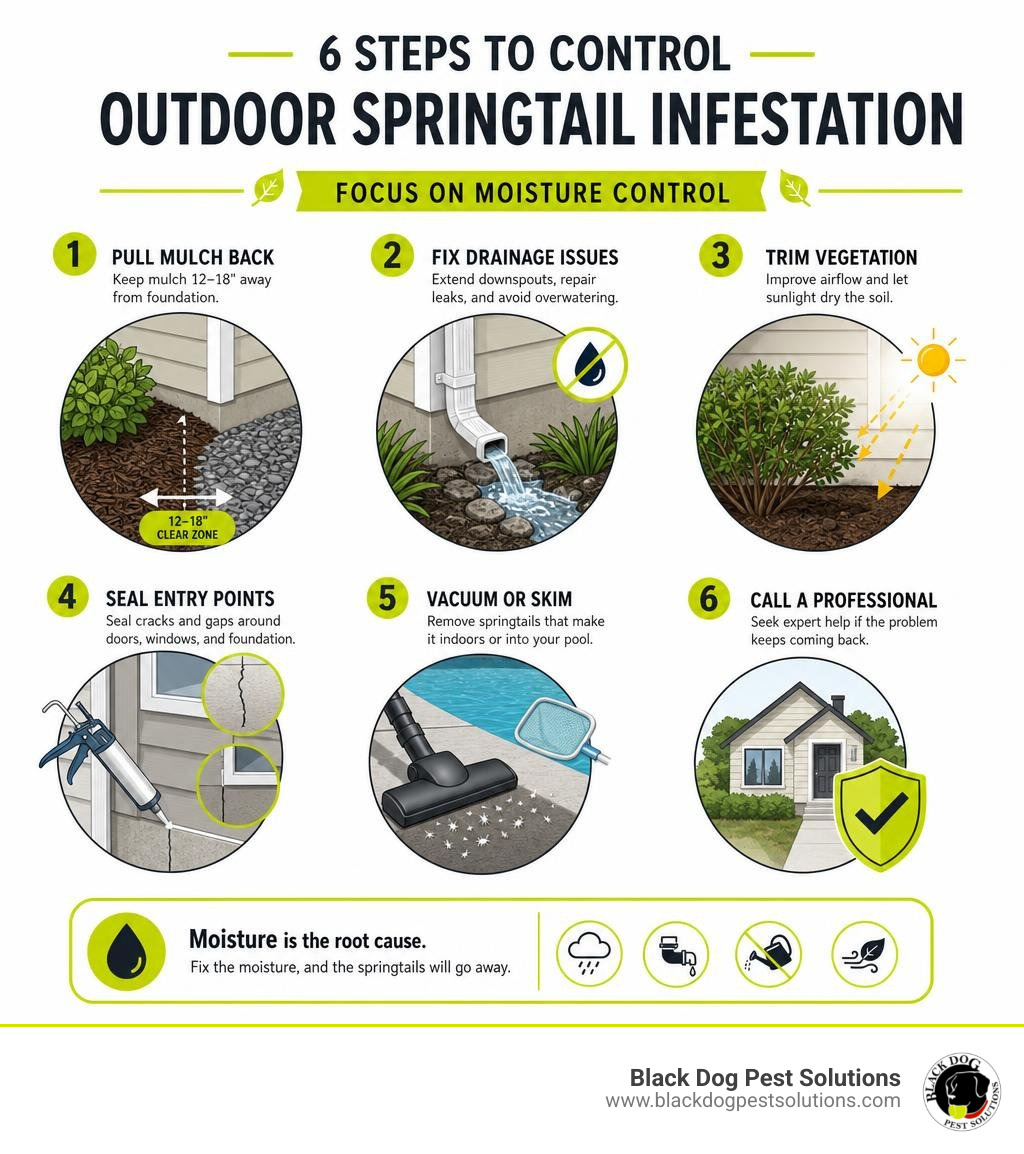
- Pull mulch back at least 12–18 inches from your foundation and replace it with gravel or rock.
- Fix drainage issues — extend downspouts, repair leaks, and stop overwatering near the house.
- Trim shrubs and vegetation to improve airflow and let sunlight dry the soil.
- Seal entry points — cracks, gaps around doors, windows, and the foundation.
- Vacuum or skim any springtails that make it indoors or into your pool. They’re harmless.
- Call a licensed pest professional if the problem keeps coming back.
Chemical treatments can help, but they’re a secondary step. Without fixing the moisture, springtails will keep coming back.
Springtails are tiny, jumping insects — most under 1/16 of an inch — that thrive in damp soil, mulch, and leaf litter. They don’t bite, spread disease, or damage your home. But when conditions are right, their numbers can explode. Scientists have recorded up to 100,000 individuals per cubic meter of surface soil — that’s potentially millions living in a single backyard. When heavy rain saturates the ground or dry weather pushes them toward moisture near your foundation, you’ll know it.
I’m Mat Ledyard, owner of Black Dog Pest Solutions in Avon, Ohio, and I’ve been in the pest control industry since 2005 — I’ve seen a springtail infestation outside turn from a minor nuisance into a full-scale indoor invasion when the underlying moisture issues go unaddressed. In this guide, I’ll walk you through exactly what causes these outbreaks and how to stop them for the long term.
Quick springtail infestation outside terms:
Understanding the Springtail Infestation Outside
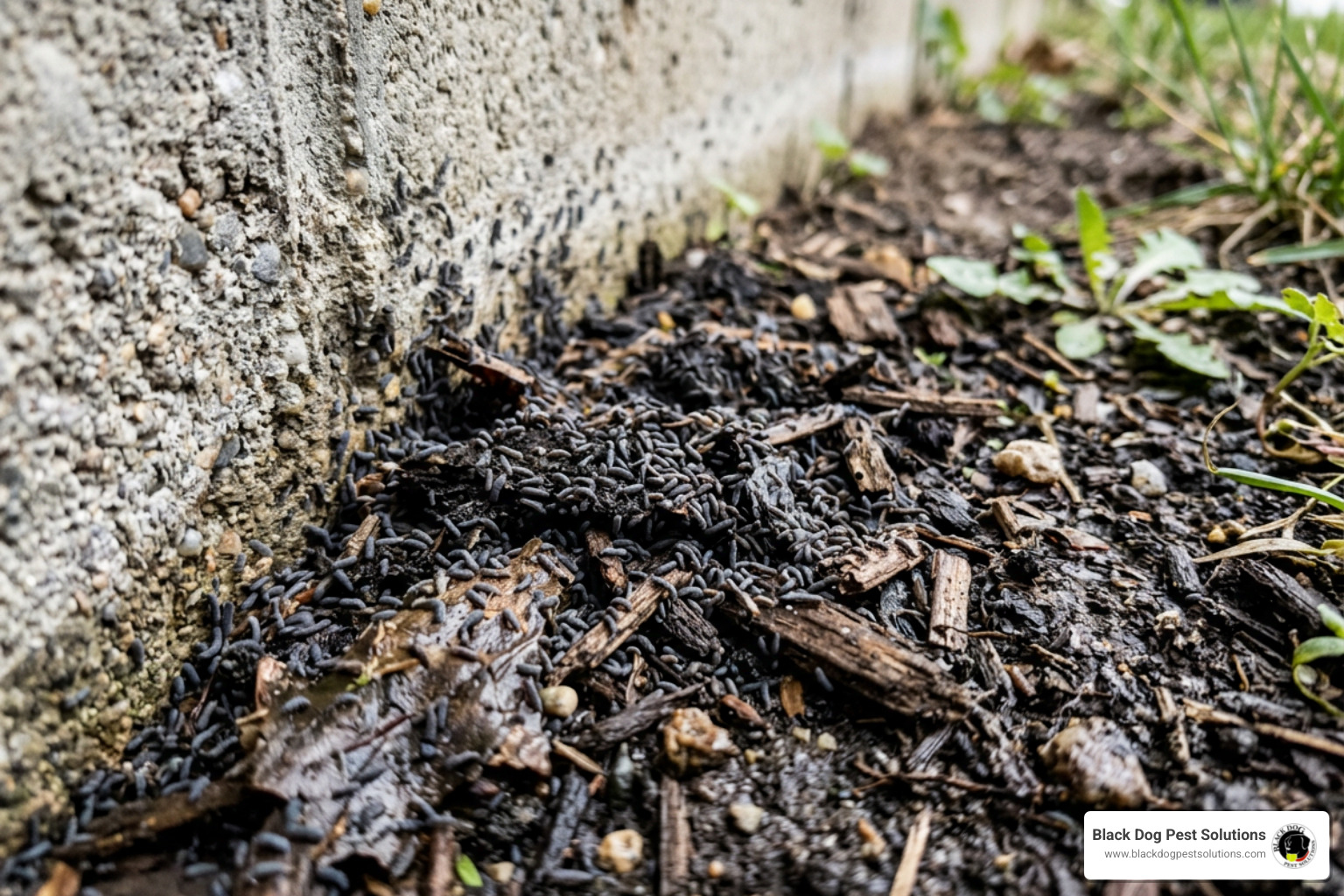
To effectively tackle a springtail infestation outside, we first need to understand what these tiny organisms are and why they congregate in such mind-boggling numbers.
Springtails belong to the class Collembola. While they look like insects, modern biologists often classify them as primitive, wingless hexapods. They are incredibly small, typically ranging from 1/32 to 1/8 of an inch in length, and vary in color from translucent white and gray to dark brown or black.
In the grand scheme of nature, springtails are actually the good guys. They are detritivores, meaning they feed on decaying organic matter, fungi, mold, algae, and bacteria. They play a vital role in recycling nutrients back into the soil. In fact, scientific studies featured in the Springtails | Ohioline fact sheet show that a single cubic foot of healthy forest litter or organic soil can harbor up to 50,000 springtails.
To learn more about their basic biology, check out our detailed guide on Springtails.
While their ecological role is beneficial, their population dynamics can quickly become a homeowner’s nightmare. Because they reproduce rapidly in warm, damp environments, their numbers can swell into the millions in a single backyard. When their outdoor habitat becomes oversaturated by heavy rains or dries out completely during a hot summer stretch, they migrate en masse. This sudden mass movement is what leads to those alarming “swarms” on your siding, patio slabs, or around your pool.
What Are Springtails and Why Do They Swarm?
The most defining characteristic of the springtail is its jumping mechanism. Underneath their abdomen, they possess a specialized, forked structure called a furcula, which is held in place under tension by a tiny clasp called a tenaculum. When threatened, the springtail releases this mechanism, catapulting itself several inches into the air to escape predators. This rapid, hopping movement is why homeowners frequently mistake them for fleas.
As detritivores, springtails are constantly seeking food sources like mold spores, algae, and decaying plant material. They do not have chewing mouthparts; instead, they suck up liquid nutrients from decaying matter.
According to research in the Springtails | NC State Extension Publications , springtails swarm when their microhabitat experiences a drastic change. If the soil becomes flooded, they climb upward to avoid drowning, coating home foundations, crawlspace vents, and utility pipes. Conversely, if their environment dries out, they seek out any remaining moisture gradients, which often lead directly to the damp gaps around your home’s foundation.
Environmental Triggers for a Springtail Infestation Outside
Several environmental factors can trigger a massive springtail infestation outside your home:
- Heavy Rains and Flooding: Excessive precipitation fills the tiny air pores in the soil, forcing springtails to flee upward to dry land—which often ends up being your concrete porch, pool deck, or home siding.
- Summer Droughts: When the topsoil dries out, springtails migrate toward shaded, damp areas. Your heavily irrigated flower beds, thick layers of mulch, and the shaded perimeter of your foundation become prime real estate.
- Organic Matter and Mulch Decay: Thick layers of wood mulch hold moisture and support the growth of mold and fungi—the ultimate springtail buffet. As the mulch decays, it creates a highly humid environment where springtails can reproduce uninterrupted.
- New Construction Materials: Interestingly, springtails are sometimes “built” into new homes. Damp framing lumber, fresh plaster, and newly laid sod or topsoil can support surface mold growth, attracting springtails before the home is even fully finished.
For more information on how to identify these pests in your landscaping, see our guide on The Great Leap: Identifying Springtails in Potted Plants.
Primary Moisture Control and Landscaping Adjustments
If there is one golden rule of springtail management, it is focusing on prevention as the best long-term approach, with moisture control being the primary fix. Because springtails have a highly permeable cuticle and a specialized tube called a collophore used for water uptake, they are extremely sensitive to drying out. If you eliminate the excess moisture, you eliminate the springtails.
To make your home’s exterior inhospitable to these jumping pests, we must adjust the landscaping directly adjacent to your foundation. Thick wood mulch and dense ground cover act like a sponge, locking in moisture and creating a perfect breeding ground. By replacing these damp zones with dry, inorganic materials, you create a natural barrier that springtails struggle to cross.
| Feature | Organic Wood Mulch | Gravel or River Rock Border |
|---|---|---|
| Moisture Retention | High (creates a damp microclimate) | Low (drains rapidly and dries quickly) |
| Food Source | High (supports decaying fungus, mold, algae) | None (inorganic material) |
| Airflow | Poor (compacts and traps humid air) | Excellent (allows soil beneath to breathe) |
| Springtail Attraction | Very High | Extremely Low |
Creating a Dry Buffer Zone Around Your Foundation
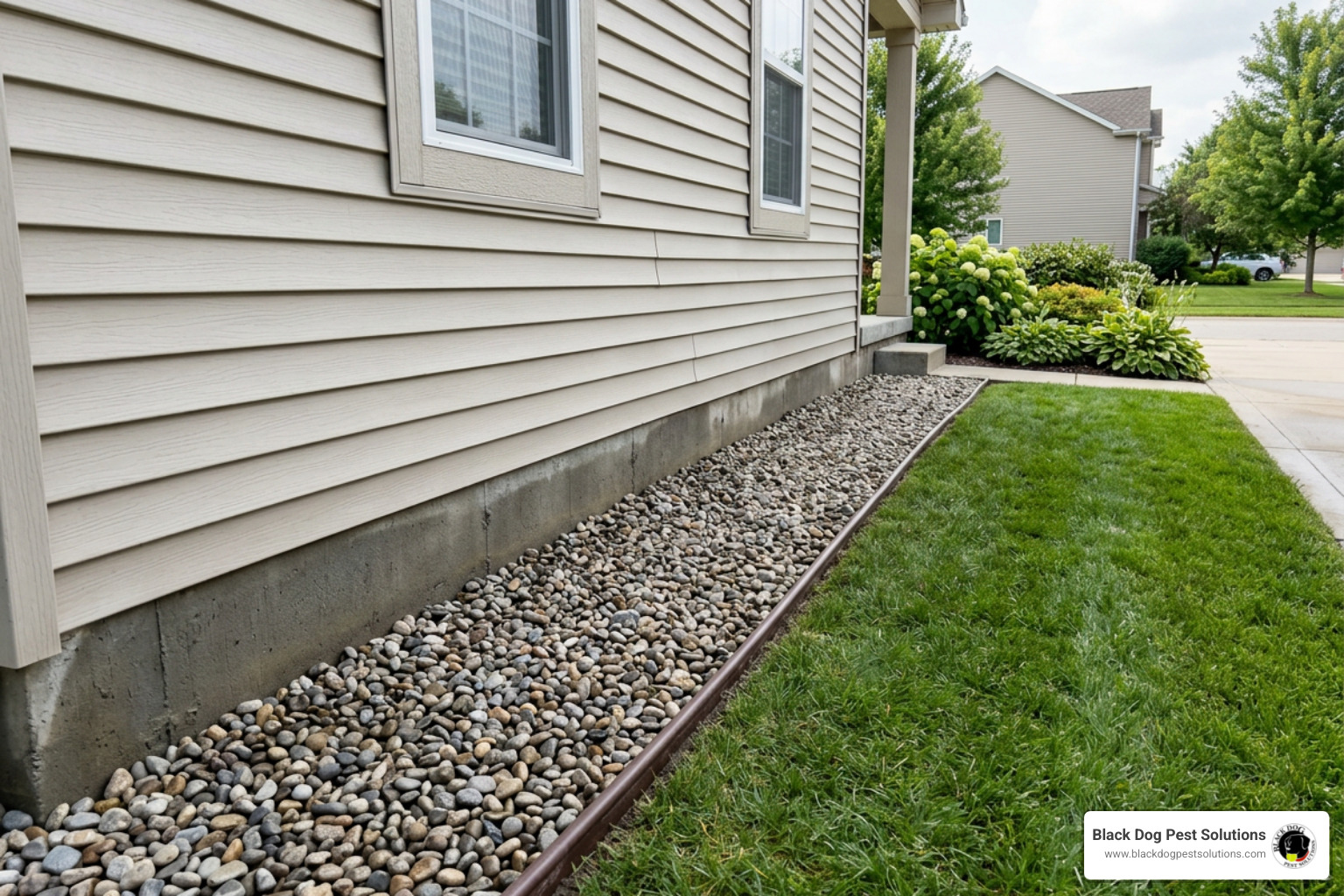
The most effective non-chemical method to prevent a springtail infestation outside from reaching your home is to establish a 12-to-18-inch dry buffer zone.
- Rake Back the Mulch: Physically remove all organic wood mulch, leaf litter, and decaying plant debris at least 12 to 18 inches away from your home’s foundation walls.
- Install a Gravel or Rock Barrier: Fill this cleared strip with coarse gravel, river rock, or crushed concrete. These materials drain incredibly fast and do not support the growth of mold or fungi.
- Clear Leaf Litter and Debris: Regularly vacuum or rake out any fallen leaves or organic debris that gets trapped between the rocks. A shop vac works wonders for keeping these stone borders clean.
- Improve Airflow Under Decks: If you have a low-clearance deck or patio, ensure there is adequate ventilation and airflow underneath to prevent damp, stagnant air from building up.
Implementing these structural changes helps keep the perimeter of your home dry, creating a barrier that springtails will avoid. For a deeper dive into managing these stubborn populations, take a look at our article on How To Eliminate a Springtail Infestation Without Losing Your Mind.
Managing Irrigation and Drainage to Prevent a Springtail Infestation Outside
Your home’s watering habits and drainage systems play a massive role in attracting or deterring springtails. If your gutters dump water directly at the base of your home or your sprinklers run daily, you are essentially throwing an open-ended pool party for these pests.
- Extend Your Downspouts: Ensure all gutter downspouts discharge water at least 6 to 10 feet away from your home’s foundation.
- Adjust Irrigation Systems: Avoid daily shallow watering. Instead, transition to deep, infrequent irrigation (such as watering deeply once a week). This allows the top layer of soil to dry out completely, which naturally suppresses springtail populations.
- Fix Hose Bib and AC Leaks: Check outdoor spigots, hose connections, and air conditioning condensate lines. Even a minor drip can keep the surrounding soil perpetually damp, creating a highly localized springtail hotspot.
- Aerate the Soil: Compacted soil holds water on the surface. Aerating your lawn and garden beds improves drainage, allowing water to sink deeper into the ground rather than pooling at the surface.
According to expert advice found on Springtail Insect Control – Ask Extension , managing these moisture gradients is far more effective than relying on heavy chemical applications, which only provide temporary relief if the damp conditions remain.
Exclusion Tactics: Keeping Springtails Out of Your Home
Once you have reduced the outdoor population, the next step is to make sure they cannot crawl inside. Because springtails are so tiny, they can slip through incredibly small gaps—often about 1/4 inch or smaller.
To keep your home secure, focus on these key exclusion steps:
- Seal Foundation Cracks: Inspect your foundation walls and use a high-quality outdoor caulk or expanding foam to seal any visible cracks or voids.
- Install Tight Door Sweeps: Check the seals on all exterior doors. If you can see light under your doors, springtails can easily hop right in. Install heavy-duty, flexible door sweeps.
- Apply Weatherstripping: Seal the gaps around windows and basement doors using foam weatherproofing strips.
- Repair Window Screens: Inspect your window and door screens for tiny tears or gaps along the frames. Springtails are attracted to indoor lights at night and will crawl right through damaged screens.
- Seal Utility Penetrations: Use outdoor sealant, silicone caulk, or steel wool to close gaps where plumbing pipes, electrical wires, and HVAC lines enter your home. Metal materials are highly recommended because they are more resistant to chewing by other pests.
If you find that springtails have already made their way into your living spaces, don’t panic. You can find practical, step-by-step removal tips in our guide, Stop the Indoor Hop with These Springtail Removal Tips.
When dealing with persistent indoor migrations, partnering with professional pest control companies in Avon can save you a lot of time and frustration. A professional eye can spot hidden entry points that are easily missed during a standard DIY inspection.
Managing Springtails in Swimming Pools and Indoors
It is incredibly common for homeowners to find millions of springtails floating on the surface of their swimming pools, especially after a heavy summer rain. Because they are so light, they do not sink; instead, they coat the water’s surface like a thick layer of soot or scum.
While this is highly annoying, it is important to remember that springtails are completely harmless. They do not bite, they do not sting, and they do not carry pathogens that can contaminate your pool water.
- Pool Skimmers and Filters: Use your pool’s standard filtration system and run a manual fine-mesh skimmer net across the surface to clear them out.
- Reduce Vegetation Around the Pool: Limit the amount of lush landscaping, ground cover, and organic mulch immediately surrounding your pool deck. Keeping this area dry and open to sunlight will naturally reduce the number of springtails that fall into the water.
- Indoor Vacuuming: If springtails make it into your kitchen, bathroom, or basement, do not spray them with harsh chemical aerosols. Instead, simply vacuum them up using a shop vac or a standard vacuum cleaner with a HEPA filter. Once finished, empty the canister or bag outdoors.
- Address Indoor Moisture: If you continue to see springtails indoors, it is a clear indicator of a localized moisture issue, such as a leaking pipe, high humidity, or damp drywall. Using fans and dehumidifiers to dry out these spaces will quickly eliminate them.
For specialized tips on dealing with springtails in the dampest areas of your home, check out our resource on How to Get Rid of Springtails in Your Bathroom.
If the problem persists despite your best efforts, reaching out to experienced pest control companies in Avon can help you identify and resolve the underlying moisture source.
When to Call Professionals for Chemical and Integrated Pest Management
While DIY moisture management and exclusion are the cornerstones of springtail control, there are times when a severe, recurring springtail infestation requires professional intervention.
At Black Dog Pest Solutions, we utilize an Integrated Pest Management (IPM) approach. This means we prioritize non-chemical strategies first—such as inspecting for dampness, sealing entry points, and advising on landscaping changes—before applying targeted chemical treatments as a supportive, secondary measure.
If chemical barrier treatments are necessary, we apply them strategically around your home’s foundation, basement window wells, and under siding edges. However, applying these products correctly requires specialized equipment and training.
It is also important to note that Ohio requires a pesticide business license for anyone applying pesticides for hire. This law ensures that any treatments applied to your property are handled safely, legally, and in a way that minimizes environmental risks, such as pesticide runoff into local storm drains.
When searching for reliable pest control companies in Avon, always ensure the technicians are fully licensed, BBB accredited, and highly rated. Our family-owned team at Black Dog Pest Solutions has been serving communities across Northern Ohio, including Avon, Westlake, North Ridgeville, and Cleveland, since 2005. We maintain an outstanding 4.9/5-star Google rating by delivering honest, professional, and effective pest management.
For comprehensive management guidelines on how professionals handle these delicate infestations, you can review the UC IPM springtail management guidelines.
Frequently Asked Questions About Outdoor Springtails
Do springtails bite humans or pets?
No, springtails do not bite humans or pets. They do not possess stings, they do not spread diseases, and they do not cause structural damage to your home or furniture. They are purely a nuisance pest due to their sheer numbers and jumping behavior.
Why do springtails suddenly appear in massive numbers?
Springtail populations rise and fall based on temperature, moisture, and food availability. Sudden swarms are typically triggered by extreme weather events—such as heavy winter or summer rains that saturate the soil, or severe droughts that dry out their natural habitats and force them to seek moisture gradients near your home. You can read more about this seasonal behavior in the Winter Rains and Springtails; Winter turf newsletter.
Can I get rid of springtails using only DIY chemical sprays?
No. Relying solely on DIY chemical sprays is rarely effective for long-term springtail control. Some springtail populations have shown resistance to common over-the-counter insecticides (such as bifenthrin or cyfluthrin). Furthermore, if the underlying moisture and decaying organic matter are not addressed, new generations of springtails will quickly repopulate the area. Chemical treatments should always be treated as a secondary tool paired with moisture control and exclusion.
Conclusion
A springtail infestation outside your home can be incredibly frustrating, but it is a problem that can be solved with a systematic, moisture-focused approach. By pulling back organic mulch, improving your yard’s drainage, trimming dense vegetation, and sealing up structural gaps, you can successfully protect your home from these jumping invaders.
If you have tried adjusting your landscaping and moisture levels but find that springtails are still taking over your yard, pool, or home, we are here to help. At Black Dog Pest Solutions, we provide reliable, professional pest control services throughout Avon and the Greater Cleveland area. We will inspect your property, identify the hidden moisture sources, and implement a custom, long-term IPM plan to keep your home comfortable and pest-free.
To take the first step toward reclaiming your outdoor space, Schedule professional pest control services with us today!