
Finding a wasp indoors in winter or late fall can be unsettling, especially after the nests outside have gone quiet. In most cases, it comes down to how wasp colonies end their year. Here’s what’s happening, what an old nest means and when it makes sense to call about wasps.

Why wasps end up inside in late fall
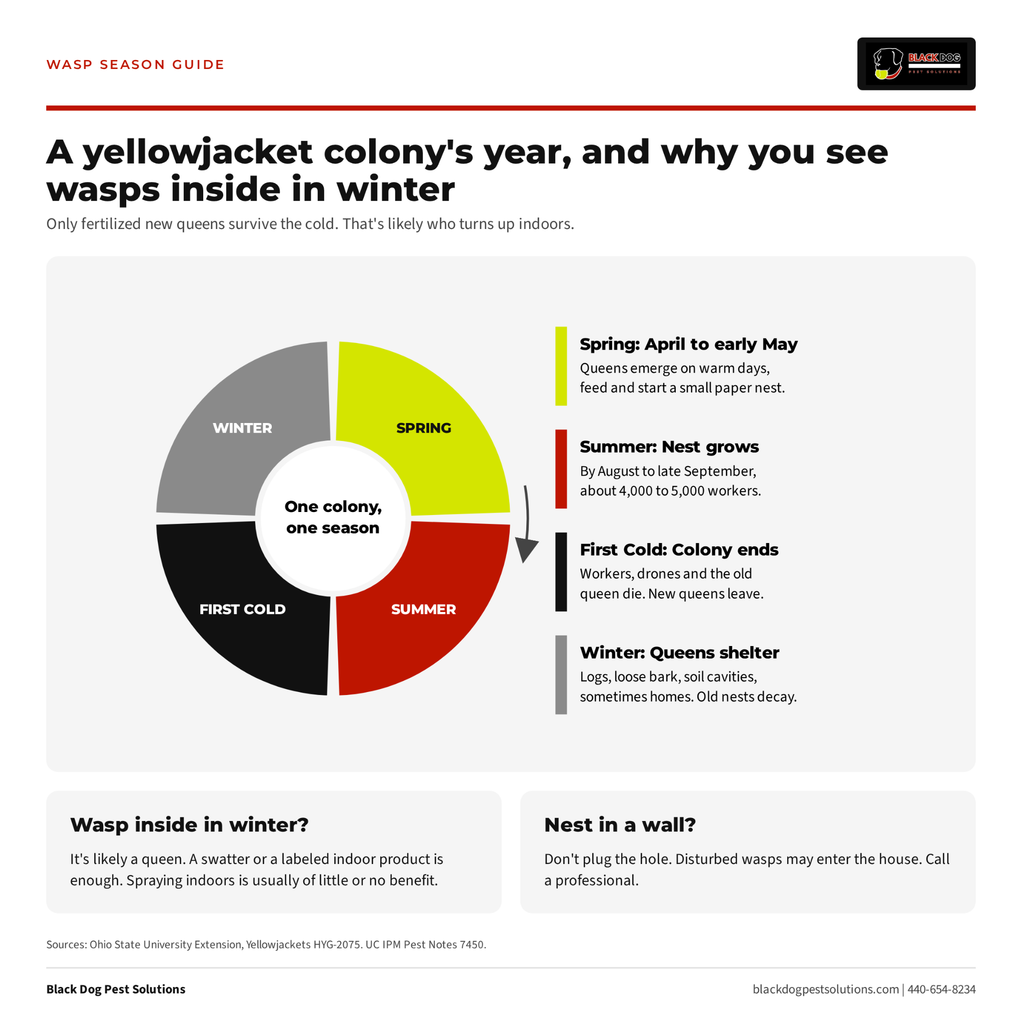
Yellowjacket colonies only last one season. Ohio State University Extension says that the workers, drones and old queen die at the onset of cold temperatures, while fertilized new queens look for protected places to spend the winter.
Most of those queens shelter outdoors in hollow logs, under loose bark of dead trees and in soil cavities. The same fact sheet notes that queens are sometimes found overwintering in homes. Since workers and males die off when it gets cold, a single wasp you find indoors after a hard freeze is likely a queen.
Paper wasps follow a similar pattern. The University of California Statewide IPM Program says yellowjacket and paper wasp colonies normally live only one season, and mated queens overwinter and start new nests in spring.
Your house can also play a part, since yellowjackets may build nests in attic and wall voids, and the German yellowjacket, now the most common species in Ohio, frequently nests in the walls of buildings, according to Ohio State. Wasps from a wall nest can find their way inside.
What a wasp or nest in winter usually means
What you find tells you a lot about what’s going on. Use this table to sort it out.
| What you find | What it likely means | What to do |
| One wasp on a window or wall | Queens sometimes overwinter in homes. Workers die off in the cold. | Remove it with a swatter or a labeled indoor product. |
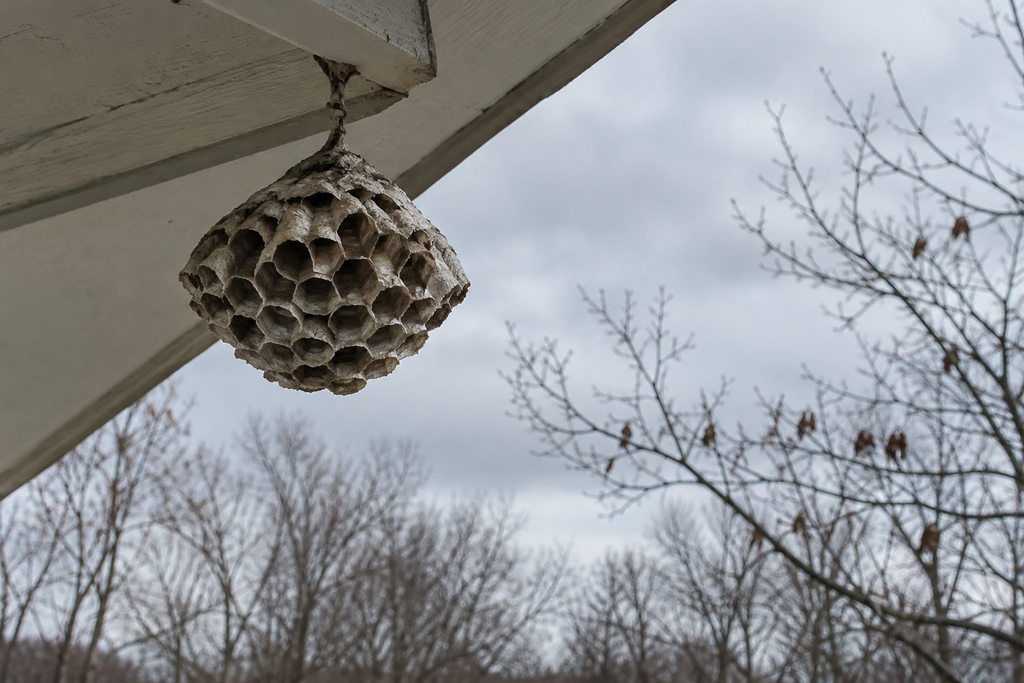
| An old paper nest under the eaves | Abandoned nests usually break down over winter. Another queen occasionally reuses one. | A paper wasp nest shouldn’t need treatment unless it’s near people. |
| Many wasps inside or near a wall in late fall | A nest may be in a wall void. German yellowjackets often nest in walls. | Don’t plug the hole. Call a professional. |
Sources: Ohio State University Extension, Yellowjackets HYG-2075. UC IPM, Yellowjackets and Other Social Wasps.
The wall void row matters most. You shouldn’t plug the entrance of a wall nest, because disturbed wasps may enter the house, the fact sheet warns. They may come in even when the entrance is left open, so keep people away from the area.
What to do about wasps in your house in winter
A lone wasp inside in December isn’t a reason to spray the house. For queens found overwintering indoors, Ohio State says you can use a fly swatter or a contact spray or aerosol labeled for indoor use. The same fact sheet says that spraying indoors is usually of little or no benefit.
Stings are still possible, so handle a wasp with care. Yellowjackets sting mainly to protect the nest, but they’ll also sting when threatened or trapped, and they can sting more than once, according to Ohio State. If you’ve had an allergic reaction to a sting before, or you have trouble breathing or swallowing after a sting, get emergency medical care right away.
Old nests outside can usually wait. Abandoned yellowjacket nests typically decompose during the winter, and paper wasp nests shouldn’t need treatment unless they’re near people, according to UC IPM. Nests are seasonal, so a gray paper nest you spot after the leaves drop is most likely empty.
When to call about wasps in spring
Spring is when the next round starts, when overwintering queens emerge during the warm days of April and early May to feed, pick a nest site and build a small paper nest, per Ohio State. By August and late September, a nest can reach about 4,000 to 5,000 workers.
That’s why a nest near a door, deck or play area is easier to handle when it’s found early. Ohio State also recommends hiring a professional to kill and remove wasp nests. Our bees, wasps and hornets service covers homes and businesses, and when we treat a nest, we also check nearby areas for additional nests or activity. You can learn more about other stinging insects on our stinging bugs page.
If wasps aren’t the only thing turning up indoors this time of year, our post on overwintering pests covers stink bugs, boxelder bugs and lady beetles.
What to do if you keep finding wasps
If you keep finding wasps in your house in winter or think a nest is in a wall, we can help you find where they’re coming from. Planning ahead for spring can help protect your family from stings. Call Black Dog Pest Solutions at 440-654-8234 or contact us online to schedule a visit.
Frequently asked questions
Do wasps die in the winter?
Yellowjacket workers, drones and the old queen die when cold weather arrives. Fertilized new queens survive by sheltering in protected places until spring.
Why is there a wasp in my house in winter?
It’s likely a queen looking for a protected place to spend the winter. Queens are sometimes found overwintering in homes, according to Ohio State University Extension.
Will wasps reuse last year’s nest?
Abandoned yellowjacket nests usually break down during the winter. Another queen occasionally reuses one.
When do wasp queens come out in spring?
Overwintering yellowjacket queens emerge during the warm days of April and early May, according to Ohio State.
Can you get rid of bees, wasps or yellow jackets around my property?
Yes, Black Dog Pest Solutions offers services for bees, wasps and hornets at homes and businesses. We discuss the activity you’re seeing and explain the recommended approach before work begins, so you know what to expect. Call us at 440-654-8234 or request service online to discuss your situation.