
Christmas tree bugs are a common worry for families who bring home a real tree, but most trees won’t carry any. Penn State Extension says most real Christmas trees are free of insects and other arthropods, though some trees may carry one or more species. If you’re picking out a tree in Avon, Westlake or Bay Village this month, here’s what might come along for the ride and how to handle it without a spray can.
Why bugs show up on a real tree
A real Christmas tree grew outside, so it can carry the same overwintering insects as any other evergreen. According to Penn State Extension, some of those arthropods stay on the tree after it comes indoors and wake up in the warm house. Depending on the species, they may stay put on the branches or wander toward windows during the day and lamps at night.
Most of them spend the winter as eggs or adults. That’s why you might not see anything for the first week or two, and then notice tiny crawlers or a few small insects near the tree.
The reassuring part comes straight from the same fact sheet. These insects live on outdoor conifers. For that reason, none of the species that might come into a home on a real Christmas tree are dangerous to the home, its contents or the people living there.
Common Christmas tree bugs and what they do
You won’t find all of these on one tree, and the fact sheet points out that most trees have none of them. Here’s what each group looks like if one does turn up.
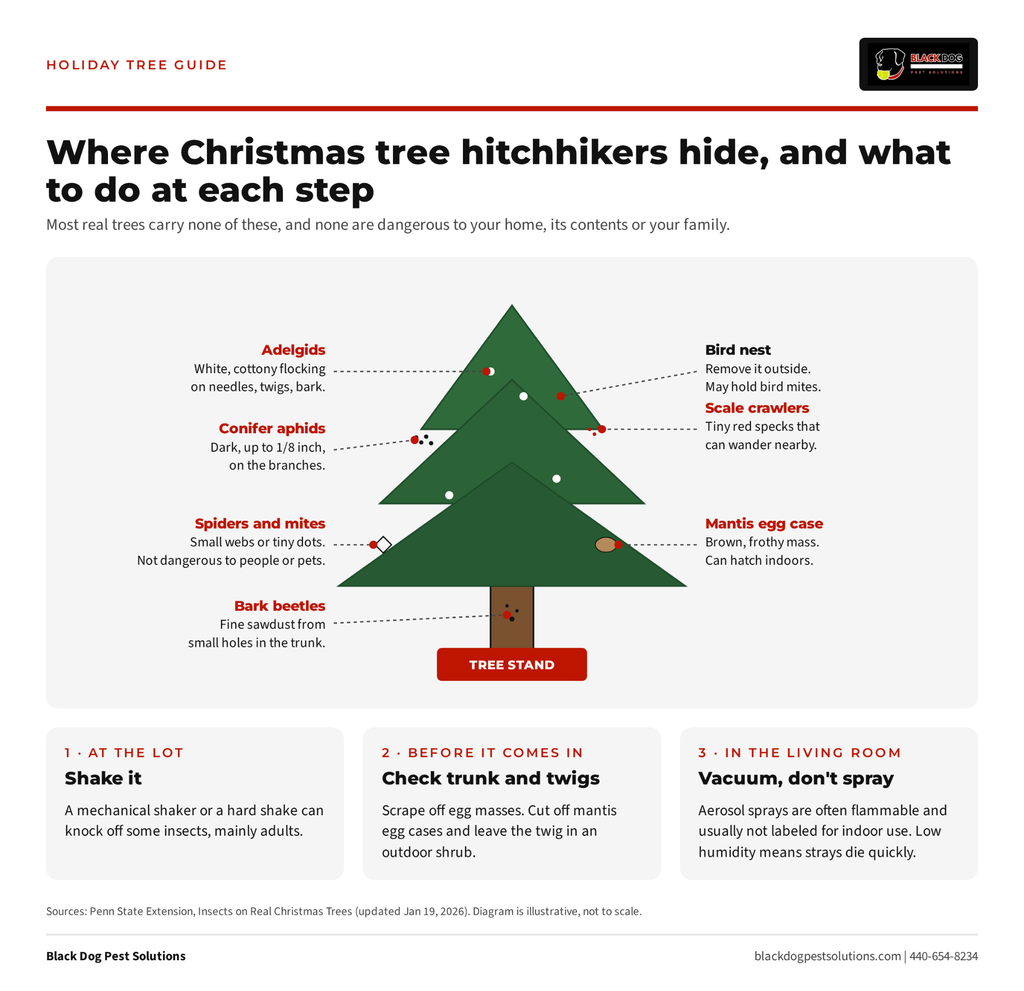
| Hitchhiker | What you might notice | Risk to your home |
| Adelgids | White, cottony flocking on needles, twigs or bark. | They don’t leave the tree. The flocking is harmless. |
| Conifer aphids | Dark insects up to 1/8 inch long on the branches. | They only feed on conifers. Houseplants are safe. |
| Bark beetles | Fine sawdust pushed out of small holes. | House wood is too dry for them to use. |
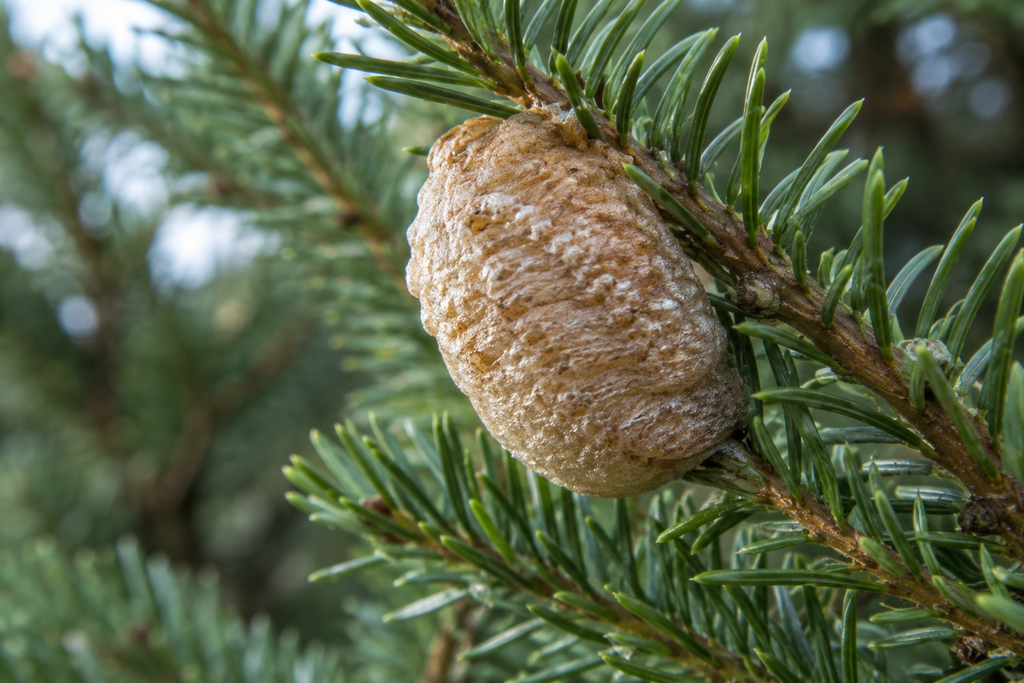
| Mantis egg cases | A brown, frothy egg mass on a twig. | They can hatch indoors after several weeks. |
| Scale crawlers | Tiny red specks moving on the tree or nearby walls. | Wipe them up with a damp towel. |
| Spiders and mites | Small webs or tiny moving dots. | Penn State says they aren’t dangerous to people or pets. |
Source: Penn State Extension, Insects on Real Christmas Trees.
Bark lice, also called psocids, can show up too. Despite the name, they don’t bite and can’t feed on people, according to Penn State. Like most tree hitchhikers, they need high humidity, so they die quickly in a heated home.
How to check your tree before it comes inside
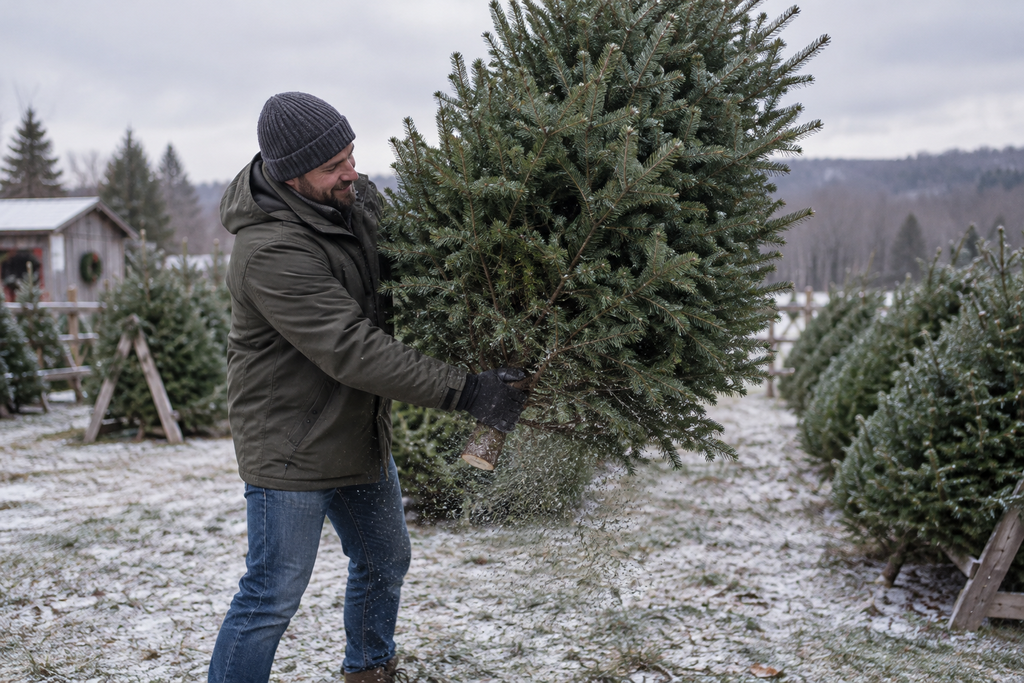
A few minutes outside can save you from a surprise in your living room. Ask the tree lot if they have a mechanical shaker. Shaking works because using a tree shaker or shaking the tree hard can knock off some arthropods, mainly adults, per Penn State. It won’t remove everything, but it helps.
Once you’re home, give the trunk and inner branches a slow look before you carry the tree in. Insect egg masses, such as those laid by mantises and spotted lanternflies, can be scraped off the trunk or branches, the fact sheet says. It also recommends removing any bird nests you find, since they may hold bird mites.
Mantis egg cases deserve a closer look. For these, the best control is to look for and remove them before the tree comes indoors, according to Penn State. You can cut off the twig and leave it in an outdoor shrub, where the eggs will hatch at the right time in spring. If one hatches inside, you could end up with dozens of tiny mantises in the living room.
Spotted lanternfly egg masses matter for another reason. Ohio has been under a statewide spotted lanternfly quarantine since February 2026, which we covered in our post on the Ohio spotted lanternfly quarantine. An egg mass on a Christmas tree is unlikely, the fact sheet says, but it’s worth scraping off any you find.
Why you shouldn’t spray your Christmas tree
Reaching for a can of bug spray is a natural reaction, but it’s the wrong move here. Penn State Extension says aerosol insect sprays are often flammable, usually not labeled for indoor use and should not be sprayed on a Christmas tree. If insects come in on a tree, the fact sheet says to stick with non-chemical control.
So what should you do instead? Leave insects on the tree alone until the tree goes out. Use a vacuum for any that gather on ceilings, walls or windows. Low indoor humidity and a lack of food mean these insects usually die within a short time, the extension notes.
Spiders are a good example. The ones that come in on a tree aren’t indoor species and won’t survive long in your house, according to Penn State. If they spin small webs on a wall or a shelf, a vacuum or dusting brush takes care of them.
When it’s more than a tree problem
Tree hitchhikers should fade once the tree is gone. If you’re still finding insects in January, or you see spiders, beetles or other pests in rooms far from where the tree stood, something else may be going on in the house. That’s a good time to have someone take a look.
Our residential services cover homes across Northern Ohio, and our spider control page describes our spider service for homes. If lady beetles or stink bugs are turning up on warm winter days, our post on overwintering pests explains where they hide.
Christmas tree bugs usually fade on their own, but pests that stick around after the holidays deserve a closer look. We can help you find what’s going on and protect your home through the winter. Call Black Dog Pest Solutions at 440-654-8234 or contact us online to schedule a visit.
Frequently asked questions
Are bugs on a Christmas tree dangerous?
No. Penn State Extension says none of the species that might come into a home on a real Christmas tree are dangerous to the home, its contents or the people living there.
Should I spray my Christmas tree for bugs?
No. Aerosol insect sprays are often flammable and usually aren’t labeled for indoor use, so Penn State says not to spray them on a Christmas tree. Vacuum any strays instead.
How do I get bugs out of my Christmas tree?
Have the lot run it through a mechanical shaker or shake it hard outside. Then check the trunk and branches for egg masses and bird nests before you bring it in.
What are the white fuzzy spots on my Christmas tree?
White, cottony flocking is likely adelgids. These tiny insects stay on the tree, and Penn State says both the insects and the flocking are harmless.
Will bugs from my Christmas tree infest my house?
It’s unlikely. Most tree hitchhikers need outdoor conditions, so low indoor humidity and a lack of food mean they usually die within a short time.