
Is pest control safe for pets and kids? The answer depends on the product, its label and how closely everyone follows the directions. According to the EPA, many common household products such as cleaners and pesticides could hurt a pet if they aren’t used and stored correctly. With the right prep and a few good questions, you can plan a treatment around the people and animals in your home.
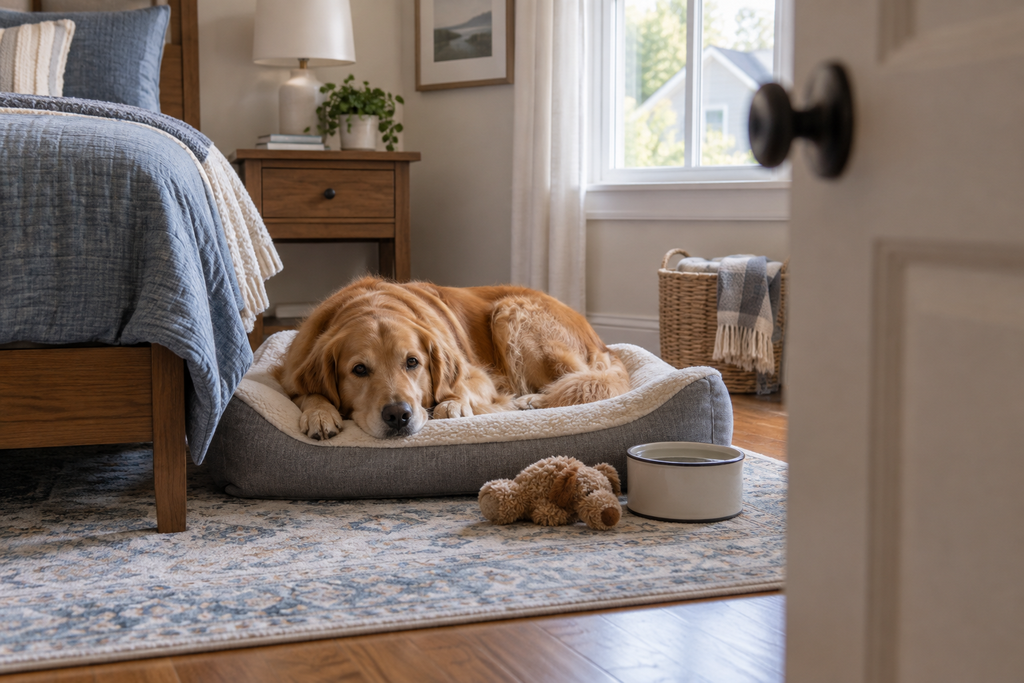
Is pest control safe for pets? Start with the label
Every pesticide product comes with a label, and that label carries the safety rules for your home. EPA guidance is to read the label first before you buy, store or use household cleaners or pesticide products, and to keep all products out of the reach of pets and children.
According to the EPA, a label tells you how to use the product safely, how to store it, what first aid to give and what number to call for help. It also tells you when people and animals can go back into a treated room. Its advice is to keep pets and children away from treated areas as directed on the label.
That’s why there isn’t one waiting time that fits every treatment. For sprays, the EPA’s guide to choosing a pest control company says not to let children or pets into treated areas until the spray has dried. A university-run information service, the National Pesticide Information Center (NPIC), adds that the area should also be well ventilated, and the label may have more specific instructions.
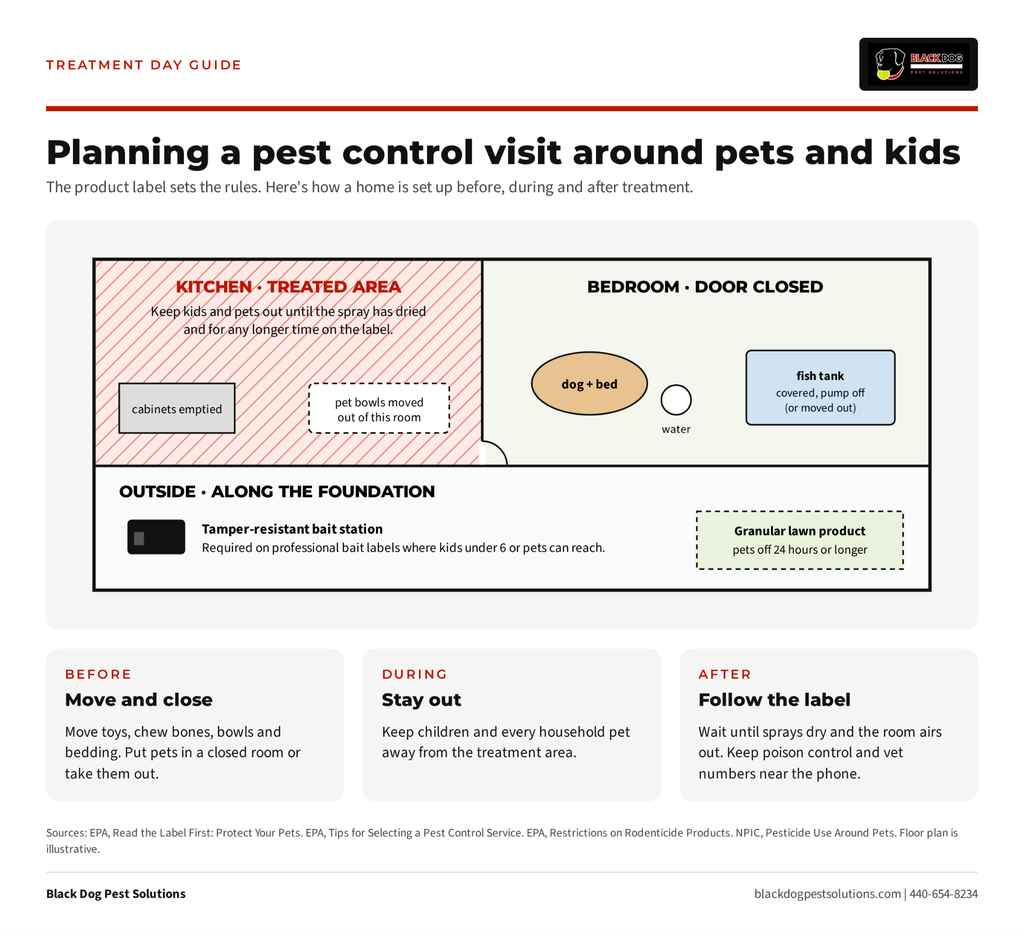
How to get your home ready for a treatment visit
Most of the work happens before the technician arrives. If your service provider asks you to move items off the floor, empty kitchen cabinets or remove pets, you should do it before they get there, the EPA says. Here’s how the main precautions line up by product type.
| Situation | What to do | Source |
| Spray treatment indoors | Keep kids and pets out until the spray has dried. Follow any longer time on the label. | EPA |
| Pet bowls, toys and bedding | Move them out of the area before treatment starts. | NPIC |
| Fish tanks | Cover the tank with heavy plastic and turn off the air pump. Or move it out of the room. | EPA |
| Granular lawn products | Pets may need to stay off the lawn for 24 hours or longer. Check the label. | NPIC |
| Rodent or slug baits | Place baits where pets can’t reach them. | NPIC |
Sources: EPA, Tips for Selecting a Pest Control Service. NPIC, Pesticide Use Around Pets.
Ask your provider whether pets can stay in an untreated room or need to leave the home, and follow the product label and treatment-specific instructions. Remember small pets too, since the EPA says to remove all other household pets from the treatment area. The EPA also says not to spray or store pesticides near pet food or water dishes.
How baits are placed around pets and children
If you’re dealing with mice this winter in Avon Lake or Westlake, rodent baits need extra care in a home with pets. NPIC explains that pesticide baits are often made with food ingredients that can attract pets. Pets often dig up baits that were buried, and they can also be poisoned by eating poisoned prey.
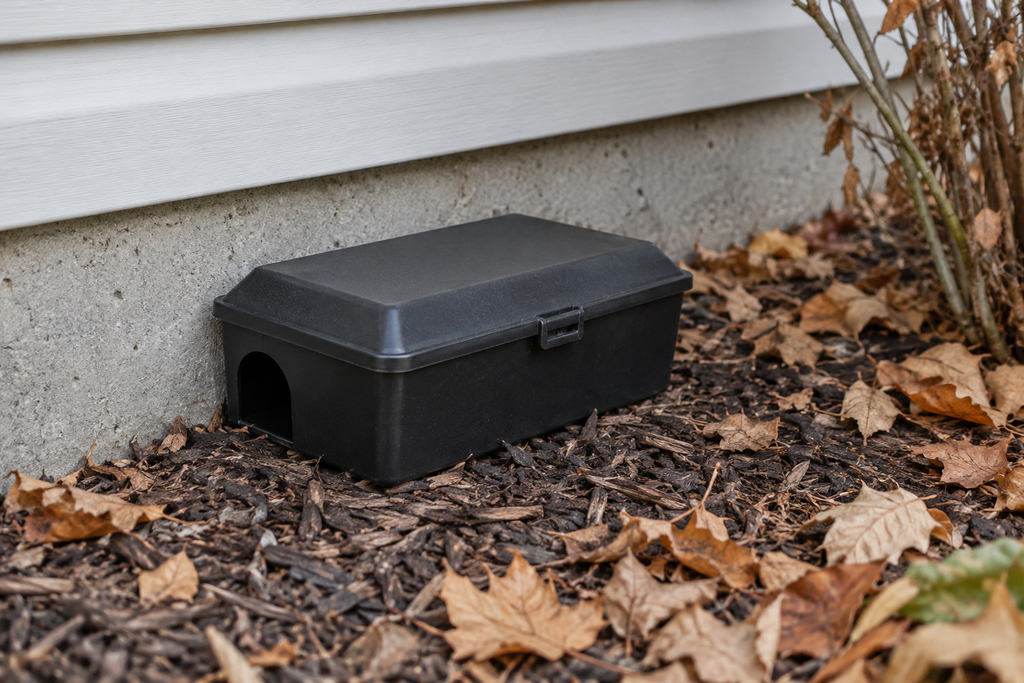
Federal rules address this for professional products. The EPA says labels for professional rodent bait products require tamper-resistant bait stations wherever bait goes in a spot that children under six, pets or nontarget wildlife can reach. They also require them for all outdoor, above-ground placements.
Pesticides don’t have to be the first step, either. The EPA’s guidance is that pesticides should not be applied unless the pests are actually present and other methods can’t control them. A service plan should include periodic inspections, the EPA adds.
If a pet or child gets into a product
Plan for this before you need it. Keep your local poison control center’s number and your veterinarian’s number near the phone, as the EPA recommends. Have the product label with you when you call, because it gives the people helping you important details about the product.
What to ask before your pest control appointment
You have every right to ask about the products used in your home. If you hire a pest control company, NPIC suggests you talk to them about the products they’re using and the possible risk to your pets. Reliable applicators will be able to give you copies of the labels for the products they apply, according to the EPA.
Here are a few questions worth asking when you book:
- Which products do you plan to use, and where?
- How long should pets and kids stay out of each treated area?
- Will you use baits, and where will they go?
- Is there anything I should do before you arrive?
When you call us, tell us about the children, pets and any sensitivities in your home before the visit. We’ll go over the proposed treatment and any precautions you’ll need before, during and after the appointment. You can read more about how we work with families on our residential services page, or see what a typical pest control visit looks like.
Is pest control safe for pets in your home? The best answer comes from a conversation about your pets, your family and the pests you’re seeing. We’ll walk you through the plan so you can protect your household with confidence. Call Black Dog Pest Solutions at 440-654-8234 or contact us online to schedule a visit.
Frequently asked questions
How long after pest control can pets go outside?
It depends on the product. For outdoor sprays, keep pets off the area until it has dried. Granular lawn products may need 24 hours or longer, so check the label.
How long should kids stay out of a room after pest control?
Keep children out until the spray has dried, and follow any longer time listed on the product label.
Are rodent bait stations safe around dogs?
Professional rodent bait labels require tamper-resistant bait stations in spots that pets or young children can reach. Bait should still go where your pets can’t get to it.
Is Black Dog Pest Solutions safe for pets and kids?
Contact Black Dog Pest Solutions before booking to discuss children, pets or sensitivities in your household. Ask about the proposed treatment and any precautions needed before, during and after the appointment. Call 440-654-8234 for treatment-specific information.
What should I do with my fish tank during pest control?
Cover the tank with heavy plastic and turn off the air pump, or move it out of the treatment area.