
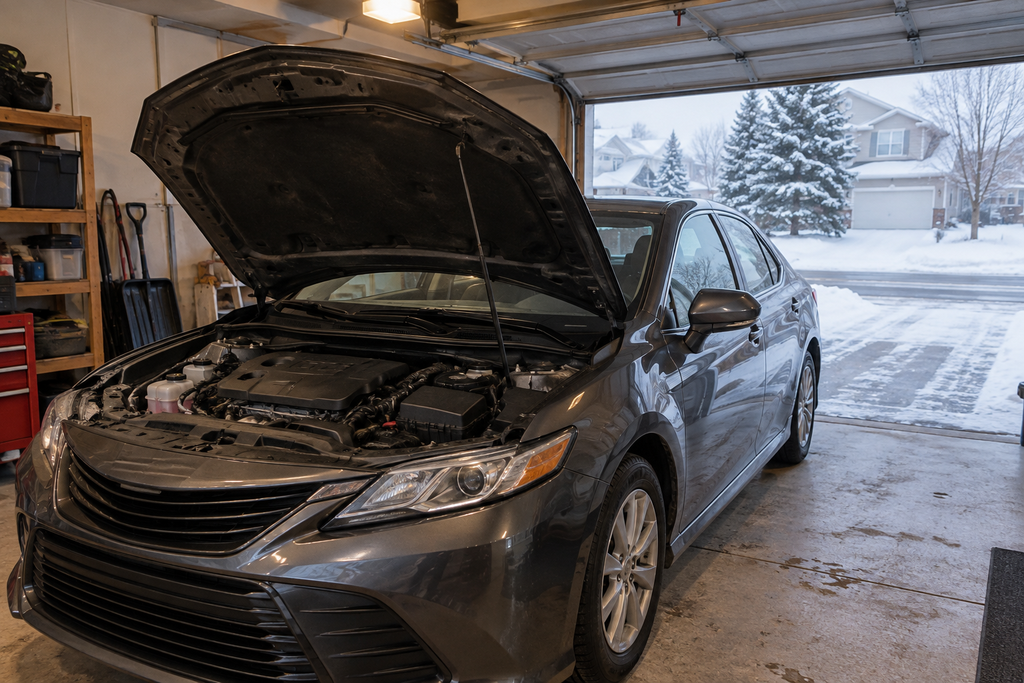
If you’re wondering how to keep mice out of your car, start before the coldest weeks arrive. According to the CDC, rodents may build nests in cars, trucks, campers and other vehicles, especially ones that aren’t driven often. A car that sits in an Avon or Avon Lake garage for days at a time can look like a warm, quiet place to a mouse.
Why mice move into cars in late fall
House mice look for shelter as nights get colder. University of California IPM (Integrated Pest Management) says that where mice live outdoors, they frequently enter homes in autumn when nighttime temperatures become colder. A garage, and the car parked inside it, is often the first stop.
Around Lake Erie, that cooldown is well underway by late November. Here are the average first frost and freeze dates for Northern Ohio weather stations.
| Station | Average first frost (36°F) | Average first freeze (32°F) |
| Cleveland | October 14. | October 28. |
| Akron-Canton | October 8. | October 19. |
| Youngstown | October 1. | October 14. |
| Mansfield | October 2. | October 14. |
| Toledo | October 6. | October 17. |
Source: National Weather Service Cleveland, Frost/Freeze Information, based on 1991 to 2020 climate normals.
Mice in a car are more than a nuisance. UC IPM notes that house mice can damage structures and vehicles by gnawing on electrical wires and gas lines. They also leave urine, droppings and nesting material that need careful cleanup.
How to keep mice out of car cabins and engine bays
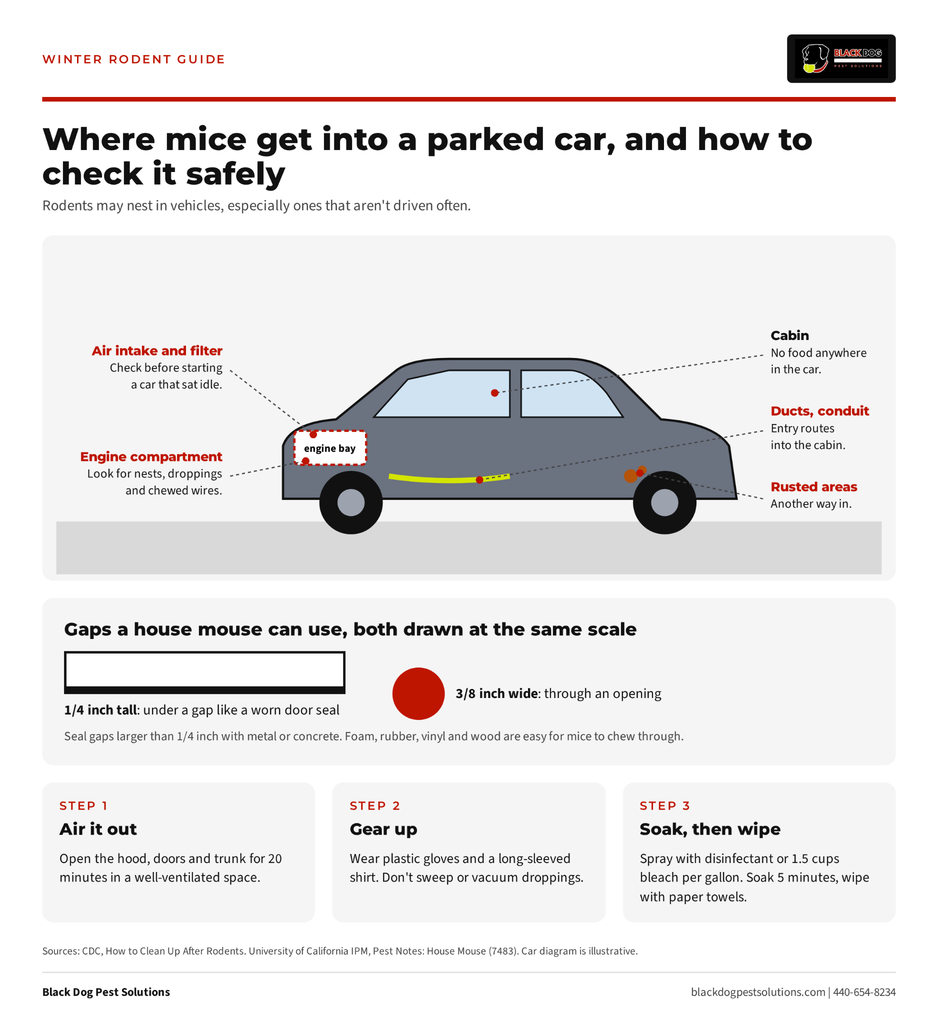
Food is the first thing to remove. Don’t leave any kind of food anywhere in the car, the CDC says, because it can attract rodents. That includes snack wrappers, crumbs in car seats and pet food or birdseed bags stored in the trunk.
Next, think about how mice get inside. Rodents can enter the passenger compartment through ducting, rusted areas and cable conduit, per the CDC. You can’t seal a car the way you’d seal a house, which is why the garage around it matters so much.
UC IPM says house mice can squeeze under gaps 1/4 inch tall and through openings 3/8 inch wide. A worn seal under a garage door or a gap around a utility line can be enough. To keep mice out, UC IPM recommends sealing gaps and openings larger than 1/4 inch, using metal or concrete around pipes, vents and cables, and making sure doors fit tightly.
What you seal with matters. Steel wool makes a good temporary plug but may rust over time, according to UC IPM. Plastic screening, rubber, vinyl, expanding foam and wood are easy for mice to chew through, so they don’t hold up in mouse-proofing. Our post on rodent proofing in Northern Ohio covers common entry points around the home.
Traps can help stop mice that are already getting in. The CDC says snap traps and poison baits are effective in stopping rodents from getting into vehicles. If you have pets or kids, read our guide on whether pest control is safe for pets before placing any bait.
What to do if you find signs of mice in your car
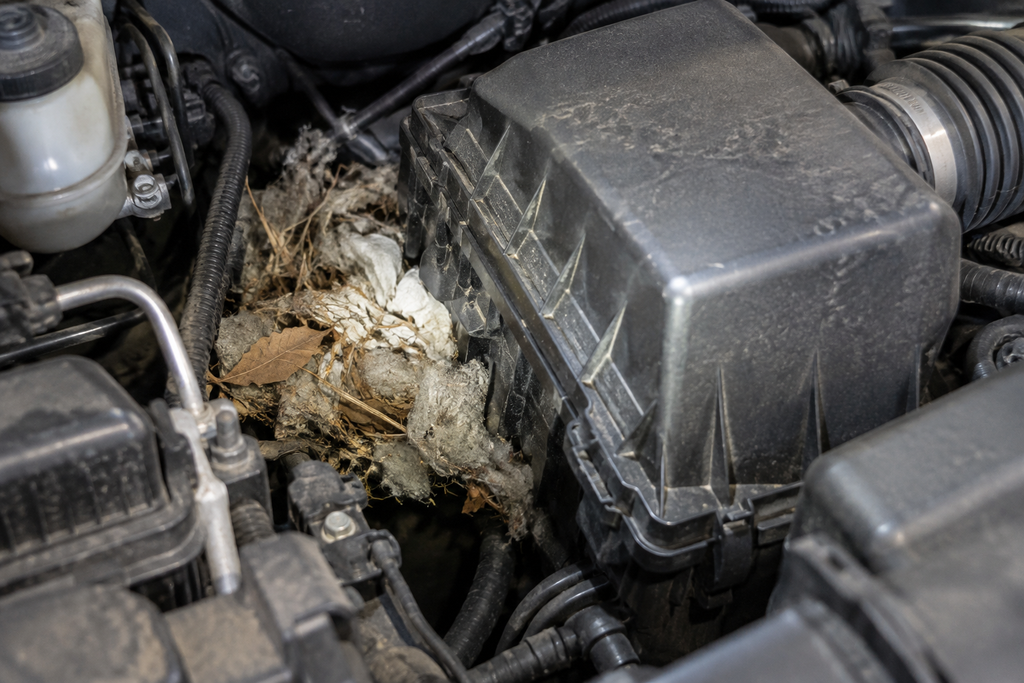
Shredded paper or insulation, droppings and chewed wires are common clues. Keep your hands and your vacuum off them until you’ve prepared.
Before inspecting the engine compartment, disconnect the battery cables or have a qualified automotive professional do it. Reconnect the battery only after the cleaned area is dry.
Do this check with the vehicle in a well-ventilated space, as the CDC suggests. Start by opening the hood, doors and trunk to let the interior and engine compartment air out for 20 minutes. If the vehicle has been sitting for a long time, the CDC also says to inspect the air intakes and filters before you start the engine. Wear plastic gloves and a long-sleeved shirt while you look.
Clean up droppings and nests safely
Don’t sweep or vacuum. The CDC says not to vacuum or sweep rodent urine, droppings or nesting materials, because it can put tiny droplets containing viruses into the air. Instead, the CDC says to:
- Spray the area with a disinfectant or a bleach solution until it’s very wet.
- Mix the bleach solution at 1.5 cups of household bleach to 1 gallon of water.
- Let it soak for 5 minutes, or as long as the disinfectant label says.
- Wipe it up with paper towels and throw them in a covered garbage can.
After removing the droppings and nesting materials, clean the rest of the area with additional disinfectant. Wash your gloved hands before removing the gloves, then wash your bare hands with soap and warm water.
Wires, hoses and air filters are a job for a mechanic. For vehicle help, the CDC recommends talking with a qualified mechanic or automotive professional, so don’t guess at damage under the hood.
When the problem starts in your garage or home
If you keep finding nests or droppings in the same vehicle, the mice are likely living nearby in the garage, a shed or the house itself.
That’s where we can help. Our rodent control service covers homes and businesses in Avon, Westlake, Bay Village and across Northern Ohio. We’ll look for where mice are getting in and talk through the options for your property. You can also learn more about mouse control on our site.
Knowing how to keep mice out of your car starts with finding where they live around it. We can help you protect your garage and home from mice this winter. Call Black Dog Pest Solutions at 440-654-8234 or contact us online to schedule a visit.
Frequently asked questions
What attracts mice to cars?
A parked car offers shelter, and food left inside can draw them in. The CDC says rodents may nest in vehicles, especially ones that are used infrequently.
How do mice get into a car?
The CDC says rodents can enter the passenger compartment through ducting, rusted areas and cable conduit.
When do mice start moving into cars in Northern Ohio?
University of California IPM says house mice often move indoors in autumn as nights get colder. In Cleveland, the average first freeze is October 28, according to the National Weather Service.
Should I vacuum mouse droppings in my car?
No. The CDC says not to vacuum or sweep rodent urine, droppings or nesting materials. Spray them with disinfectant, let it soak and wipe them up with paper towels.
Can mice damage car wiring?
Yes. University of California IPM says house mice can damage vehicles by gnawing on electrical wires and gas lines. Have a mechanic check for damage.