
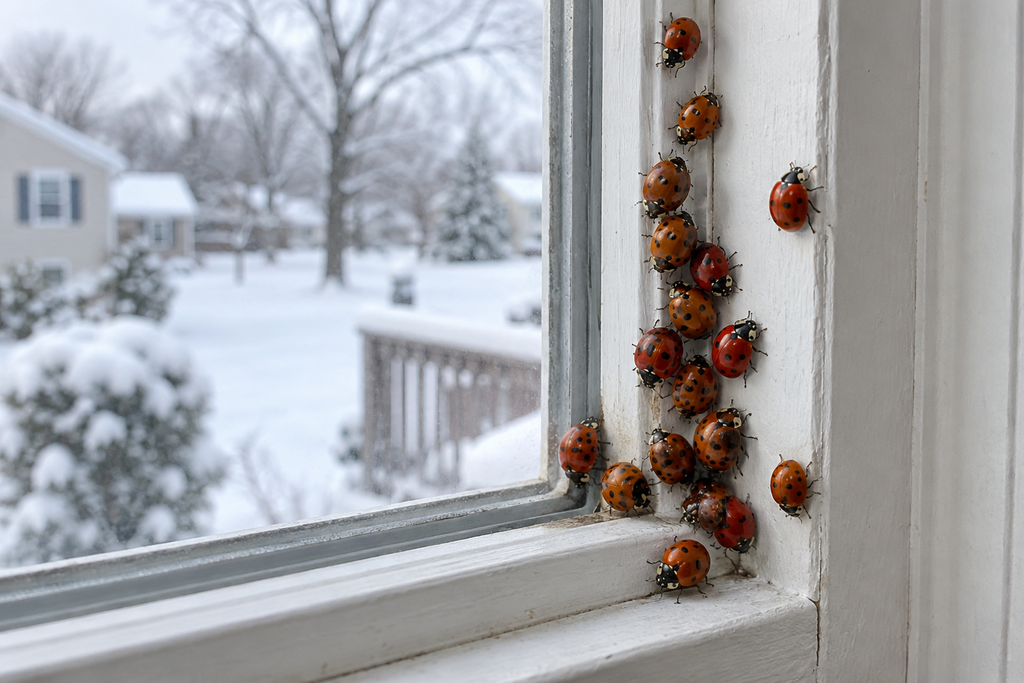
If you’re asking why there are ladybugs in my house when it’s cold outside, the answer usually starts back in October. The beetles crawling on your windows in Avon or Westlake today are likely multicolored Asian lady beetles that moved into the walls and attic during fall. University of Kentucky Extension says they don’t reproduce indoors. The ones you see in winter are the same beetles that came in last fall.
Where the beetles came from
Ladybugs are usually welcome in the garden because they eat aphids and other plant pests. Ohio State University Extension says native species typically spend the winter outdoors, while the multicolored Asian lady beetle (Harmonia axyridis) often seeks shelter in and around buildings. UK Extension explains that it flies to buildings looking for a place to spend the winter and some of those beetles end up indoors.
You can tell it apart from native lady beetles by a few features. Adults are about 1/4 inch long, and their color ranges from tan to orange to red. Spots vary too, and some beetles have none. Most have a small dark “M” or “W” shaped mark on the whitish area behind the head.
Ohio research cited by OSU found these adults start searching for overwintering sites on the first day over 64°F after a significant drop in temperature, usually to near freezing. In Ohio, those conditions usually come sometime in mid- to late October. That’s why a warm afternoon after the first cold snap can bring a crowd of beetles to your siding.
Why are there ladybugs in my house in December?
Once they land on a building, the beetles look for cracks and protected spaces. Common spots, per the Kentucky fact sheet, are cracks around window and door frames, behind fascia boards and siding, and inside soffits, attics and wall voids. Homes with many cracks and openings are the most likely to have a problem.
Inside those spaces, the beetles stay cool and quiet through the coldest weeks. On a sunny winter day, though, the wall or attic around them warms up. OSU notes that the beetles move into homes in both the fall and early spring. As they warm up, UK Extension says some wander inward instead of outside and come out from behind baseboards, walls, attics and suspended ceilings. Because they’re drawn to light, you’ll often find them near windows and light fixtures.
This table shows how the year usually plays out for these beetles in an Ohio home.
| Time of year | What the beetles are doing |
| Mid- to late October | Adults search for winter shelter on the first day over 64°F after a big temperature drop. |
| September to November | Swarms fly to buildings, mostly on sunny afternoons. Timing depends on location and weather. |
| Winter | They shelter in attics, wall voids, soffits and window frames. |
| Late winter to early spring | They become active again as walls warm up. Some wander into living areas. |
| Late spring or summer | This is the best time to seal cracks, before adults fly to buildings again. |
Sources: Ohio State University Extension, Multicolored Asian Lady Beetle (ENT-44), and University of Kentucky Extension, Asian Lady Beetle Infestation of Structures (ENTFACT-416).
Why some houses get more beetles than others
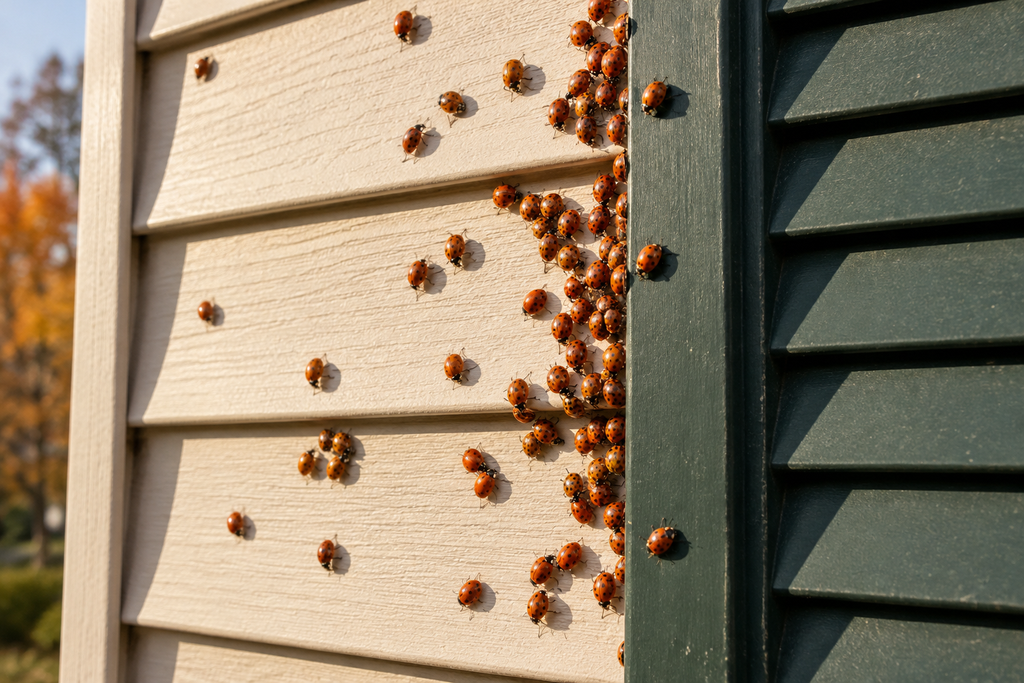
The side of the house matters. Asian lady beetles tend to gather on the sunnier, southwest sides of buildings that get afternoon sun, according to UK Extension. Homes shaded from afternoon sun are less likely to attract them.
Contrast matters too. Dark shutters on light siding, light trim around dark windows and gutters that stand out against the siding can all attract beetles. According to UK Extension, house color and building material matter less than that contrast. Homes near woods or fields are especially prone to infestation, but homes in other locations can be infested as well.
Are Asian lady beetles harmful?
Mostly they’re a nuisance. Kentucky’s entomologists note that Asian lady beetles don’t attack wood, food or clothing, and they don’t transmit diseases. That doesn’t mean they’re harmless in every way.
When disturbed, these beetles release a yellowish fluid with a strong odor. OSU says that fluid can permanently stain walls, drapes and carpeting, and swatting or crushing them releases it. They may also bite or pinch. UK Extension describes the bite as feeling like a pinprick and seldom serious. UK also notes that recent studies suggest infestations can cause allergies in some people, from eye irritation to asthma. If you think you’re having a reaction, talk to your doctor.
What to do about the beetles you see now
A vacuum is the simplest tool. Once lady beetles are indoors, the easiest way to remove them is with a vacuum cleaner, according to UK Extension. A broom is more likely to cause staining. OSU suggests putting a knee-high nylon stocking inside the vacuum wand and holding it in place with a rubber band. When you turn the vacuum off, pull out the stocking and throw it away with the beetles inside.
Skip the bug bombs. Foggers and indoor sprays are generally not recommended for lady beetles, per the same fact sheet. They tend not to work and may stain or leave residues on walls and counters. Trying to kill beetles hidden inside wall cavities is seldom effective either.
A better plan is to reduce how many get in next year. Kentucky Extension calls sealing cracks and openings the most permanent way to keep lady beetles out of buildings, and says the time to do it is late spring or summer, before the adults start flying to buildings. Gaps of 1/8 inch or less can let lady beetles in. Seal around windows, doors, soffits, fascia boards, utility pipes and wires, repair damaged screens and add screening behind attic vents.
Some homes need more than sealing. OSU says a properly timed exterior treatment by a licensed company can help prevent entry, and it recommends late September or early October for that treatment in Ohio. A treatment applied in late winter won’t help, because the beetles are already inside. You can read more about this group of pests in our post on Northern Ohio overwintering pests, and our lady bug control page explains how we can help.
If you’re still wondering why are there ladybugs in my house every winter, the answer is usually a few gaps on a sunny wall. We can help you protect your home before next fall’s flight. Call Black Dog Pest Solutions at 440-654-8234 or contact us online to schedule an inspection.
Frequently asked questions
Do ladybugs lay eggs in my house during winter?
No. Asian lady beetles don’t reproduce indoors, according to University of Kentucky Extension. Beetles you see in late winter or early spring are the same ones that came in the previous fall.
Why do ladybugs show up on warm winter days?
Asian lady beetles shelter in walls and attics through winter. As those spaces warm up, they become active, and some wander into living areas instead of outdoors.
Is it safe to crush ladybugs?
It’s better not to. Ohio State University Extension says crushed lady beetles release a foul-smelling fluid that can permanently stain walls, drapes and carpeting. A vacuum is the cleaner option.
Do Asian lady beetles bite?
They can. Kentucky Extension says they occasionally bite or pinch when they land on skin. The bite feels like a pinprick and is seldom serious.
When is the best time to keep lady beetles out?
Seal cracks in late spring or summer, per UK Extension. Ohio State recommends late September or early October for exterior treatments in Ohio.
What areas does Black Dog Pest Solutions serve?
We serve homes and businesses across Northern Ohio, including Avon, Avon Lake, Bay Village, Westlake, North Ridgeville, Lorain, Elyria and surrounding communities. Contact us to confirm coverage for your address.