
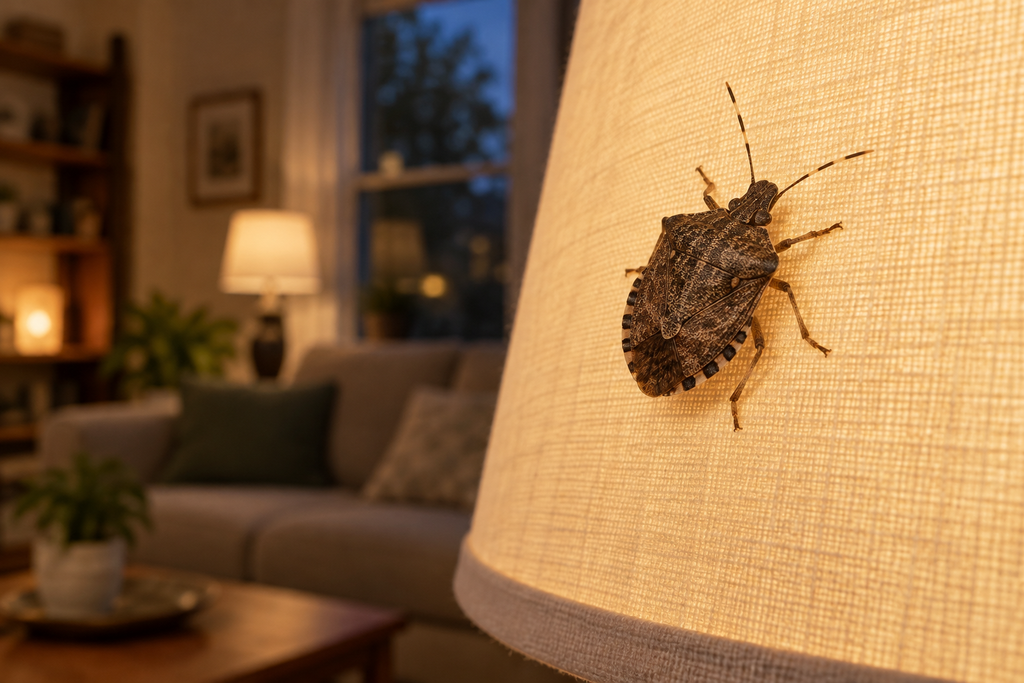
Learning how to get rid of stink bugs in your house starts with knowing that the bugs you see in December got in months ago. University of Kentucky Extension says brown marmorated stink bugs don’t breed or reproduce indoors, so the ones crawling across a lamp in Avon Lake or Bay Village tonight are the same bugs that moved in during fall.
Why stink bugs are in your house in winter
The brown marmorated stink bug (Halyomorpha halys) is native to Asia and is now present in at least 46 states, according to UK Extension. Adults are about 5/8 inch long with a shield-shaped body. You can tell them apart from other stink bugs by the white and dark bands on their legs, antennae and the edge of the abdomen.
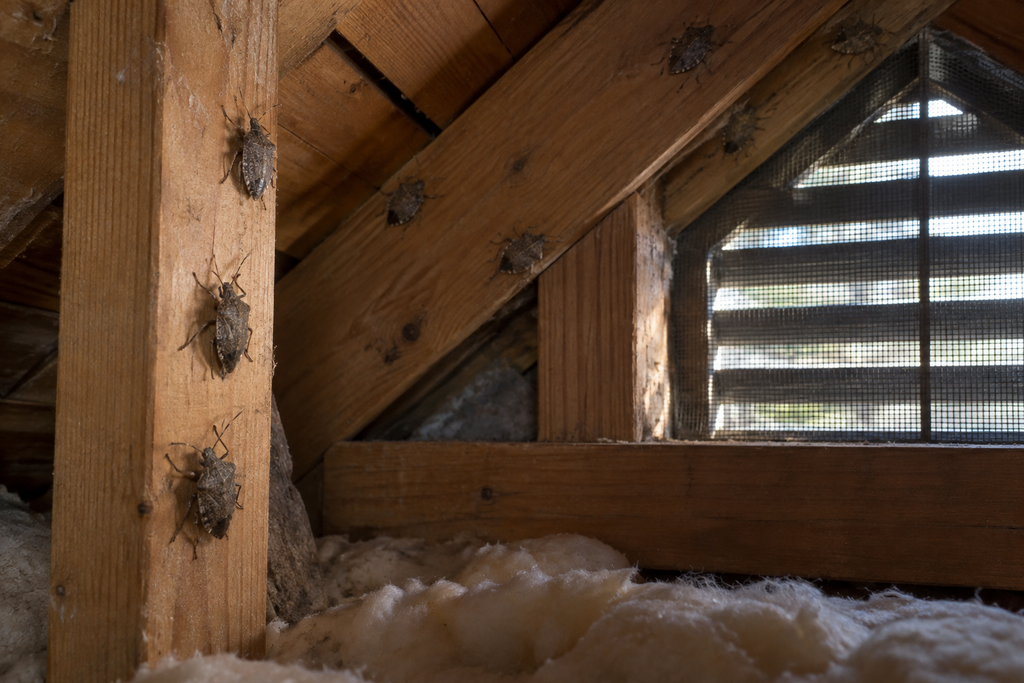
In late summer and early fall, adults move to buildings on warm, sunny days to find a place to spend the winter. Kentucky’s fact sheet says they tend to prefer upper areas of buildings and often get in through attics and chimneys. Common entry points include cracks and gaps around windows, doors, roof flashing, vents, window air conditioners, fascia and siding.
Unheated attics are often the most important place they spend the winter inside a building. Crawlspaces and basements are much less preferred. Stink bugs also overwinter in garages, sheds, vehicles, HVAC units and gas grills.
Winter doesn’t keep them still. UK Extension says stink bugs tend to be more active indoors throughout the entire winter, especially on warmer days. They reach living areas through cracks, vents, fireplaces and other openings, and they’re attracted to light, so they may buzz around lamps in the evening. They leave the house between March and May.
Are stink bugs harmful to people or pets?
They don’t bite. Stink bugs feed only on plants, and UK Extension says they don’t bite humans or pets. Their droppings can stain walls, curtains and other surfaces, though.
Handling them is where the trouble starts. Stink bugs give off a strong cilantro-like odor when they’re picked up or disturbed. When they’re crushed, squeezed or handled, they often release chemicals that irritate the skin. Recent clinical studies cited by UK Extension also suggest these stink bugs may be an airborne allergen for some people, causing eye and nose irritation. If you have those symptoms in a home with many stink bugs, check with your doctor.
How to get rid of stink bugs in the house without the smell
Start with simple removal. Pick them up with gloves or tissue, sweep them up or vacuum them. Avoid touching your face or eyes while you work.
Expect your broom or vacuum to smell like stink bugs for a while. UK Extension suggests putting a cut-off nylon stocking in the vacuum’s suction tube to limit odor and save bags. If you vacuum up a large group, throw out the whole vacuum bag and air out the hose.
Stink bugs drop straight down when they’re disturbed. For a few bugs on a wall, ceiling, curtain or lampshade, hold a container underneath and gently nudge them so they fall in.
Light can help in an attic. Like lady beetles, stink bugs are strongly attracted to ultraviolet light, and UK Extension says glue board light traps can be useful in areas such as attics. The fact sheet also describes a homemade trap made from a light placed above a large pan of soapy water.
What not to do
Don’t spray inside. According to UK Extension, insecticides aren’t warranted for stink bugs indoors, except perhaps in heavily infested areas such as attics. Trying to kill stink bugs inside wall cavities is unlikely to work. It could also make a carpet beetle problem worse, because carpet beetles can feed on piles of dead insects.
Don’t count on pheromone traps indoors, either. The Kentucky team says the pheromone traps used to monitor stink bugs on farms aren’t effective at attracting them while they overwinter inside buildings.
How to keep stink bugs out next fall
Sealing is the long-term fix. UK Extension calls sealing cracks and openings the most permanent way to prevent stink bugs and other fall invaders from entering, and summer is the best time to do it. Seal around windows, doors, soffits, fascia boards, pipes and wires with caulk. Repair damaged window screens and add screening behind attic vents. In the fall, seal or remove window air conditioners, which are another common entry point.
Screen size matters for attic vents. Adult stink bugs are thin-bodied, and UK researchers tested how many could pass through common mesh sizes.
| Mesh opening | What happened in the UK trial |
| 1/2 inch | All of the adult stink bugs got through. |
| 1/4 inch | Half of the adult stink bugs got through. |
| 1/6 inch or smaller | This size was needed to keep adults out. |
Source: University of Kentucky Extension, Stink Bug Infestation of Dwellings (ENTFACT-654). The fact sheet notes that conventional galvanized hardware cloth isn’t effective for keeping these stink bugs out.
Timing matters for exterior treatment too. UK Extension says a professional pest control company can apply insecticide to the outside of a building in fall, in a targeted band around windows, doors, eaves, soffits, attic vents and chimneys. That treatment needs to start before the bugs begin gathering on buildings, which is early to mid-September in the Midwest. It may also need to be repeated at least monthly during their fall flight period. A barrier treatment in late winter or early spring won’t help, because the bugs got in the previous autumn.
Our stink bug control page explains how we can help, and our post on Northern Ohio overwintering pests covers the other insects that move in each fall.
Knowing how to get rid of stink bugs in your house is easier when fewer get inside to begin with. We can help you protect your home before next fall’s flight starts. Call Black Dog Pest Solutions at 440-654-8234 or contact us online to schedule an inspection.
Frequently asked questions
Do stink bugs lay eggs in your house?
No. University of Kentucky Extension says the adults overwinter unmated and don’t breed or reproduce indoors. They lay eggs outdoors on host plants.
Why do I see more stink bugs on warm winter days?
UK Extension says stink bugs tend to be more active indoors throughout the winter, especially on warmer days. They reach living areas through cracks, vents and fireplaces.
Is it okay to squish a stink bug?
It’s better not to. Crushed or handled stink bugs often release chemicals that irritate the skin, and they give off a strong odor. Use tissue, gloves or a vacuum.
Should I spray insecticide inside for stink bugs?
UK Extension says indoor insecticides aren’t warranted, except perhaps in heavily infested attics. Killing bugs inside walls is unlikely to work and can lead to carpet beetle problems.
When do stink bugs leave the house?
They emerge from hibernation between March and May and go back to living outdoors, according to UK Extension.