
Carpet beetles are tiny insects whose larvae feed on wool, fur, felt, silk, feathers and leather. October is when a lot of Northern Ohio families pull sweaters, coats and blankets out of storage, and that’s often when the damage shows up. University of Kentucky Extension says these pests are common in homes and that their damage is often mistaken for clothes moths. Here’s how to tell what you’re seeing and where to look.
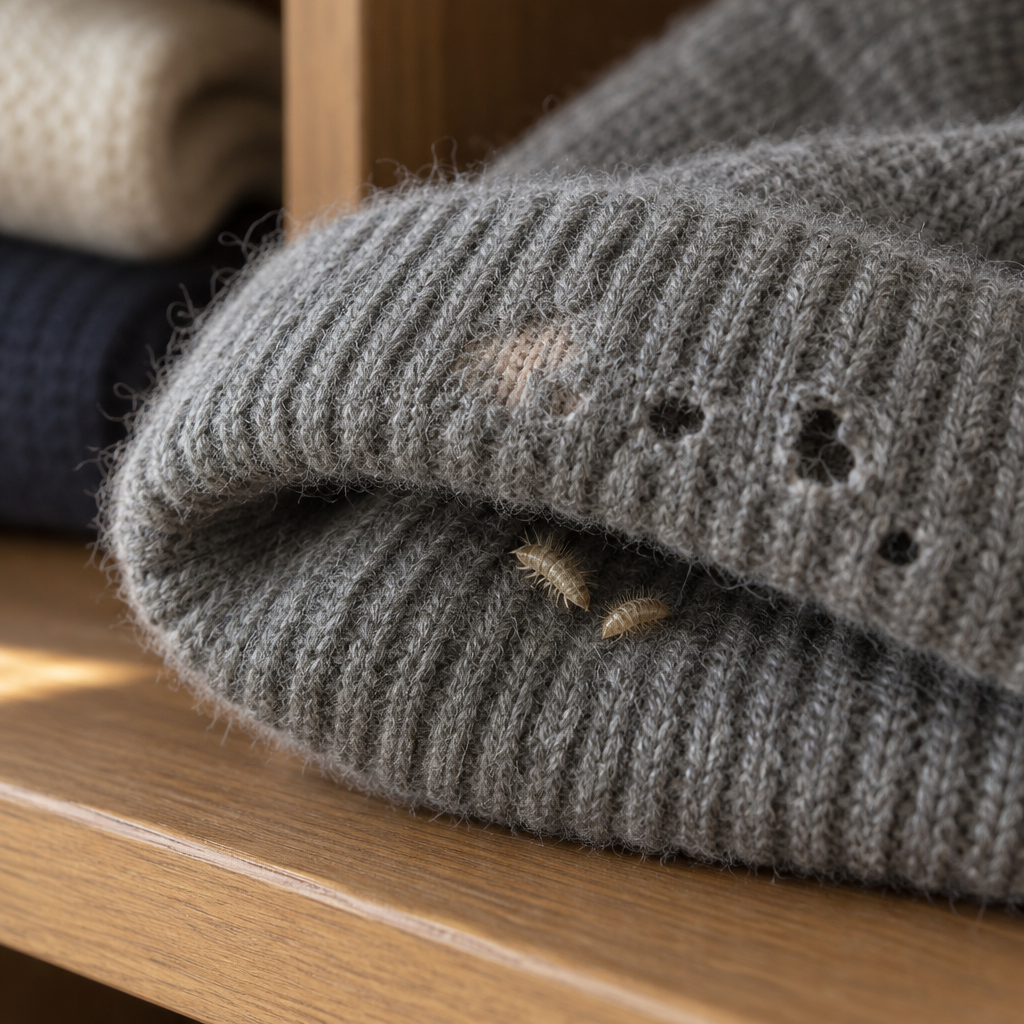
What they look like at each stage
The adults are small and easy to miss. UK Extension describes them as oval beetles about 1/16 to 1/8 inch long. Their color runs from black to a mottled mix of white, brown, yellow and orange. The adults feed on flower pollen and don’t damage fabric. You’ll often see them on windowsills, because the University of California IPM program notes they’re attracted to sunlight and usually found near windows when they’re indoors.
The larvae do the damage. They’re about 1/8 to 1/4 inch long, tan to brown, slow moving and covered with hairs or bristles. As they grow, they shed their skins, and those brown, bristly skins are one of the best clues you’ll find.
UC IPM names three common species: the varied carpet beetle, the furniture carpet beetle and the black carpet beetle. Each one has a different life cycle.
| Stage | Varied carpet beetle | Furniture carpet beetle | Black carpet beetle |
| Eggs per female | About 40. | About 60. | About 90. |
| Days until eggs hatch | 10 to 20. | 9 to 16. | 6 to 16. |
| Days as a larva | 220 to 630. | 70 to 94. | 166 to 330. |
| Days as a pupa | 10 to 13. | 14 to 17. | 8 to 14. |
| Adult life | Females 2 to 6 weeks. Males 2 to 4 weeks. | 4 to 8 weeks. | 4 to 8 weeks. |
Source: UC Statewide IPM Program, Pest Notes, Table 1.
A varied carpet beetle larva can feed for more than a year and a half, so a problem can build in a closet long before anyone notices.
Signs of damage to look for
Carpet beetle larvae graze along the surface of a fabric and often leave threadbare spots and irregular holes. UC IPM offers a useful way to tell them from moths. These beetles tend to damage a large area on one part of a garment or rug, while moth damage more often shows up as scattered holes. The larvae also don’t spin webs.
Look for these signs:
- Thin or bare patches in wool, felt or fur.
- Brown, bristly shed skins in folds, drawers or under rugs.
- Tiny fecal pellets about the size of a grain of salt, per UC IPM.
- Small beetles on windowsills.
Where carpet beetles hide in a Northern Ohio home
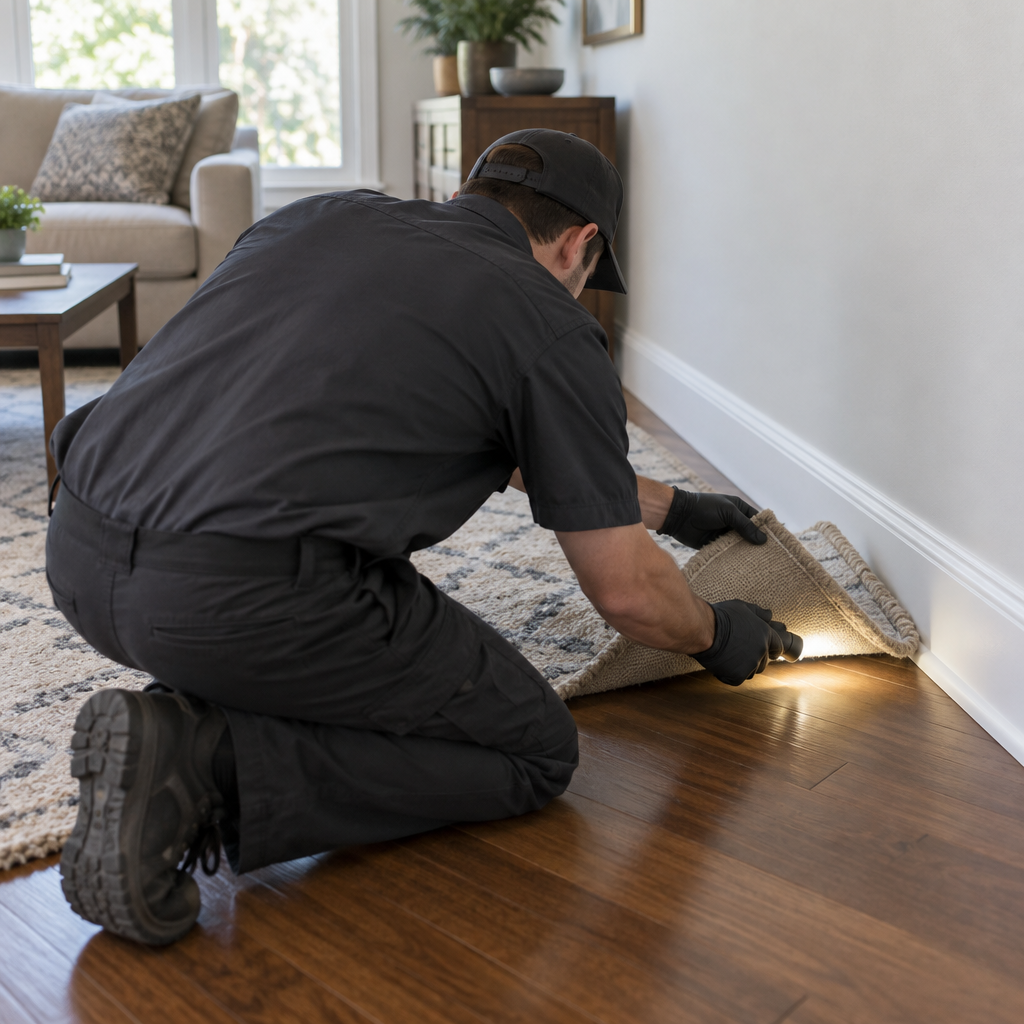
These pests like dark spots that nobody disturbs. Kentucky’s fact sheet says larvae often feed in hems, collars and cuffs of items packed away in closets, chests and boxes. Clothes and blankets you use every week are seldom attacked, and the same goes for rugs that get vacuumed often. Rug edges and undersides are more likely to be infested than open floor.
Some sources are harder to find. The same sheet lists lint and pet hair under baseboards and inside floor vents, plus bird nests, animal remains and piles of dead insects in attics, chimneys and light fixtures. That last one matters in Northern Ohio, where cluster flies and lady beetles move indoors each fall. Penn State Extension warns that when cluster flies die in wall voids or attics, these beetles may feed on the dead flies and then attack woolens and stored goods in the home.
Old rodent nests count too. Kentucky’s sheet shows shed skins found with mice nesting in an attic. If you’ve had mice this fall, our post on mice in walls covers where those nests tend to sit.
What to do when you find them
To get rid of them, you have to find every infested item. Wash, dry-clean or throw out damaged items, and bag heavily infested items before you carry them out. Hot laundering and dryer heat kill eggs and larvae. Vacuum rug edges, baseboards, closets and heating vents, and empty the vacuum promptly. Before you store wool again, clean it and seal it in tight plastic bags or bins. Cedar chests seldom work, according to Kentucky Extension, because the seal isn’t tight enough to hold the oil’s vapors.
Insect sprays have limits here. UC IPM says not to spray clothing or bedding, and sprays often can’t reach larvae hidden inside materials. When the source is in an attic, a wall void or old nest debris, a trained eye helps. Black Dog Pest Solutions handles beetles and other household pests through our residential services across Northern Ohio.
Frequently asked questions
Do the adult beetles eat clothes? No. The adults feed on flower pollen, according to UK Extension. The larvae are the stage that feeds on wool, fur and other animal-based materials.
Will they eat cotton or polyester? Rarely. UK Extension says cotton and synthetics are seldom attacked unless they’re blended with wool or stained with food or body oils.
Why do I see small beetles on my windowsill? Adults are drawn to light, according to UC IPM. A few adults near a window can mean larvae are growing somewhere inside, so check stored wool and rug edges.
Does a cedar chest keep them away? Not reliably. UK Extension and UC IPM both say cedar isn’t an effective way to protect stored fabrics.
Can freezing kill them? Yes. Items held at 0°F or colder for at least one week will kill them, according to UK Extension. Seal items in plastic first.
Closing CTA
If you’re finding carpet beetles, shed skins or thin spots in stored wool, we can help you track down the source and protect your home. Call Black Dog Pest Solutions at 440-654-8234 or contact us online to schedule an inspection.