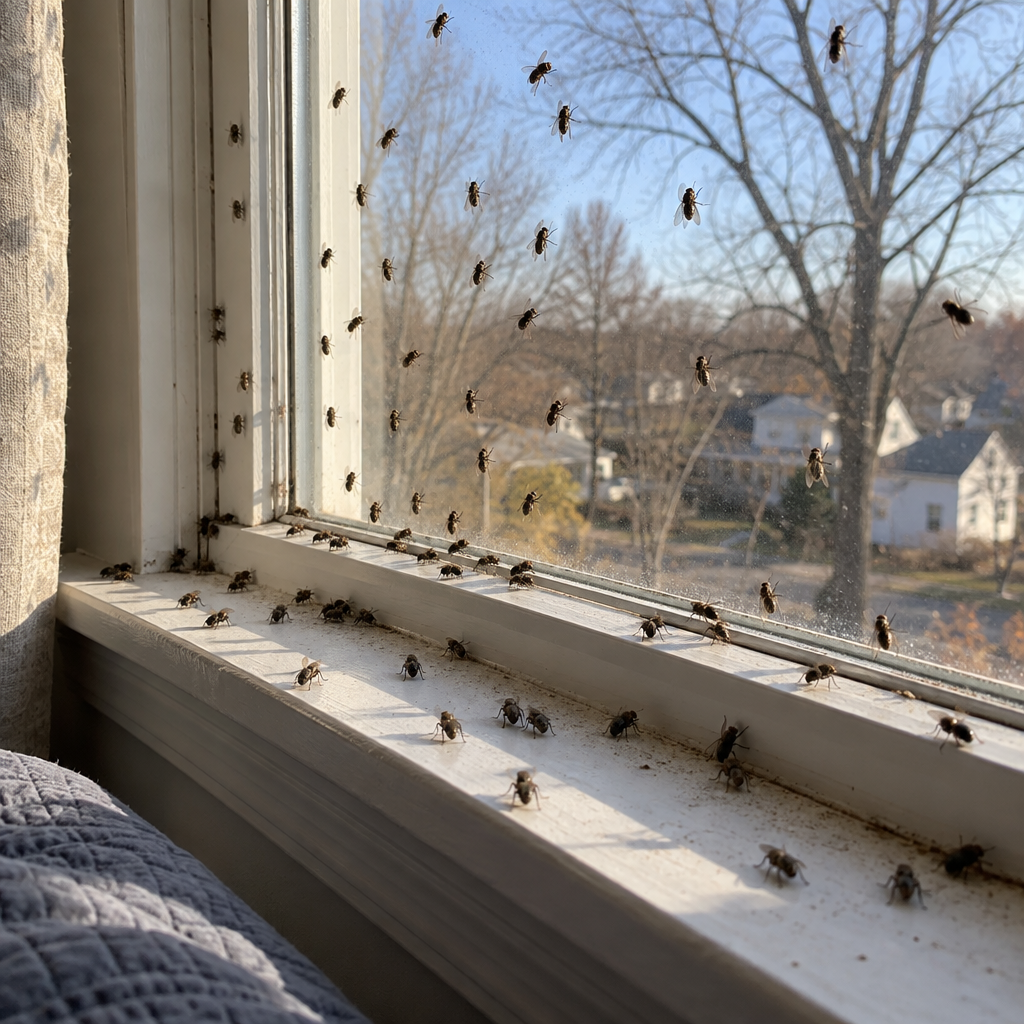
Cluster fly control in Northern Ohio confuses people because the flies behave nothing like the ones buzzing the kitchen in July. These show up in autumn on the sunny side of the house, disappear for a while, then turn up at an upstairs window on a mild winter day, dozens of them, moving slowly and easy to swat.
You’re not looking at a sanitation problem. You’re looking at an insect that spent the summer in your lawn and is now trying to find a protected place to wait out the cold. Once you know what it wants, the fix makes sense.
What a Cluster Fly Is, and What It Isn’t
The cluster fly, Pollenia rudis, is slightly larger than the common house fly, dull gray with black markings and golden-yellow hairs on the thorax that can give it a golden sheen. Those hairs are heaviest on the underside between the legs. That description comes from Penn State Extension’s cluster fly guide, which is the clearest source on this insect.
Their life cycle is the part that surprises homeowners. Eggs go into the soil, and the larvae burrow into earthworms and feed on them. Penn State reports three to four generations or more per season in Pennsylvania, which is a comparable climate to the Lake Erie shore. The adults from the last generation of the year are the ones that head for shelter in the fall, choosing hedge rows, bark on dying trees, crevices in south-facing rock faces, and cracks and voids in sheds, garages, barns, and houses.
Two points matter for how you respond. Penn State says plainly that cluster flies will not damage your home and that they aren’t known to carry any diseases of medical importance to humans. They also aren’t reproducing inside the structure, so what you’re seeing in January is the same group that came in during autumn. They occasionally leave small dark spots of excrement on windows and walls, which is the main mess they make.
Why They Gather at Your Windows in Winter
| Season | What the flies are doing | Where you see them |
| Spring | Adults leave shelter and lay eggs in soil with earthworms. | Outdoors, rarely noticed. |
| Summer | Larvae develop in earthworms. Three to four or more generations occur. | Not visible in the house. |
| Fall | Adults seek protected overwintering sites. | Clustering on sunny exterior walls, then wall voids and attics. |
| Winter | Warm days make them active. They crawl out of voids trying to get outside. | Gathering in large numbers at windows, flying sluggishly. |
Source: Penn State Extension, Cluster Flies, updated June 24, 2026.
That winter behavior is the whole complaint. The flies wake up in a warm wall void, head for light, and end up in a bedroom or a stairwell instead of outside. Penn State describes it as a confused attempt to go back out, which fits what people report. The flies come from cracks under or behind baseboards, around window and door trim, and near exhaust fans or ceiling lights, and those are the openings worth sealing when you find them.
These flies aren’t alone in this. Penn State groups them with the multicolored Asian lady beetle, the western conifer seed bug, and the boxelder bug as overwintering nuisance pests, which is why a house with cluster flies often has more than one of these insects. The same gaps serve all of them, and so does the same seasonal exterior work.
What Cluster Fly Control in Northern Ohio Actually Involves
Mechanical exclusion is the best method for keeping them out of homes and buildings, according to Penn State. The specific targets are cracks around windows, doors, siding, and utility pipes, plus openings behind chimneys and under the fascia, all sealed with a quality silicone or silicone-latex caulk. Damaged window and door screens get repaired or replaced. University of Kentucky Extension’s pest-proofing guidance adds that repairing screens reduces entry of these flies and lady beetles in early fall, and that 1/4-inch wire mesh over attic and roof vents blocks the larger openings.
Exterior insecticide work can supplement sealing where covering the whole exterior isn’t realistic, and Penn State is specific about the conditions. Applications should be made by a licensed pest control operator in the autumn just before the flies congregate, and the honest caveat comes from the same source: sunlight breaks these products down, so the residual effect drops sharply and may not affect flies much beyond several days or a week. Results vary with the weather, the exposure of the walls, and how many openings can be reached.
Older buildings and rural properties tend to have the worst of it. Penn State lists sheds, garages, and barns alongside houses as shelter, and any structure with an unfinished attic, open soffit runs, or gaps behind old fascia gives the flies dozens of ways in. Properties surrounded by lawn and pasture also produce more flies to begin with, since the larvae need soil with earthworms. That combination is common on the edges of Avon, North Ridgeville, and the farm country south of the lakeshore, and it’s why some homes deal with this year after year while a neighbor two streets over barely notices.
Commercial buildings have the same issue with higher stakes. Flies collecting at the windows of an office, a clinic, or a restaurant dining room become a customer-facing problem long before the numbers get impressive, and light fixtures in drop ceilings are a common emergence point. Our commercial work handles those inspections on the same seasonal schedule as residential exterior work.
Timing is the lever you actually control. Work done before the flies gather does more than work done after they’re in the walls, which is why late September into October is when this gets scheduled around here. Our fly service page covers the other species we deal with, and the approach for each one differs.
What Not to Do After They’re in the Walls
Penn State advises against using insecticide inside a structure once the flies have reached wall voids or attic areas, and the reason is worth understanding. Dust treatments in those voids may kill thousands of flies, and then carpet beetles feed on the dead insects and move on to woolens and stored dry goods. You trade one pest for another that damages fabric.
Aerosol foggers have a similar problem. They’ll kill the flies massed in an attic and won’t stop more from emerging out of the wall voids, so the relief is brief. Spray insecticide directed into cracks and crevices doesn’t prevent emergence either, and Penn State doesn’t consider any of these a viable long-term answer.
What works indoors is unglamorous. The flies are typically sluggish and easy to swat or capture, so a vacuum handles the ones at the window. If flies keep entering a room, locate the openings they emerge from and seal them with caulk or another suitable material so the next warm day stays quiet. Light traps can be useful in dark confined spaces such as attics, which Kentucky Extension notes in the context of flies and lady beetles, though they catch relatively few of the insects moving through living areas.
FAQ
Are Cluster Flies Dangerous?
Penn State Extension says they aren’t known to carry any diseases of medical importance to humans and won’t damage your home. They may leave small dark spots of excrement on windows and walls, which is the main issue beyond the nuisance.
Why Do These Flies Appear in Winter?
They overwinter in wall voids and attics, and warm days make them active. They crawl out of the voids trying to reach the outdoors and gather at windows in large numbers instead.
Are They Breeding in My House?
No. Penn State notes the flies aren’t reproducing within the structure. The larvae develop in earthworms in soil outdoors, so the flies at your window came in the previous fall.
How Are They Different From House Flies?
Cluster flies are slightly larger than the common house fly, dull gray with black markings, and carry golden-yellow hairs on the thorax. They also fly sluggishly, while house flies are quick and tend to gather around food and waste.
When Should Exterior Treatment Happen?
In autumn, before the flies congregate on the building. Penn State specifies applications by a licensed pest control operator at that point, and notes the residual effect may not last much beyond several days or a week because sunlight breaks the products down.
Should I Spray or Fog the Attic?
Penn State advises against it once flies are in voids or attics. Dust treatments can attract carpet beetles that feed on dead insects and then damage woolens and stored goods, and foggers don’t prevent more flies from emerging. Sealing openings and vacuuming are the better response indoors.
Cluster Fly Control in Northern Ohio
If flies are gathering on your siding or piling up at an upstairs window, the openings letting them in can be found and sealed. Contact Black Dog Pest Solutions and we’ll inspect the exterior, show you where cluster fly control in Northern Ohio makes the biggest difference on your house, and schedule the work while the timing still helps. Call 440-654-8234 to protect your rooms from another winter of flies at the windows.