
Mice vs rats is the first question to settle when you find droppings in the basement or hear something moving in a wall. The answer changes where you look, how traps get set and how big the entry holes are likely to be. October is a busy month for both in Northern Ohio, since the Internet Center for Wildlife Damage Management (ICWDM) says house mice are most likely to invade structures as temperatures cool in the fall. This guide compares the two side by side, using the house mouse and the Norway rat, which ICWDM says lives throughout the contiguous 48 states.
Size and looks: the quick check
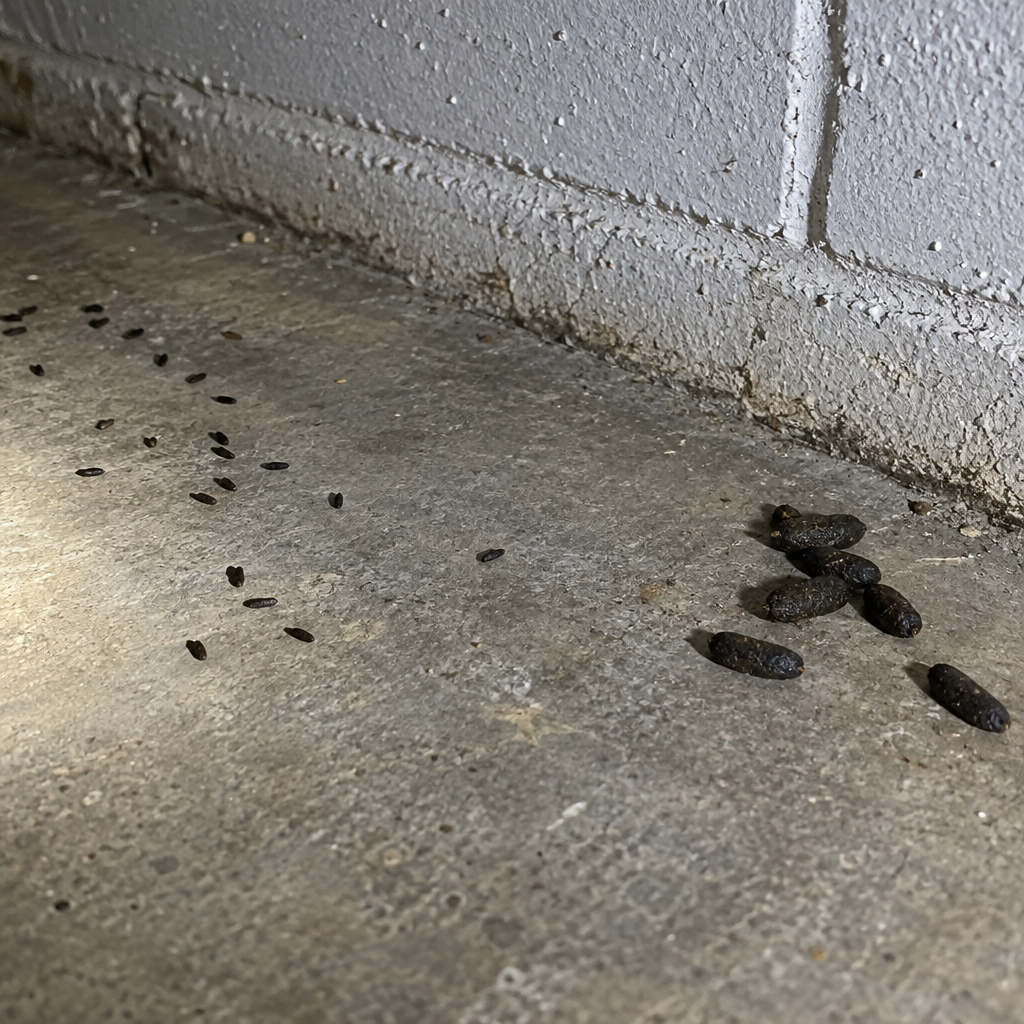
If you get a clear look at an adult, size is usually the deciding factor. ICWDM gives adult house mice a body length of 3 to 4 inches, a tail of 2 to 4 inches and a weight of 0.4 to 0.9 ounces. Adult Norway rats weigh an average of 12 to 16 ounces, according to the ICWDM Norway rat page. That’s well over ten times the weight of a typical mouse.
A Norway rat has coarse fur that’s usually brown or red-gray on top, and its tail doesn’t reach the tip of its nose when pulled forward. A house mouse is slender and gray-brown, with large, sparsely haired ears and a nearly hairless tail.
Young rats are where people get fooled. UC IPM explains that a young rat can be confused with a mouse, but very young rats have large heads and feet compared to their bodies. Adult mice have much smaller heads and feet in proportion.
Mice vs rats: the signs side by side
Most people find what a rodent left behind long before they see the animal itself, so the table below compares the signs that are most useful for identification.
| Sign | House mouse | Norway rat |
| Adult weight | 0.4 to 0.9 ounces. | Average of 12 to 16 ounces. |
| Droppings | Average 1/4 inch long. | Up to 3/4 inch long and 1/4 inch wide, with blunt ends. |
| Gnaw marks | About 1/32 inch. | About 1/16 inch. |
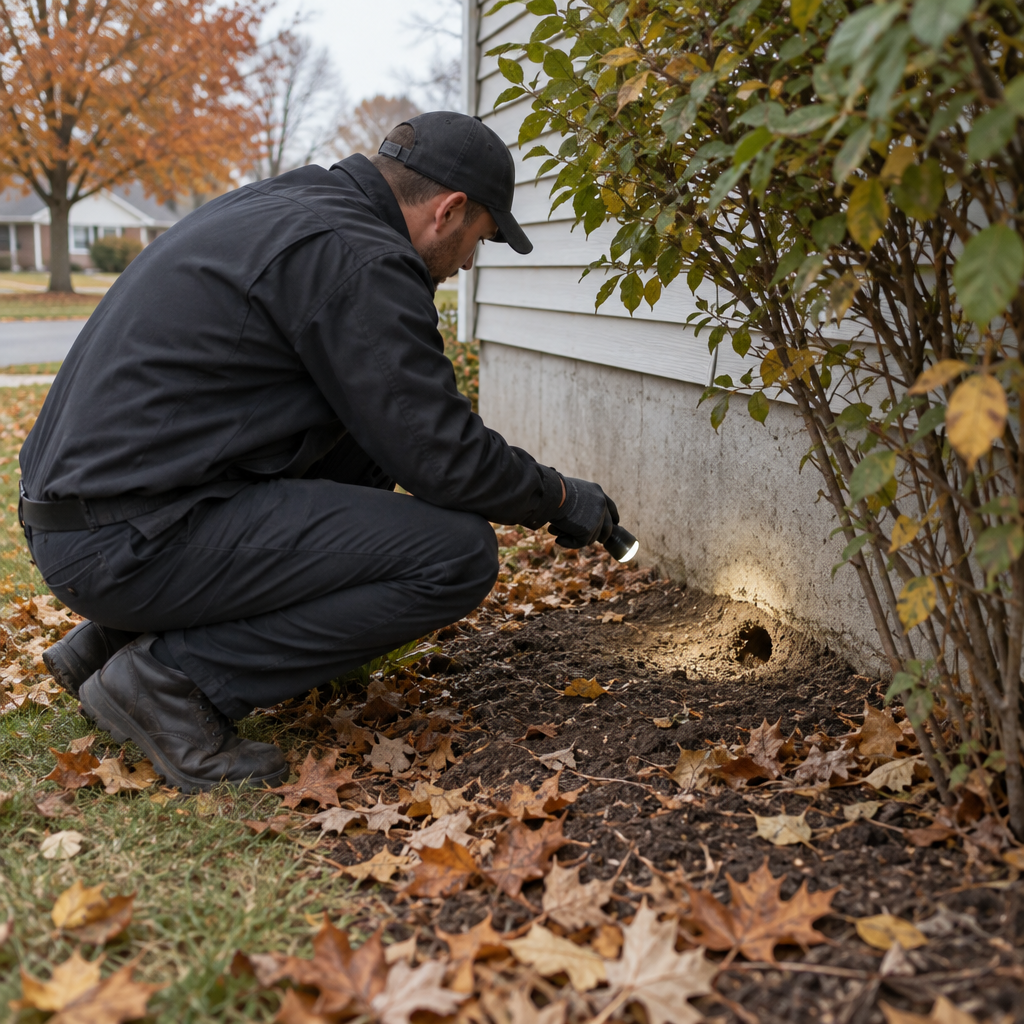
| Entry holes | Often 1 1/2 inches across or less. | Active holes are 2 to 3 inches wide. |
| Daily travel | An area 10 to 30 feet across. | An area 100 to 150 feet across. |
| Water | Can get water from food. | Needs 1/2 to 1 ounce a day on dry food. |
| Litters | 5 to 10 a year, 5 or 6 young each. | 3 to 6 a year, 6 to 12 young each. |
Sources: ICWDM house mouse and house mouse biology, and ICWDM Norway rat and Norway rat biology.
Droppings tell you more than size. Rats deposit about 40 to 50 droppings a day, usually clumped in small groups, while other rodents tend to scatter theirs, and fresh droppings have a soft texture, according to ICWDM. Mouse droppings can be confused with cockroach droppings, but ICWDM notes that roach droppings show ridges and squared-off ends under a magnifying glass.
Where each one lives in a house
Mice will nest in almost any sheltered location. According to ICWDM, they prefer nesting next to heat sources, such as compressors, pilot lights and water heaters, and because they’re strong climbers, upper floors and ceilings are possible too. Our post on mice in walls covers the signs to check inside a wall.
Norway rats are burrowers that usually nest in burrows below ground or at ground level, and in northern climates they prefer to nest near heat, per ICWDM. Look for runs or burrows along walls, fences and under bushes or debris. Although most can climb, ICWDM notes that Norway rats tend to stay on the lower floors of buildings. UC IPM says they usually stay in basements and ground floors when they get inside.
Both can squeeze through surprisingly small openings. UC IPM says house mice can get under gaps 1/4 inch tall, while young rats can fit beneath a door with only a 1/2-inch gap and may gnaw a wooden door to enlarge it.
Why the difference changes the plan
Mice and rats behave differently around traps and bait, so a setup that works for one species can fail for the other.
Rats are wary of new things. They quickly notice new objects and tend to avoid them, and ICWDM says traps and bait stations are often avoided for several days. Leaving traps baited but unset for a short time can help rats get used to them.
Mice are curious. By ICWDM’s description, mice notice new objects but don’t fear them, and they almost immediately enter bait stations and sample bait. Their small range is the challenge. Since one mouse covers an area only 10 to 30 feet across, traps have to sit close to where the activity is.
Rats travel farther and need water. A rat covers an area 100 to 150 feet across each day and seldom travel more than 400 feet from its burrow for food or water, according to ICWDM. That means the source may be outside, under a shed or along a fence, even when the signs are in your basement.
Outdoor bait needs sealed entry points first. UC IPM advises closing entry points before baiting outside so poisoned rats don’t come inside to die. Bait placement around a home takes care, since all rodenticides are toxic to pets and people, per UC IPM.
When to call a professional
Call for help if you can’t tell which rodent you have, if signs keep coming back after trapping, or if you find holes 2 inches or wider near the foundation. ICWDM notes that seeing mice during the day does not necessarily mean a large population is present, though that usually is true for rats.
Black Dog Pest Solutions handles mice, rats and other rodents across Northern Ohio. A rodent visit looks for entry points and nesting areas so the plan fits the animal you actually have. If you’re ready to close gaps before winter, our rodent proofing guide walks through what to seal.
Frequently asked questions
Can a mouse grow into a rat? No. They’re different species. A young rat can look like a mouse, but UC IPM says young rats have large heads and feet compared to their bodies.
How can I tell rat droppings from mouse droppings? Size is the main clue. ICWDM says mouse droppings average 1/4 inch, while Norway rat droppings can be up to 3/4 inch with blunt ends. Rat droppings are also usually clumped in small groups.
Why aren’t my traps catching anything? If it’s a rat, it may be avoiding the new traps. ICWDM says rats often avoid traps for several days. If it’s a mouse, the traps may be too far from where it travels.
Are rats more likely to be in the basement? Often, yes. UC IPM says Norway rats usually stay in basements and ground floors once inside, while mice climb well and can show up on any floor.
Do mice and rats carry diseases? Yes, they can. ICWDM lists diseases tied to both, including salmonellosis and leptospirosis. Wear gloves when you handle traps or clean up droppings.
Closing CTA
Still not sure about mice vs rats in your home? We can inspect the signs, find where they’re getting in and help protect your home before winter. Call Black Dog Pest Solutions at 440-654-8234 or contact us online to schedule a visit.