
Tiny Flies, Big Frustration: What to Do When Gnats Take Over Your Plants
If you’re wondering how do you get rid of gnats in your plants, here’s the short answer:
- Let the soil dry out — allow the top 1–2 inches to dry completely between waterings
- Place yellow sticky traps near the soil surface to catch flying adults
- Drench the soil with BTI (Mosquito Bits solution) every 7–10 days for 3–4 weeks to kill larvae
- Try a hydrogen peroxide drench — mix 1 part 3% hydrogen peroxide with 4 parts water as an alternative larval treatment
- Add a sand or gravel layer on top of the soil to block egg-laying
Those five steps handle most infestations. Keep reading for the full details on each one.
You water your plant, and suddenly a tiny cloud of black flies erupts from the soil. Sound familiar? Those are almost certainly fungus gnats — and you’re far from alone. Research suggests roughly 70% of houseplant owners deal with them at some point.
Here’s the frustrating part: the flies you see aren’t actually the real problem. The adult gnats hovering around your plant are mostly just a nuisance. It’s the larvae living in your soil that are silently chewing on your plant’s roots and causing real damage — stunted growth, yellowing leaves, and in bad cases, plant death.
The good news? Fungus gnats are manageable. You don’t need harsh chemicals, and most infestations clear up in 2–4 weeks with the right approach.
I’m Mat Ledyard, owner of Black Dog Pest Solutions in Avon, Ohio, and with nearly decade in pest control I’ve helped homeowners tackle everything from rodent problems to the kind of persistent indoor pest issues — like figuring out how do you get rid of gnats in your plants — that drive people crazy. Let’s walk through exactly what works.
What Are Fungus Gnats and Why Do They Infest Houseplants?
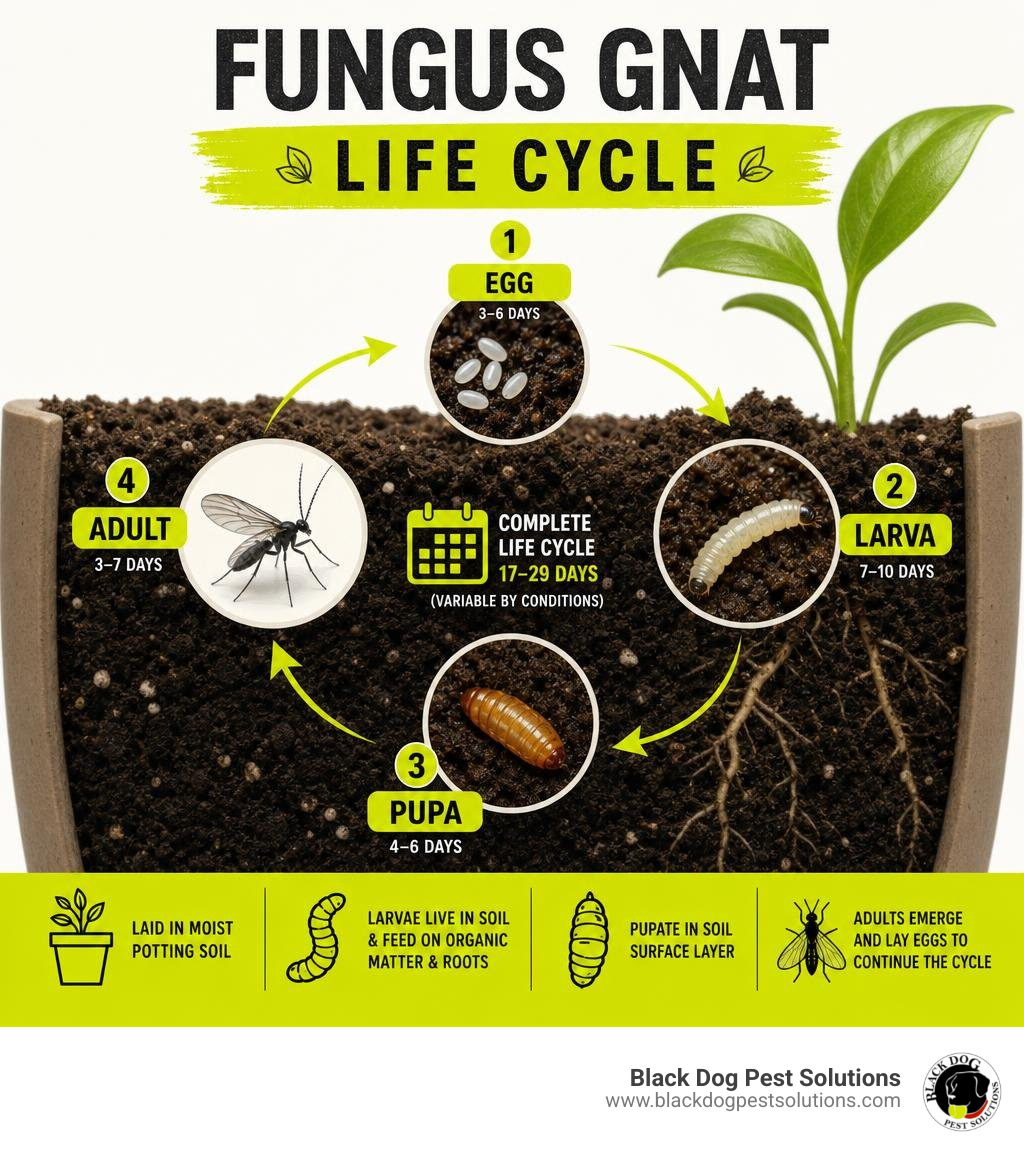
To defeat your enemy, you first have to understand them. Fungus gnats (primarily from the family Sciaridae) are small, delicate-looking, grayish-black flies that measure about 1/16 to 1/8 of an inch long. They are weak fliers and tend to stay very close to the soil surface, plant leaves, or nearby window frames where light attracts them.
It is incredibly common to mistake them for other household pests, but they are quite distinct:
- Fungus Gnats: Dark bodies, long legs, and long antennae. They fly in lazy, erratic patterns and stay near damp soil.
- Fruit Flies: Tan-to-brown bodies, bright red eyes, and a more robust shape. They hover around rotting fruit, garbage disposals, and kitchen waste.
- Springtails: Wingless, tiny creatures that jump when disturbed. If you are noticing hopping bugs in your pots, you might actually be dealing with springtails rather than gnats. You can read more about them in The Ultimate Guide to Spring Pests. For springtails, prioritizing moisture control and exclusion over chemical treatments is key. This includes keeping mulch 12-18 inches back from the foundation, using gravel or rock near the home, fixing drainage, extending downspouts, avoiding overwatering, trimming vegetation, and sealing entry points. It is helpful to note that indoor or pool springtails are harmless but annoying, and they can simply be vacuumed or skimmed. If the problem persists, it is best to call a licensed pest professional. Additionally, please note that Ohio requires a pesticide business license for anyone applying pesticides for hire.
So, why did they choose your plants? Fungus gnats are attracted to moisture, decaying organic matter, and fungus. When you overwater your plants, you create a perfect breeding ground. The top layer of soil remains constantly damp, promoting fungal growth that serves as the primary food source for gnat larvae.
Additionally, many commercial potting soils that are high in peat moss or incompletely composted organic matter naturally attract egg-laying females. This is why many plant owners notice gnats shortly after bringing a new plant home or repotting an old one. Fungus gnats are one of the most common reasons homeowners search for professional pest control companies in Avon, especially during the wetter spring months or late fall when outdoor plants are brought inside.
According to the Fungus Gnats as Houseplant and Indoor Pests | Colorado State University Extension , a single female can lay 100 to 300 eggs during her short, week-long adult life. This rapid reproduction explains why a minor issue can quickly escalate into a full-blown infestation.
How Do You Get Rid of Gnats in Your Plants? A Step-by-Step IPM Strategy
At Black Dog Pest Solutions, we advocate for Integrated Pest Management (IPM). This means we do not just spray chemicals and hope for the best. Instead, we combine inspection, physical barriers, biological treatments, and cultural adjustments to tackle the pest at every stage of its life cycle.
While some pest control companies in Avon focus strictly on structural pests, we know that managing indoor plant health is key to keeping your entire home comfortable. To get rid of gnats, you must target both the flying adults (to stop egg-laying) and the underground larvae (to stop new adults from emerging). This is the secret behind the methods detailed in Get Rid of Fungus Gnats Fast 2026: A Proven 2-Step Method .
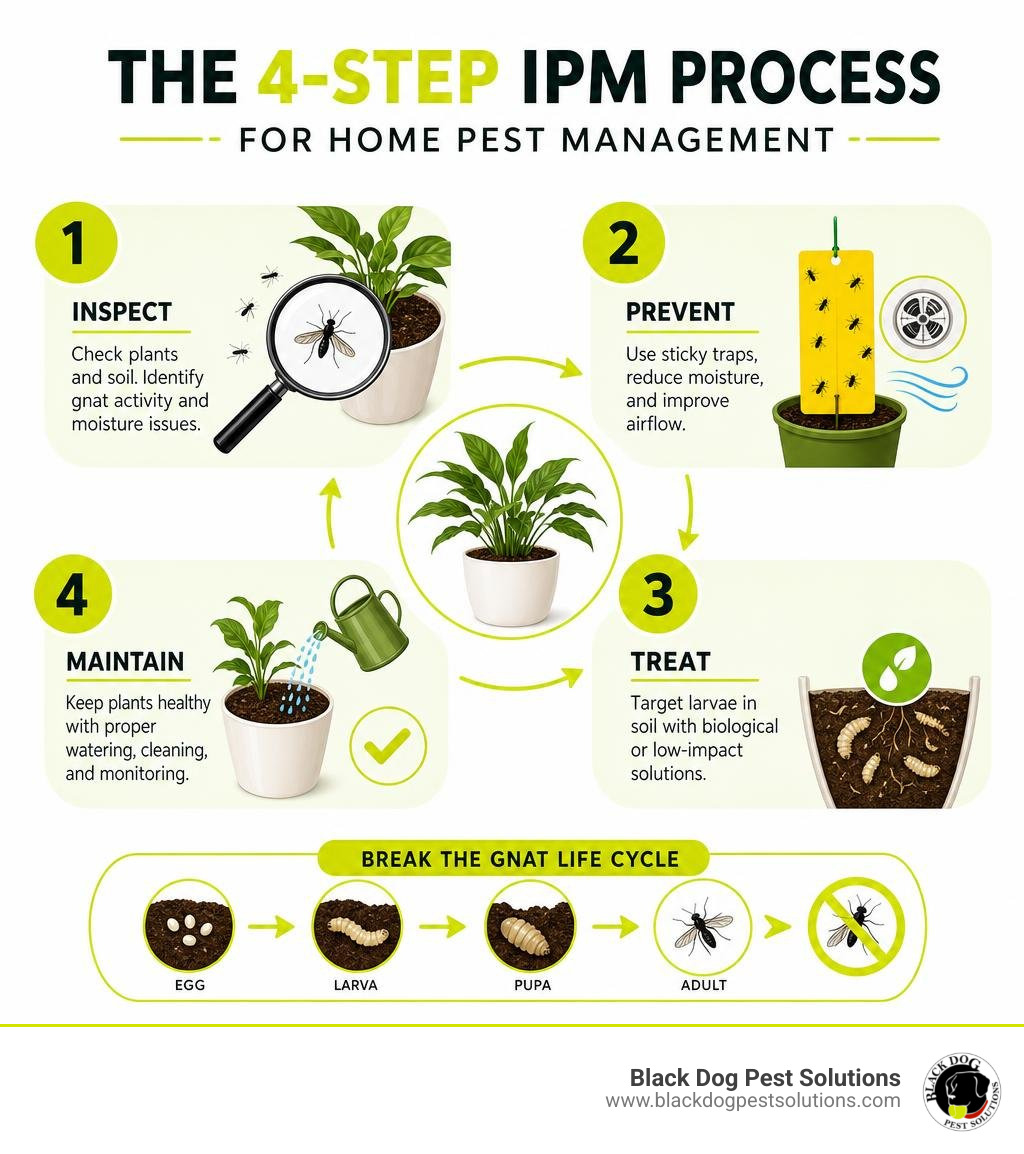
Let’s break down this multi-pronged approach step-by-step.
Step 1: How Do You Get Rid of Gnats in Your Plants Using Sticky Traps and Physical Barriers?
The first step in your strategy is to control the adult population and block their access to the soil.
Yellow Sticky Cards
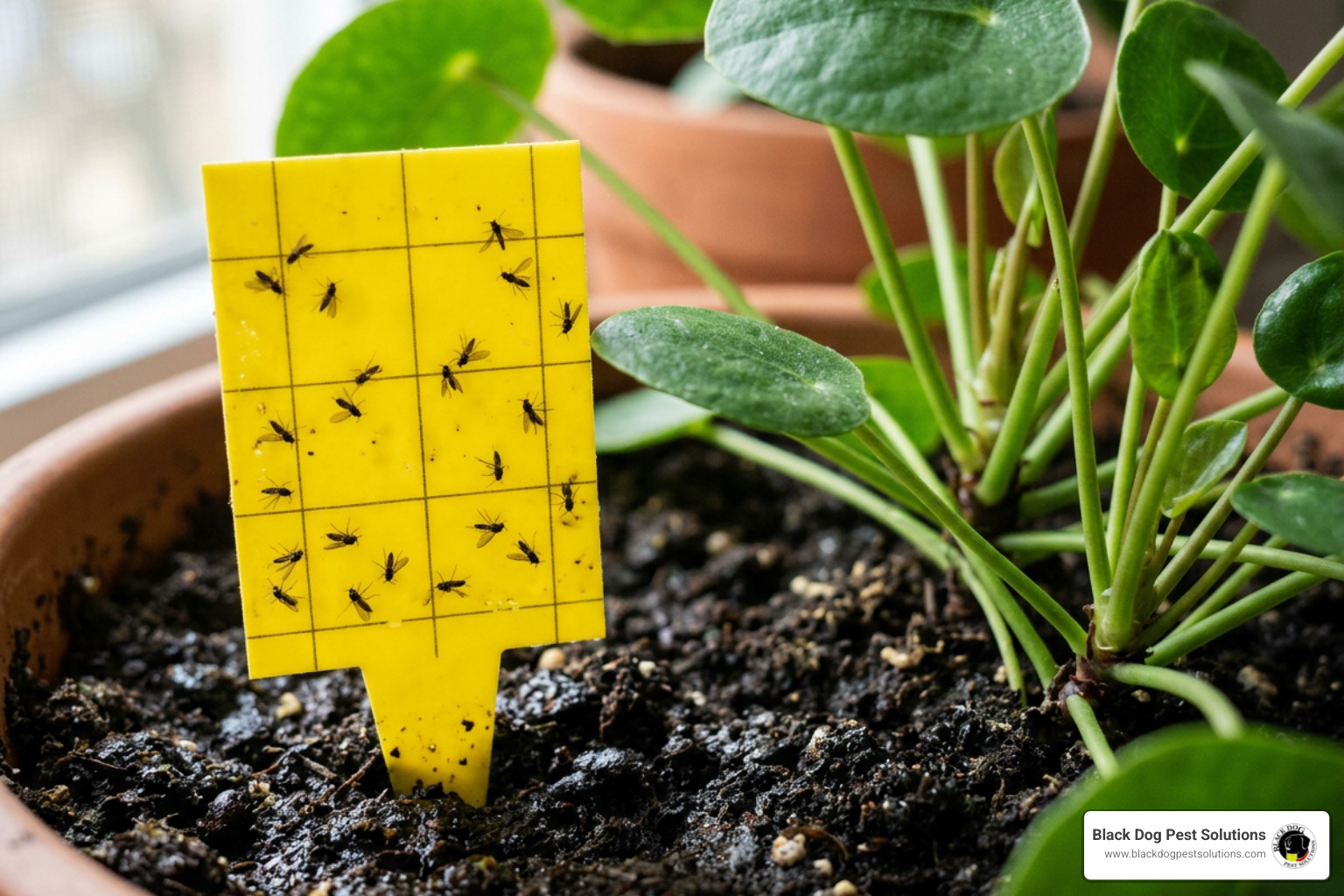
Adult gnats are highly attracted to the color yellow. By placing yellow sticky traps horizontally just above the soil surface or mounting them on small wooden stakes, you can capture dozens of flying adults within 24 hours. This immediately reduces the number of females available to lay new eggs. Check these traps weekly and replace them monthly or when they are covered in insects.
The Potato Slice Test
Not sure which plant is the primary “breeding factory” in your home? Try the potato slice test. Cut a raw potato into 1/4-inch slices or wedges and press them slightly into the soil surface. Leave them for 24 to 48 hours. Gnat larvae love potato moisture and will migrate to feed on them. When you lift the potato, you will easily see the tiny, translucent larvae with shiny black heads. This is an excellent, chemical-free way to monitor your progress.
Physical Soil Barriers
To prevent adult gnats from burrowing into the soil to lay eggs, you can apply a physical barrier. A 1/2-inch layer of coarse horticultural sand (not play sand, which holds too much moisture) or fine gravel works wonders. Because sand dries out incredibly fast, adult gnats find it inhospitable and cannot reach the organic potting mix underneath.
Another physical treatment is food-grade diatomaceous earth (DE). When the topsoil is completely dry, sprinkle a fine layer of DE over the surface. The microscopic, sharp edges of DE pierce the bodies of crawling insects, dehydrating them. Just remember to wear a mask when applying it, and reapply it after watering, as wet DE loses its effectiveness. For more detailed application tips, check out How to Get Rid of Gnats in Plant Soil: A Step-by-Step Beginner Guide – Olivia’s Garden .
Step 2: How Do You Get Rid of Gnats in Your Plants with Soil Drenches and Biological Controls?
Physical barriers and sticky traps are great, but the real battle is won in the soil. You must target the larvae.
BTI (Bacillus thuringiensis israelensis)
BTI is a naturally occurring soil bacterium that specifically targets the digestive systems of gnat, blackfly, and mosquito larvae. It is entirely non-toxic to humans, pets, and the plants themselves. You can buy BTI in the form of “Mosquito Bits” or “Mosquito Dunks.”
To apply, soak 4 tablespoons of Mosquito Bits in 1 gallon of warm water for about 30 minutes. Strain out the bits, and use this “BTI tea” to water your plants. Repeat this process every 5 to 7 days for at least three to four weeks to ensure you catch every new wave of hatching larvae. The science behind this biological approach is highly recommended by the Fungus Gnats / Home and Landscape / UC Statewide IPM Program (UC IPM) .
Hydrogen Peroxide Drench
If you want a quick, affordable home remedy, a hydrogen peroxide drench is a fantastic option. Mix 1 part standard 3% household hydrogen peroxide with 4 parts water. Wait until your plant’s soil is dry, then water thoroughly with this mixture.
You will hear a satisfying fizzing sound as the peroxide contacts the organic material. This fizzing reaction kills soft-bodied gnat larvae on contact and immediately breaks down into harmless water and oxygen molecules, which actually helps aerate your plant’s roots. This is a safe method to use alongside other treatments like those outlined in Stop the Hop: A Guide to Getting Rid of Springtails in Potted Plants.
Beneficial Nematodes
For severe infestations, beneficial nematodes (Steinernema feltiae) are your best friends. These microscopic roundworms are watered into the soil, where they actively hunt down and consume fungus gnat larvae. They provide excellent, long-term biological control and are completely safe for indoor environments.
Long-Term Prevention: Watering and Soil Practices
Once you have successfully cleared the infestation, your goal shifts to keeping them gone. Because fungus gnats are ultimately a symptom of overwatering, adjusting your cultural habits is the single most effective long-term preventative measure.
- Let the Soil Dry Out: Never water on a strict calendar schedule. Always check the soil moisture first. For most houseplants, wait until the top 2 inches of soil are completely dry before watering again.
- Improve Soil Drainage: Heavy, dense potting soils hold moisture for weeks. To improve drainage, mix at least 25% to 30% coarse perlite, pumice, or orchid bark into your potting mix. This allows excess water to flow through easily.
- Embrace Bottom Watering: Instead of pouring water over the top of the soil, place your plant pot in a shallow tray of water for 15 to 30 minutes. The roots will draw up the moisture they need, while the top 2 inches of soil remain dry. Since gnat larvae live in the surface layer, this deprives them of the damp environment they need to survive.
- Quarantine New Arrivals: Always isolate new plants for 2 to 3 weeks before introducing them to your main collection. Place a yellow sticky trap in the pot to monitor for any hidden pests.
To help you decide which treatment method fits your specific lifestyle and plant collection, we have put together this handy comparison table. For more seasonal tips on protecting your home from local pests, see How to Tackle Ohio’s Spring Pests.
| Treatment Method | Target Stage | Speed of Results | Pet & Kid Safe? | Best Use Case |
|---|---|---|---|---|
| Yellow Sticky Traps | Adults | Fast (24 hours) | Yes | Monitoring and catching active flyers |
| BTI (Mosquito Bits) | Larvae | Moderate (1-2 weeks) | Yes | Large collections, long-term control |
| Hydrogen Peroxide | Larvae | Instant | Yes | Quick, cheap home remedy for minor issues |
| Diatomaceous Earth | Larvae & Adults | Moderate | Yes (wear mask) | Dry-loving plants like cacti and succulents |
| Beneficial Nematodes | Larvae | Moderate (1-2 weeks) | Yes | Severe, persistent infestations |
| Bottom Watering | Prevention | Long-term | Yes | Ongoing cultural maintenance |
If you are comparing pest control companies in Avon to see who can help you secure your home’s perimeter from seasonal invaders, keeping these indoor cultural practices in mind will make your overall pest management plan much more successful.
Frequently Asked Questions about Fungus Gnats
Are fungus gnats harmful to humans, pets, or plants?
No, adult fungus gnats do not bite, sting, or transmit diseases to humans or household pets. However, they are a major nuisance. For your plants, the story is a bit different. While adult gnats are harmless, heavy populations of larvae will feed on root hairs, especially in young plants, seedlings, or stressed specimens. This root damage stunts growth, causes leaves to yellow or wilt, and creates entry points for secondary root rot pathogens like Pythium and Fusarium.
How long does it take to break the fungus gnat life cycle?
At typical indoor temperatures (around 75°F), a fungus gnat develops from egg to adult in about 17 days. Because their generations overlap, you will have eggs, larvae, pupae, and adults in your soil all at the same time. This is why you must maintain your treatments (like weekly BTI drenches and sticky traps) consistently for 3 to 4 weeks to fully break the life cycle.
When should you consider repotting or discarding an infested plant?
If you have treated a plant for over a month and the infestation persists, or if the plant is showing severe signs of decline (mushy stems, foul-smelling soil, extensive leaf loss), it is time to inspect the roots. Gently remove the plant from its pot. If you find slimy, dark, or rotting roots, trim them away. Rinse the remaining healthy roots thoroughly under running water to remove all old soil, sterilize the pot with a 10% bleach solution, and repot the plant in fresh, sterile potting mix with plenty of perlite.
Conclusion
At the end of the day, dealing with fungus gnats can feel like an uphill battle, but with patience and a systematic IPM approach, you can reclaim your indoor jungle.
When looking for reliable pest control companies in Avon to keep your home pest-free, Black Dog Pest Solutions is here for you. We are a family-owned, licensed, and BBB-accredited business run by Mat Ledyard, proud of our 4.9/5-star Google rating. While we specialize in residential and commercial pest control throughout Northern Ohio — including Avon, Westlake, North Ridgeville, and the Greater Cleveland area — we believe in educating our community on all types of pest challenges.
Please note that the state of Ohio requires a pesticide business license for anyone applying pesticides for hire, which is why working with a fully licensed and insured professional is always your safest bet for structural pest issues.
If you are struggling with other small flying pests around your kitchen or drains, we can help! Learn more about our fruit fly and pest control services to keep your home healthy, clean, and comfortable.