
What Are the Best Granules to Kill Springtails?
If you’re looking for granules to kill springtails, here are the most effective options:
| Granule Type | Active Ingredient | Best Use |
|---|---|---|
| Synthetic pyrethroid | Bifenthrin (e.g., Bifen G) | Lawn, mulch beds, foundation perimeter |
| Synthetic pyrethroid | Lambda-cyhalothrin (e.g., Demand G) | Mulched areas, nesting zones |
| Synthetic pyrethroid | Carbaryl (e.g., Sevin Lawn Granules) | Broad lawn and perimeter coverage |
| Plant-based (natural) | Clove oil + thyme oil | Low-toxicity lawn and landscape use |
| Diatomaceous earth | Silica-based mineral | Soil surface barrier, indoor pots |
Key tips before you start:
- Apply granules in a 5–10 foot band around your foundation
- Water granules in after application to activate and push them into the soil
- Fix moisture problems first — granules alone won’t solve the root cause
- Reapply every 2–4 weeks on lawns or 4–6 weeks in landscape beds as needed
Springtails are tiny, wingless creatures — usually no bigger than 1/16 of an inch — that thrive in damp soil, mulch, and organic debris. Most homeowners notice them when populations explode near a foundation, in a basement, or around potted plants. They don’t bite, sting, or damage your home, but when hundreds or thousands of them start hopping across your patio or bathroom floor, annoying is an understatement.
The good news is that granular insecticides are one of the most practical tools for getting outdoor springtail populations under control. Unlike sprays that sit on the surface, granules can be watered into the soil to reach the nesting zones where springtails actually live and breed.
I’m Mat Ledyard, owner of Black Dog Pest Solutions in Avon, Ohio, and I’ve been working in pest control since 2005 — including plenty of calls from homeowners dealing with springtail invasions where granules to kill springtails were part of the solution. In the sections below, I’ll walk you through how to choose, apply, and get the most out of granular treatments alongside the moisture control steps that make the real long-term difference.
Granules to kill springtails terms simplified:
Understanding Springtails and Moisture Attraction
Springtails belong to the class Collembola. Though they have six legs, modern science actually classifies them as non-insect hexapods. What makes them famous is their jumping ability. Unlike fleas, which use powerful hind legs, springtails have a specialized fork-like appendage under their abdomen called a furcula. When threatened, this “tail” snaps downward, catapulting the tiny creature several inches into the air.
These pests are completely dependent on high moisture environments. Outdoors, they play a useful role in the ecosystem by consuming decaying organic matter, bacteria, algae, mold, and fungi. If you breed them on purpose for terrariums, you might feed them specialty items like Springtail Food Pollen – Natural Food for Springtails – Springtails.eu or a dry mix like Springtail Culture Booster | Super Springtail Food| TC INSECTS. However, when their outdoor habitats dry out in the heat of summer, or when local rain patterns cause soil populations to boom, they look for new damp nesting zones.
This search for humidity often brings them indoors. You might find them in crawl spaces, damp basements, under kitchen sinks, or hopping around your bathroom tiles. If you notice them in your home, you can easily vacuum them up or wipe them away. If they end up in your swimming pool, a quick skimming of the water surface is the easiest way to remove them.
You may also spot them in houseplants. If you need help identifying these tiny jumpers in your indoor greenery, see our guide on identifying springtails in potted plants. If they are taking over your washroom, check out our tips for getting rid of springtails in your bathroom.

Evaluating Granules to Kill Springtails
When outdoor populations are massive, physical removal isn’t always enough. Many homeowners turn to chemical or natural barrier products. Applying granules to kill springtails is a popular approach because of how these products release their active ingredients.
Most synthetic insecticidal granules use active ingredients called pyrethroids. These are synthetic versions of natural pyrethrins, which are derived from chrysanthemum flowers. Common pyrethroids used in granules include:
- Bifenthrin: Known for its stability in sunlight, making it useful for outdoor soils.
- Lambda-cyhalothrin: Formulated to bind tightly to organic matter.
For those looking for minimum-risk options, plant-based granules are available. These formulas often use essential oils like clove oil and thyme oil, which may help repel or reduce pest activity.
While granules can be a helpful tool, we prioritize moisture control and exclusion over chemical treatments as the primary means of management. If you don’t address the underlying dampness, springtails may keep returning. This balanced approach is a core part of the EPA Integrated Pest Management (IPM) principles, which focus on long-term prevention. If you are eager to learn more about application strategies, check out our guide on how to kill springtails.
How Granules to Kill Springtails Work in Soil
Liquid sprays often dry on top of grass blades or mulch, where sunlight breaks them down quickly. In contrast, granules are designed to sit on the soil surface until they are “watered in.”
When you apply granules and then lightly water the area (or let a gentle rain do the work), the water dissolves the carrier granule and releases the active ingredient. This chemical barrier then sinks into the soil and mulch layers, reaching the nesting zones where springtails breed. This deep penetration provides a residual barrier that may protect treated areas for up to three months.
However, DIY granular applications have limitations. Homeowners often struggle to get the watering-in step exactly right. Too much water can wash the active ingredients away, while too little water fails to activate the product. Additionally, professional-grade equipment typically ensures a more even distribution than standard residential push-spreaders.
Selecting the Right Granules to Kill Springtails
Choosing the right product depends on your goals, your landscape, and your safety preferences.
- Synthetic Pyrethroids: Products like Demand G or Bifen G offer residual control and can help manage heavy infestations. Some specialized professional products, such as Talstar Nursery Granular Insecticide, are formulated specifically for commercial nursery or greenhouse soils and are not labeled for residential lawn use.
- Minimum-Risk Plant Oils: Products containing clove and thyme oil, such as those detailed on the 33611INSECTKILLER_10LB label, provide a natural alternative. They are safe to use around children and pets when applied as directed, but they do not require watering-in and have a shorter residual life.
- Diatomaceous Earth: For indoor potted plants, natural diatomaceous earth works as a mechanical barrier. Products like Fungus Gnat Control Granules for Indoor Plants | Natural Diatomaceous create a dry, abrasive soil topper that dehydrates crawling larvae and pests.
| Feature | Synthetic Pyrethroid Granules | Natural Plant-Oil Granules |
|---|---|---|
| Active Ingredients | Bifenthrin, Lambda-cyhalothrin | Clove oil, Thyme oil |
| Residual Life | Up to 3 months | 2 to 4 weeks |
| Activation | Requires watering-in | Do not water after application |
| Target Areas | Broad lawns, mulch, perimeters | Lawns, landscapes, gardens |
| Mode of Action | Contact and stomach poison | Contact killer and repellent |
Regardless of the product you choose, read and follow all pesticide label instructions and safety precautions carefully.
Integrated Pest Management (IPM) and Moisture Control
Because springtails are drawn to moisture, we emphasize prevention as the best long-term approach. If you rely solely on chemical granules without changing the environment, you may find yourself in a constant loop of reapplication.
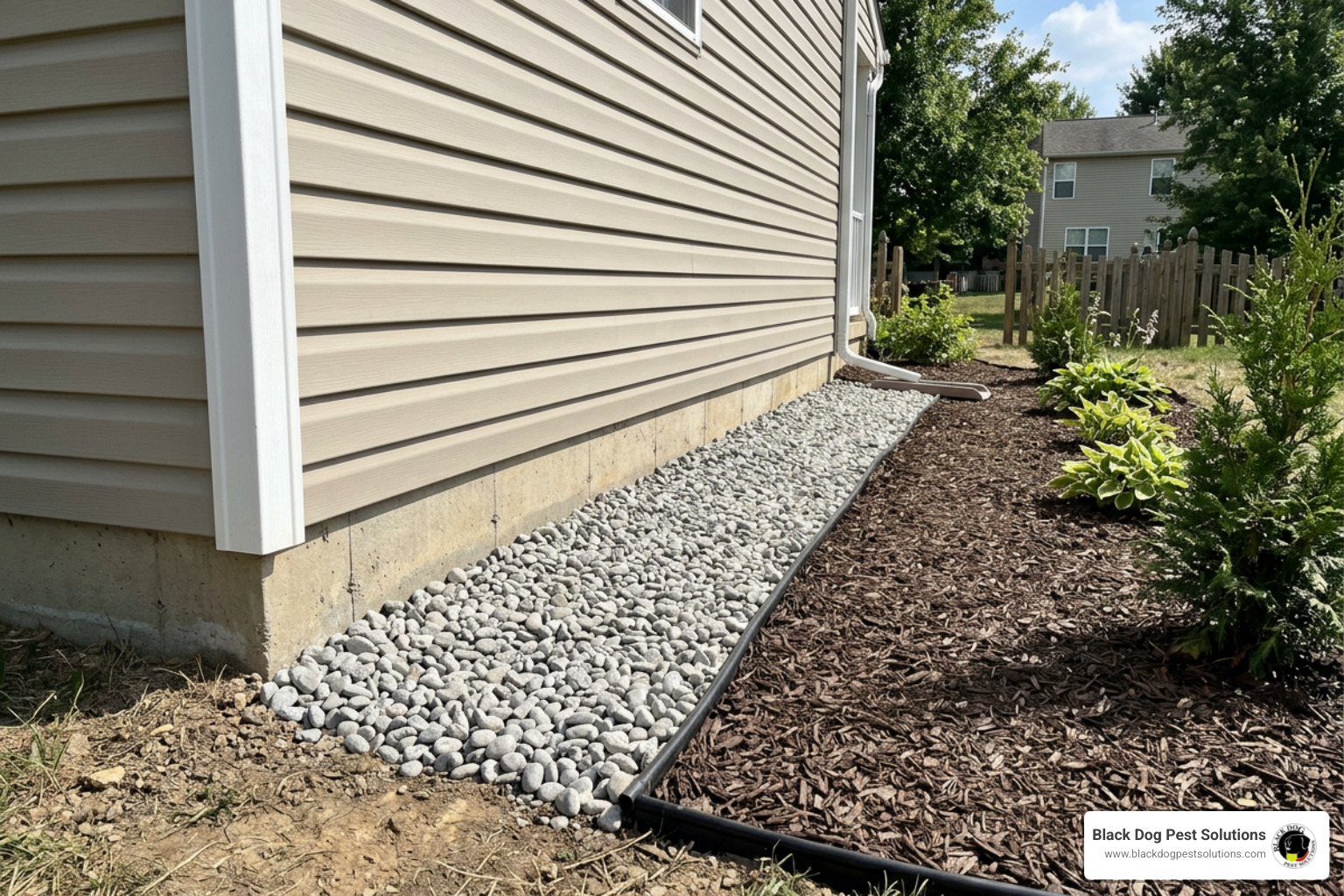
To make your home’s exterior less attractive to springtails, we recommend the following moisture control practices:
- Mulch Management: Keep mulch 12 to 18 inches back from your home’s foundation. Instead of letting organic mulch touch your siding, use a barrier of gravel, river rocks, or decorative stone near the home.
- Correct Drainage: Ensure the ground slopes away from your foundation so rainwater doesn’t pool against your basement walls.
- Extend Downspouts: Attach extensions to your gutters to direct roof runoff at least several feet away from the home.
- Avoid Overwatering: Let your lawn and landscape beds dry out slightly between waterings. Overwatering creates the perfect moldy, humid environment that springtails love.
- Trim Vegetation: Prune low-hanging shrubbery, ground covers, and branches to improve air circulation and help the sun dry out damp soil.
- Seal Entry Points: Inspect your foundation, windows, and doors for gaps about 1/4 inch or smaller. Seal any cracks with high-quality caulk. Since springtails can easily slide through standard screen mesh, keeping even tiny gaps tightly sealed is essential.
- Use Chewing-Resistant Materials: When sealing entry points (especially if you are also trying to keep out mice, which reproduce quickly), use metal materials like copper mesh or steel wool. These are far more resistant to chewing than foam or plastic.
If you are looking for local support to tackle these issues, professional pest control companies in Avon can help you identify moisture problems and apply targeted treatments. For a deeper dive into outdoor prevention, check out our guide on taming the outdoors to prevent springtails. If you feel overwhelmed by the sheer number of hopping bugs, we have practical advice on eliminating springtails without losing your mind.
Best Practices and FAQs for Granular Application
When applying granules yourself, it is recommended to use a properly calibrated lawn spreader (drop or rotary) to help ensure even coverage.
- Application Rates: For synthetic pyrethroids, standard rates are typically 2 to 3 lbs per 1,000 square feet. For natural plant-oil granules, rates range from 2 to 5 lbs per 1,000 square feet on lawns, and 1 to 2 lbs per 500 linear feet for foundation perimeters.
- Spreader Settings: Refer to the product label to match your specific spreader brand with the recommended setting.
- Child and Pet Safety: For synthetic products, keep children and pets off the treated area until the granules have been watered in and the grass has dried completely. For plant-oil granules, the area is generally safe immediately, but verify with the specific product label.
- Legal Requirements: If you are hiring someone to apply these treatments for you, keep in mind that the State of Ohio requires a pesticide business license for anyone applying pesticides for hire. Ensure you are working with licensed pest control companies in Avon.
For more identification tips and product insights, you can consult resources like Springtails – Amdro, Identify and Control Springtails – GardenTech, or read about broad-spectrum yard treatments on springtail control and treatments for the home yard and garden.
Are springtails harmful to humans, pets, or structures?
No, springtails are completely harmless. They do not bite humans, they do not sting, and they do not carry any diseases or poisons. Unlike termites or carpenter ants, they do not cause any structural damage to your wood or drywall. They are simply an annoying nuisance.
If they find their way into your swimming pool, they will eventually drown, but they can be easily skimmed out. If they crawl into your home, you can simply vacuum them up or wipe them away with a damp cloth. For more tips on keeping them out of your living spaces, read our indoor springtail removal tips.
How long do granular treatments take to work?
Granular treatments are designed for long-term reduction rather than instant knockdown. Because the granules must be watered in to dissolve and penetrate the soil, it can take several days to a week to see a drop in the springtail population.
In cases of severe soil infestations, it can take a few weeks of consistent moisture management and granular activity to break the breeding cycle. If you have corrected your drainage, trimmed your plants, applied granules, and the problem still persists, it is time to call a licensed pest professional.
Can I apply springtail granules myself in Ohio?
Yes, homeowners are legally allowed to purchase and apply over-the-counter pest control granules on their own residential property. However, you must follow the label instructions exactly.
If you decide to hire a professional to handle the application, make sure they are properly certified. Ohio law strictly requires a pesticide business license for anyone applying pesticides for hire. Licensed pest control companies in Avon have the specialized training and equipment to apply these products safely and effectively.
Conclusion
At Black Dog Pest Solutions, we believe that the best approach to pest control is a smart, honest, and environmentally responsible one. We are a family-owned, BBB-accredited business run by Mat Ledyard, and we have been serving Northern Ohio communities — including Avon, Lorain, Elyria, Westlake, and Strongsville — since our founding. With a 4.9/5.0-star Google rating, we pride ourselves on providing clear answers and professional service.
While granules to kill springtails can be a helpful tool for knocking down large outdoor populations, long-term prevention typically relies on managing moisture and sealing up entry points.
If you are dealing with a persistent springtail invasion or want a professional inspection of your home’s perimeter, reach out to us today. Explore our professional pest control services to see how we can help keep your home comfortable and pest-free.