
Why Finding the Best Way to Get Rid of Paper Wasps Matters Before Summer Peaks
The best way to get rid of paper wasps is to identify the nest, judge the risk, and act before the colony becomes large.
Here is the safest basic approach for small, accessible nests only:
- Inspect the nest location and confirm it is safe to approach
- Wait until after dark when wasps are less active and most of the colony is present
- Apply a labeled wasp spray from a safe distance, or use soapy water only on a very small, reachable nest
- Wait at least 24 hours, then remove the nest only if there is no activity
- Clean the area with detergent and seal nearby gaps to reduce the chance of rebuilding
Paper wasps are common in Northeast Ohio from spring through late summer. By late summer, one nest can hold hundreds of wasps. Disturbing a nest at the wrong time, using the wrong method, or working without protection can quickly become dangerous.
Small nests in low, open, easy-to-reach areas may be manageable for some homeowners. Large nests, nests near doors or play areas, nests inside structures, or any situation involving a sting allergy should be handled by a licensed professional.
I’m Mat Ledyard, owner of Black Dog Pest Solutions in Avon, Ohio. With nearly two decades of pest control experience, I have removed many paper wasp nests from homes and businesses across Northeast Ohio. This guide explains the best way to get rid of paper wasps safely, with clear steps and practical warnings for homeowners.
Understanding Paper Wasps: Identification and Behavior
Before taking any action, confirm that you are dealing with paper wasps. Misidentifying stinging insects can lead to painful surprises, especially if the nest belongs to more defensive yellowjackets or hornets.

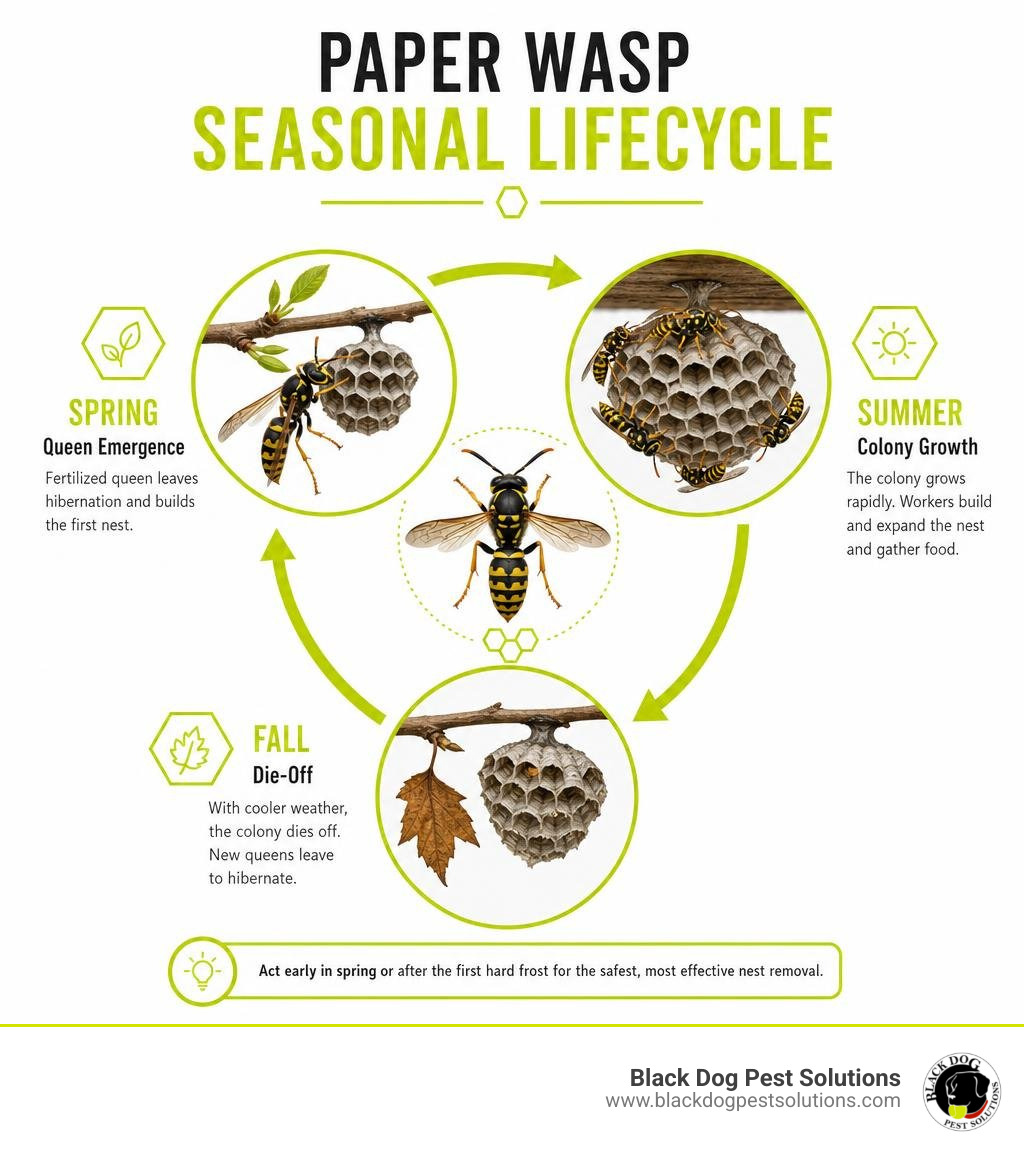
Paper wasps belong to the genus Polistes. Their colonies include queens, workers, and males. In Northern Ohio, old colonies die off during winter, while fertilized queens overwinter in protected areas such as attics, woodpiles, and gaps behind loose siding. In spring, those queens emerge and begin new nests.
For comparison, see Getting Rid of Paper Wasps, Yellowjackets, and Other Stinging Insects.
| Feature | Paper Wasps | Yellowjackets | Hornets |
|---|---|---|---|
| Colony Size | Small (typically 20 to 75 wasps) | Large (1,000 to 5,000+ workers) | Moderate to large (100 to 700 workers) |
| Nest Structure | Open-comb, umbrella-like, single stalk | Enclosed paper envelope, often underground | Large, enclosed gray paper “basketball” |
| Aggression Level | Lower, but will sting if the nest is threatened | High; easily provoked | High; strong nest defenders |
| Flight Appearance | Slender body, long legs dangling | Compact body, legs tucked close | Large, heavy-bodied, fast flight |
What Do Paper Wasps Look Like?
Paper wasps are usually 3/4 to 1 inch long. They have slender bodies, a narrow “wasp waist,” and dark brown or black coloring with yellow markings. Some species have reddish-brown tones.
A key clue is their long legs, which often hang beneath them in flight. This differs from yellowjackets, which look more compact while flying. For more identification help, see our guide on Wasps.
Identifying Paper Wasp Nests vs. Other Stinging Insects
Paper wasp nests are often called “umbrella nests” because of their curved, open shape. They are made from chewed wood fibers mixed with saliva, creating gray, paper-like combs with visible hexagonal cells.
Unlike hornets and yellowjackets, paper wasps do not build a protective outer envelope around the comb. Their nests usually hang from a single stalk under eaves, porch ceilings, window frames, door frames, and attic rafters. For more on related pests, read our resource on Bees Wasps Hornets.
The Best Way to Get Rid of Paper Wasps: A 5-Step Safe Removal Guide
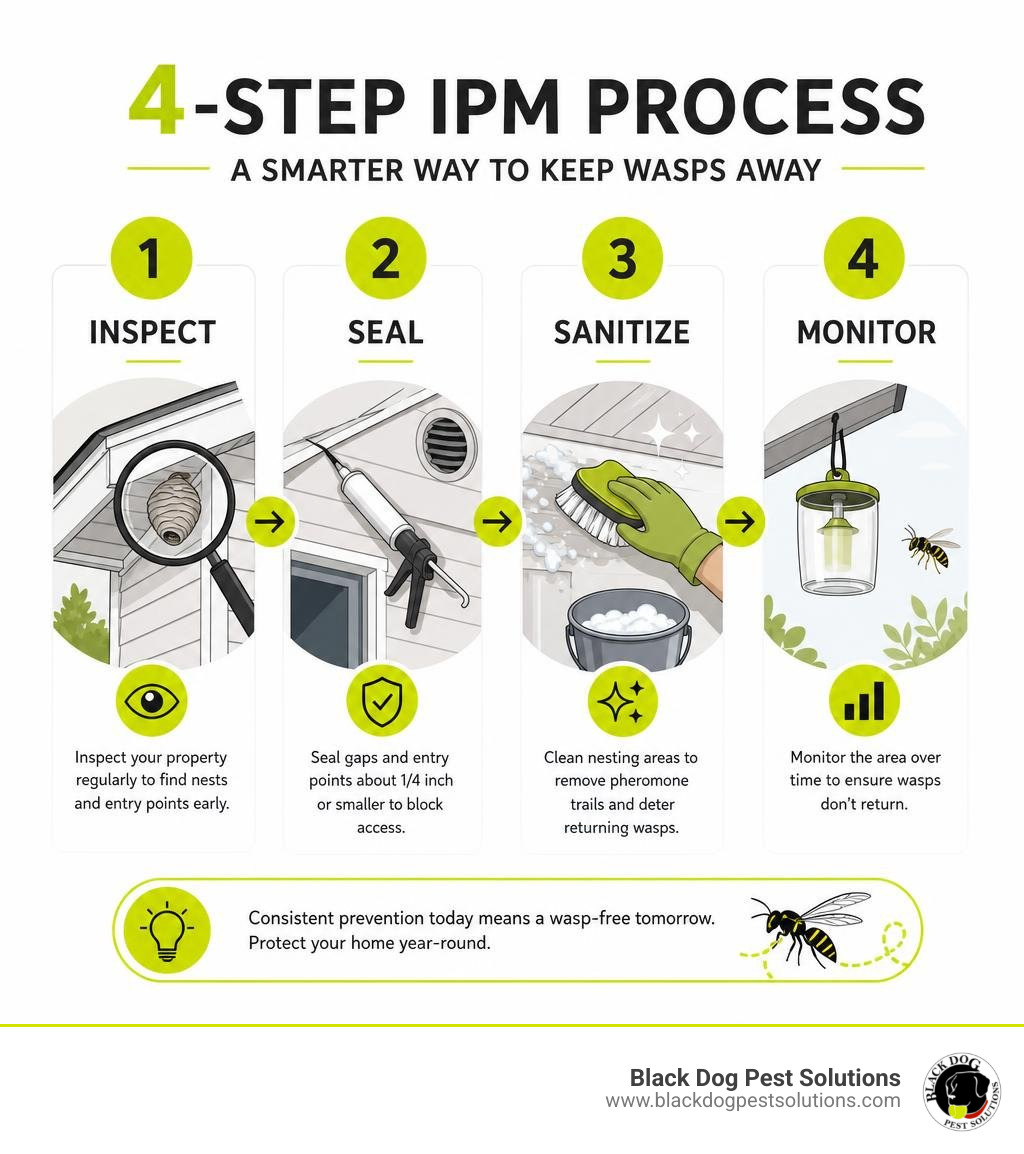
The best way to get rid of paper wasps follows an Integrated Pest Management (IPM) approach: inspect first, reduce access points, and use targeted treatment only when needed.
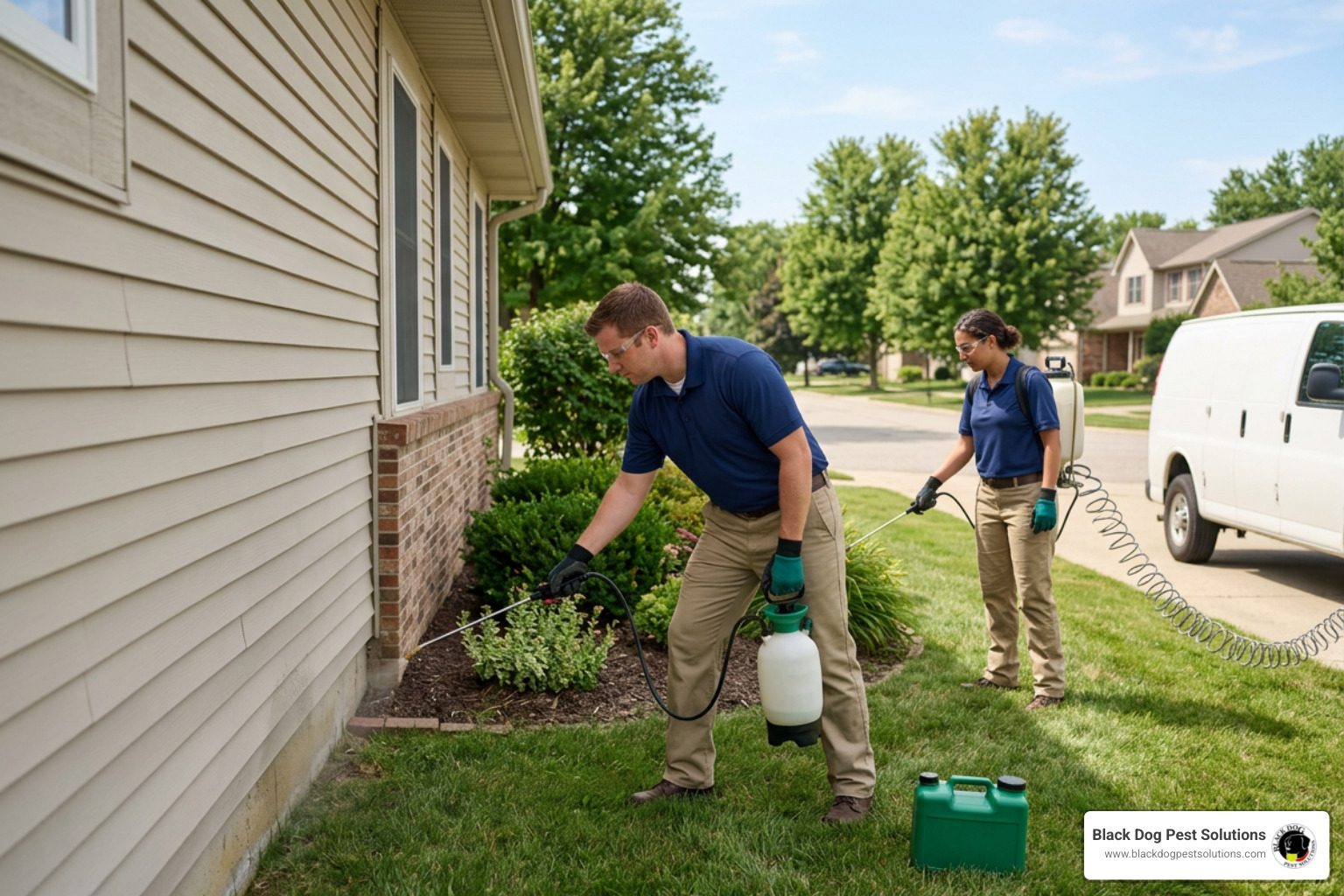
For technical guidance, see Controlling Paper Wasps in and Around Structures | NC State Extension Publications. If you decide to treat a nest yourself, limit DIY work to small, open, easy-to-reach nests. Do not attempt removal if the nest is high, hidden, large, or close to heavy foot traffic.
Step 1: Inspect and Assess the Nest Location
During the day, watch from a safe distance to locate active nests. Look for repeated flight paths under eaves, gutters, porch roofs, and other sheltered areas.
Ask: Can I reach this nest safely without a ladder, tight space, or close contact? If a small nest is in a remote corner where people do not pass, leaving it alone may be the safest choice because paper wasps help control garden pests. If the insects seem unusually aggressive or the nest looks enclosed, verify the species before acting. Our guide on Hornets can help.
Step 2: Choose the Best Time of Day and Season for Treatment
Timing matters. Paper wasps are least active after dark or before dawn, especially in cooler temperatures.
- Time of Day: Treat only at night or pre-dawn, when most wasps are on the nest and less active. Avoid shining a bright white light directly at the nest.
- Season: Spring is the safest time to address starter nests. In March and April, nests are often small and may contain only the founding queen. By late summer, colonies are larger and more hazardous.
Step 3: Apply the Best Way to Get Rid of Paper Wasps Using Safe DIY Methods
Use caution and follow all label directions. Wear long pants, a thick long-sleeved shirt or sweatshirt, gloves, closed-toe shoes, and eye protection. If you feel unsure, stop and call a professional.
- Prepare Your Light: Use a red-filtered light when possible, or place a flashlight on the ground away from you and aimed toward the nest.
- Plan Your Exit: Clear the path before treatment. If wasps fly out, leave calmly and do not swat.
- Choose Your Treatment:
- Commercial Wasp Spray: Use only a product labeled for wasps and follow the directions exactly. A jet spray can allow treatment from 15 to 20 feet away. Aim carefully at the nest and attachment point.
- Soapy Water Solution: For a very small, exposed, reachable nest, some homeowners use about 1/4 cup of dish soap in a pressurized sprayer. This method still carries sting risk and should not be used on high, hidden, or busy-area nests.
Step 4: Safely Remove and Destroy the Nest Structure
Do not knock the nest down right away. Wait at least 24 hours and check for activity from a safe distance. If wasps are still present, do not approach.
When there is no activity, use a long broom handle, paint scraper, or putty knife to remove the attachment stalk. Let the nest fall into a garbage bag, seal it, and dispose of it in an outdoor trash can.
Step 5: Clean the Area and Monitor for Returning Wasps
Wasps use chemical cues around nesting sites. If residue remains, returning wasps or future queens may try to rebuild nearby.
Scrub the attachment area with soapy water, household detergent, or a diluted bleach solution. Then monitor the spot for several weeks. Seal nearby gaps where queens could shelter or start new nests.
Natural and Non-Chemical Prevention Strategies
Prevention can reduce wasp activity without relying on broad chemical treatments. The goal is to make your home less attractive to nesting queens and reduce easy shelter around entry points.
For more context, read What To Do If You Find A Paper Wasp Nest Near Your Home.
Natural Repellents and Habitat Modification
- Paint Eaves Sky Blue: Some homeowners use light blue paint under porch roofs and eaves to discourage nesting, though results vary.
- Manage Attractants: Keep garbage cans covered, remove outdoor pet food promptly, and cover food during cookouts.
- Trim Landscaping: Keep trees and shrubs near the home trimmed to improve airflow and reduce sheltered nesting areas.
- Use Repellent Plants Carefully: Peppermint, eucalyptus, and citronella may help deter some foraging wasps, but they should not be relied on as the only prevention method.
- Decoy Nests: Fake nests may discourage some searching queens in early spring, but results are inconsistent.
Why Prevention is the Best Long-Term Approach
The long-term IPM goal is exclusion: reduce the places where pests can enter, hide, or nest.
Inspect your exterior for cracks, gaps, and crevices. Check utility line openings, soffit vents, window screens, and siding gaps. Seal openings about 1/4 inch or smaller with quality silicone caulk or expandable foam. For vents and larger openings, use heavy-duty mesh or wire cloth. Metal materials are recommended because they resist chewing and provide longer-lasting protection.
When to Call Pest Control Companies in Avon
DIY treatment is only appropriate for small, open, low nests that you can reach safely from the ground. Many paper wasp situations are better handled by a professional.
You should contact professional pest control companies in Avon if:
- The nest is high, hidden, or requires a ladder.
- The nest is inside a wall void, attic, soffit, crawlspace, or other enclosed area.
- The nest is near a doorway, deck, patio, play area, business entrance, or other high-traffic location.
- Anyone nearby has a known or suspected allergy to insect stings.
- The nest is larger than a tennis ball or has heavy wasp traffic.
- You are not sure whether the insects are paper wasps, yellowjackets, hornets, or bees.
- You have already tried treatment and wasps remain active.
- You feel unsafe or uncomfortable at any point.
Professional technicians have protective equipment, commercial tools, and training to handle stinging insects safely. If you are dealing with a risky nest, visit our service page on Stinging Bugs to see how Black Dog Pest Solutions can help.
Frequently Asked Questions About Paper Wasps
What should I do if I get stung by a paper wasp?
Leave the area right away to avoid more stings. Paper wasps can sting repeatedly. Wash the sting site with soap and water, apply a cold compress, and consider an over-the-counter antihistamine or hydrocortisone cream for itching or swelling.
Note: Call 911 or seek emergency medical care immediately if you have trouble breathing, swelling of the face or throat, dizziness, widespread hives, or other signs of a severe allergic reaction.
Are paper wasps beneficial to have around the garden?
Yes. Paper wasps prey on caterpillars, tomato hornworms, flies, beetle larvae, and other garden pests. If a nest is high, away from people, and not creating a risk, leaving it alone can support natural pest control.
Does Ohio require a license for professional pesticide application?
Yes. In Ohio, anyone applying pesticides for hire must hold the proper pesticide business license and certification through the Ohio Department of Agriculture. When hiring pest control companies in Avon, verify that the company is licensed and insured.
Conclusion
Finding the best way to get rid of paper wasps starts with careful identification, safe timing, and honest risk assessment. Small, open nests may be manageable when treated cautiously, but large, hidden, high, or high-traffic nests should be left to professionals.
Black Dog Pest Solutions is a family-owned, BBB-accredited business serving Avon, Ohio, and the Greater Cleveland area. Led by Mat Ledyard, our team uses Integrated Pest Management (IPM) practices that focus on inspection, exclusion, moisture control, and targeted treatments.
If you need help from one of the leading pest control companies in Avon, we are ready to assist. More info about stinging bug services is available here, or you can contact our local team to protect your home long-term.