
What to Do When You Find a Mouse in Garage Spaces
Finding a mouse in your garage is more serious than it might seem. One mouse can quickly become many — and the damage, health risks, and stress that come with an infestation are far easier to prevent than to fix after the fact.
Here’s what to do if you have a mouse in your garage:
- Look for signs — droppings along walls, gnaw marks, shredded nesting material, or a musky smell
- Identify entry points — gaps about 1/4 inch or smaller around doors, pipes, vents, and the foundation
- Remove attractants — store food in airtight metal or thick plastic containers and clear out clutter
- Set traps — place snap traps or live-catch traps along walls where you see activity
- Seal gaps — use steel wool, hardware cloth, or hydraulic cement to close off entry points
- Monitor regularly — check traps and inspect for new signs of activity on a weekly basis
- Call a professional — if the problem keeps coming back or you find signs of a larger infestation
Garages are one of the most common entry points for mice moving into a home. They offer warmth, shelter, and often plenty of food — from birdseed and pet food to cardboard boxes perfect for nesting. Once mice settle in, they reproduce quickly, making fast action important.
I’m Mat Ledyard, owner of Black Dog Pest Solutions in Avon, Ohio, and I’ve been working in pest control since 2005 — helping Northern Ohio homeowners deal with exactly this kind of mouse in garage situation. In that time, I’ve seen how a small gap or a bag of birdseed can turn into a full-blown infestation if left unchecked.
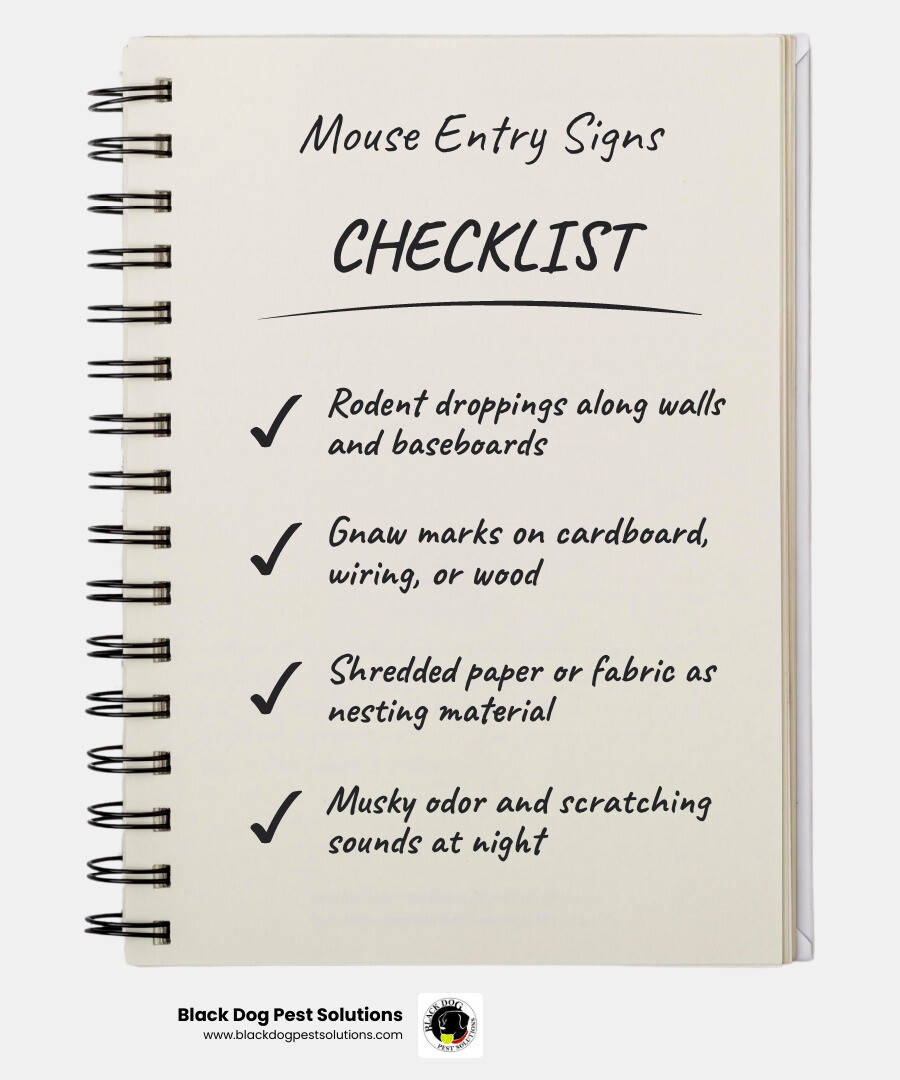
Identifying the Signs of a Mouse in Garage
Before we can solve the problem, we have to confirm that a mouse—or a family of them—has actually moved in. Because mice are nocturnal and cautious, you might never see the rodent itself. Instead, you have to play detective and look for the evidence they leave behind.

In Northern Ohio, we primarily deal with the House Mouse and the Deer Mouse. While they have different habits, they leave very similar calling cards. If you notice any of the following, it’s time to take action:
- Droppings: These are usually the first sign. Mouse droppings look like small, dark grains of rice and are most often found along the edges of the garage, behind storage bins, or near food sources.
- Gnaw Marks: Mice have teeth that never stop growing, so they chew on almost anything to keep them filed down. Look for nibble marks on cardboard boxes, plastic storage bins, or even the wooden frame of your garage door.
- Musky Odor: A large infestation or a long-term nesting site will produce a distinct, unpleasant ammonia-like smell from urine and droppings.
- Nesting Materials: Mice love “soft” materials. If you find shredded paper, bits of insulation, or chewed-up rags tucked into a corner or inside a box, you’ve likely found a nest.
- Scratching Sounds: At night, when the garage is quiet, you might hear faint rustling or scratching sounds coming from the walls or ceiling voids.
To learn more about identifying these specific pests, check out our detailed guide on Mice.
Common Indicators of a Mouse in Garage
Mice are opportunistic. They aren’t just looking for a place to sleep; they are looking for resources. In a typical garage in Avon or Westlake, this often means they are targeting your storage. Shredded cardboard is a classic sign, as it makes for excellent insulation in their nests.
You should also keep an eye out for “rub marks.” Mice have oily fur, and as they travel the same paths along walls every night, they leave behind dark, greasy stains or smudges. If you see these marks near a gap in the siding or a corner of the garage door, you’ve found one of their main highways. According to experts at Earthkind, identifying these high-traffic areas is the first step toward effective control.
Health Risks and Property Damage
It’s easy to think of a mouse in garage as a minor nuisance, but they pose real risks to your home and health. Mice can carry diseases like Hantavirus and Leptospirosis, which can be transmitted to humans through contact with urine, droppings, or even dust disturbed during cleaning.
Beyond health, the property damage can be significant. One of the most dangerous habits mice have is chewing on electrical wiring. In fact, many “unexplained” house fires are actually caused by rodents gnawing through wire insulation in garages or attics. Because mice reproduce quickly—with a single female capable of producing dozens of offspring in a year—a small problem can escalate into a structural threat in just a few months.
How to Get Rid of a Mouse in Garage
At Black Dog Pest Solutions, we utilize Integrated Pest Management (IPM). This means we don’t just throw chemicals at a problem; we look at the environment, seal entries, and use the most targeted, humane methods possible to resolve the issue.
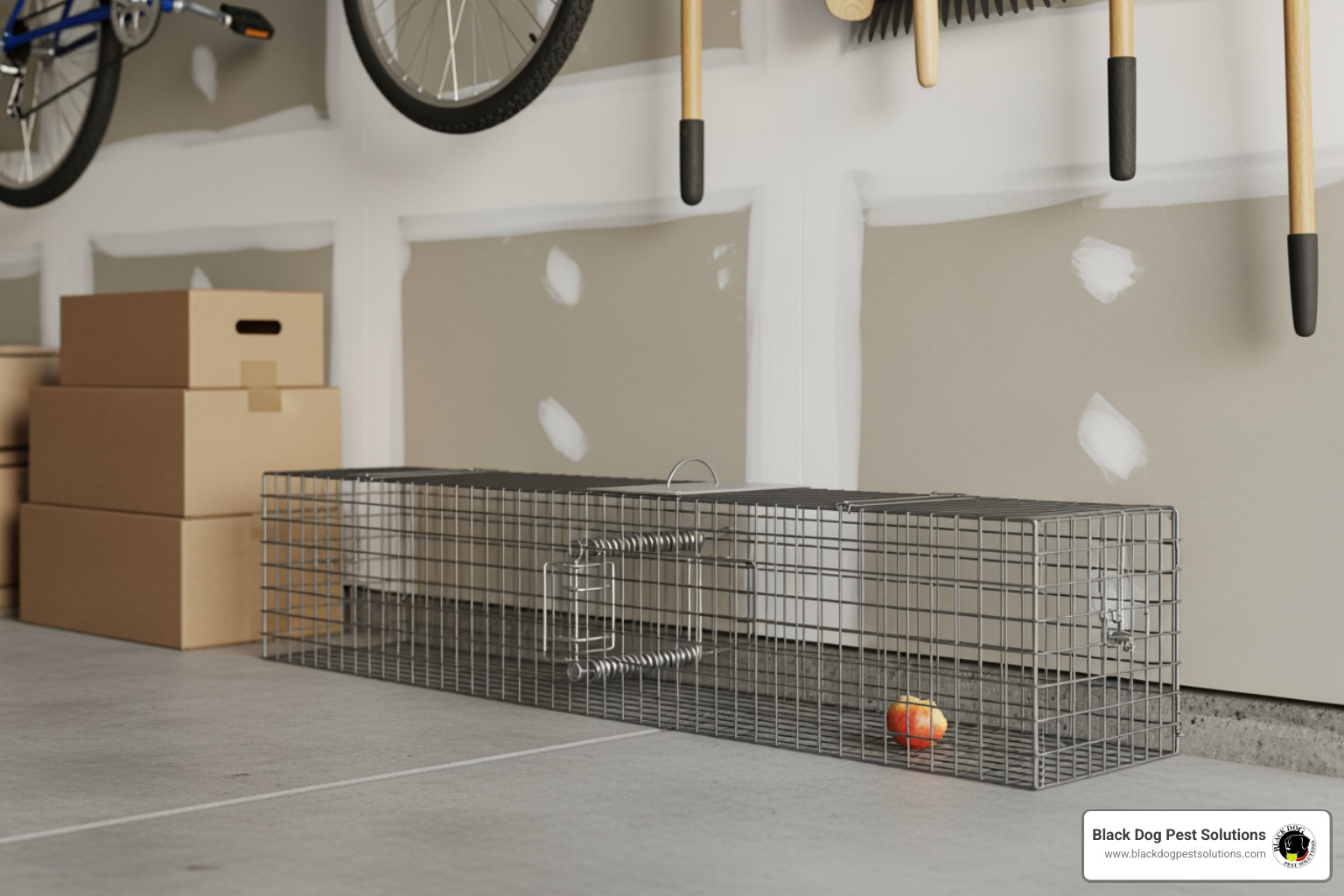
When deciding how to remove the mice, you have a few options. Many of our neighbors in the Greater Cleveland area prefer humane mouse control methods that focus on minimizing stress and suffering. For those interested in these techniques, we have a specialized guide on Compassionate Critter Control: Humane Mouse Removal Strategies.
Effective Trapping Strategies
Regardless of the type of trap you choose, success comes down to placement. Mice have poor eyesight and tend to navigate by whiskers, hugging the walls as they move. Therefore, traps should always be placed perpendicular to the wall, with the trigger or entry hole facing the baseboard.
- Baiting: You don’t need a cartoonish block of cheese. A small amount of peanut butter is often the most effective bait because it’s high in protein and can’t be easily pulled off the trap without triggering it.
- Quantity: Don’t just set one trap. If you’ve seen one mouse, there are likely others. Setting a dozen traps increases your chances of a quick resolution.
- Monitoring: You must check your traps frequently—at least once a day. This is especially important for live-catch traps to ensure the animal doesn’t suffer from dehydration or stress.
For more tips on the fastest ways to clear out an infestation, read our article on Quick Kill: The Fastest Ways to Evict Mice from Your House.
Humane Removal and Disposal
If you are using live-catch traps, you’ll need a plan for release. Local release guidance can vary, but generally, you want to release the mouse in a suitable habitat where it won’t immediately find its way back into your or your neighbor’s garage.
When handling any traps—live or traditional—always wear gloves and a mask to protect yourself from pathogens. If you are disposing of a dead mouse, double-bag it in plastic before placing it in your outdoor trash bin.
| Trap Type | Best For | Humane Level | Monitoring Requirement |
|---|---|---|---|
| Live-Catch Trap | Catch and release | High (Minimizes stress) | Very High (Check every 12 hours) |
| Snap Trap | Quick resolution | Moderate (Instant) | Moderate (Check daily) |
| Electric Trap | Clean disposal | Moderate (Instant) | Moderate (Check daily) |
Sealing Entry Points for Long-Term Control
We always tell our clients in Avon Lake and North Ridgeville that prevention as the best long-term approach. You can trap mice all day, but if you don’t close the “front door,” more will simply move in to take their place.
Mice are incredibly flexible. Because of their skeletal structure, they can fit through gaps about 1/4 inch or smaller—roughly the size of a dime. To keep them out, you need to use materials that are more resistant to chewing, such as steel wool, hardware cloth, or metal sheeting. Standard expanding foam or plastic caulk won’t work on its own, as mice can chew through them in minutes.
For a deeper dive into the mechanics of mouse-proofing, The Spruce offers excellent DIY tips for structural sealing.
Blocking a Mouse in Garage Entryway
The biggest entry point is almost always the garage door itself. Over time, the rubber seal at the bottom can crack, warp, or be gnawed away.
- Garage Door Seals: Replace worn bottom seals with “rodent-proof” versions that contain stainless steel mesh.
- Threshold Plates: Installing a metal threshold on the floor can help create a tighter seal.
- Aluminum Door Sweeps: For the side “man door” of your garage, an aluminum sweep is much more effective than a rubber one.
- Hydraulic Cement: If you have cracks in your concrete foundation, use hydraulic cement or a concrete patch to fill them permanently.
Maintenance and Exterior Conditions
The area outside your garage matters just as much as the inside. Mice don’t just appear; they are drawn to the perimeter of your home first.
- Tall Grass: Keep your lawn mowed short near the garage foundation to remove hiding spots.
- Firewood Storage: Never stack firewood against the garage wall. Store it at least 20 feet away and off the ground.
- Utility Line Gaps: Check where pipes or wires enter the garage. These are often overlooked holes that can be easily stuffed with steel wool and sealed with silicone caulk.
Sanitation and Natural Repellents
A clean garage is a mouse-free garage. Mice are attracted to clutter because it provides safety and nesting material. By switching from cardboard boxes to airtight plastic or metal bins, you remove their “bedroom” and their “pantry” in one fell swoop.
According to Martha Stewart, natural deterrents can be a great supporting step in your overall strategy. While they aren’t a “magic bullet,” they can make your garage less appealing to scouts looking for a new home.
Preventing a Mouse in Garage Return
Sanitation is about more than just tidying up; it’s about removing the biological reasons for a mouse to stay.
- Pet Food Storage: If you keep dog food or birdseed in the garage, it must be in a thick plastic or metal container with a locking lid. Mice can easily chew through paper bags.
- Cardboard Removal: Get rid of empty shipping boxes. If you must keep them, store them on elevated shelving rather than on the floor.
- Cleaning Spills: If you spill birdseed while filling a feeder, sweep it up immediately. Even a few seeds are enough to sustain a mouse for days.
For more tips on keeping your space clean, see our guide: Keep Your Garage Squeaky Clean: A Guide to Effective Mice Control.
The Role of Natural Deterrents
Mice have a highly developed sense of smell. You can use this against them by introducing scents that cause “sensory disturbance.”
- Peppermint Oil: Soaking cotton balls in pure peppermint oil and placing them near entry points can act as a mild deterrent.
- Balsam Fir Oil: Products like Fresh Cab use botanical oils to trigger an escape response in mice.
- Cedar Blocks: These can be placed in storage bins to protect fabrics and paper.
These scents fade. For them to remain even partially effective, you should plan on weekly refreshing of any oils or cotton balls.
When to Hire pest control companies in Avon
Sometimes, despite your best efforts, the mice keep coming back. This is often because they have established nests deep within wall voids or the ceiling where DIY traps can’t reach. If you are dealing with recurring infestations or you hear scratching in areas you can’t access, it’s time to call in the experts.
If you’re feeling overwhelmed, don’t worry. Our article on how to find emergency mice exterminators can help you navigate the process of getting professional help quickly.
Why Homeowners Trust pest control companies in Avon
When you work with a local, licensed, family-owned company like Black Dog Pest Solutions, you get more than just someone setting traps. We understand the specific local pest patterns of Northern Ohio. We know how the lake effect weather in Sheffield Lake or the older foundations in Lakewood can make homes more attractive to mice.
We use a professional-grade version of IPM that includes a thorough inspection to find the entry points you might have missed. Our goal is to provide a reliable, long-term solution that protects your family and your property. To understand our full process, read about Integrated Pest Management.
Frequently Asked Questions about Garage Mice
Are natural repellents like peppermint oil effective?
Peppermint oil is a deterrent only and is best used as a supporting step. It will not remove an existing infestation, but it can make an area less attractive to new mice. For it to work, you must use high-quality essential oils and commit to refreshing them weekly. It is most effective when combined with sealing and sanitation.
How small of a hole can a mouse fit through?
A mouse can fit through an opening about 1/4 inch or smaller—roughly the size of a dime. Their flexible skeleton and soft cartilage allow them to squeeze through any gap that their head can fit through. This is why sealing materials like steel wool and metal mesh are so important.
When should I call professional pest control companies in Avon?
You should call a professional if:
- You see visible droppings after you’ve already performed a cleanup.
- You hear scratching sounds in the walls or ceiling.
- Your DIY trapping efforts haven’t stopped the activity after two weeks.
- You have health concerns or a member of the household has allergies triggered by pests.
Conclusion
Managing a mouse in your garage doesn’t have to be a nightmare. By following the IPM steps of inspection, sanitation, sealing, and trapping, you can reclaim your space. The best defense is a good offense—seal those 1/4-inch gaps before the winter chill drives the rodents inside.
At Black Dog Pest Solutions, Mat Ledyard and our team are dedicated to helping our neighbors in Avon and across Northern Ohio stay pest-free. We are proud of our 4.9-star rating and our BBB accreditation, which reflect our commitment to professionalism and customer satisfaction. If you need a hand with a stubborn infestation, we’re here to help.
For more information on the costs associated with professional service, see our guide on Mice Pest Control Costs. If you’re ready to get started, visit our main Mice page to learn more about how we can help you achieve long-term protection.