
The Best Carpenter Ant Spray Options Compared (And When to Skip the Spray)
Carpenter ant spray is one of the most common ways homeowners tackle an infestation — but not all sprays work the same way, and some situations call for more than a can off the shelf.
Here’s a quick look at the top options to help you decide fast:
| Product | Type | Residual Protection | Best For |
|---|---|---|---|
| TERRO Carpenter Ant & Termite Killer Spray | Ready-to-use | Up to 4 months | Indoor/outdoor contact + residual |
| TERRO Carpenter Ant & Termite Killer Aerosol | Aerosol | Up to 4 weeks | Cracks, crevices, spot treatment |
| BioAdvanced Carpenter Ant & Termite Killer Plus Concentrate | Concentrate | Varies by mix | Large perimeter barriers |
| Harris Carpenter Ant Killer (2-Pack) | Ready-to-use | Varies | Spot treatment indoors/outdoors |
| Spectracide Terminate Concentrate | Concentrate | Up to 8 weeks | Outdoor barrier, up to 16,000 sq ft |
| Raid Ant & Roach Killer 26 | Aerosol | Up to 12 weeks | Indoor contact kill on trails and entry points |
Quick answer: For many homeowners dealing with a visible trail or a few entry points, a ready-to-use residual spray like TERRO or Raid can reduce carpenter ant activity quickly. For larger or hidden infestations — especially in wall voids or structural wood — a concentrate, bait program, or professional inspection may be more effective.
Carpenter ants are one of several common seasonal pests in Northern Ohio, where Lake Erie humidity can contribute to damp, softened wood around homes and commercial buildings. That same regional moisture pattern also supports spring termite pressure, summer mosquitoes and cockroaches, winter rodent activity, and fall invaders such as stink bugs, earwigs, boxelder bugs, silverfish, and centipedes. Carpenter ants do not eat wood like termites do — they tunnel through it to build nests, which means damage can develop gradually before it is noticed.
Choosing the right spray depends on where the ants are, how severe the infestation is, and whether a satellite nest may be hidden inside walls, window frames, or other voids.
This guide takes a neutral, IPM-based approach to carpenter ant spray, including what retail products can and cannot do, how to apply them safely, and when it may make sense to compare pest control companies in Avon, Ohio for additional help.
Carpenter ant spray definitions:
- Carpenter ants in Ohio
- How to get rid of carpenter ants naturally
- How to get rid of carpenter ants in a tree
Identifying the Threat: Carpenter Ants vs. Termites
Before you grab a bottle of carpenter ant spray, you need to be certain about what you’re fighting. In Northern Ohio, especially near the high-moisture areas of Lake Erie, both carpenter ants and termites are common seasonal threats.
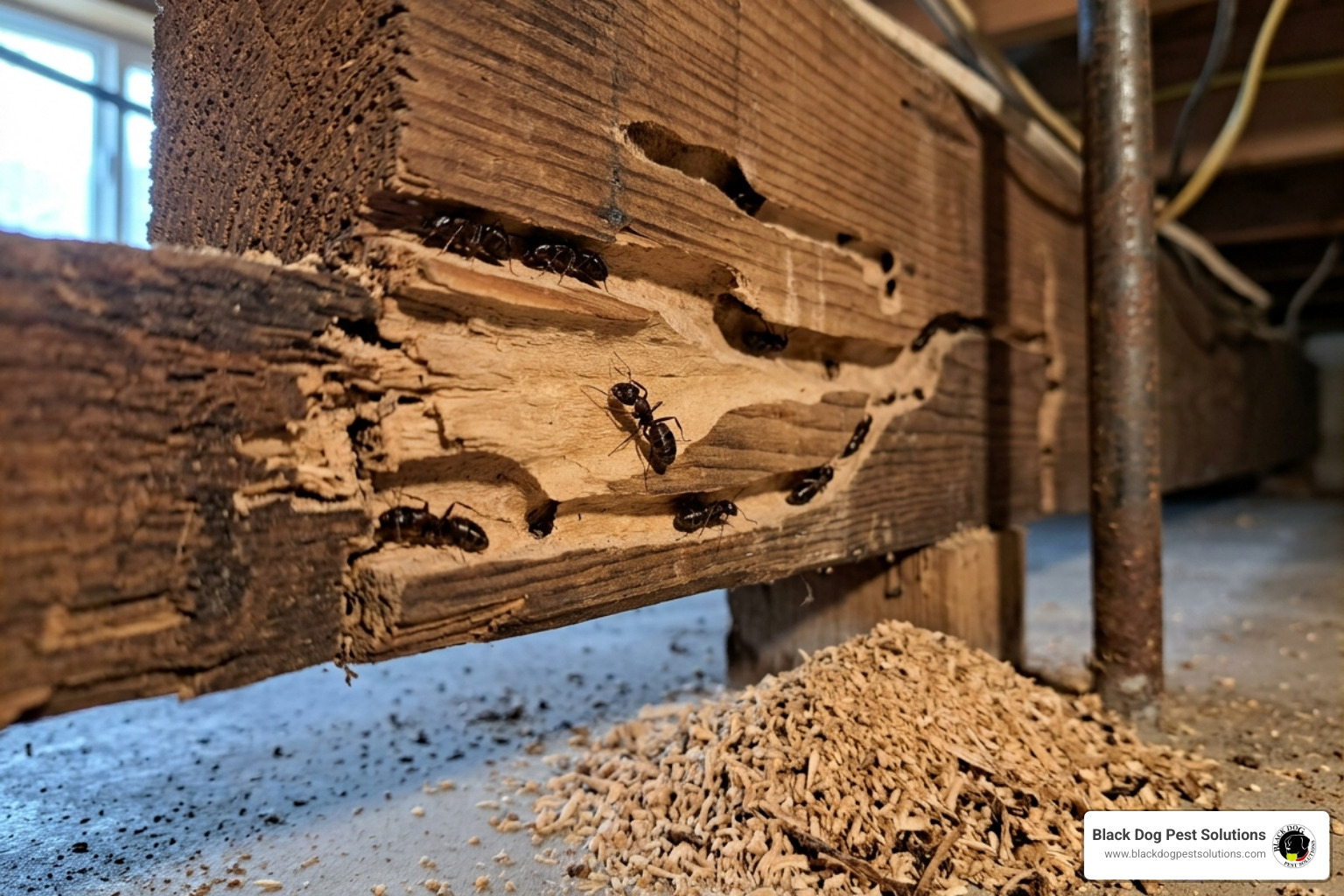
Carpenter ants are large, ranging from 1/4 inch to a full 1 inch in length. They are typically black, though some species show reddish hues. Unlike termites, which consume wood for nutrition, carpenter ants simply excavate it to create galleries for their nests. This leads to a tell-tale sign of infestation: frass. Frass looks like coarse sawdust and often contains bits of insect parts or debris. If you find a pile of sawdust near a wooden beam, you’re likely looking at a carpenter ant colony. Their galleries are notably smooth and clean, whereas termite-damaged wood is often filled with mud or soil.
Another key difference is the presence of “winged reproductives” or swarmers. While both pests swarm in the spring, carpenter ants have elbowed antennae and unequal wing lengths. Termites have straight antennae and wings of equal length. Identifying the pest is the first step of Integrated Pest Management (IPM), a strategy we use to ensure we aren’t just spraying chemicals blindly but addressing the root cause.
Understanding Carpenter Ant Spray in an IPM Framework
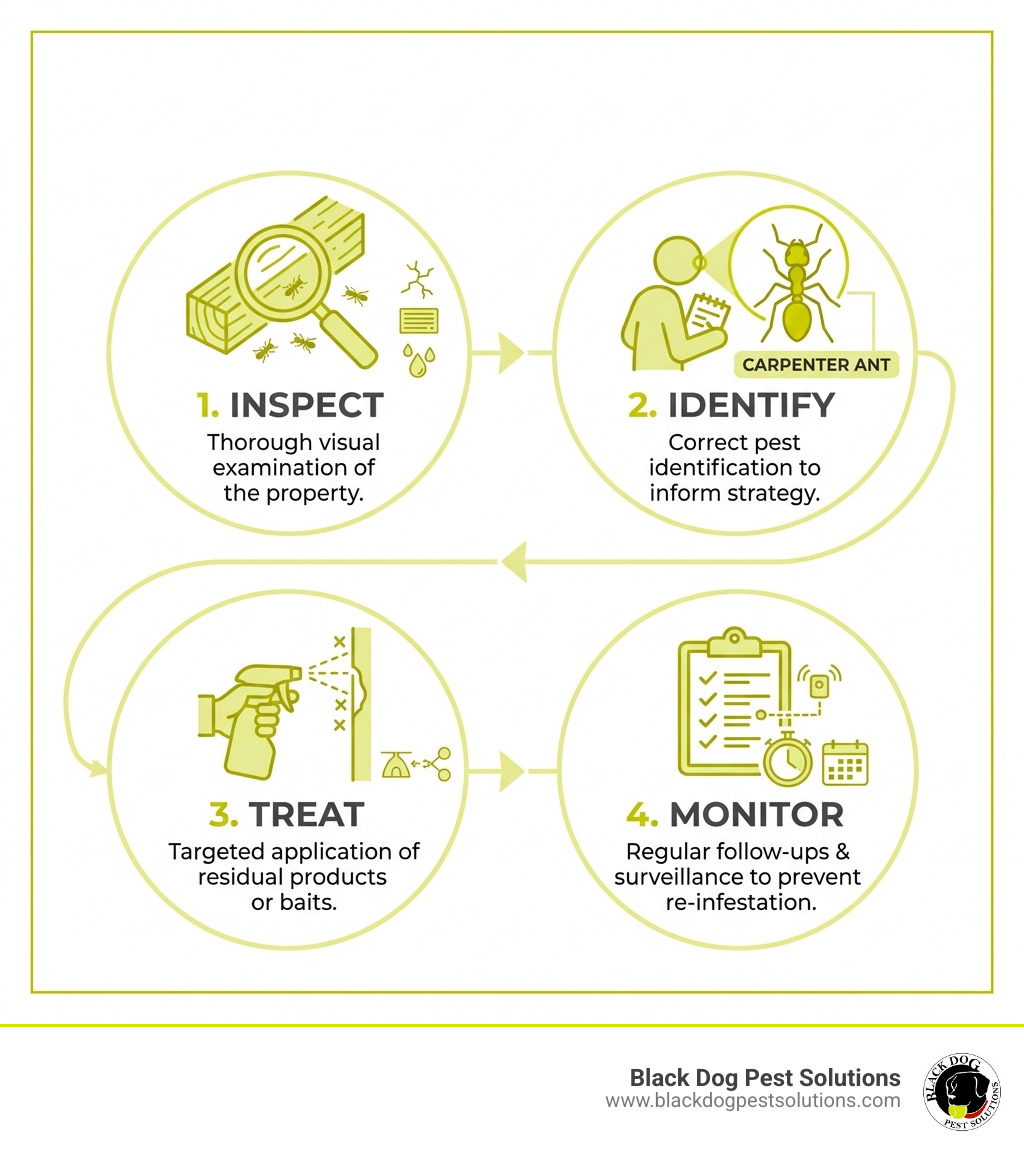
When discussing carpenter ant spray, it helps to place it inside an Integrated Pest Management approach: inspect, identify, treat, and monitor. In practice, sprays usually serve two main functions: contact kill and residual control.
- Contact Kill: Products like Raid Ant & Roach Killer 26 or TERRO Aerosol kill ants the moment the liquid touches them. This can help clear a visible trail on a counter, sill, or baseboard.
- Residual Control: A residual spray leaves behind a film that continues to affect ants for weeks or months. For example, TERRO Ready-to-Use Spray offers up to 4 months of protection, while Raid provides about 12 weeks on non-porous surfaces.
However, surface-level sprays have limitations. If you only spray the ants you see, you may miss satellite nests hidden inside wall voids or damp structural areas. In Northern Ohio, Lake Erie humidity can soften wood and increase moisture issues that make nesting sites more attractive. A localized spray may kill workers, but the reproductive portion of the colony can remain protected.
Professional-Grade vs. Consumer-Grade Solutions
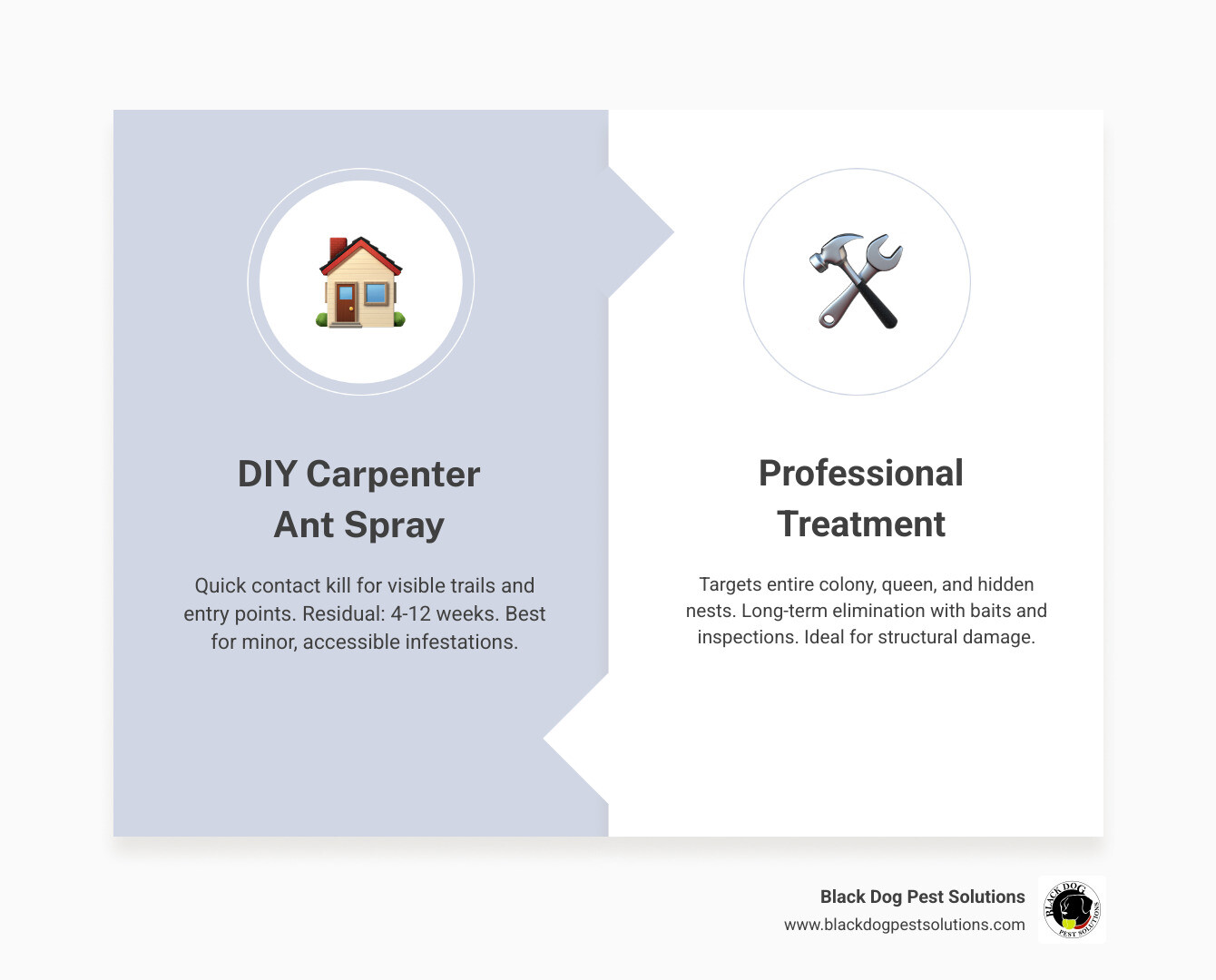
Many homeowners start with consumer-grade products like Harris or Spectracide. These can be useful for minor activity and perimeter maintenance. Spectracide Terminate, for instance, is a concentrate that covers up to 16,000 square feet, making it a cost-effective barrier option for larger exterior areas.
Professional services may use products and application methods not typically available at retail, including targeted crack-and-crevice treatments, dusts, non-repellent materials, and baiting strategies. When comparing pest control companies in Avon, Ohio, homeowners may also want to ask whether the provider handles broader seasonal pest issues such as winter rodents, spring stinging insects and termites, summer mosquitoes and cockroaches, fall invaders, and wildlife removal.
The Importance of Proper Inspection
The most important IPM step is inspection. Before using spray, look for ant activity near window sills, door frames, plumbing penetrations, damp wood, and areas where tree limbs or utility lines contact the structure. Frass, rustling sounds in a wall, or repeated sightings in the same area can all point to a nearby nest. Without inspection, treatment may only address visible activity rather than the source.
Ohio residents comparing pest control companies in Avon, Ohio should also verify current Ohio Department of Agriculture licensing and ask whether the business is properly insured for the services provided.
Professional Services and Local Options in Avon, Ohio
Sometimes, a DIY approach is not enough. If ants keep returning despite repeated use of carpenter ant spray, it may be useful to review ant removal methods trusted by professional services. Many professionals combine targeted sprays with baits, dusts, exclusion work, moisture correction recommendations, and monitoring.
In the Greater Cleveland area, homeowners and property managers can compare several licensed local providers when searching for pest control companies in Avon, Ohio and nearby communities. Service offerings vary — some companies focus heavily on mosquitoes or general pests, while others may offer broader structural pest control, termite programs, rodent work, or wildlife removal.
Black Dog Pest Solutions is one local option based in Avon. The company describes itself as family-owned, licensed, and BBB accredited, and notes service experience tied to Mat Ledyard dating back to about 2005, with the business established later. As with any provider, consumers should independently confirm current licensing, insurance, service scope, and review history.
When to Consider Professional Help
You may want to contact a professional if:
- You see winged ants indoors, which can indicate a mature nest is already inside the structure.
- You find signs of damage in structural wood or are unsure whether the pest is carpenter ants or termites.
- Retail sprays reduce activity briefly, but ants return within days or a week.
- The problem appears connected to moisture, wall voids, exterior wood decay, or inaccessible nesting sites.
In Ohio, pesticide applicators must meet Ohio Department of Agriculture licensing requirements. It is also reasonable to ask whether a company carries insurance appropriate to pest control or wildlife-related work.
Proper Application and Safety Precautions
If you decide to handle the treatment yourself, safety is paramount. Always read the label of your carpenter ant spray—it is a legal document.
- Pet and Child Safety: Most sprays, like Harris or TERRO, are safe for pets and children once they are completely dry. Keep everyone out of the treated area for at least 1-2 hours.
- Ventilation: If spraying indoors, ensure windows are open.
- Avoid Runoff: Do not spray outside right before a heavy Northern Ohio rainstorm. The chemical can wash off into the soil or local water systems, which is bad for the environment and a waste of your money.
- Electrical Hazards: Never spray liquid into electrical outlets or near chewed wires. If you suspect ants are nesting near wiring, use a dry dust or call a professional.
Frequently Asked Questions about Carpenter Ant Control
How long does residual carpenter ant spray last?
It varies by product and environment. For example, TERRO Ready-to-Use offers up to 4 months of protection. Raid Ant & Roach Killer 26 lasts about 12 weeks. Outdoor exposure, cleaning, porous surfaces, and Lake Erie-area humidity can all shorten that timeline.
Is carpenter ant spray safe for pets and children?
It can be, provided the label is followed closely. The key factor is drying time and correct placement. Most products should be applied only to listed sites and kept away from food-prep areas, toys, and pet items until dry. Crack-and-crevice placement generally reduces contact risk compared with broad surface spraying.
Can sprays eliminate an entire carpenter ant colony?
Sometimes, but often not by themselves. Many standard sprays kill the ants they contact yet do not reliably reach hidden nests or queens. In some cases, repellent materials can also push ants to relocate deeper into the structure. Baits, dusts, moisture correction, and exclusion are often part of a more complete treatment plan.
What seasonal pest issues are common in Northern Ohio besides carpenter ants?
Lake Erie humidity and seasonal weather patterns influence a wide range of pest activity. Winter often brings rodents indoors. Spring can bring carpenter ants, termites, and stinging insects. Summer is commonly associated with mosquitoes and cockroaches. Fall often brings stink bugs, earwigs, boxelder bugs, silverfish, and centipedes into homes and commercial buildings.
What should I ask when comparing local pest providers?
Ask about Ohio Department of Agriculture licensing, insurance, experience with carpenter ants and termites, whether the company follows IPM steps, and whether it also handles exclusion or wildlife removal when needed. Review service guarantees carefully and compare recommendations from multiple providers, including pest control companies in Avon, Ohio that serve both residential and commercial properties.
Are all carpenter ant problems caused by poor housekeeping?
No. Sanitation can influence foraging, but carpenter ants are usually more closely tied to moisture problems, decayed wood, voids, and access points. Even well-kept homes can develop infestations if conditions are favorable.
Conclusion
Managing pests in Northern Ohio requires an understanding of our unique climate. From the winter rodent huddles to the spring carpenter ant swarms, the Lake Erie humidity keeps us on our toes. While a high-quality carpenter ant spray is a great tool for your DIY arsenal, it is only one part of a successful Integrated Pest Management plan.
Whether you choose to tackle the job yourself with a product like BioAdvanced or Spectracide, or you decide to hire one of the many pest control companies in Avon, Ohio, the goal is the same: protecting your home’s structural integrity. When selecting a provider, homeowners should verify Ohio Department of Agriculture licensing and insurance coverage. Local options like Black Dog Pest Solutions, which is BBB accredited, offer professional expertise for those in Avon, Elyria, and surrounding areas. If the ants are winning the battle, professional assistance can help ensure the home remains pest-free.
2026 Ohio Average Pricing Note: For those considering professional services, initial treatments for ants typically range from $100–$300, with quarterly maintenance between $100–$175. Termite treatments are more involved, often ranging from $230–$2,500+, while bed bug treatments can range from $500–$1,500+ and rodent control typically costs between $200–$600. These prices vary based on your home’s size and the severity of the infestation.