
Tiny Jumpers, Big Annoyance: What You Need to Know About Springtail Control
Springtail control starts with one simple fix: eliminate the moisture they depend on to survive.
Here is a quick overview of how to get rid of springtails:
- Reduce humidity — run a dehumidifier and keep indoor humidity below 50%
- Fix moisture sources — repair leaks, improve drainage, extend downspouts
- Remove outdoor breeding sites — pull mulch and organic debris 12–18 inches back from your foundation
- Seal entry points — caulk gaps around doors, windows, and pipes
- Vacuum or skim — remove visible springtails indoors or from pool surfaces
- Apply a perimeter treatment if needed — use label-approved products as a secondary step
- Call a licensed pest professional — if the problem persists after addressing moisture
If you have noticed tiny jumping springtails (Collembola) in your bathroom, kitchen sink, or basement, you are likely dealing with springtails. These small, wingless pests measure about 1/16 of an inch and are completely harmless to people and pets. They do not bite, sting, or cause structural damage. But they can appear in enormous numbers when conditions are right, and that tends to alarm homeowners fast.
Springtails do not invade homes the way cockroaches or ants do. They follow moisture. When outdoor soil dries out, they push inside looking for damp surfaces, and they find them in bathrooms, basements, kitchens, and crawl spaces. Their presence is less a pest problem and more a signal — something in or around your home is wetter than it should be.
Scientists have found as many as 50,000 springtails in a single cubic foot of forest litter. So when conditions are right, populations can explode quickly and seem to come out of nowhere.
I’m Mat Ledyard, owner of Black Dog Pest Solutions in Avon, Ohio, and I’ve been working in pest control since 2005. When looking for pest control companies in Avon, homeowners are often surprised to learn that springtail control is one of the most misunderstood services — fixing a drainage issue or adjusting mulch often helps resolve the problem faster than any spray. Let’s walk through exactly what you’re dealing with and how to handle it.
What Are Springtails and How to Identify Them?
To understand how to manage springtails, we first need to look at what they actually are. Springtails are not true insects; they are primitive, wingless, insect-like hexapods belonging to the subclass Collembola. They have soft, rounded bodies and are incredibly small, typically measuring between 1/32 and 1/8 of an inch in length (with most adult springtails averaging about 1/16 of an inch).
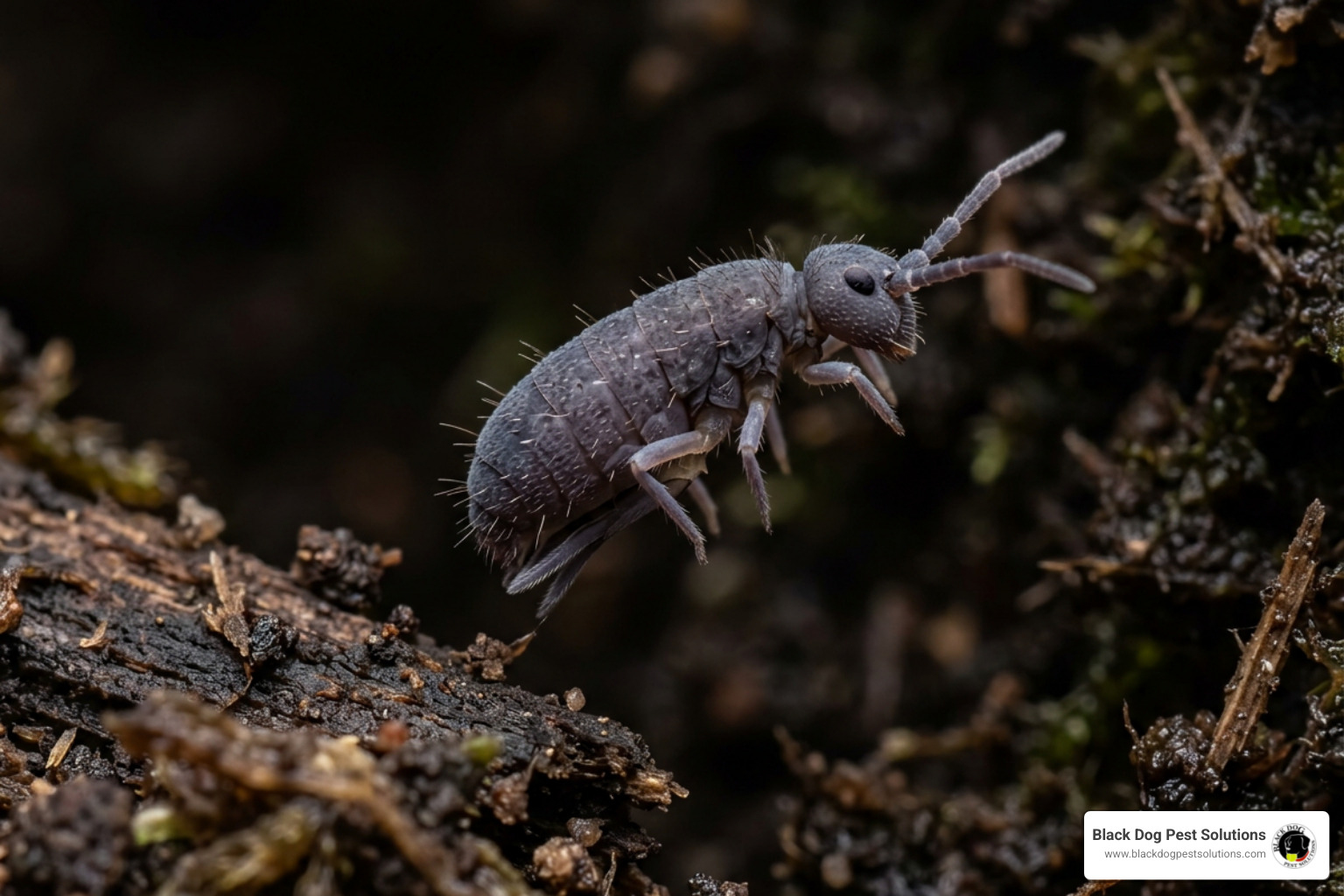
Their most famous feature is their jumping mechanism. Unlike fleas, which use powerful hind legs, springtails jump using a specialized, fork-like tail appendage called a furcula. When the springtail is resting, the furcula is folded tightly beneath its abdomen and held in place by a tiny clasp. When the springtail senses danger, it releases this spring-loaded mechanism, snapping the furcula against the ground and catapulting itself several inches into the air. This rapid escape jump is why they are so frequently confused with fleas.
In terms of appearance, springtails can vary widely in color. Depending on the species, they may look white, grey, brown, or even black. Another fascinating biological quirk of Collembola is their molting habits: unlike most true insects, which stop shedding their skins once they reach adulthood, adult springtails continue to molt throughout their entire lives.
To dive deeper into their biology, check out our Springtails Pest Control Complete Guide.
Distinguishing Springtails (Collembola) from Fleas
Because springtails jump when disturbed, many homeowners spend weeks mistakenly treating their homes and pets for fleas. Differentiating them is critical to avoid wasting time and money on incorrect treatments.
- Body Shape and Texture: Fleas have hard, flat-sided (laterally compressed) bodies built to navigate through animal fur. Springtails have soft, rounded bodies that easily dehydrate.
- Biting Behavior: Fleas are parasites that require blood meals; they bite humans and pets, leaving itchy, red welts. Springtails lack biting mouthparts and do not bite or feed on animals or humans.
- Target Areas: Fleas are usually found on pets, pet bedding, or carpeted areas where hosts sleep. Springtails are found in highly damp environments, such as around sink drains, under damp basement floors, or in the soil of overwatered houseplants.
For more identification tips, you can read the detailed breakdown on Springtails | NC State Extension Publications .
What Causes Springtail Infestations in Homes?
Springtails are highly sensitive to moisture because they breathe through their skin. If their surroundings dry out, they quickly dehydrate and die. Consequently, their presence indoors is a direct indicator of high moisture levels. Let’s look at the primary drivers behind these infestations.
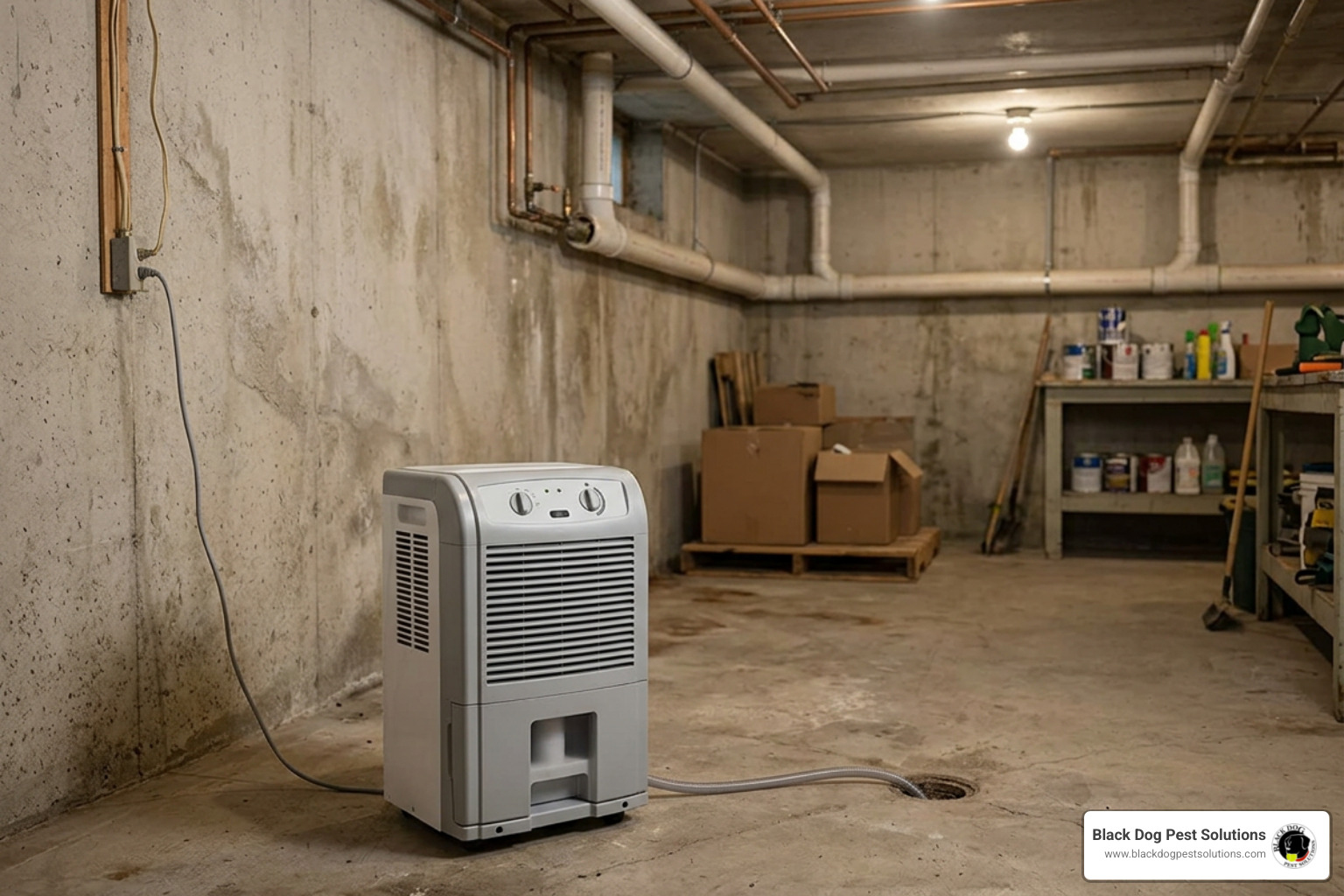
- High Humidity and Poor Ventilation: Indoor relative humidity levels above 60 percent create an ideal micro-climate where mold, mildew, and fungi thrive. Because springtails feed primarily on these microscopic organic materials, high humidity provides both the hydration and the food supply they need to multiply.
- Damp Building Materials in New Construction: It is surprisingly common to find springtail infestations in brand-new homes. During the construction phase, wooden studs and framing materials are often left exposed to rain. If the drywall and siding are installed before these materials dry completely, moisture becomes trapped inside the wall voids. This damp wood supports mold growth, creating a hidden sanctuary where springtails can breed by the thousands before crawling out through baseboards and electrical outlets.
- Overwatered Potted Plants: Indoor potted plants are a frequent vehicle for bringing springtails inside. If the soil is kept constantly wet, it becomes a perfect breeding ground. To learn more about identifying and managing these pests in your greenery, read The Great Leap Identifying Springtails in Potted Plants and Stop the Hop A Guide to Getting Rid of Springtails in Potted Plants.
- Outdoor Migration: When outdoor weather turns hot and dry, the soil and mulch around your foundation dry out. Desperate for moisture, springtails migrate in massive numbers, seeking any tiny gap around windows, doors, or utility lines to slip inside your home. Conversely, heavy rain or flooding can also oversaturate their outdoor habitats, driving them upward and inward to escape drowning.
For a comprehensive look at how environmental factors trigger these migrations, refer to the Springtails / Home and Landscape / UC Statewide IPM Program (UC IPM) resource.
Integrated Pest Management for Springtail Control
At Black Dog Pest Solutions, we rely on Integrated Pest Management (IPM). Rather than simply spraying pesticides to kill the active pests on the surface, IPM focuses on understanding the pest’s biology to address the root causes of the infestation.
An effective IPM strategy for springtails involves three core phases:
- Inspect: Pinpoint where the moisture is coming from and locate the nesting sites.
- Sanitize & Exclude: Eliminate the food sources (mold, mildew, organic debris) and seal physical entry points.
- Monitor: Use sticky traps to track activity levels and ensure the moisture-reduction steps are working.
To learn more about how we apply this eco-friendly methodology to residential properties, visit our page on Residential Services.
Primary Fixes for Springtail Control
Because springtails cannot survive without moisture, physical and environmental modifications are the most important elements of any springtail control plan.
- Mulch Management: Thick layers of mulch retain moisture and trap decaying organic matter, creating a springtail paradise. Keep mulch layers to a depth of 2 to 3 inches, and pull all mulch, leaves, and groundcover 12 to 18 inches away from your home’s foundation. Filling this gap with a dry barrier of gravel or river rock helps prevent springtails from nesting near your walls.
- Fix Drainage and Downspouts: Ensure your gutters are clean and downspouts extend several feet away from the foundation. Standing water near the crawl space or basement walls is a major invite for pests.
- Avoid Overwatering: Let the top 2 inches of soil in your outdoor gardens and indoor potted plants dry out completely between waterings.
- Improve Airflow: Trim back low-hanging shrubbery and dense vegetation from your foundation walls to allow sunlight and wind to dry the soil.
- Vacuuming and Skimming: If springtails make it inside, do not panic. They are harmless but annoying, and you can easily vacuum them up with a brush attachment and empty the canister into a sealed trash bag outdoors. If they are coating your swimming pool surface, skim them out regularly and check the surrounding soil for oversaturation.
For practical room-specific tips, check out our guide on How to Get Rid of Springtails in Your Bathroom and explore Taming the Great Outdoors to Prevent Springtail Invasions for exterior landscaping tips.
Physical Exclusion and Sealing Entry Points
Once you have managed the moisture outside, you need to block the physical pathways springtails use to enter your home. Because they are so tiny, they can slip through gaps of about 1/4 inch or smaller, including standard window screen mesh and microscopic cracks.
- Seal Foundation Cracks: Use a high-quality exterior silicone caulk to seal any cracks in your foundation walls or concrete slabs.
- Install Door Sweeps and Weatherstripping: Ensure all exterior doors have tight-fitting sweeps and fresh weatherstripping. Pay close attention to basement windows and garage doors.
- Seal Utility Penetrations: Apply caulk or expandable foam around pipe escutcheons, dryer vents, and outdoor electrical outlets.
If you are looking for more actionable advice on home sealing, check out Stop the Indoor Hop with These Springtail Removal Tips.
Chemical and Natural Springtail Control Options
While environmental modifications are the primary way to solve a springtail issue, natural desiccants and label-approved chemical barriers can serve as valuable secondary treatments to assist in managing the population.
| Control Method | How It Works | Common Uses (Label-Dependent) | Safety & Label Considerations |
|---|---|---|---|
| Dehumidifiers | Helps lower relative humidity below 50% to assist in dehydrating pests. | Basements, crawl spaces, and bathrooms. | Completely safe; highly recommended. |
| Diatomaceous Earth (DE) | Can scratch the outer cuticle, helping to absorb body fluids. | Indoor baseboards, under sinks, and wall voids. | Use food-grade DE; avoid inhaling dust. |
| Vinegar Spray | Mildly acidic contact spray that may help break down skin-breathing pests. | Direct spot treatment on visible indoor clusters. | Safe for pets; test on surfaces first. |
| Liquid Insecticide Barriers | Designed to create a chemical perimeter that may deter crawling pests. | Foundation walls and adjacent soil. | Must be applied strictly according to label instructions. |
| Insecticide Granules | Dissolves into soil to help target deep-nesting populations. | Outdoor mulch, lawns, and garden beds. | Requires water activation; follow label instructions carefully. |
To explore more about using chemical and non-chemical options safely, see How to Kill Springtails Even If You’ve Never Tried It Before.
Natural Remedies and Desiccants
If you prefer to avoid synthetic chemicals, there are several natural remedies you can use to manage springtails safely around children and pets.
- Crash the Humidity: Running a portable dehumidifier to bring indoor humidity levels below 50 percent is an effective way to dry out springtails. Once the air is dry, they may dehydrate and die.
- Food-Grade Diatomaceous Earth (DE): This natural powder is made from fossilized algae. When springtails crawl over it, the microscopic sharp edges cut through their protective outer layer, which can cause them to dry out. Apply a very fine layer along baseboards, under sinks, and behind appliances using a bulb duster.
- Vinegar and Dish Soap Spray: Mixing equal parts white distilled vinegar and water with a teaspoon of dish soap makes an excellent direct contact knockdown spray. Because springtails breathe through their skin, the acidic vinegar and soap mixture can help neutralize them on contact.
For a step-by-step guide on natural eradication, check out Springtails Natural Remedy: 3 Steps to Eradicate Them Safely – YardCareScience .
Label-Dependent Products for Springtail Control
When natural methods are not enough to curb a severe outdoor nesting population, targeted chemical applications can help establish a protective barrier around your home. However, any chemical application must be performed in strict accordance with the product label instructions to prevent environmental runoff.
- Liquid Perimeter Sprays: Commonly used liquid concentrates can be mixed and sprayed up the foundation wall and out into the soil according to label directions. This is intended to create a barrier that migrating springtails may encounter when trying to move indoors.
- Granular Insecticides: Granules are commonly used products for treating thick mulch beds and lawns where springtails breed. Unlike liquids, granules must be watered in immediately after application to release the active ingredients into the soil, strictly following label instructions.
Always read and follow the product labels carefully, as pesticide labels are legally binding documents. For more details on choosing the right products, check out our Beginner’s Guide to Effective Control Options for Springtails and All About Granules to Kill Springtails. If you are looking for DIY product guides, you can also consult How To Get Rid of Springtails | Do My Own .
Frequently Asked Questions About Springtails
Are springtails harmful to humans or pets?
No. Springtails are entirely harmless to humans, pets, and the structural integrity of your home. They do not bite, sting, transmit diseases, or eat household goods. While they can be an annoying nuisance when they gather in large numbers, they are actually beneficial decomposers in nature, helping to break down organic matter in soil.
You can read more about their ecological role and lack of threat in the Springtails | Ohioline fact sheet.
How long does it take to eliminate a springtail infestation?
Once you have successfully identified and addressed the underlying moisture source, indoor springtail populations may naturally decline or migrate away. Combining dehumidification with physical cleaning and natural desiccants like diatomaceous earth can assist in reducing activity over time.
To keep from getting overwhelmed during this process, read our guide on How to Eliminate a Springtail Infestation Without Losing Your Mind.
When should I call pest control companies in Avon?
If you have addressed visible moisture issues, dried out your home, sealed entry points, and still find thousands of springtails appearing daily, it is time to call a professional. Persistent springtail activity is often a sign of a hidden moisture issue, such as a slow pipe leak inside a wall void or rotted wood behind your siding.
A licensed pest professional has the specialized training and equipment to locate these hidden nesting sites. Furthermore, keep in mind that the State of Ohio requires a pesticide business license for anyone applying pesticides for hire, ensuring that professional treatments are handled safely and legally.
If you are looking for professional assistance in Northern Ohio, there are several pest control companies in Avon, but our team at Black Dog Pest Solutions is ready to help. When you are ready to speak with our team, please visit our Contact Us page.
Conclusion
Managing springtails is ultimately a matter of managing moisture, with prevention as the best long-term approach. By focusing on the core principles of Integrated Pest Management — inspecting your property, reducing humidity, correcting outdoor drainage, and sealing entry points — you can achieve excellent, long-term control of these persistent jumping pests without relying heavily on chemical sprays.
As one of the leading pest control companies in Avon, Black Dog Pest Solutions is proud to serve communities across Northern Ohio, including Avon, Greater Cleveland, Lorain, Elyria, Avon Lake, Bay Village, North Ridgeville, Westlake, Sheffield Village, Sheffield Lake, Vermillion, Huron, Sandusky, Medina, Grafton, Wellington, Oberlin, Amherst, North Olmsted, Lakewood, Strongsville, Cleveland, Brunswick, and Rocky River.
As a licensed, family-owned business founded by Mat Ledyard, we have been delivering reliable, high-quality pest control services since our establishment. Our commitment to thorough inspections, practical sanitation advice, and professional service has earned us a 4.9/5-star Google rating and BBB accreditation.
If you are struggling with a stubborn pest issue or want to learn more about our comprehensive services, explore our main Springtails page or browse our full library of target Pests and professional Services. We are here to help you restore comfort and peace of mind to your home!