
Tiny Jumping Bugs in Your Home? Here’s How to Stop Them
If you’ve spotted pest control springtails becoming a problem in your bathroom, basement, or kitchen, you’re not alone — and the fix is more straightforward than you might think.
Here’s what works for controlling springtails:
- Reduce moisture — fix leaks, run a dehumidifier, improve ventilation
- Remove organic debris — pull mulch back from your foundation, clear damp leaves
- Seal entry points — caulk cracks, repair screens, check weather-stripping
- Physically remove them — vacuum indoor clusters, skim pools
- Apply targeted treatments — use label-approved products as a secondary step
Springtails are tiny, wingless jumpers — usually under 1/8 inch long — that thrive wherever there’s moisture and mold. They’re harmless to people and pets, but when they show up in large numbers, it almost always means there’s a moisture problem somewhere in or around your home. Scientists have documented populations reaching up to 100,000 individuals per cubic meter of surface soil, so it’s no surprise they can seem to appear overnight in a damp basement or bathroom.
The good news: springtails follow moisture predictably. Address the water source, and the population drops — often within one to three weeks.
I’m Mat Ledyard, owner of Black Dog Pest Solutions in Avon, Ohio, and I’ve been working in pest control springtails and general pest management since 2005. In my experience serving homeowners across Northeast Ohio, springtail calls almost always trace back to a moisture issue that’s simple to identify once you know what to look for. If you are struggling to manage them on your own, reaching out to professional pest control companies in Avon can help you identify the root cause.
Understanding Collembola: What Are Springtails?
To successfully manage these tiny invaders, it helps to understand exactly what we are dealing with. Springtails belong to the class Collembola. While they look like tiny insects, modern scientific classification actually groups them as primitive hexapods. They are wingless, ancient creatures that have lived on Earth for millions of years, playing a crucial role in our local ecosystems.
Outdoors, springtails are incredibly beneficial. They act as natural decomposers, breaking down decaying organic matter and recycling nutrients back into the soil. Their preferred diet consists of mold, fungi, algae, and bacteria. Because of this, you will find them by the thousands in damp soil, forest litter, compost piles, and thick layers of organic mulch. In fact, research shows there can be up to 50,000 springtails in just a single cubic foot of forest litter. You can learn more about their biology from the detailed guide on Springtails | Ohioline.
When they remain outdoors in their natural habitat, they are completely harmless. They do not damage healthy plants, nor do they cause structural damage to your home. They are simply a nuisance when they migrate indoors in search of moisture.
Identifying Collembola vs. Fleas and Mites
One of the most common phone calls we receive at Black Dog Pest Solutions starts with a panicked homeowner believing their house is overrun by fleas. Because springtails can jump several inches high, they are frequently misidentified. However, making a correct identification is the critical first step in resolving the issue.
Here are the key physical differences to look for:
- Body Shape and Texture: Springtails have soft, rounded, or elongated bodies that range in color from white and gray to dark brown or black. Fleas, on the other hand, have hard, flat-sided bodies designed to move easily through animal fur.
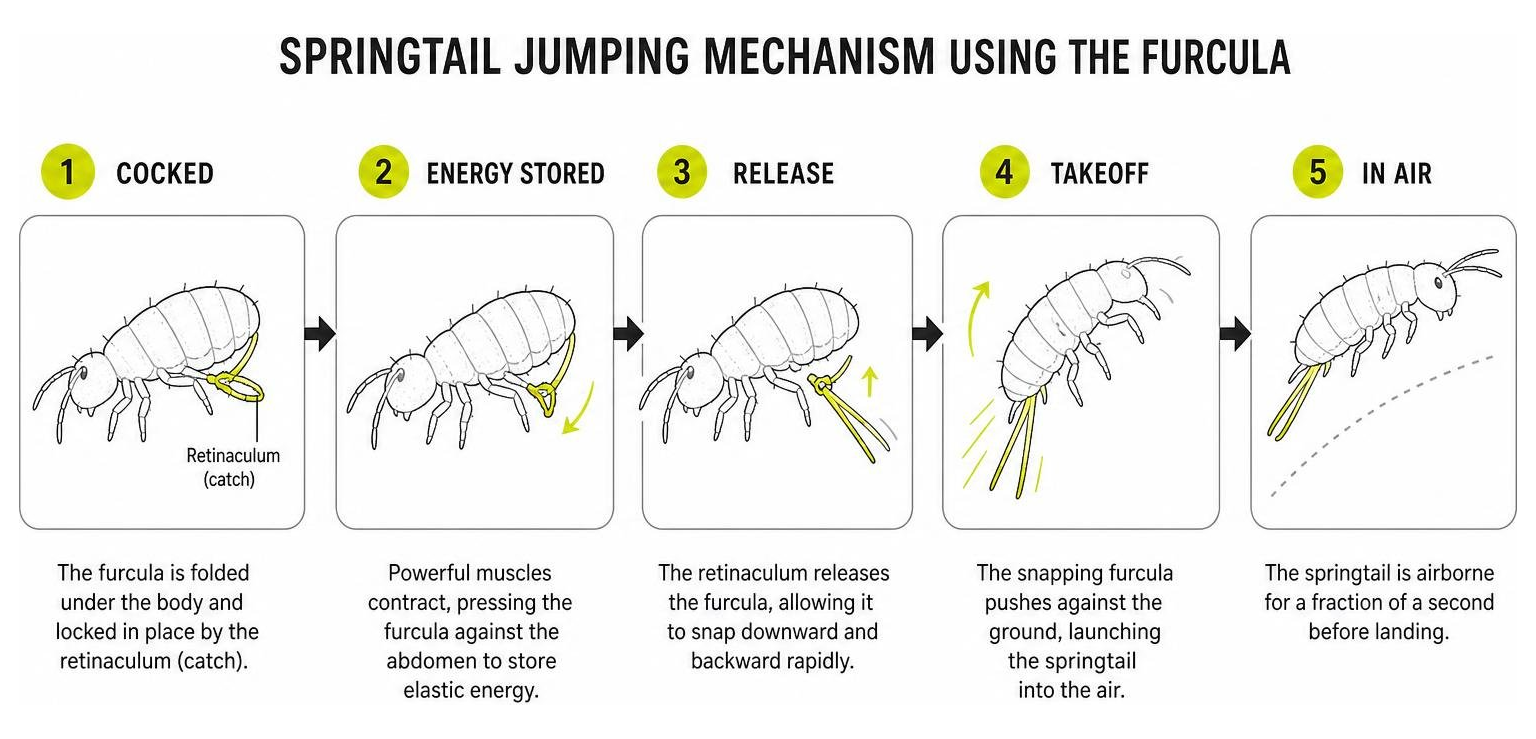
- Jumping Mechanism: Fleas jump using powerful hind legs. Springtails do not have strong legs; instead, they possess a unique, fork-like appendage tucked under their abdomen called a furcula. When they are disturbed, this spring-loaded mechanism releases, catapulting them into the air.
- Diet and Behavior: Fleas are parasites that require a blood host (like your dog, cat, or yourself) and will bite. Springtails have no biting mouthparts capable of breaking human skin. If you are experiencing itchy bites, you are likely dealing with fleas, bed bugs, or mites, rather than springtails.
If you want to dive deeper into distinguishing these pests, you can read our guide on how to Stop the Indoor Hop with These Springtail Removal Tips.
Why You Need Moisture-Focused Pest Control for Springtails
If you see springtails inside your home, it is always a direct reflection of local weather and building conditions. These creatures have a very thin cuticle, which means they lose body moisture rapidly. They cannot survive in dry conditions.
During hot, dry summer stretches in Northern Ohio, the soil outdoors dries out, forcing springtails to migrate in search of moisture. Conversely, heavy rain and prolonged downpours saturate the soil, flooding their underground homes and forcing millions of them to crawl upward. They find their way into homes through tiny gaps around basement windows, crawl space vents, and utility entry points.
Once inside, they congregate in areas with high humidity and organic growth. This is why bathrooms, damp basements, crawl spaces, and the soil of overwatered houseplants are their favorite indoor retreats. To learn more about managing these bathroom invasions, see our step-by-step article on How to Get Rid of Springtails in Your Bathroom Once and for All.
Effective Pest Control for Springtails: A 5-Step Elimination Guide
Because springtails are entirely driven by moisture, traditional pest control methods that rely solely on chemical sprays are rarely effective long-term. If you spray a pesticide without addressing the underlying moisture, a new batch of springtails will simply migrate into the damp area a few days later.
True pest control springtails management requires an Integrated Pest Management (IPM) approach. This means we focus on changing the environment to make it inhospitable to the pests, sealing them out, and using targeted treatments only as a secondary support.
To help visualize where these pests thrive and how we can target them, let’s look at the differences between their primary indoor and outdoor habitats:
| Environmental Factor | Outdoor Habitat | Indoor Habitat |
|---|---|---|
| Primary Locations | Thick mulch, leaf litter, garden soil, around pool decks | Bathrooms, damp basements, crawl spaces, potted plant soil |
| Food Sources | Decaying leaves, mold, algae, fungi, soil bacteria | Microscopic mildew, mold on wet drywall, decaying potting soil |
| Moisture Source | Rain, overwatered lawns, poor gutter drainage | Leaking pipes, high humidity, condensation on cold water lines |
| Primary Control Focus | Landscaping sanitation, gravel barriers, downspout extensions | Dehumidification, fixing plumbing leaks, physical vacuuming |
Now, let’s walk through the five practical steps you can take to eliminate a springtail infestation in your home.
Step 1: Eliminate Excess Moisture and Humidity
Since moisture is non-negotiable for springtails, drying out their environment is the single most effective action you can take.
- Fix Plumbing Leaks: Inspect under your kitchen and bathroom sinks, around bathtubs, and near your water heater. Even a tiny, slow drip can create enough mold and moisture to sustain thousands of springtails.
- Improve Bathroom Ventilation: Always run your bathroom exhaust fans during and for at least 20 minutes after showers. If your bathroom lacks a fan, consider installing one or using a portable fan to circulate air.
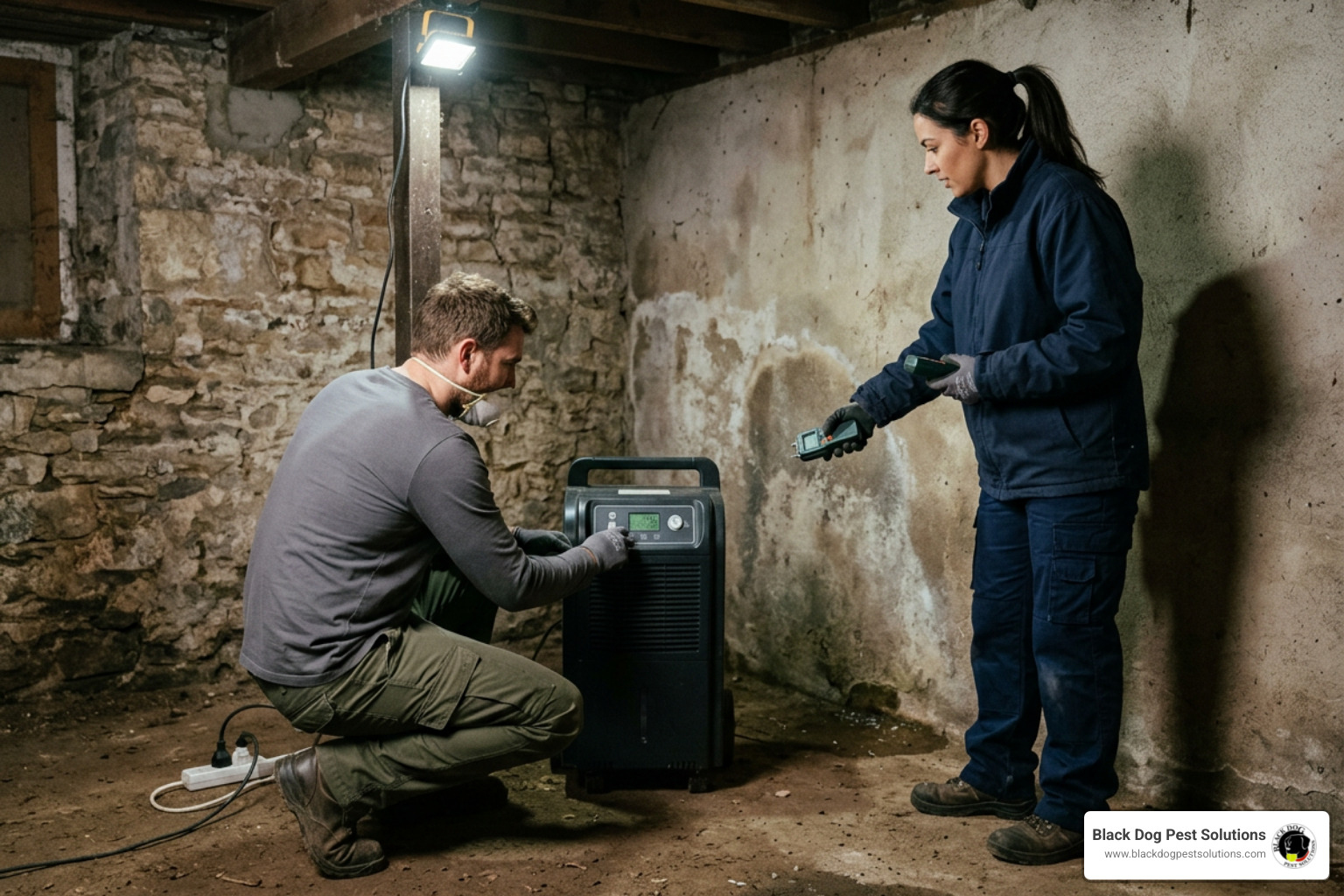
- Run Dehumidifiers: If your basement or crawl space feels damp, run a dehumidifier. Keeping the relative humidity below 50 percent makes the air too dry for springtails to survive, causing them to dehydrate and die naturally.
Step 2: Implement Outdoor Sanitation and Landscaping Adjustments
The battle against springtails starts in your yard. By creating a dry zone around your home’s foundation, you make it much harder for springtails to approach your walls.
- Manage Mulch: Keep organic mulch (like wood chips or bark) at least 12 to 18 inches away from your home’s foundation. Instead of mulch, use gravel, river rock, or stone barriers immediately adjacent to the structure. This dry buffer zone is highly effective at stopping crawling pests.
- Trim Vegetation: Prune low-hanging branches, shrubs, and ground cover away from your foundation. This allows sunlight and wind to dry the soil near your home, eliminating the damp, shaded microclimates springtails love.
- Improve Drainage: Ensure your gutters are clean and free of leaves. Extend your downspouts away from the foundation so rainwater deposits safely away from your home’s basement walls.
For more tips on managing your yard to stop these pests, read our guide on Taming the Great Outdoors to Prevent Springtail Invasions.
Step 3: Seal Potential Entry Points
Springtails are incredibly small — typically 1 to 3 mm in length — which means they can slip through the tiniest cracks. You want to inspect your home’s exterior and address any gaps about 1/4 inch or smaller.
- Caulk and Seal: Apply a high-quality silicone or acrylic caulk to gaps around basement windows, crawl space vents, and where utility lines enter the home.
- Check Weather-Stripping: Ensure door sweeps and weather-stripping around exterior doors fit tightly against the frame.
- Repair Screens: Inspect window and door screens for small tears or gaps, and repair them promptly.
Step 4: Physical Removal Indoors and in Pools
When springtails cluster indoors, your first instinct might be to reach for a chemical spray. However, simple physical removal is safer and highly effective.
- Vacuuming: Use a vacuum cleaner equipped with a HEPA filter to sweep up indoor clusters on floors, walls, or window sills. Once finished, empty the vacuum canister or bag into an outdoor trash bin immediately so they do not crawl back out.
- Pool Maintenance: Because springtails are attracted to moisture, they often end up in swimming pools, where they drown and cover the surface. Keep vegetation trimmed back from the pool edge, and use a fine-mesh skimmer to clear them from the water.
- Houseplant Care: If you see them jumping in your potted plants, you are likely overwatering. Let the soil dry out completely between waterings, or repot the plant in fresh, well-draining soil.
For more details on managing potted plants, refer to our article on The Great Leap: Identifying Springtails in Potted Plants. If you feel overwhelmed by an indoor surge, you can also check out our guide on How to Eliminate a Springtail Infestation Without Losing Your Mind.
Step 5: Apply Targeted, Label-Dependent Treatments
If you have addressed the moisture and sealed entry points but still see activity, targeted exterior treatments can help establish a protective barrier.
When choosing products, always look for those labeled specifically for springtails and follow the instructions exactly. Commonly used products include outdoor granular barriers or liquid perimeter sprays applied to the soil and the lower few feet of the foundation wall. It is important to remember that chemical treatments are secondary to moisture control and exclusion; they work best when used in combination with the sanitation steps outlined above.
To understand how outdoor treatments work, check out our resource on All About Granules to Kill Springtails and our Beginner’s Guide to Best Insecticide for Springtails. If DIY efforts do not yield the results you want, it may be time to consult with professional pest control companies in Avon.
When to Call Professional Pest Control Companies in Avon
While many springtail issues can be resolved with a dehumidifier and some landscaping adjustments, persistent infestations often point to a deeper, hidden moisture problem. If you have tried drying out your home and sealing cracks, but the jumping pests keep returning, a professional inspection is highly recommended.
Persistent springtails can act as an early warning sign of underlying structural issues, such as:
- Slow leaks behind drywall or under subflooring.
- Saturated insulation in crawl spaces.
- Poor foundation drainage or failing vapor barriers.
In Ohio, anyone applying pesticides for hire must hold a valid pesticide business license. When you hire a professional, you are gaining access to specialized training, commercial-grade moisture detection tools, and targeted Integrated Pest Management (IPM) strategies.
Long-Term Pest Control for Springtails with IPM
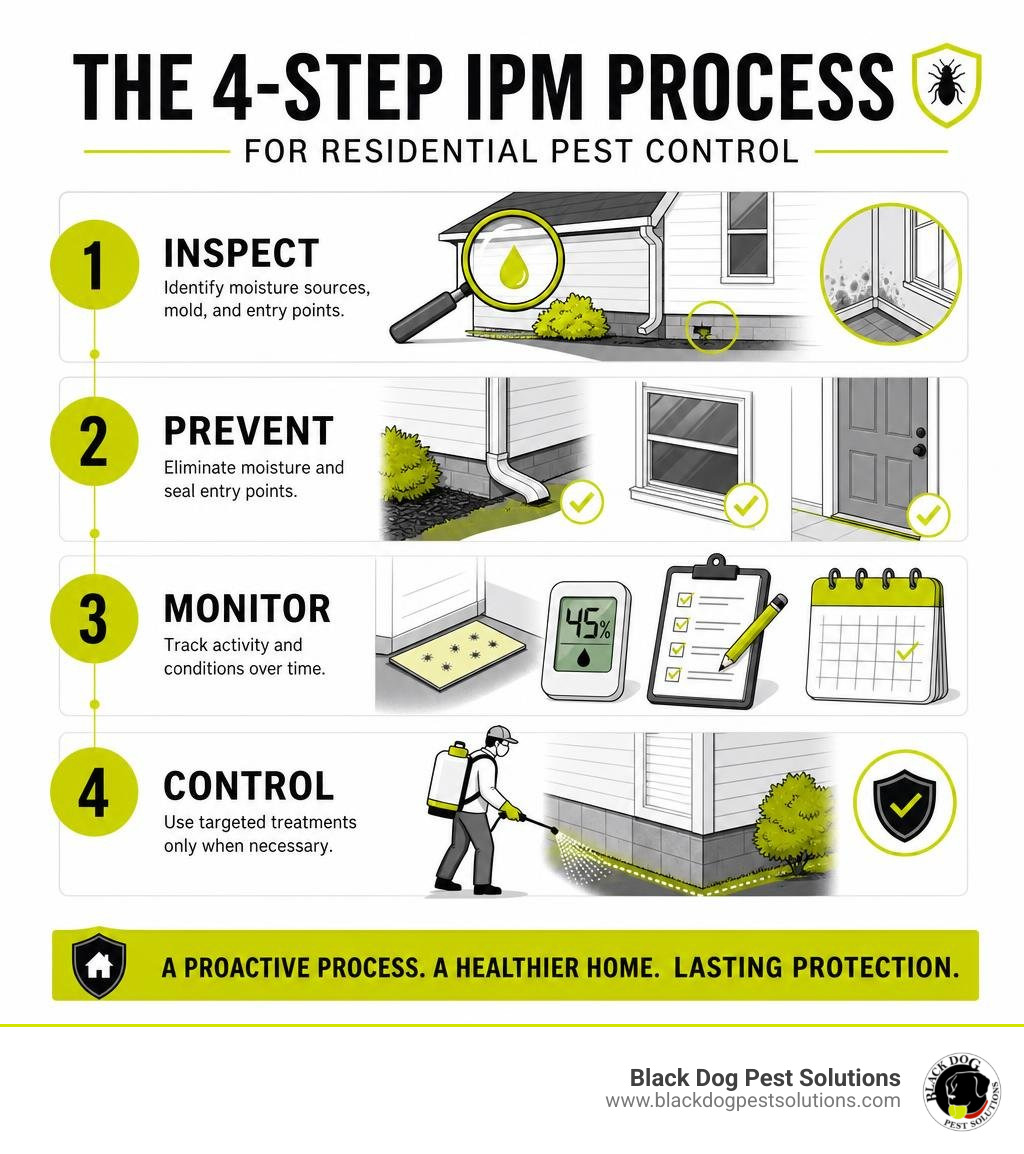
Professional pest control companies in Avon focus on long-term prevention rather than quick, temporary fixes. At Black Dog Pest Solutions, we utilize a comprehensive IPM process:
- Inspect: We conduct a thorough assessment of your home’s interior and exterior to identify moisture sources, mold growth, and entry points.
- Seal: We provide guidance on sealing gaps about 1/4 inch or smaller around your foundation and utility penetrations.
- Sanitize: We help you identify and remove organic debris, excessive mulch, and damp leaf litter near the structure.
- Monitor: We set up monitoring protocols to ensure the springtail population is declining and that your home remains protected over time.
By focusing on these core principles, we help you resolve the root cause of the infestation without relying on unnecessary chemical applications.
Frequently Asked Questions About Springtails
Do springtails bite humans or pets?
No. Springtails do not possess biting mouthparts or stingers. They do not feed on blood, nor do they transmit diseases to humans or pets. While their rapid jumping behavior can easily be confused with fleas, they are entirely harmless to your family and animals.
Will a dehumidifier get rid of springtails?
Yes, a dehumidifier is one of the most effective tools for controlling indoor springtails. By keeping your indoor relative humidity below 50 percent, you dry out the micro-mold and fungi they feed on and remove the moisture they need to survive. For best results, combine dehumidification with physical vacuuming and sealing of entry cracks.
Why do springtails suddenly appear in massive numbers?
Springtails typically appear in large numbers overnight due to extreme weather changes. Heavy rainfall saturates the outdoor soil, flooding their natural habitats and forcing millions of them to crawl upward and seek drier ground. Conversely, during hot, dry summer spells, they will migrate indoors in massive numbers simply to find the moisture they need to stay alive.
Conclusion
Dealing with a springtail invasion can be frustrating, but remember: these tiny, jumping hexapods are simply indicators of a localized moisture problem. By focusing your efforts on drying out damp areas, sealing entry points, and adjusting your outdoor landscaping, you can naturally and effectively reduce their numbers.
If you are located in Northern Ohio — including Avon, Bay Village, North Ridgeville, Lorain, or the surrounding Greater Cleveland area — and need help tracking down a persistent moisture and pest issue, Black Dog Pest Solutions is here for you. As a family-owned, BBB-accredited business with a 4.9/5-star rating, we pride ourselves on providing honest, professional, and highly effective IPM services.
To learn more about our services or to schedule an inspection, visit our main page on Springtails or reach out to us today. Let us help you restore comfort and dryness to your home!