
Pantry pests are the moths and small beetles that move into flour, cereal, spices and other dry food. University of Minnesota Extension calls insects in stored food one of the most common household insect problems. Holiday baking is a good time to check your shelves, and this guide covers how to spot them, where the problem starts and what to throw out.
Signs you have a problem in the kitchen
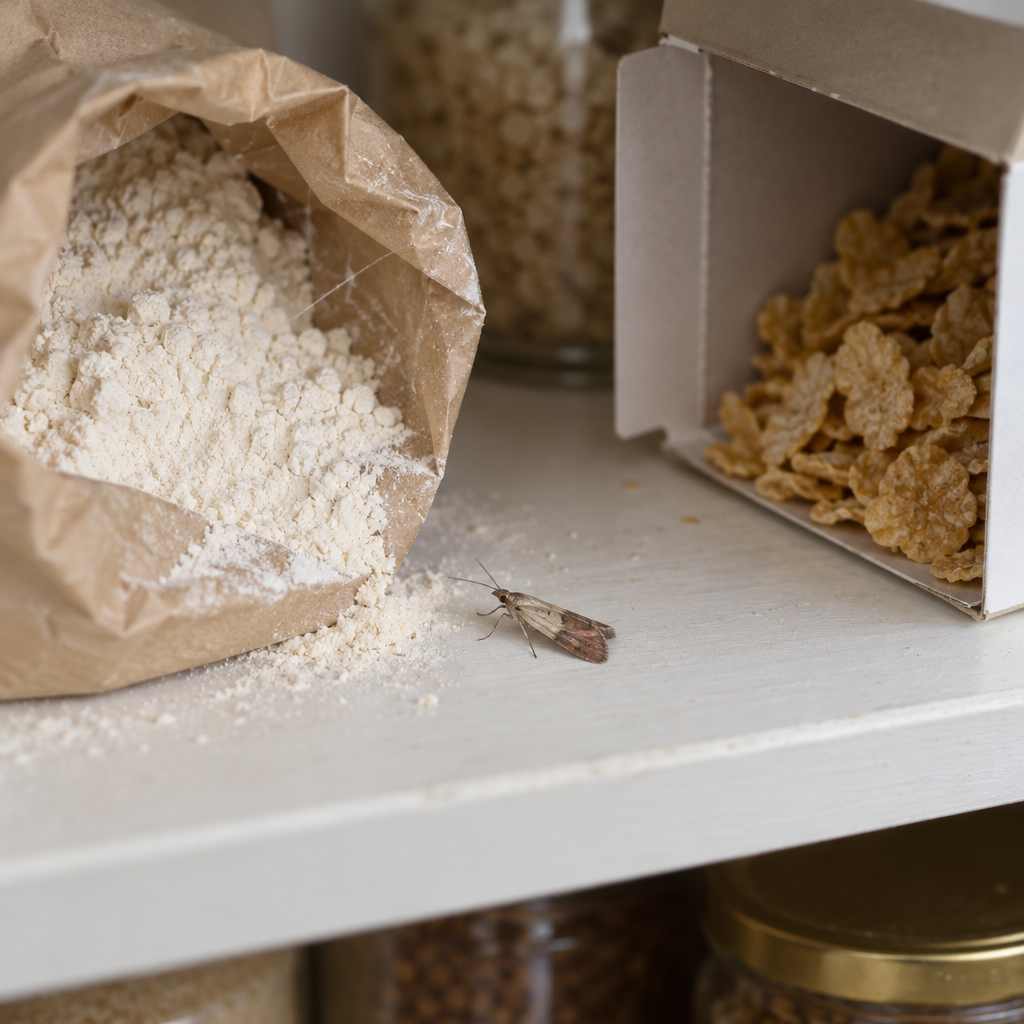
Most people notice the adults first. University of Kentucky Extension says the first sign is usually small beetles crawling over countertops, moths flying across rooms, or caterpillars crawling up walls or across ceilings. Minnesota Extension notes they often gather in pots, pans and dishes or on window sills.
They don’t bite or sting people or pets, and they don’t damage your house. The same page notes that they contaminate more food than they eat.
When you check the food itself, look for webbing. Indian meal moth caterpillars leave silk webbing on the surface of the food they’re feeding in. A flashlight on the top of each product helps, or pour it onto a cookie sheet.
How to tell common pantry pests apart
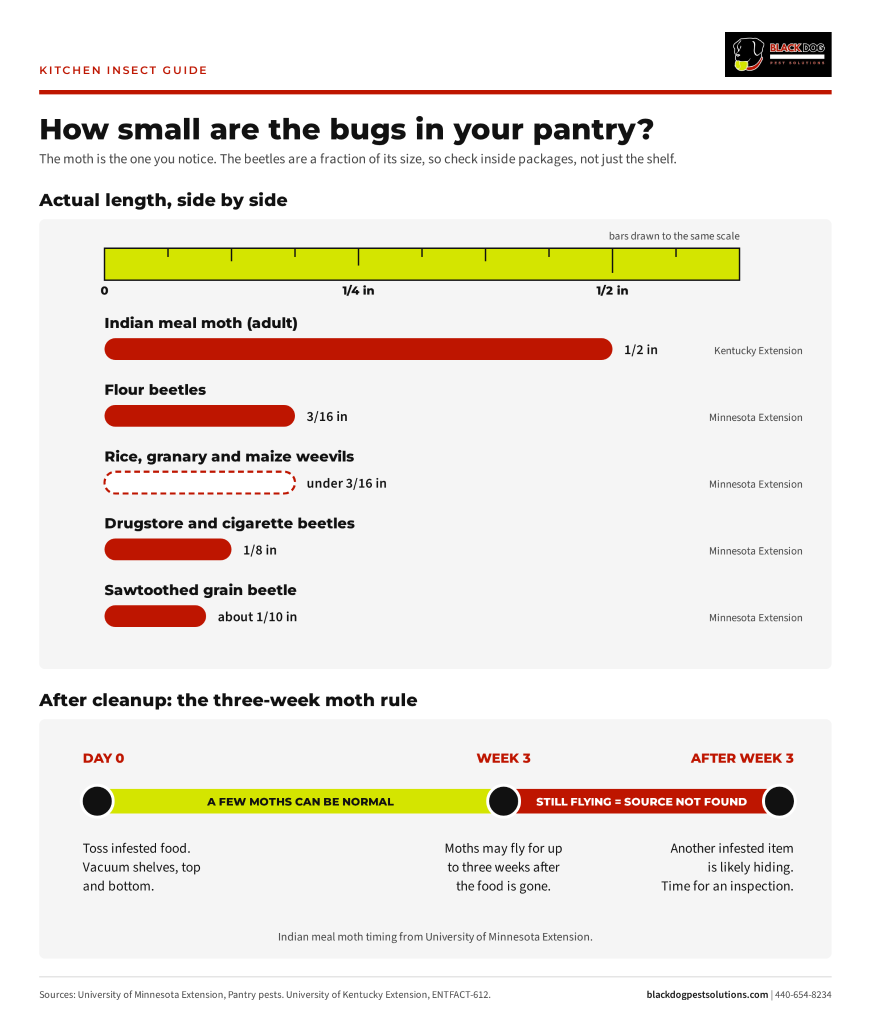
Kentucky Extension describes the adult Indian meal moth as about 1/2 inch long with pale gray and coppery brown front wings. Its life cycle can be as short as 25 days. The beetles are much smaller. Per Minnesota Extension, the sawtoothed grain beetle is about 1/10 inch, drugstore and cigarette beetles are 1/8 inch, and flour beetles are 3/16 inch.
Weevils get blamed for a lot of flour problems. According to Minnesota Extension, granary, rice and maize weevils are under 3/16 inch and eat only whole grains or seeds, and flour is not a typical place to find them. Kentucky Extension notes that flour beetles and the sawtoothed grain beetle are the ones that feed on processed grains like flour and meal.
| Pest | What it feeds on | What you’ll notice |
| Indian meal moth | Dried fruit, chocolate, flour, dry dog food and birdseed. It prefers coarse flour and cornmeal. | Moths fly around rooms. Webbing sits on top of the food. |
| Sawtoothed grain beetle | Dried fruit, cereal, nuts, dried meat and pasta. | Slender brown beetles show up in food. |
| Red flour beetle | Flour, bran, cereal, dried fruit, nuts and chocolate. | Reddish-brown beetles show up in flour. This one is common in homes. |
| Drugstore and cigarette beetles | Spices, pasta and dry dog food. Cigarette beetles are common in paprika. | They fly. You may find them around windows. |
| Rice and granary weevils | Whole grains and seeds. | Grains have small round exit holes. |
Sources: University of Minnesota Extension, Insects found in stored food. University of Kentucky Extension, ENTFACT-612.

Where the source usually hides
Killing the adults won’t fix it. Kentucky Extension says infested articles must be found and destroyed, and the more insects you see, the older the infestation tends to be. The starting point is often a partly used box or bag pushed to the back of a shelf and forgotten.
Unopened food can be affected too. Minnesota Extension says these insects can get into unopened paper, thin cardboard and plastic-wrapped packages by chewing in or crawling through folds and seams. From one package, they can spread to other rooms.
Clean shelves don’t end the search, since the Minnesota page also lists birdseed, dry pet food, ornamental corn, dried flowers and potpourri as other possible sources.
What to toss and how to clean up
Kentucky Extension calls throwing out infested food the best way to eliminate the problem. After that, vacuum the shelves, both upper and lower surfaces, and use a crevice tool on cracks. Empty the vacuum or toss the bag afterward.
Washing shelves with bleach, ammonia or detergent won’t keep these insects from coming back, and the Minnesota page says there’s no evidence that bay leaves or spearmint gum work either. It doesn’t recommend insecticides in food cupboards, since household sprays have no effect on insects inside packages.
For older food you aren’t sure about, you can freeze it at 0°F for at least four days or heat it in shallow pans at 130°F for at least 30 minutes. For food storage after cleanup, move clean food into tightly closed glass, metal or heavy plastic containers, and buy dry goods in amounts you’ll use within two to four months.
A moth or two afterward is expected. Minnesota Extension says it’s normal to see Indian meal moths for up to three weeks after the infested food is gone. Moths still flying after three weeks mean there’s a source you haven’t found yet. That’s a good time to call for an inspection, and our beetle control service and residential services cover homes across Northern Ohio. If the small beetles you’re finding are in closets or carpets instead of food, read our post on carpet beetles.
If pantry pests keep turning up after you’ve cleaned out the cupboards, we can help track down the source. Finding it early helps protect the food you’re stocking up for the holidays. Call Black Dog Pest Solutions at 440-654-8234 or contact us online to schedule a visit.
Frequently asked questions
Are there weevils in my flour?
Probably not. Weevils eat whole grains and seeds, so flour beetles are a more likely match.
Why do I still see moths after throwing out the food?
Moths may keep flying for up to three weeks. After that, there’s likely another infested item in the house.
Can these insects get into unopened packages?
Yes. They can chew into paper, thin cardboard and plastic wrap or crawl in through folds and seams.
Do pantry insects bite people or pets?
No, they don’t bite or sting people or pets, and they don’t damage buildings.
Is pest control worth it compared to doing it myself?
If you’ve cleaned out your shelves and still see insects, contact Black Dog Pest Solutions to talk through what you’re finding. Ask about service options and pricing so you can compare them with your own efforts. Call 440-654-8234.