
Tiny Jumpers, Big Annoyance: What You Need to Know About Killing Springtails
If you’re trying to figure out how to kill springtails, here’s the short answer:
- Vacuum or physically remove visible springtails right away.
- Fix the moisture problem — leaks, overwatering, poor drainage, damp mulch.
- Use soapy water, vinegar spray, or diatomaceous earth for quick knockdown indoors.
- Apply a perimeter insecticide if non-chemical methods aren’t enough.
- Call a licensed pest professional if the infestation keeps coming back.
Moisture control is the most effective long-term approach. Everything else is temporary without it.
You’ve probably seen them — tiny specks near your bathroom sink or basement floor that jump when you get close. Those are springtails. They’re small, wingless arthropods (technically in the group Collembola, not true insects) that use a forked tail-like structure called a furcula to launch themselves into the air when threatened. They don’t bite, sting, or spread disease — but when millions show up in your pool or across your bathroom tiles, harmless starts to feel like a stretch.
Springtails thrive wherever there’s moisture. A single cubic foot of soil can harbor up to 10,000 of them, with potentially millions living in one backyard. They’re active year-round, and they won’t leave on their own as long as the damp conditions remain.
Their presence isn’t just annoying — it’s a signal. Springtails showing up indoors usually means there’s a moisture problem somewhere: a slow leak, poor ventilation, soggy mulch against your foundation, or overwatered houseplants. Fix that, and you fix the infestation.
I’m Mat Ledyard, owner of Black Dog Pest Solutions in Avon, Ohio, and I’ve been working in pest control since 2005 — including countless calls from homeowners across Northern Ohio who needed help figuring out how to kill springtails after DIY methods fell short. In the sections below, I’ll walk you through everything from identification to chemical treatments, so you can solve this the right way.
How to kill springtails terms you need:
Identifying a Springtail Infestation
Before you grab a vacuum or spray, you need to make sure you’re actually dealing with springtails. Because they jump, many homeowners in Avon and the Greater Cleveland area mistake them for fleas and start panicking about pet treatments.
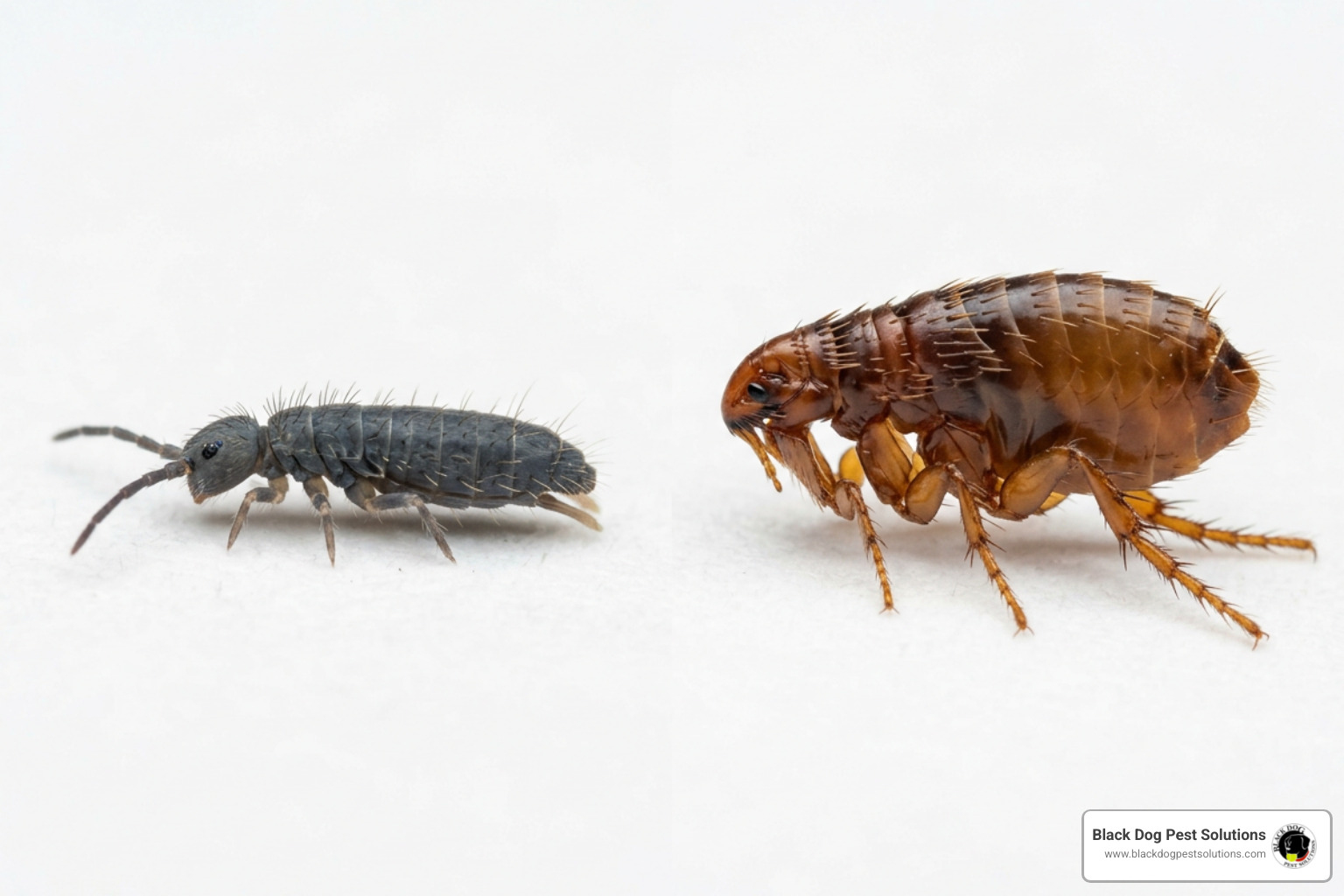
Let’s break down the physical characteristics so you can tell them apart easily:
- Size: Adult springtails are minute, typically measuring 1/16 to 1/8 of an inch in length (about 1 to 3 millimeters). Some species can reach nearly a quarter of an inch, but most look like moving dust particles to the naked eye.
- Body Shape: Unlike fleas, which are hard-bodied, teardrop-shaped, and flattened from side to side, springtails have soft, elongated or globular bodies.
- Color Variations: They come in a wide range of colors. You might spot white, gray, red, mottled brown, or almost completely black springtails.
- The Jumping Mechanism: This is their hallmark trait. When disturbed, they release a tucked-under, fork-like appendage called a furcula from their abdomen, catapulting themselves several inches into the air.
If you see these tiny critters huddled in damp areas like soil, bathroom tiles, or around pool decks, they are likely springtails. For a deeper dive into confirming their identity, especially when they take over your favorite greenery, check out The Great Leap: Identifying Springtails in Potted Plants. You can also read the scientific breakdown of their habits via Springtails | Ohioline to understand how these decomposers operate in the Ohio climate.
How to Kill Springtails Using Non-Chemical Methods
When springtails invade, your first instinct might be to spray everything in sight. However, because these pests are harmless to your health and home structure, heavy chemical use isn’t always the best first step. Non-chemical physical removal and home remedies can provide immediate relief.

For a quick overview of safe, non-chemical approaches, you can review How to Get of Rid of Springtails Quickly and Safely . To get them out of your living spaces fast, we also recommend checking out Stop the Indoor Hop with These Springtail Removal Tips.
How to Kill Springtails Indoors Safely
If they’ve already breached your home’s perimeter, you can clear them out using simple household items:
- Vacuum Daily: This is a fast way to reduce their numbers. Use a vacuum with a HEPA filter to sweep up large clusters. Because springtails need high humidity to survive, they will quickly dehydrate inside a dry vacuum canister, but it’s still best to empty the cup or bag into an outdoor trash bin immediately.
- Soapy Water Spray: Mix 2 tablespoons of liquid dish soap with a quart of water in a spray bottle. Spraying this directly on springtails can break their surface tension and help eliminate them on contact.
- Vinegar Solution: A 50/50 mix of white vinegar and water can be highly acidic to springtails, helping to manage them on contact and clean up the mold, algae, and organic biofilm they feed on.
- Diatomaceous Earth (DE): Sprinkle food-grade diatomaceous earth along baseboards, under sinks, and in crawl spaces. DE is a natural powder made from fossilized algae that can wear down the waxy outer coating of pests, helping to dry them out. Note that DE only works when it is completely dry; if it gets wet from bathroom humidity, it loses its effectiveness.
For step-by-step guidance on clearing out these damp-loving pests from your home’s wettest rooms, take a look at our specialized guide on How to Get Rid of Springtails in Your Bathroom Once and for All.
How to Kill Springtails in Swimming Pools Quickly
In Northern Ohio, springtails frequently end up in swimming pools, especially after heavy summer rainstorms or when new sod is laid nearby. Because they are so light, they float on the surface tension of the water, sometimes forming thick, unsightly mats that make the pool unusable.
- Use Fine Mesh Nets: Standard pool skimmer nets have mesh openings that are too wide, allowing microscopic springtails to pass right through. Line your skimmer net with a tight-knit fabric, like an old t-shirt or cheesecloth, to trap them.
- Skimmer Socks: Slip nylon skimmer socks over your pool’s skimmer baskets. These fine filters catch springtails as the pool pump circulates the water. Be sure to check and change these socks daily during an outbreak.
- The Soapy Bucket Trick: Keep a bucket of water mixed with a few drops of dish soap next to the pool. As you scoop the springtails off the pool surface, dump them into the soapy bucket. The soap breaks the water’s surface tension, causing them to sink and drown rather than hopping off your net back into the pool.
Moisture Control and Habitat Modification: The Ultimate Prevention Strategy
While physical removal helps manage the immediate nuisance, focusing on prevention as the best long-term approach is key, as you cannot effectively manage a springtail issue without modifying their habitat. Springtails require constant moisture to survive because they absorb water directly through their skin. If their environment dries out, they die. Therefore, moisture control is your primary line of defense.
To make your property inhospitable to these jumping pests, focus on these essential landscaping and home maintenance steps:
- Create a Gravel or Rock Border: Keep mulch at least 12 to 18 inches away from your home’s foundation. Mulch retains moisture and organic material, making it a perfect breeding ground. Replace the mulch closest to your foundation with gravel, river rocks, or stones.
- Fix Drainage and Extend Downspouts: Ensure that the ground slopes away from your foundation so rainwater doesn’t pool against your walls. Extend your gutter downspouts several feet away from the house to redirect water safely.
- Avoid Overwatering: If you have an irrigation system, reduce its frequency. Allow the top 1 to 2 inches of lawn and garden soil to dry out completely between waterings.
- Trim Vegetation: Prune low-hanging branches, thick shrubs, and heavy ground cover near your foundation. This improves sunlight penetration and airflow, helping the soil dry out faster.
- Seal Entry Points: Springtails can wiggle through gaps that are about 1/4 inch or smaller. Use outdoor-grade caulk to seal cracks in your foundation, gaps around basement windows, and entry points near utility pipes. Install fine mesh screens over weep holes and replace worn weatherstripping under doors.
For more details on managing the outdoor environment to prevent these pests from reaching your home, check out Taming the Great Outdoors to Prevent Springtail Invasions. You can also read the ecological and management guidelines provided by the Springtails / Home and Landscape / UC Statewide IPM Program (UC IPM) to understand how environmental modification forms the backbone of professional pest control.
If you find that local weather and building conditions in Northern Ohio keep your home damp despite your best efforts, reaching out to professional pest control companies in Avon can help you identify hidden moisture reservoirs that are attracting these pests.
Chemical Treatments and Professional Pest Control
When non-chemical methods and moisture adjustments aren’t enough to curb a massive migration, chemical treatments can serve as an optional secondary tool. However, prioritizing moisture control and exclusion is the best long-term approach, as applying insecticides without fixing the underlying moisture issues will only provide short-term relief, as new populations can quickly move in to replace the ones you targeted.
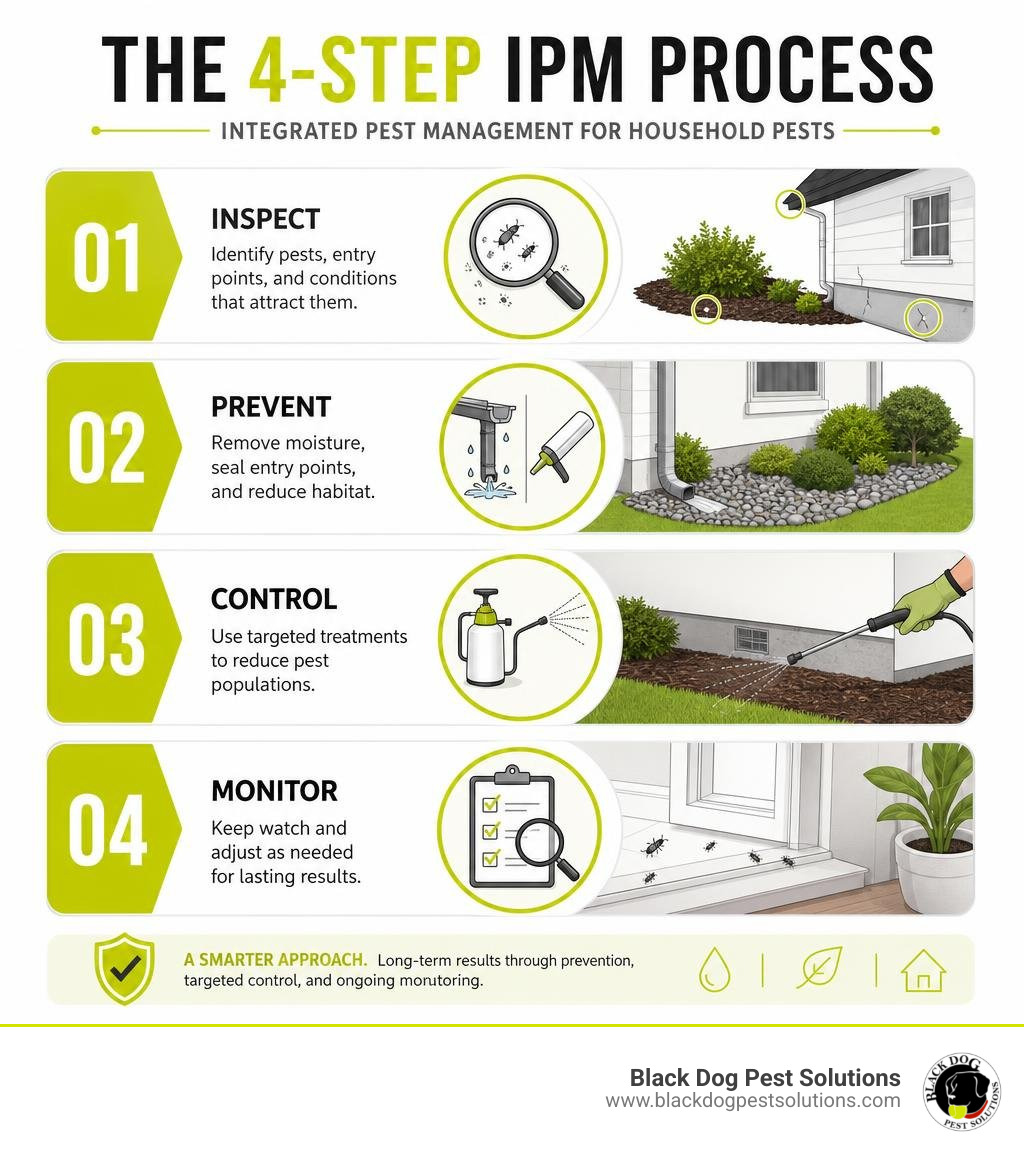
If you decide to use chemical controls, here is what can work best:
- Perimeter Sprays: Applying a liquid residual insecticide (such as those containing bifenthrin) in a 5- to 10-foot band around your home’s foundation can help prevent outdoor springtails from migrating inside.
- Granular Insecticides: Spreading granular insecticides under heavy mulch layers or in damp soil zones can reach deeper nesting sites where liquid sprays might not penetrate.
- Dusts in Wall Voids: For springtails that have settled inside damp walls or crawl spaces, applying an insecticidal dust with a hand duster can provide control in hard-to-reach areas.
For a detailed look at selecting and applying these products safely, you can refer to the product and application guides on How To Get Rid of Springtails | Do My Own . If you want to understand how professionals approach severe, deep-seated infestations, read our guide on How to Eliminate a Springtail Infestation Without Losing Your Mind.
Important Licensing Rules in Ohio
If you are considering hiring help, it is vital to know that the state of Ohio requires a pesticide business license for anyone applying pesticides for hire. Never hire an unlicensed contractor or handyman to apply chemicals around your home.
When looking for pest control companies in Avon, always ensure they are fully licensed, insured, and experienced in Integrated Pest Management (IPM) practices. A licensed professional has access to specialized equipment and commercial-grade products that can safely target springtail nesting sites deep under concrete slabs or behind exterior siding.
Frequently Asked Questions About Springtails
If you are still searching for answers, here are some of the most common questions homeowners ask pest control companies in Avon about dealing with these persistent jumpers. For general information on their biology, you can also visit our main page on Springtails.
Are springtails dangerous to humans or pets?
No. Springtails are completely harmless to humans, dogs, cats, and household furnishings. They do not bite, they do not sting, they do not carry diseases, and they do not cause structural damage to your wood or drywall. They are simply nuisance pests that are attracted to damp environments.
How long does it take to get rid of springtails?
When you combine physical removal, targeted treatments, and proper moisture control, it typically takes 2 to 4 weeks to significantly reduce a springtail infestation. Because they reproduce quickly and can nest deep in the soil, you may continue to see a few stray jumpers as the local environment dries out. Persistent infestations that last longer usually indicate an unresolved moisture source, such as a hidden pipe leak or rotting wood behind a wall.
Why do I suddenly have springtails in my home?
A sudden explosion of springtails indoors is almost always triggered by weather changes. Heavy rainstorms can saturate the outdoor soil, forcing millions of springtails to climb upward and seek drier ground, which often leads them through your foundation cracks. Conversely, a prolonged dry spell can dry out their outdoor nesting sites, driving them indoors in search of the humidity they need to survive.
Conclusion
At Black Dog Pest Solutions, we believe in using Integrated Pest Management (IPM) to solve pest problems safely and effectively. This means we don’t just spray chemicals and hope for the best. Instead, we inspect your property, help you seal entry points, suggest practical sanitation and moisture control steps, and use targeted treatments only when necessary.
If you live in Avon, Avon Lake, Westlake, or anywhere in Northern Ohio, and you are tired of dealing with persistent jumping pests, let our family-owned, BBB-accredited team help you get things back under control.
Schedule a professional pest inspection with us today, and let’s dry out your pest problems for the long term!