
Why Rodent Removal Matters for Northern Ohio Homes and Businesses
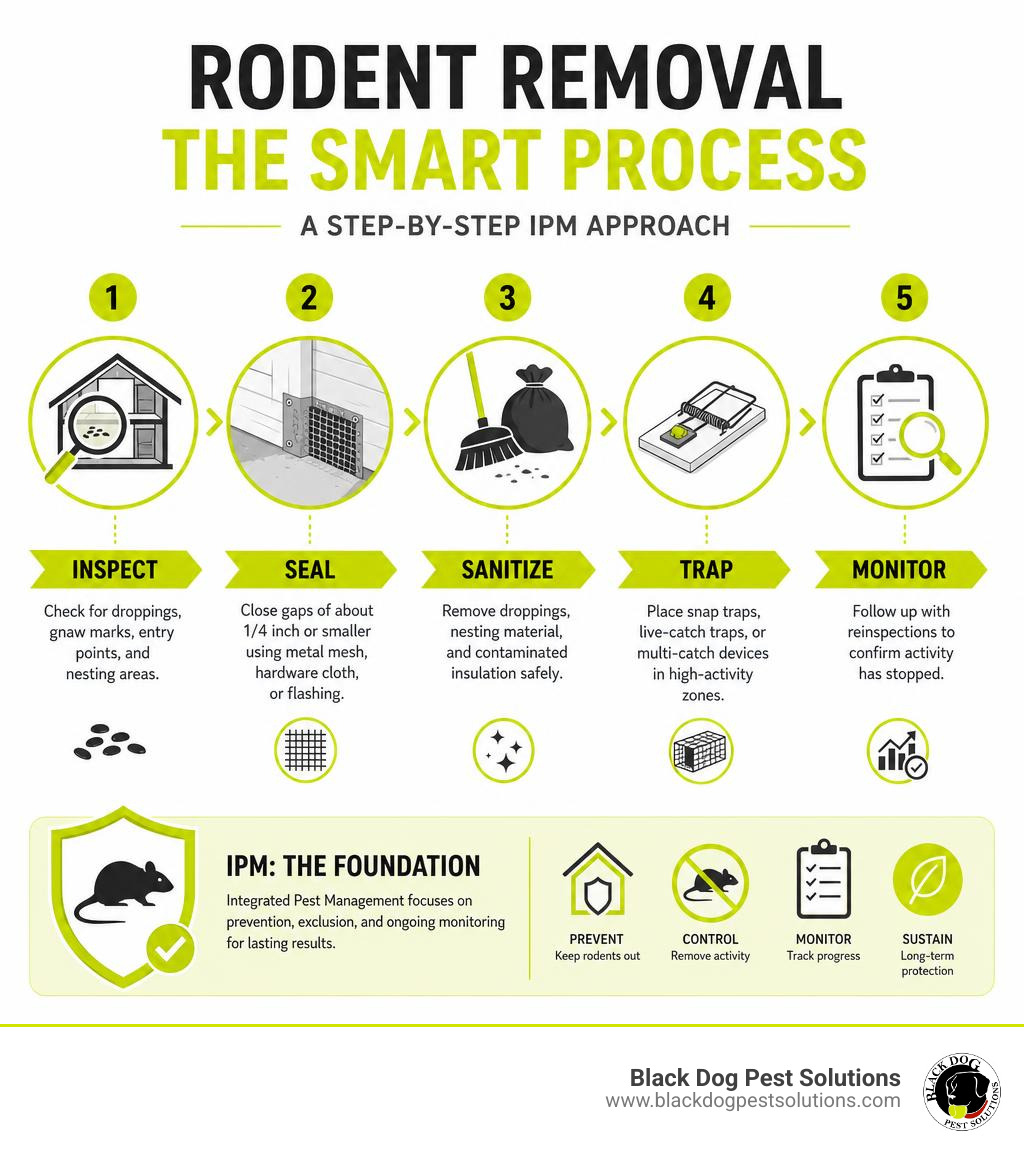
Rodent removal is the process of identifying, eliminating, and helping prevent infestations of mice and rats in homes or businesses. Here’s a quick overview of how it works:
- Inspect – Check for droppings, gnaw marks, entry points, and nesting areas
- Seal – Close gaps of about 1/4 inch or smaller using metal mesh, hardware cloth, or flashing
- Sanitize – Remove droppings, nesting material, and contaminated insulation safely
- Trap – Place snap traps, live-catch traps, or multi-catch devices in high-activity zones
- Monitor – Follow up with reinspections to confirm activity has stopped
Rodents are not just a nuisance. They spread more than 35 diseases, contaminate food, chew through electrical wiring, and cause an estimated $19 billion in property damage across the United States every year. And because mice reproduce quickly, a small problem can grow into a serious infestation in a matter of weeks.
In Northern Ohio, older homes, attached garages, and local weather conditions can make buildings especially attractive to mice and rats — particularly in the fall and winter months when rodents seek warmth and shelter indoors.
The good news: when caught early and handled with a structured approach, rodent problems are manageable.
My name is Mat Ledyard — owner of Black Dog Pest Solutions in Avon, Ohio, and a pest control professional since 2005 with over a decade focused on helping Northern Ohio homeowners and businesses with rodent removal and long-term prevention. In this guide, I’ll walk you through everything you need to know, from spotting the first signs of activity to understanding what professional treatment actually involves.
How to Identify a Rodent Problem Before It Spreads
Rodents usually leave evidence before they show themselves. That is good news, because early signs give you a chance to act before mice or rats settle into attics, wall voids, crawlspaces, garages, storage rooms, or commercial kitchens.
A practical approach is simple: look for patterns. One dropping might mean a recent visitor. Fresh droppings, gnaw marks, scratching noises, nesting material, and pantry damage together usually point to active rodent activity.
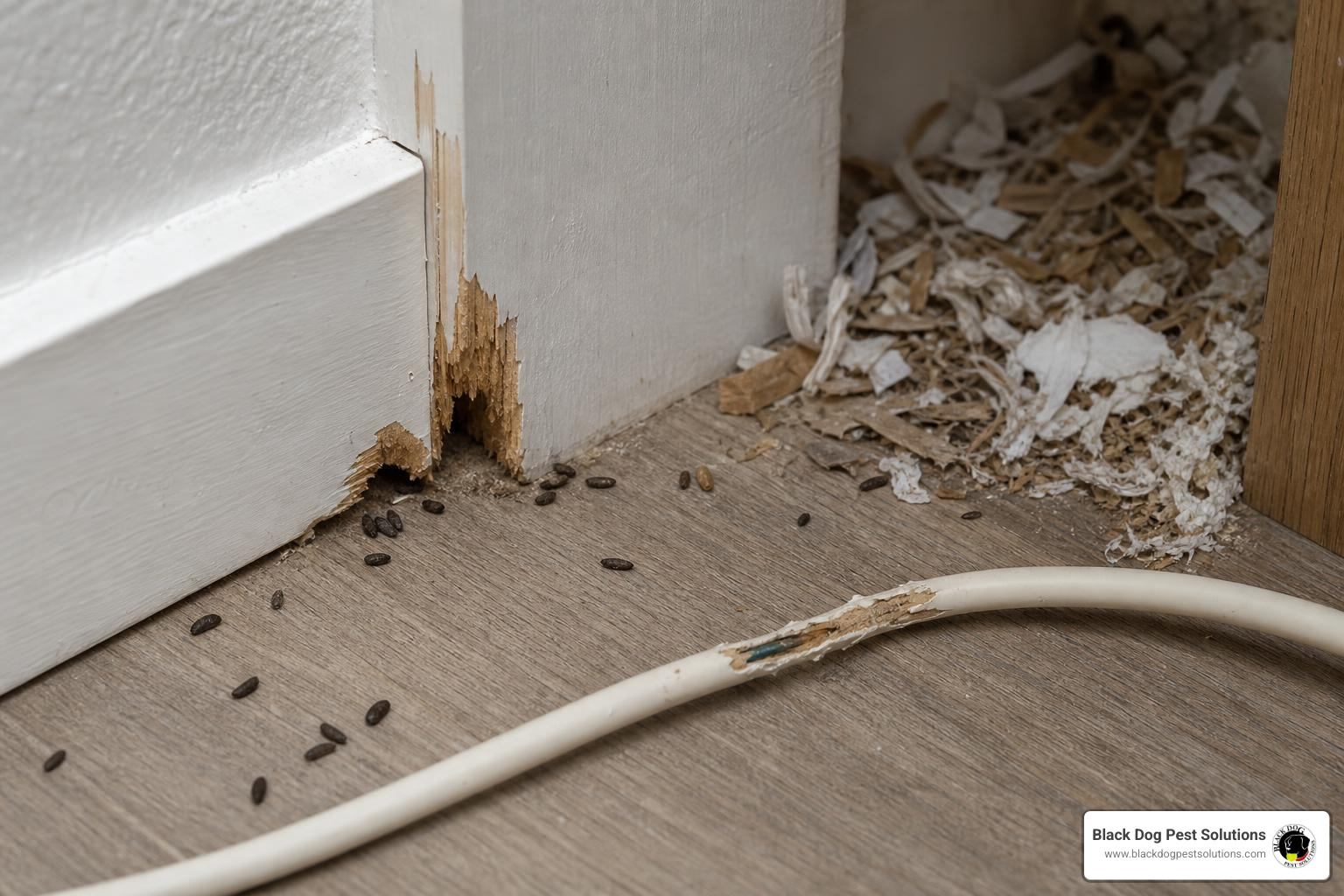
Common early clues include:
- Small droppings near walls, cabinets, appliances, or stored food
- Gnaw marks on packaging, wood, plastic, wiring, or insulation
- Scratching or scurrying sounds at night
- Chewed pantry goods or holes in bags and boxes
- Oily rub marks along baseboards or wall edges
- Shredded paper, fabric, insulation, or nesting material
- Musty or ammonia-like odors
- Unusual pet interest in cabinets, appliances, or walls
- Fly activity or odors from a dead rodent
For a broader checklist, see our guide: Do You Have a Pest Problem? Key Signs Every Owner Must Know.
Common Signs of Mice and Rat Activity
Mice and rats behave differently, but both tend to travel along edges rather than crossing open rooms like tiny action heroes. Look where walls meet floors, behind appliances, under sinks, near water heaters, around utility lines, and inside basement corners.
The most common signs include:
- Droppings: Mouse droppings are small and dark, while rat droppings are larger. Fresh droppings are usually darker and softer than old ones.
- Gnaw marks: Rodents chew constantly to manage tooth growth. Packaging, baseboards, wires, pipes, and stored furniture are common targets.
- Nesting debris: Shredded paper, fabric, insulation, and cardboard may be tucked behind appliances, in wall voids, or inside storage boxes.
- Rub marks: Rats often leave greasy smudges along regular travel paths.
- Odors: A strong ammonia smell can indicate urine buildup in enclosed spaces.
- Food contamination: Rodents can contaminate food and surfaces with urine, droppings, saliva, and hair.
If you are unsure what you are seeing, our pages on Mice and Rats can help you compare signs.
Where Rodents Hide in Northern Ohio Homes and Businesses
In Northern Ohio, rodents often move indoors when weather shifts, but they can be active inside any time conditions are favorable. Local weather and building conditions can make homes more attractive to mice, especially when food, warmth, and shelter are easy to access.
Check these high-probability areas:
- Attics and insulation
- Attached garages
- Basements and crawlspaces
- Wall voids and utility chases
- Drop ceilings
- Storage rooms
- Commercial kitchens and breakrooms
- Under sinks and behind appliances
- Garage sofas, stored cushions, and cardboard boxes
- Cluttered corners, shelving, and seasonal storage
Attics are especially common because rodents can access rooflines, soffits, and vents. Read more here: Attic Annoyance: Say Goodbye to Unwanted Rodent Guests.
Garages are another big one. They offer shelter, food storage, pet food, birdseed, and old furniture. We covered that in Don’t Let Rodents Make a Meal Out of Your Garage Sofa.
Why Small Rodent Problems Escalate Quickly
A single mouse sighting should not cause panic, but it should prompt action. Mice reproduce quickly, and rats can also build populations fast when food, water, and shelter are available. Under ideal conditions, a single pair of rats has the potential to produce thousands of descendants in one year.
Why does this matter? Because rodents are often hidden before they are obvious. By the time you see one crossing a kitchen floor, there may already be activity in walls, behind appliances, or in storage areas.
Prompt help from experienced pest control companies in Avon can reduce the guesswork. Professional inspection helps answer three important questions:
- What species is active?
- How are they getting in?
- What conditions are supporting the infestation?
How Rodents Enter Buildings and What to Inspect
Rodents do not need a front-door invitation. Mice can squeeze through openings about 1/4 inch or smaller, and rats can use larger gaps around foundations, vents, doors, and rooflines. If a gap looks too small, assume a mouse has already looked at it and said, “Challenge accepted.”
Exterior Entry Points Homeowners Should Check
Walk the exterior slowly and look from the ground up. Common rodent entry points include:
- Foundation cracks and mortar gaps
- Gaps at sill plates
- Brick weep holes
- Crawlspace doors and vents
- Basement windows with damaged seals
- Garage door corners and worn thresholds
- Gaps around siding, trim, and deck connections
- Porch steps and slab gaps
- Roof returns and fascia boards
- Soffit intersections
- Attic vents and damaged vent screens
- Chimney gaps
- Dryer vents and exhaust openings
- Utility penetrations for AC lines, cables, plumbing, and gas lines
- Open doors, windows, and damaged screens
Rooflines matter, too. Some rodents climb trees, fences, utility lines, and downspouts to reach upper-level openings. Trimming branches away from the structure can help reduce access.
Interior Clues That Point to Entry Routes
Inside, droppings and rub marks often point toward travel paths. Look for:
- Dropping trails along baseboards
- Gnawing near pipe openings
- Scratching in walls or ceilings
- Activity around kitchen and bathroom plumbing
- Gaps where floors meet walls
- Openings around laundry hookups
- Attic access points
- Basement utility lines
- Nesting material near warm appliances
Rodents often follow the same routes repeatedly. If you find activity under the kitchen sink, the entry point may be outside near plumbing, siding, or a foundation gap.
Why Exclusion Is the Core of Long-Term Rodent Removal
Trapping helps remove active rodents, but exclusion helps prevent new ones from replacing them. That is why rodent removal should always include entry-point correction.
Effective exclusion materials include:
- Metal mesh
- Hardware cloth
- Flashing
- Door sweeps
- Vent covers
- Cement or mortar for appropriate masonry gaps
- Steel wool backing with sealant in certain small gaps
Metal materials are more resistant to chewing than foam alone. Expanding foam may fill space, but rodents can gnaw through it if it is not reinforced.
This prevention-first thinking is part of Integrated Pest Management, or IPM. Learn more in our guide: Get Smart About Mice: What is Integrated Pest Management?. You can also review the EPA guidance on Integrated Pest Management.
Health, Safety, and Property Risks Linked to Rodents
Rodent problems are not only about noise in the walls. Rodents can affect health, food safety, indoor air quality, and building systems.
They can spread disease directly through droppings, urine, saliva, bites, and contaminated food. They can also contribute to indirect risks through fleas, ticks, or mites. According to public health guidance, rodents are associated with more than 35 diseases worldwide, including hantavirus, leptospirosis, salmonellosis, rat-bite fever, lymphocytic choriomeningitis, and tularemia.
Diseases and Contamination Concerns
Rodent contamination is especially concerning in:
- Kitchens
- Pantries
- Restaurants
- Schools
- Offices
- Warehouses
- Breakrooms
- Pet feeding areas
- Homes with children, older adults, pets, or immunocompromised occupants
Droppings, urine trails, nesting debris, and contaminated food packaging should be handled carefully. Rodents may carry pathogens without appearing sick, so visual inspection of the animal is not a reliable safety measure.
For businesses, rodents can also create food safety concerns, employee complaints, customer trust issues, and downtime.
Property Damage Caused by Rats and Mice
Rodents chew. A lot. And they are not picky.
Damage may include:
- Chewed electrical wires
- Increased fire risk from damaged wiring
- Gnawed plastic pipes or water lines
- Water leaks
- Damaged insulation
- Contaminated ductwork
- Chewed stored goods
- Furniture damage
- Garage clutter damage
- Wall void contamination
- Odors from urine, nesting, or dead rodents
Chewed electrical wires are one of the most serious concerns. If you find damaged wiring, do not ignore it. Contact a qualified electrician for electrical repairs and a pest professional to address the rodent source.
Safe Cleanup After Rodent Activity
Avoid sweeping or vacuuming dry droppings, because that can stir particles into the air. A safer basic approach includes:
- Ventilate the area when appropriate.
- Wear disposable gloves.
- Apply disinfectant according to label directions.
- Pick up droppings and nesting material with disposable towels.
- Seal waste in bags.
- Disinfect affected surfaces.
- Wash hands thoroughly.
Larger infestations may require professional sanitation, HEPA vacuuming, odor reduction, or insulation assessment. If odor is the main clue, start here: Bye-Bye Bad Odor: Expert Tips for Dead Mouse Removal.
DIY vs Professional Rodent Removal: What Works, What Has Limits
DIY rodent control can help in limited situations, especially when activity is new, isolated, and entry points are obvious. But recurring activity, attic noises, rats, or contamination usually call for professional help.
| Factor | DIY Rodent Control | Professional Rodent Removal |
|---|---|---|
| Best for | One recent mouse sighting or very light activity | Ongoing, hidden, or recurring infestations |
| Inspection | Limited to visible areas | Interior, exterior, attic, crawlspace, garage, roofline, and utility areas |
| Trapping | Homeowner-placed traps | Strategic placement based on activity patterns |
| Humane options | Live-catch traps may be considered where appropriate | Humane mouse control planning with frequent checks and prevention |
| Exclusion | Often missed or incomplete | Entry-point mapping and sealing recommendations |
| Safety | Higher risk if droppings, dead rodents, pets, or children are involved | Safer handling procedures and sanitation guidance |
| Long-term control | Can be limited if gaps remain open | Focuses on prevention, monitoring, and follow-up |
When DIY Rodent Removal May Be Reasonable
DIY rodent removal may be reasonable if:
- You saw one mouse recently
- You found a clear entry path
- There are no signs of attic or wall activity
- Droppings are minimal and easy to clean safely
- You can seal food and reduce clutter
- You can check traps frequently according to instructions
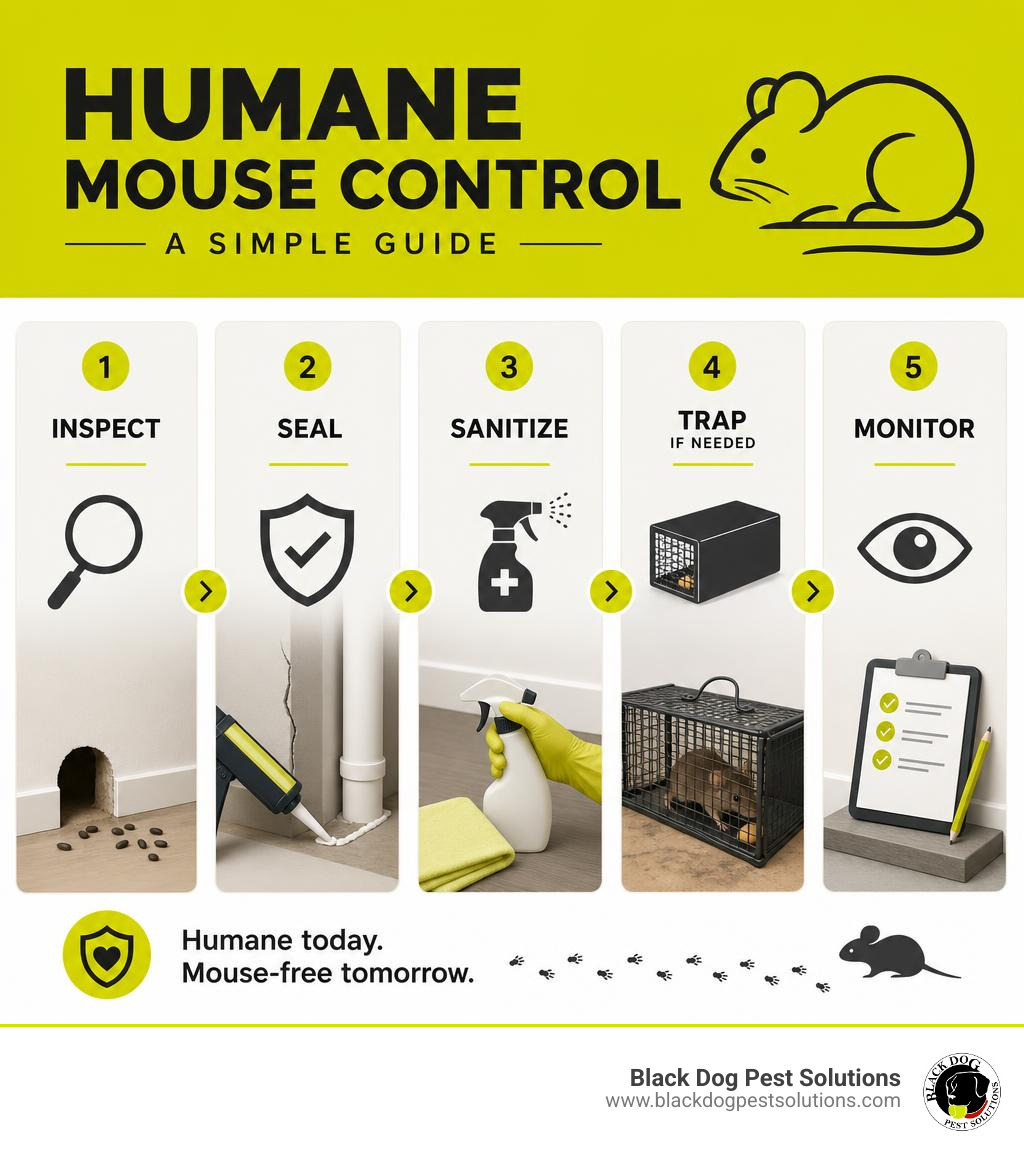
For humane mouse control, consider live-catch traps where appropriate. Check them often, follow product directions, and remember that release rules vary by location and situation. The goal should be minimizing stress and suffering while also recognizing that prevention is the best long-term approach.
Read more here: Compassionate Critter Control: Humane Mouse Removal Strategies.
When to Call a Professional
Call a professional if you notice:
- Multiple sightings
- Fresh droppings after cleaning
- Scratching in walls or ceilings
- Attic or crawlspace activity
- Suspected rats
- Chewed wires
- Strong odors
- Dead rodents
- Large nests
- Business or food-service activity
- Recurring problems after DIY efforts
- Children, pets, or vulnerable occupants in affected areas
This is where experienced pest control companies in Avon are valuable. They can identify species, entry points, and the level of activity before treatment begins.
Helpful resources:
- Beyond a Few Pests: Eradicating a Full-Blown Mice Infestation
- Don’t Panic: How to Find Emergency Mice Exterminators Near You
Understanding Costs, Promises, and Service Expectations
Rodent service needs vary by property. Factors include:
- Inspection scope
- Infestation severity
- Rodent species
- Number and location of entry points
- Exclusion repairs needed
- Sanitation needs
- Follow-up visits
- Monitoring requirements
Be cautious with absolute promises. Rodent control depends on building conditions, sanitation, exclusion, and ongoing monitoring. A good service should explain realistic expectations, provide service notes, and recommend long-term prevention steps.
For more detail, see:
- The Price of Peace: Understanding Mice Pest Control Costs
- Is Guaranteed Mice Removal a Myth? Unpacking Pest Control Promises
What Professional Rodent Removal Services Typically Include
Professional rodent control usually follows an IPM process: inspect, diagnose, treat, exclude, sanitize, and monitor. At Black Dog Pest Solutions, we use this kind of practical, prevention-first approach for residential and commercial properties across Northern Ohio, including Avon, Greater Cleveland, Lorain, Elyria, Avon Lake, Bay Village, North Ridgeville, Westlake, Lakewood, Strongsville, Medina, Sandusky, and nearby communities.
Professional Rodent Removal Inspection and Diagnosis
A professional inspection may include:
- Exterior foundation review
- Roofline and soffit inspection
- Garage and door seal checks
- Basement and crawlspace review
- Attic inspection
- Kitchen and pantry inspection
- Utility penetration review
- Dropping and gnaw mark identification
- Nesting area checks
- Species identification
- Entry-point mapping
- Photo documentation when helpful
The goal is not just to ask, “Where is the mouse?” It is to ask, “Why is the mouse here, how did it get in, and what would stop the next one?”
Treatment Methods Used by Rodent Control Companies
Treatment may include:
- Snap traps
- Multi-catch traps
- Live-catch traps where appropriate
- Tamper-resistant stations
- Targeted bait use when appropriate and allowed
- Follow-up adjustments
- Monitoring devices
- Sanitation recommendations
Trap placement matters. Rodents travel along walls, pipes, beams, and edges. Random trap placement in the middle of a room is usually less effective than careful placement near active routes.
When we discuss treatment with customers, we also consider children, pets, access, food areas, and humane mouse control goals, including minimizing stress and suffering when live-catch options are suitable.
Exclusion, Sanitation, and Monitoring After Removal
After active removal, long-term reduction depends on prevention. That may include:
- Sealing gaps around pipes and utility lines
- Adding door sweeps
- Repairing garage seals
- Screening vents
- Reinforcing gaps with metal materials more resistant to chewing
- Reducing food and water sources
- Removing nesting material
- Evaluating contaminated insulation
- Monitoring for fresh droppings or new gnawing
Garages deserve special attention because they are often the bridge between outdoors and indoors. See Keep Your Garage Squeaky Clean: A Guide to Effective Mice Control.
Long-Term Rodent Prevention for Homes and Businesses
The best rodent plan is the one that makes your building boring to rodents. No easy food. No easy water. No cozy clutter. No open gaps. Basically, no tiny rodent vacation package.
Practical Sanitation Steps That Reduce Rodent Pressure
Keep sanitation simple and consistent:
- Store food in sealed containers
- Clean crumbs and spills quickly
- Keep trash in containers with tight lids
- Avoid leaving pet food out overnight
- Rotate pantry items
- Clean grease under appliances
- Reduce cardboard storage
- Keep birdseed sealed
- Clean around bird feeders
- Keep dumpsters closed and away from entry doors when possible
- Organize garage storage off the floor
- Fix easy water sources, such as leaks or condensation issues
In commercial kitchens and warehouses, sanitation should be documented and routine. Rodents thrive where food debris and clutter are predictable.
Building Maintenance That Helps Keep Rodents Out
Prevention also means routine building checks. Look for:
- Gaps about 1/4 inch or smaller
- Worn weatherstripping
- Garage threshold gaps
- Damaged screens
- Missing vent covers
- Loose siding
- Foundation cracks
- Pipe and cable gaps
- Basement window damage
- Crawlspace access gaps
- Soffit and fascia damage
- Roofline openings
- Tree limbs touching the structure
- Dense shrubs against walls
- Firewood stored too close to buildings
These small details matter. Many repeat infestations happen because the original entry point was never corrected.
Seasonal Rodent Patterns in Northern Ohio
Northern Ohio rodent pressure often changes with the seasons:
- Fall: Rodents seek warmth and shelter as temperatures drop.
- Winter: Indoor activity may become more noticeable in walls, attics, garages, and basements.
- Spring: Nesting activity can increase where shelter is already established.
- Summer: Outdoor food sources are more available, but indoor access can continue if gaps remain.
Lake-effect weather, older homes, attached garages, and storage-heavy basements can all influence rodent activity. Preventive inspections from pest control companies in Avon can help identify problems before the first scratching sound becomes your new midnight soundtrack.
Frequently Asked Questions About Rodent Removal
What are the most common signs that rodents are in my home or business?
The most common signs are droppings, gnaw marks, scratching noises, damaged food packaging, nesting material, oily rub marks, ammonia-like odors, and chewed wires. In businesses, you may also notice activity near storage rooms, commercial kitchens, dumpsters, drop ceilings, or utility areas.
If you clean an area and fresh droppings appear again, that is a strong sign of active rodent activity.
How fast can rodents multiply, and why does timing matter?
Mice reproduce quickly, and rats can also increase rapidly when food and shelter are available. Under ideal conditions, a pair of rats has the potential to produce a very large number of descendants in a year. Even when real-world conditions slow that growth, a small problem can still become a larger infestation within weeks or months.
Timing matters because rodents contaminate surfaces, damage insulation, chew wires, and establish hidden nests. Professional services can often reduce rodent activity significantly within the first month when treatment is combined with exclusion and follow-up monitoring.
What should I expect during and after a professional rodent removal visit?
You should expect an inspection, diagnosis, treatment plan, entry-point review, and practical recommendations. Depending on the situation, service may include trap placement, exclusion recommendations, sanitation guidance, and follow-up monitoring.
After service, keep watching for fresh droppings, new noises, or signs around sealed areas. No company can responsibly promise that nature will never test your building again, but a strong IPM plan helps reduce risk over time.
Conclusion
Rodent removal works best when it is structured, practical, and prevention-focused:
- Inspect for activity and entry points.
- Seal gaps with durable materials.
- Sanitize contaminated areas safely.
- Trap if needed using appropriate methods.
- Monitor to confirm activity has decreased or stopped.
Humane mouse control is also part of good pest management. When appropriate, that means considering methods that help minimize stress and suffering while focusing on prevention as the best long-term approach.
Black Dog Pest Solutions is a licensed, family-owned pest control provider based in Avon and serving Northern Ohio homes and businesses. Led by Mat Ledyard, our team has helped local customers with practical pest solutions for years, and we are proud to be BBB accredited with a 4.9/5 Google rating.
If you are comparing pest control companies in Avon or need help with mice or rats in Greater Cleveland, Lorain, Elyria, Avon Lake, Bay Village, North Ridgeville, Westlake, or nearby communities, we are here to help.