
Why Mice Control Matters for Northern Ohio Homes and Businesses
Effective mice control starts with understanding what you’re dealing with — and acting before a small problem becomes a big one. If you’ve spotted a mouse in your home or business, here’s what you need to know right away:
Quick Answer: How to Control Mice
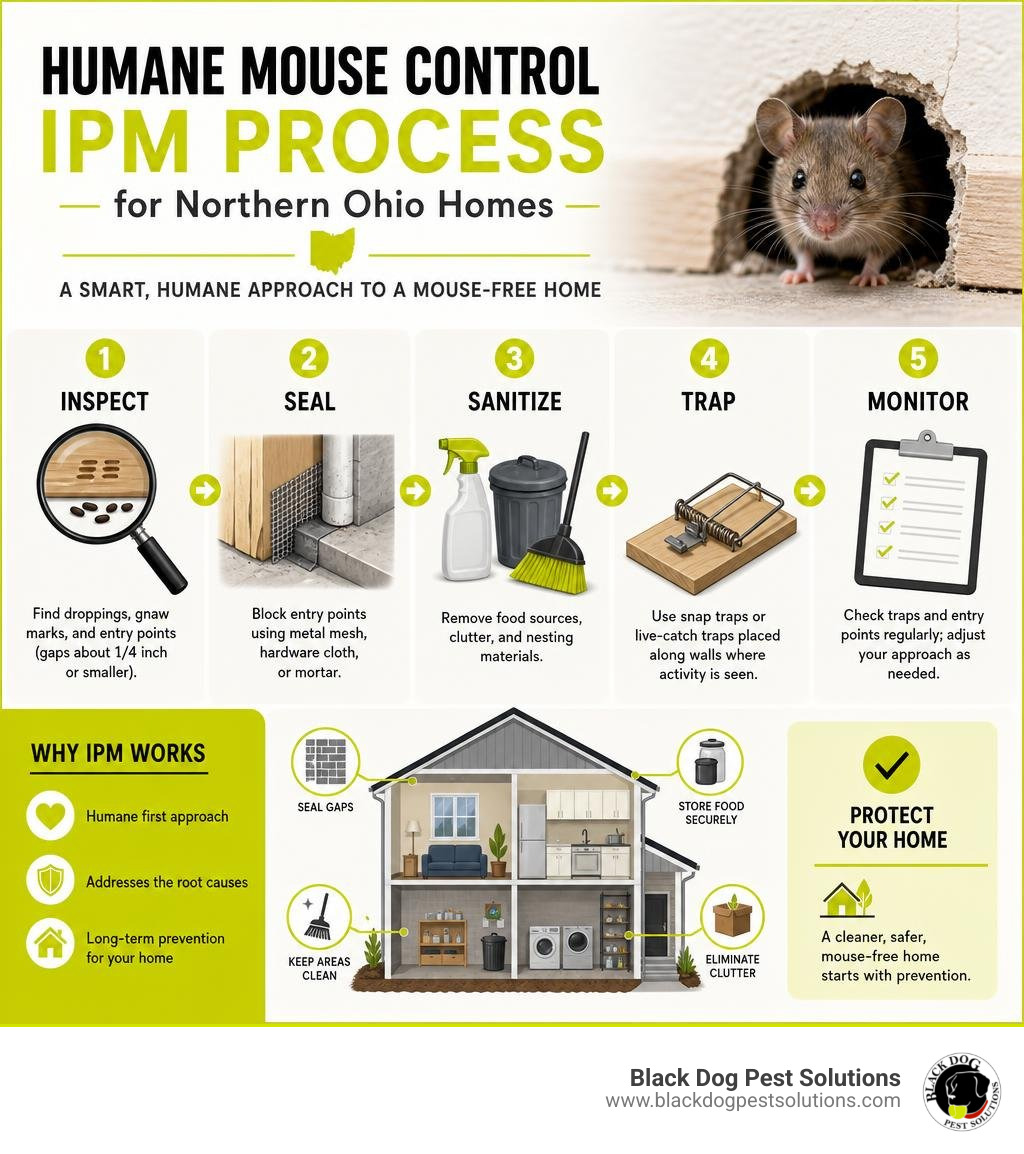
- Inspect — Find droppings, gnaw marks, and entry points (gaps about 1/4 inch or smaller)
- Seal — Block entry points using metal mesh, hardware cloth, or mortar
- Sanitize — Remove food sources, clutter, and nesting materials
- Trap — Use snap traps or live-catch traps placed along walls where activity is seen
- Monitor — Check traps and entry points regularly; adjust your approach as needed
This guide covers everything from identifying mouse species and spotting the signs of an infestation, to exclusion, humane trapping, and when to call a professional.
Mice are small, but the problems they cause are not. A single house mouse produces roughly 36,000 droppings per year, can squeeze through gaps about 1/4 inch or smaller, and mice reproduce quickly when warmth, shelter, and food are available. Local weather and building conditions in Northern Ohio can make homes more attractive to mice, especially as temperatures drop in fall and winter.
I’m Mat Ledyard, owner of Black Dog Pest Solutions in Avon, Ohio, and I’ve been working in mice control and pest management since 2005. In the sections ahead, I’ll walk you through everything I’ve learned — from biology and behavior to the most effective, humane methods for long-term prevention.
Simple guide to mice control terms:
Mice Control Basics: Common Mouse Types, Behavior, and Identification
The first step in good mice control is identification. Not every small rodent in Northern Ohio is the same, and control methods should match the species, location, and level of activity.
For a science-based overview of house mouse biology and management, the UC IPM house mouse guide is a helpful reference.

Common Mice Found in Homes and Businesses
The most common mice we see in homes, garages, restaurants, warehouses, offices, and storage areas include:
- House mouse: Usually gray or gray-brown with a lighter belly, large ears, small dark eyes, and a nearly hairless tail. This is the most common indoor mouse.
- Deer mouse: Often has a brown upper body, white underside, larger eyes, and a more furred tail that may be darker on top and lighter underneath.
- White-footed mouse: Similar to the deer mouse, with white feet and underside. These are often associated with wooded or brushy areas but may enter structures.
House mice are especially comfortable living close to people. They nest in wall voids, attics, crawlspaces, garages, basements, commercial storage rooms, and around appliances where warmth and food are nearby.
How to Identify a Mouse vs. a Rat
Mice and rats are both rodents, but they behave differently. Correct identification matters because trap spacing, bait placement, exclusion work, and risk level can all change.
| Feature | Mouse | Rat |
|---|---|---|
| Size | Small, often 5 to 8 inches including tail | Larger, often much longer and heavier |
| Snout | More pointed | More blunt |
| Ears | Larger compared to body | Smaller compared to body |
| Tail | Thin, often lightly haired | Thicker, scaly-looking |
| Droppings | Small, rice-like, often pointed | Larger, capsule-shaped or blunt |
| Movement | Stays close to nest, often 10 to 30 feet | May travel farther |
| Entry needs | Can fit through gaps about 1/4 inch or smaller | Needs larger openings |
| Signs | Tiny gnaw marks, droppings, shredded nesting material | Larger gnaw marks, rub marks, burrows in some cases |
If you are unsure, treat the situation carefully and avoid handling droppings or nesting materials without protection.
Why Mice Reproduce Quickly
Mice reproduce quickly, which is why a “just one mouse” situation should not be ignored. Indoors, a population may grow when mice have food, warmth, nesting material, and protected travel routes.
Conditions that can support activity include:
- Warm shelter
- Food access
- Nesting material
- Low disturbance
- Hidden travel routes
That is why prevention is the best long-term approach. Removing mice without sealing entry points is a little like mopping up water while the sink is still running.
Signs of a Mouse Infestation and How to Read the Clues
Mice are mostly active at night, so you may notice evidence before seeing the animal itself. University extension guidance such as Controlling House Mice notes that droppings, gnawing, nests, tracks, sounds, and odors are all important clues.

Common signs include:
- Small dark droppings near food, cabinets, baseboards, or appliances
- Scratching or scurrying in walls, ceilings, or attics
- Chewed food packaging
- Gnaw marks on wood, plastic, wiring, insulation, or stored goods
- Shredded paper, fabric, or insulation used for nesting
- Musty or musky urine odor
- Greasy gray smudges along walls or travel paths
- Pet interest in a cabinet, stove, garage corner, or wall void
- Nighttime sightings
- Daytime sightings, which can suggest heavier pressure or disturbed nesting areas
Fresh vs. Old Mouse Activity
Reading the age of activity helps determine whether the problem is recent or ongoing.
Fresh activity may include:
- Dark, moist-looking, or shiny droppings
- New gnaw marks with lighter exposed material
- Stronger odor
- Repeated noises at night
- New damage to food packaging
- Trap catches or fresh bait disturbance
Older activity may include:
- Gray, dusty, dry droppings
- Cobwebs over droppings or nests
- Faded gnaw marks
- No new noises or food damage
- No changes after several days of monitoring
When in doubt, monitor. A few well-placed traps or non-toxic tracking methods can help confirm whether mice are still active.
Where Mice Hide Indoors
Mice prefer quiet, protected areas close to food. In Northern Ohio homes and businesses, we commonly inspect:
- Kitchens and pantries
- Behind refrigerators, ovens, and dishwashers
- Under sinks
- Basements and crawlspaces
- Garages
- Attics and insulation
- Suspended ceilings
- Wall voids
- Storage rooms
- Utility rooms
- Around water heaters and furnaces
- Pet food zones
- Commercial kitchens and dry storage areas
A mouse may not travel far from its nest, so evidence in one cabinet often means the nesting or entry point is nearby.
When One Mouse May Mean More
Seeing one mouse does not always prove there is a large infestation, but it should not be ignored. Mice have small home ranges, often around 10 to 30 feet, and they hide well. If you are seeing frequent droppings, hearing repeated scratching, or finding damage in several areas, there may be multiple mice, nests, or entry points.
Entry Points, Exclusion, and Long-Term Prevention
Exclusion is the part of mice control that keeps paying you back. Traps remove mice already inside. Exclusion helps prevent the next wave.
For consumer-friendly prevention guidance, see the National Pesticide Information Center’s mice prevention guidance.
How Mice Get Into Buildings
Mice can enter through very small gaps, including openings about 1/4 inch or smaller. Common entry points include:
- Foundation cracks
- Gaps under doors
- Garage door corners
- Utility penetrations
- Plumbing and cable openings
- Crawlspace vents
- Attic vents
- Roofline gaps
- Soffit openings
- Siding seams
- Gaps around windows
- Construction joints
- Open doors or garage doors
In places like Avon, Westlake, Bay Village, Elyria, Lorain, Cleveland, Lakewood, Strongsville, and surrounding Northern Ohio communities, fall and winter pressure often increases as mice look for shelter.
Exclusion Materials That Help Prevent Entry
Mice chew. So foam alone is usually not enough.
Better exclusion materials include:
- Hardware cloth
- Copper mesh
- Metal mesh
- Sheet metal
- Mortar
- Concrete patch
- Chew-resistant vent covers
- Door sweeps
- Weather stripping
Metal materials are more resistant to chewing and work well as backing before sealant is applied. Steel wool can help in some small gaps, but it may rust or shift over time, so we usually prefer more durable materials when possible.
Sanitation and Habitat Changes That Matter Most
Sanitation does not mean your home is “dirty.” Mice can enter clean homes if shelter and access points exist. But reducing food and nesting opportunities makes control much easier.
Focus on:
- Store pantry food in sealed containers
- Keep pet food in lidded bins
- Clean crumbs under appliances
- Empty trash regularly
- Keep outdoor trash covered
- Reduce cardboard storage
- Keep garage items organized
- Store goods off the floor when possible
- Trim vegetation touching the structure
- Move firewood and debris away from the foundation
- Clean up birdseed and spilled pet food
Small habits matter. A mouse does not need a buffet. It just needs enough crumbs and cover to stay comfortable.
Seasonal Mouse Pressure in Northern Ohio
Mouse activity can happen year-round, but seasonal patterns matter:
- Fall: Mice move indoors as temperatures drop.
- Winter: Homes, garages, and businesses provide warmth and shelter.
- Spring: Nesting activity can increase.
- Summer: Outdoor activity may be higher, but mice can still live indoors.
Local weather and building conditions can make homes more attractive to mice. If you are comparing pest control companies in Avon, ask whether they inspect entry points and provide exclusion guidance, not just trapping.
Health Risks, Contamination, and Property Damage
Mice can create health, safety, and property concerns. The House Mouse Damage Prevention and Control Methods resource explains that effective management usually requires sanitation, exclusion, trapping, and sometimes carefully managed toxicants.
Health and safety concerns include:
- Food contamination from droppings, urine, and hair
- Bacteria on food-contact surfaces
- Allergens that may affect sensitive occupants
- Asthma triggers
- Lymphocytic choriomeningitis, or LCM, risk
- Parasites such as mites or fleas in some situations
- Chewed wiring
- Damaged insulation
- Odors from urine, nests, or dead mice
- Commercial sanitation and reputation concerns
Disease and Allergen Concerns
Research cited in extension materials estimates that about 5% of house mice in the United States may carry the LCM virus. Mice may also contaminate surfaces with bacteria and contribute to allergy or asthma issues.
Extra care is important around:
- Children
- Older adults
- Pregnant individuals
- People with compromised immune systems
- Food-service areas
- Healthcare or childcare settings
Avoid touching droppings, urine, nests, or carcasses with bare hands.
Property and Business Risks
Mice gnaw because their teeth grow continuously. Indoors, that can mean damage to:
- Electrical wiring
- Appliance insulation
- Wall insulation
- Stored inventory
- Packaging
- Dry goods
- Furniture
- Garage storage
- Attic materials
For businesses, mouse activity can also lead to failed inspections, product loss, customer complaints, and downtime. In commercial settings, prevention and monitoring are often just as important as removal.
Why Cleanup Requires Care
Do not sweep or vacuum dry droppings. That can stir up contaminated dust. Safer cleanup typically involves ventilation, disinfectant, gloves, careful removal, and sealed disposal.
If insulation, stored goods, or wall voids are heavily contaminated, professional cleanup or replacement may be needed.
Humane and Effective Mice Control Methods
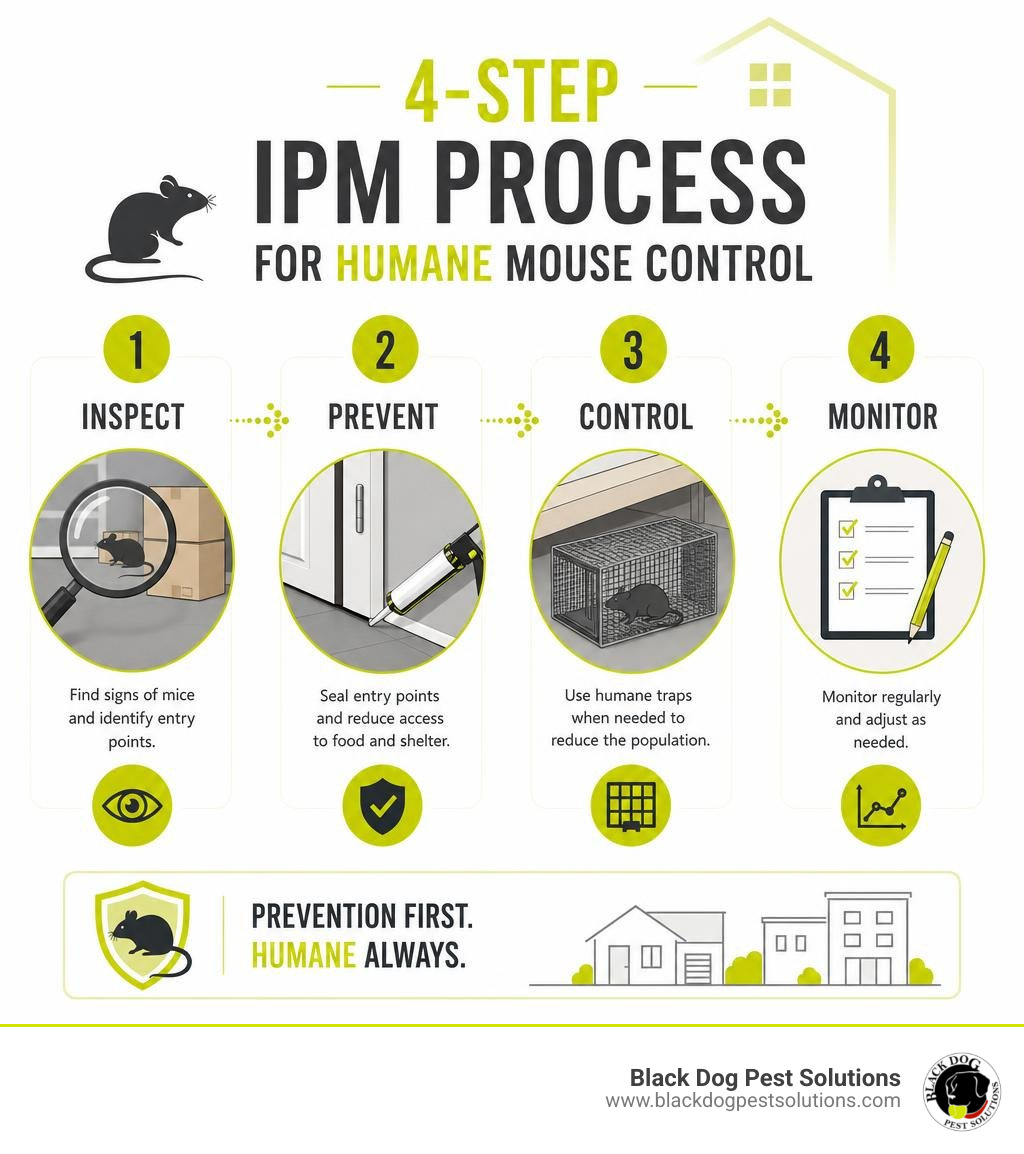
Humane mouse control means minimizing stress and suffering while solving the problem responsibly. Prevention is the best long-term approach: inspect, seal, sanitize, trap if needed, and monitor.
For broader best practices, review the EPA’s IPM principles. We also explain this approach in Get Smart About Mice: What is Integrated Pest Management?.
How Integrated Pest Management Improves Mice Control
Integrated Pest Management, or IPM, avoids relying on one tactic. A good plan includes:
- Inspect the structure
- Identify the rodent
- Find entry points
- Locate nesting and travel areas
- Reduce food and shelter
- Choose lower-risk control methods when appropriate
- Place traps strategically
- Monitor results
- Adjust the plan as activity changes
When evaluating pest control companies in Avon, look for providers who talk about inspection, exclusion, sanitation, and monitoring, not just products.
Trapping Options and Placement
Traps can be effective when they are placed correctly and checked often.
Common options include:
- Snap traps: Can be useful for targeted control when placed properly.
- Live-catch traps: May be appropriate in some situations, but they must be checked frequently according to instructions to reduce stress.
- Multiple-catch traps: Can be useful in commercial or higher-activity areas.
- Glue boards: May catch mice, but because of welfare concerns, they are usually not preferred as a primary strategy.
Placement tips:
- Place traps along walls where mice travel.
- Position snap trap triggers toward the wall.
- Use small amounts of bait.
- Place traps in dark corners, behind objects, and near droppings.
- Space traps roughly 6 to 10 feet apart in active areas.
- Check traps frequently.
- Follow all product instructions.
Peanut butter, chocolate, seeds, or nesting material may work as bait, but placement usually matters more than bait choice.
Rodenticides and Bait Stations
Rodenticides can be useful in some situations, but they require caution. Products may include anticoagulants or non-anticoagulants. Some are restricted to licensed applicators.
Safety rules include:
- Read and follow the label.
- Use tamper-resistant bait stations where required.
- Keep bait away from children, pets, and wildlife.
- Do not place loose bait in accessible areas.
- Keep bait fresh if using a baiting program.
- Remove uneaten bait according to label directions.
- Consider non-target risks before using rodenticides.
For many homes, trapping may be preferred because it can reduce the chance of mice dying in wall voids and allows progress to be monitored.
Methods That Should Not Be the Main Strategy
Some methods may help in limited situations or may sound appealing, but results can be inconsistent when they are used alone:
- Ultrasonic devices
- Scent repellents
- Pets
- Bait-only programs
- Sanitation-only programs
- Unmonitored traps
- Incomplete exclusion
- Relocation without checking local rules
Because release guidance can vary by location and situation, live-catch traps should be used only when you can check them frequently and handle the outcome legally and humanely.
DIY vs. Professional Help, Legal Considerations, and Local Reporting
Some mouse problems can be handled by careful homeowners. Others need professional help, especially when activity is recurring, hidden, or affecting a business.
For a deeper look, see The Ultimate Guide to Professional Mouse Removal.
When DIY Mouse Control May Be Appropriate
DIY may be reasonable when:
- You found early signs
- Activity appears limited
- Areas are accessible
- No one in the home is highly vulnerable
- You can seal obvious entry points
- You can check traps often
- You are not relying on restricted-use products
- You can clean safely
A simple DIY plan includes sealing gaps, storing food, reducing clutter, placing traps along active walls, and monitoring daily.
When Professional Mice Control Makes Sense
Professional help is wise when:
- Droppings keep returning
- Mice are in walls, ceilings, or attics
- Entry points are hard to locate
- A garage or crawlspace has repeated activity
- You manage a restaurant, warehouse, office, or rental
- You are concerned about rodenticide safety
- There are children, pets, or sensitive occupants
- You have tried DIY without progress
Large or recurring infestations often need a more complete plan. We explain this further in managing larger mice infestations.
If you are researching pest control companies in Avon, choose one that inspects the building envelope, explains the treatment plan, and discusses long-term prevention.
Legal and Safety Considerations
Important safety points:
- The pesticide label is the law.
- Some rodenticides are restricted or limited in how they can be sold or used.
- Bait stations may be required in areas accessible to children, pets, or wildlife.
- Schools, food-service facilities, and commercial sites may have additional rules.
- Rental properties may involve landlord and tenant responsibilities.
- Live-release rules vary, so check local requirements before relocating any animal.
Never place rodenticide where pets, children, or non-target wildlife can access it.
How Municipal Rodent Programs Work
Municipal rodent programs vary by city. In general, local governments may respond to rodent activity on public property, sanitation complaints, or neighborhood-wide concerns.
You may contact local officials when:
- Rodent activity appears tied to public land
- Trash, dumping, or property conditions are creating neighborhood problems
- There are repeated sanitation concerns
- You need guidance on local ordinances
- A neighboring property appears to be contributing to rodent pressure
Private property owners are usually responsible for control inside their own buildings, but local health or building departments may enforce sanitation rules when conditions affect the broader community.
After the Infestation: Cleaning, Sanitization, and Ongoing Monitoring
Once activity has stopped, cleanup and monitoring matter. This is the step people skip because they are relieved. Understandable, but mice love a comeback tour.
For more on immediate removal options, see our guide to faster mouse removal options.
Safe Cleanup Steps After Mouse Activity Stops
Basic cleanup steps:
- Ventilate the area if possible.
- Put on disposable gloves.
- Spray droppings, urine spots, and nesting material with disinfectant.
- Let the disinfectant sit according to label directions.
- Use paper towels to pick up waste.
- Place waste in a sealed bag.
- Disinfect washable surfaces.
- Wash contaminated fabrics when appropriate.
- Wash hands thoroughly after removing gloves.
Avoid dry sweeping or vacuuming droppings. If contamination is heavy, especially in attics or insulation, consider professional help.
How to Monitor for Return Activity
Monitoring helps confirm that control worked.
Watch for:
- Fresh droppings
- New gnaw marks
- Scratching sounds
- Trap activity
- Food packaging damage
- New nesting material
- Garage or pantry activity
- Attic or crawlspace odors
You can also use bait-free monitoring traps or non-toxic tracking methods in select areas. Recheck exterior entry points after heavy weather, repairs, or seasonal changes.
Long-Term Prevention Checklist
Monthly prevention tasks:
- Inspect the foundation for new gaps
- Check garage door seals
- Look around utility penetrations
- Store pantry goods in sealed containers
- Keep pet food covered
- Empty trash regularly
- Reduce cardboard clutter
- Trim vegetation near the structure
- Keep stored items off the floor when possible
- Check attic, basement, and garage corners
- Document any droppings or sounds
- Schedule seasonal inspections if activity has occurred before
Frequently Asked Questions About Mice Control
What is the fastest way to get rid of mice?
The fastest practical approach is to combine inspection, exclusion, sanitation, and strategic trapping. Set multiple traps in active zones, seal obvious entry points, remove food sources, and monitor daily. A professional inspection can speed up the process by finding hidden entry points and nesting areas.
For cost-related planning without specific pricing, see Everything You Need to Know About Pest Control Mice Cost.
Can mice come back after treatment?
Yes. Mice can return if gaps remain open, food is accessible, nearby populations are active, or seasonal pressure increases. Local weather and building conditions can also influence activity. Long-term prevention depends on follow-up inspections, sealing, sanitation, and monitoring.
Are live-catch traps a humane option?
Live-catch traps can be a humane option in some situations when they are checked frequently and used according to instructions. They can reduce direct lethal control, but they still require planning to minimize stress and suffering. Release rules vary by location and situation, so check local guidance before using this method. Exclusion and prevention remain the best long-term approach.
Conclusion
Effective mice control is not just about removing the mice you see. It is about understanding how they got in, reducing what attracted them, choosing responsible control methods, and monitoring so the issue does not rebuild quietly.
The best long-term plan is simple:
- Inspect
- Seal
- Sanitize
- Trap if needed
- Monitor
At Black Dog Pest Solutions, we help Northern Ohio homes and businesses with prevention-first, humane mouse control using practical IPM methods. We are a licensed, family-owned pest control company based in Avon, serving communities including Greater Cleveland, Lorain, Elyria, Avon Lake, Bay Village, North Ridgeville, Westlake, Lakewood, Strongsville, Medina, Sandusky, and nearby areas. We are proud of our 4.9-star Google rating and BBB accreditation.
If you are comparing pest control companies in Avon and want help identifying entry points, removing active mice, and building a long-term prevention plan, contact us for mice control help in Northern Ohio.